Choosing a Smart Hub for Unified Home Theater Control
Navigating the best smart hub for unified home theater control can be challenging; discover key factors to optimize your setup and enjoy seamless entertainment.
When choosing a smart hub for unified home theater control, focus on compatibility with your existing devices, voice assistant support, and ease of use. Look for a hub that handles multiple commands efficiently and offers smooth integration with lights, sound systems, and streaming devices. Consider user reviews and performance feedback to gauge reliability. If you want to optimize your setup and simplify your control options, exploring more options can help you find the perfect fit.
Verify compatibility with your existing devices, voice assistants, and streaming platforms to ensure seamless integration.
Consider the hub’s support for automation routines and multi-device control for an enhanced entertainment experience.
Assess voice control accuracy, responsiveness, and support for your preferred voice assistant (Alexa, Google, Siri).
Review user feedback on the hub’s reliability and performance in managing complex commands or noisy environments.
Ensure the hub offers user-friendly physical and app controls for manual operation and troubleshooting.
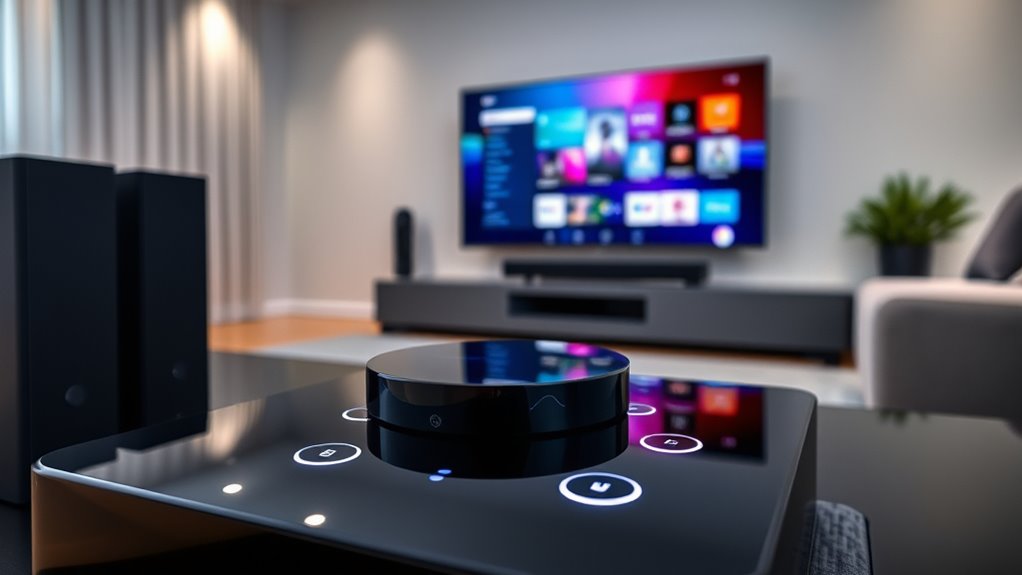
In today’s connected homes, choosing the right smart hub is vital for seamlessly controlling your entire home theater system. The right hub acts as the central command, allowing you to manage everything from lights and sound to streaming devices with ease. One of the most appealing features of modern smart hubs is voice control, which lets you operate your system hands-free. Instead of fiddling with multiple remotes or apps, you can simply speak your commands, making your entertainment experience more intuitive and enjoyable. However, as you explore options, you need to be aware of potential compatibility issues. Not all smart hubs work seamlessly with every device, so it’s essential to check whether your existing equipment, like smart speakers, TVs, or sound systems, will integrate smoothly. Compatibility problems can lead to frustration, delays, or the need for additional adapters or hubs, which defeats the purpose of having a unified control system.
You should consider how well a smart hub supports your preferred voice assistant, whether it’s Amazon Alexa, Google Assistant, or Apple’s Siri. Some hubs are optimized for specific platforms, offering deeper integration and more reliable voice control. If you already own smart speakers or other voice-enabled devices, choosing a hub compatible with those platforms will simplify setup and improve performance. It’s also wise to look into the device ecosystem the hub supports. For example, if you plan to expand your smart home, ensure the hub can connect with other smart appliances, security cameras, or lighting systems, so everything works together harmoniously. Additionally, the wave and wind qualities of a smart hub can influence its performance in different environments, especially in areas prone to interference or instability.
Another important aspect is the hub’s ability to handle multiple commands at once. Voice control is a game-changer, but only if it responds accurately and promptly. Some hubs might struggle with complex commands or have trouble distinguishing between different voices, especially in noisy environments. Reading reviews and user feedback can give you insights into how well a hub performs in real-world scenarios. Additionally, consider the physical interface and app control options—sometimes, you’ll want to manually override voice commands or set up routines that automate multiple actions simultaneously.
Ultimately, selecting a smart hub involves balancing voice control features with compatibility considerations. Focus on a device that supports your existing gear, offers reliable voice recognition, and fits into your broader smart home ecosystem. When you choose wisely, you’ll enjoy effortless, centralized control over your home theater and entire smart home, making your entertainment experience more immersive and stress-free.
Frequently Asked Questions
How Secure Are Smart Hubs From Hacking Threats?
Smart hubs are generally secure when you use strong wireless encryption and keep firmware updates current. Regular updates fix vulnerabilities, reducing hacking risks. Use strong, unique passwords and enable two-factor authentication if available. While no device is completely invulnerable, following these best practices minimizes threats. Stay aware of security alerts from the manufacturer and avoid connecting your hub to untrusted networks for added protection.
Can a Smart Hub Integrate With Existing Home Automation Systems?
Over 60% of smart home users prefer integrated systems for seamless control. Yes, a smart hub can easily integrate with your existing home automation systems, enhancing your user interface and voice control options. It acts as a central command, connecting devices like lights, thermostats, and entertainment systems. This integration simplifies management, making your home smarter and more responsive, all while maintaining a cohesive user experience.
What Is the Average Lifespan of a Smart Hub Device?
A smart hub typically lasts about 3 to 5 years, depending on device durability and usage. Regular firmware updates help extend its lifespan by fixing bugs and enhancing functionality. You should keep your hub updated and handle it carefully to avoid damage. Over time, hardware may become outdated, but proper maintenance can maximize its performance during its lifespan.
Are There Compatibility Issues With Specific Home Theater Brands?
About 30% of users report compatibility issues with certain home theater brands. You might encounter brand compatibility challenges, especially with older or less common devices. Device interoperability varies across smart hubs; some work seamlessly, while others require extra setup or adapters. To avoid frustration, research the smart hub’s compatibility with your specific home theater brands before purchasing, ensuring smooth integration and an enjoyable, unified control experience.
How Energy-Efficient Are Smart Hubs During Operation?
Smart hubs are generally energy-efficient, consuming low power during operation. Their power consumption varies depending on the model and features, but most are designed to minimize energy use. In standby mode, they typically draw even less power, helping you save on energy costs. If you’re mindful of power consumption, look for hubs with low standby mode power draw and energy-saving features to optimize efficiency and reduce your overall energy footprint.
Conclusion
Choosing the right smart hub simplifies your home theater experience, making everything more seamless and enjoyable. Did you know that over 70% of smart home users report increased satisfaction when using a unified control system? By selecting a hub that fits your needs, you’ll enjoy effortless control and fewer frustrations. Invest in the right technology today, and turn your home theater into a truly integrated entertainment haven you’ll love to use every day.
Discover how integrating security systems with your home theater can enhance safety and convenience—learn the secrets to seamless control and monitoring today.