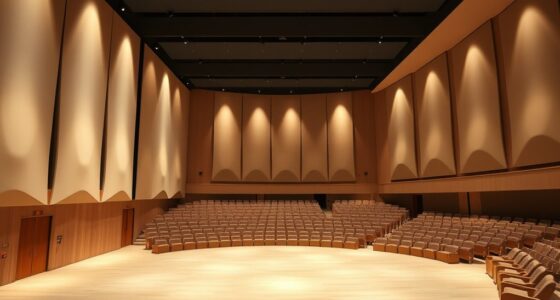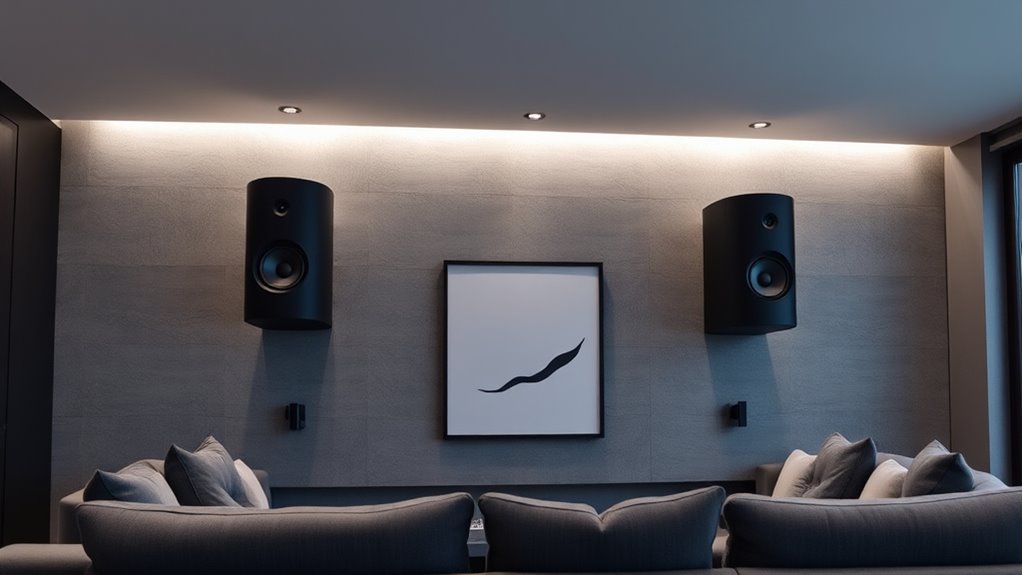

If you’re mounting your surround speakers too high or too low, you’re likely affecting sound clarity and immersion. Proper placement balances sound dispersion and guarantees your audio sounds natural and immersive. Typically, surround speakers should be positioned slightly behind and to the sides, at ear level or just above. Misaligned height can cause poor sound imaging and reduce effects. Keep these tips in mind to improve your setup—more insights await to help you get it just right.

Get business pricing on your home office setup
- Business-only prices and quantity discounts
- Tax-exempt purchasing
- Multiple users, one account, clear invoices
Key Takeaways
- Mount speakers slightly above ear level for optimal sound imaging and immersive experience.
- Avoid placing surround speakers too high or too low, which can distort sound and reduce surround effects.
- Consider room acoustics and size to determine proper mounting height for balanced sound coverage.
- Ensure speakers are angled toward the listening area to maximize clarity and surround sound accuracy.
- Use calibration tools or AI-assisted setup to fine-tune speaker height and positioning effectively.
Understanding the Role of Surround Speakers in Home Theater Systems
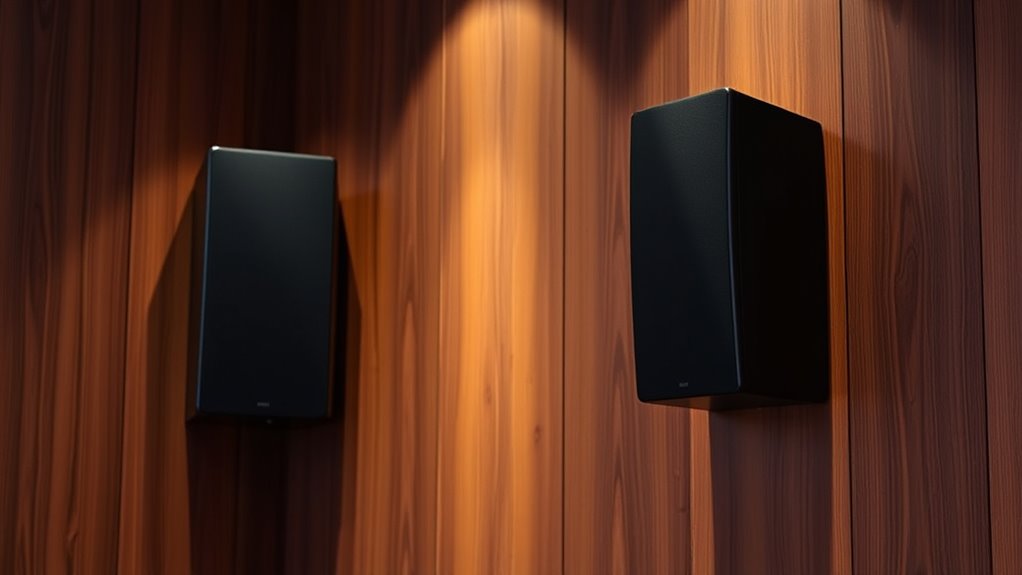
Surround speakers are vital for creating an immersive home theater experience, as they deliver ambient sounds and directional audio that make you feel like you’re right in the middle of the action. Proper surround sound calibration guarantees that audio cues are balanced and accurate, enhancing overall clarity. Following speaker placement guidelines is essential; positioning speakers correctly around your seating area guarantees ideal sound dispersion. Typically, surround speakers should be placed slightly behind and to the sides of your viewing position, at ear level or slightly above. This setup allows sound to envelop you naturally. Additionally, understanding the role of audio calibration helps ensure your system delivers the best possible sound quality. Correct placement and calibration can also mitigate issues related to sound displacement, ensuring effects are precisely aligned with on-screen action. Ignoring these principles can result in a disconnected audio experience, where effects seem distant or misplaced. By paying attention to calibration and placement, you’ll maximize your system’s potential and enjoy a truly immersive home theater environment. Proper speaker positioning is especially crucial for achieving balanced sound and avoiding audio blind spots.
The Ideal Height for Mounting Surround Speakers
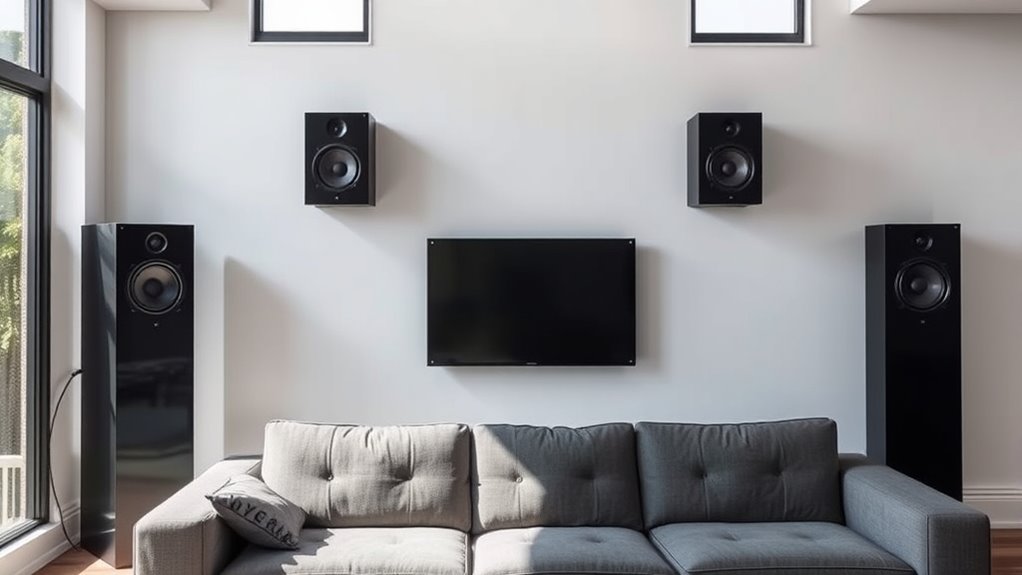
You should mount your surround speakers at a height that matches the ideal listening level for clear sound. Room acoustics can also influence the best placement, so consider how your space absorbs or reflects sound. Finding the right height ensures a more immersive and balanced home theater experience. Additionally, maintaining proper speaker cable connections can help optimize sound quality and overall system performance. Proper placement can also mitigate issues caused by sound reflection, enhancing overall audio clarity.
Optimal Listening Level
Finding the most suitable listening level for mounting surround speakers is essential to create an immersive audio experience. To achieve this, focus on proper speaker calibration, ensuring your speakers are balanced with other components. Proper calibration helps you set the right volume levels, preventing sound from being overpowering or too subtle. Bass management is also vital; it directs low-frequency sounds appropriately, avoiding muddiness and ensuring clarity. When you position your speakers at an ideal height, it becomes easier to calibrate them accurately, resulting in a more natural and enveloping soundstage. Additionally, understanding sound design techniques can help optimize your setup for the best auditory experience. Correct speaker height also plays a crucial role in acoustic performance, as it influences how sound waves interact within your space. Proper speaker placement can also prevent sound distortion, ensuring a cleaner listening environment. Remember, the goal is for your surround speakers to blend seamlessly with the rest of your system, providing a cohesive listening experience at the right volume level. Considering AI-powered calibration tools can further enhance your setup by automating adjustments for optimal sound quality.
Room Acoustics Impact
Since room acoustics substantially influence sound quality, mounting surround speakers at the right height is crucial for ideal performance. When speakers are placed too high or low, sound reflections and echoes can distort audio, reducing clarity and immersion. Proper height ensures sound reaches your ears directly, improving dialogue and surround effects. Additionally, consider speaker aesthetics—mounting them at an advantageous height can keep them discreet, blending seamlessly with decorative accents and enhancing your room’s decor. Speaker placement is a key factor in optimizing your home theater setup. By paying attention to room acoustics, you create a balanced environment where sound and style coexist effortlessly, making your home theater experience more immersive and visually appealing. Adjusting the listening position and speaker height in relation to it can significantly improve overall sound quality.
Common Mistakes in Surround Speaker Placement

Many people make mistakes by placing surround speakers at incorrect height levels or ignoring ear alignment, which can ruin the listening experience. Overlooking room acoustics also leads to poor sound quality and uneven coverage. Paying attention to these details guarantees your setup sounds balanced and immersive. Additionally, understanding the importance of proper self-watering system placement can help optimize sound distribution in your room. Being aware of cybersecurity vulnerabilities, such as potential hacking attempts, emphasizes the need to secure your audio equipment and prevent unauthorized access. Proper calibration and speaker positioning are essential for achieving an optimal surround sound environment.
Incorrect Height Levels
One common mistake in surround speaker placement is setting the speakers at incorrect height levels, which can substantially diminish the immersive experience. Improper height affects sound calibration and reduces the realism of your setup. To avoid this, focus on these key points:
- Place speakers too high or too low, disrupting the sound’s natural flow.
- Mount them at ear level when seated, ensuring accurate sound imaging.
- Avoid uneven heights, which can cause inconsistent sound distribution.
Getting the right height is essential for effective speaker placement and ideal sound calibration. When speakers are mounted too high or too low, it hampers the surround effect, making the experience less engaging. Correct positioning ensures your system delivers balanced, immersive audio.
Ignoring Ear Alignment
Proper surround speaker placement isn’t just about height; aligning speakers with your ears when seated is equally important. Ignoring ear alignment can lead to an imbalanced soundstage, where audio feels disconnected or uneven. Even if you’ve set the correct speaker height, if the speakers aren’t at ear level, the sound won’t reach you properly. This misalignment causes certain frequencies to diminish or distort, reducing immersion. Keep in mind that the ideal speaker height isn’t just about mounting them high or low but positioning them so that their sound aligns with your ear level when seated. Failing to consider ear alignment compromises overall audio quality, making you miss subtle details and diminishing your listening experience. Always double-check that speaker height matches your seated ear level for maximum sound, and consider proper speaker positioning to optimize audio performance. Additionally, understanding the importance of ear-level alignment can help you achieve a more immersive home theater experience. Properly aligned speakers can also enhance your overall enjoyment of surround sound, creating a more authentic and engaging audio environment. Ensuring correct placement can also prevent sound distortion and improve clarity across different audio ranges. Furthermore, the integration of automation technology can assist in fine-tuning speaker placement for optimal sound quality.
Overlooking Room Acoustics
Have you considered how your room’s acoustics impact surround sound performance? Ignoring room acoustics can weaken your setup. First, consider furniture and decor, which can absorb or reflect sound, affecting clarity. Second, avoid placing speakers in corners or against reflective surfaces that cause echo or muddiness. Third, explore decorative options like soft curtains or rugs to improve sound quality without sacrificing style. If wiring is an issue, wireless alternatives can simplify placement and reduce clutter. Proper placement ensures sound reaches you evenly, avoiding dead spots or harsh reflections. Additionally, understanding room acoustics helps in optimizing speaker placement for the best audio experience. Incorporating sound treatment techniques can further enhance clarity and immersion. Enhancing sound clarity can significantly elevate your overall listening environment. By paying attention to room acoustics, you enhance immersion and clarity. Don’t overlook these factors—your sound experience depends on it.
How Room Dimensions Affect Speaker Height Choices

Room dimensions play a crucial role in determining the ideal height for your surround speakers. If your space is small or has low ceilings, mounting speakers too high can create a disconnect between sound and visuals. Conversely, larger rooms with higher ceilings may require placing speakers higher to fill the space effectively. Consider decorative speaker placement, ensuring the speakers blend seamlessly with your room’s design while maintaining good sound dispersion. Aesthetic considerations also matter; you want your setup to look intentional without compromising audio quality. Room shape and size influence how sound waves travel, so adjusting speaker height accordingly helps achieve balanced sound. By understanding your room’s dimensions, you can optimize speaker positioning for both style and superior surround sound experience.
Tips for Achieving Optimal Sound Dispersion
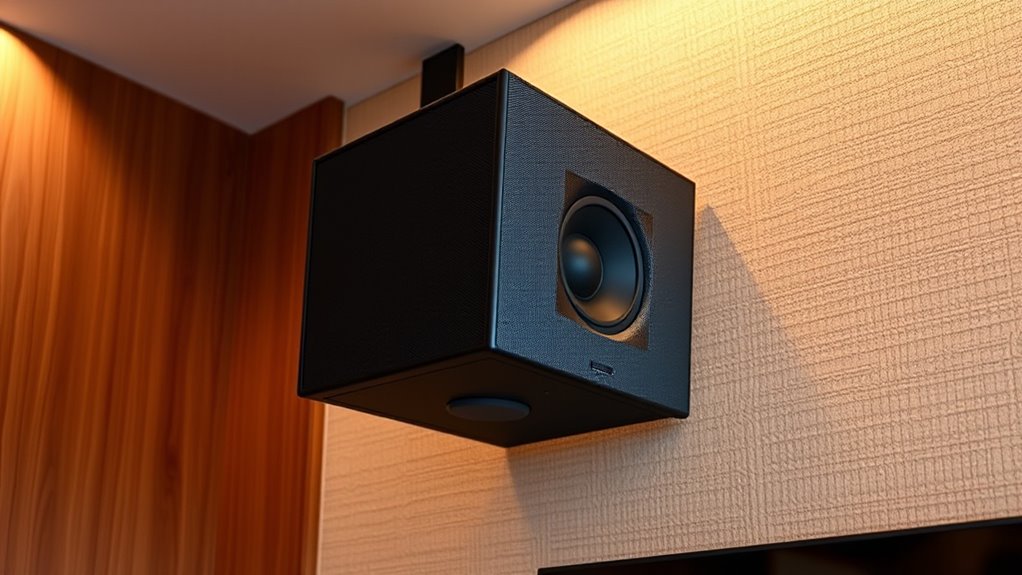
To achieve perfect sound dispersion from your surround speakers, focus on positioning them at angles that direct sound evenly across the listening area. Proper placement ensures balanced audio and enhances your experience. Here are some tips:
- Aim for a slight downward tilt or angle toward the listening zone to improve sound coverage.
- Integrate decorative options like stylish wall mounts or sleek stands to blend speakers seamlessly into your decor.
- Use wireless connectivity wherever possible to avoid cable clutter and allow flexible positioning for ideal dispersion.
Tools and Techniques for Proper Mounting
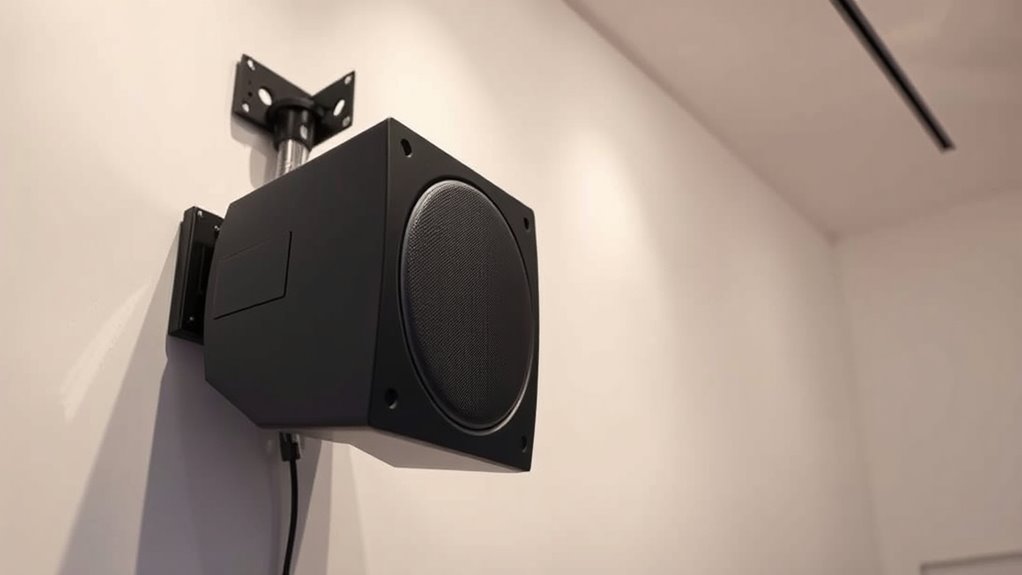
Choosing the right tools and techniques is essential for securely mounting your surround speakers and ensuring ideal sound performance. Start by selecting a sturdy mounting bracket compatible with your speaker’s size and weight. Use a drill to make precise holes in the wall or ceiling, ensuring proper placement. Once mounted, attach the speaker grille to protect the speaker and maintain a clean look. When installing the bracket, double-check that it’s level to avoid misalignment, which can distort sound dispersion. Carefully secure the speaker to the bracket, making sure all screws are tight. Proper tools like a stud finder can help locate secure mounting points. These techniques ensure your speakers stay in place and deliver perfect surround sound, avoiding any unwanted vibrations or shifts.
Adjusting Speaker Height for Different Listening Environments

Adjusting speaker height is essential to maximize sound quality across different listening environments. Proper speaker positioning enhances clarity and immerses you in the audio experience. To do this effectively, consider these steps:
- Evaluate your listening height, ensuring speakers are aligned with your ear level for optimal listening ergonomics.
- Adjust the height based on your environment, whether sitting or standing, to maintain consistent sound delivery.
- Fine-tune the angle of the speakers to direct sound toward your ears, minimizing reflections and distortions.
Frequently Asked Questions
Can Ceiling-Mounted Surround Speakers Provide Better Sound Than Wall-Mounted?
Ceiling-mounted surround speakers can offer better sound than wall-mounted ones because they provide more immersive, evenly distributed audio. Proper speaker placement and acoustic treatment are key to maximizing sound quality. When mounted on the ceiling, speakers can be positioned to create a more natural surround effect, reducing reflections and dead spots. Just guarantee you follow recommended placement guidelines for your setup to get the best audio experience.
How Does Ceiling Height Influence Optimal Surround Speaker Placement?
Imagine a symphony orchestra; the height of the ceiling influences the acoustic impact just as it does for your surround speakers. When ceiling height is high, placing speakers higher helps disperse sound evenly, creating a more immersive experience. Conversely, lower ceilings may require closer placement to avoid muffled audio. Adjust your speaker height based on ceiling height to optimize sound and achieve perfect harmony in your space.
What Are the Signs of Improperly Mounted Surround Speakers?
If your surround speakers are improperly mounted, you’ll notice issues like poor sound alignment and sound imbalance. You might feel the audio isn’t wrapping around you correctly or that certain sounds are too loud or too soft. Discrepancies in volume or directionality indicate they’re not positioned properly. Make certain your speakers are angled correctly and aligned with your listening position to achieve the best sound experience.
Is It Better to Hide or Expose Surround Speaker Mounts?
Imagine you’re in a vintage movie, and your surround speakers steal the scene. Whether you hide or expose the mounts depends on your speaker aesthetics and mounting flexibility. Hiding mounts keeps a sleek look, but exposing them allows easy adjustments and better sound dispersion. Consider your room style and future tweaks—if flexibility’s key, go for exposed mounts. Otherwise, hiding them preserves that clean, minimalist vibe you’re after.
How Do Different Speaker Types Affect Ideal Mounting Height?
Different speaker types influence ideal mounting height because of their design and sound dispersion. For example, bookshelf speakers need to be at ear level for maximum sound, while in-ceiling speakers are best mounted closer to the ceiling for proper acoustic coverage. You should consider speaker placement and acoustic considerations to achieve balanced sound. Adjust mounting height based on the specific speaker type, aiming for clear, immersive audio without sacrificing aesthetics.
Conclusion
Getting your surround speakers at the right height can transform your home theater experience. For example, imagine a friend who mounted theirs too high, missing out on immersive sound. By adjusting the height to ear level when seated, you’ll enjoy richer, more accurate audio. Don’t overlook your room’s specifics—small tweaks can make a big difference. Proper placement isn’t just about looks; it’s about creating a soundscape that pulls you right into the action.
Evergreen bestsellers Picks
bestsellers
As an affiliate, we earn on qualifying purchases.