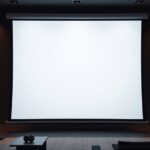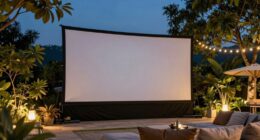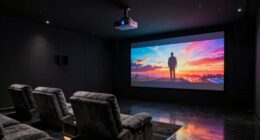
When comparing PVC and fabric screens, you’ll find PVC offers sharp, vibrant images with minimal distortion and is easy to mount due to its rigidity. It’s durable, resistant to moisture and scratches, making it great for permanent or outdoor setups. Fabric screens, on the other hand, provide a softer look, diffuse light well, and are lightweight and flexible for temporary or customizable installations. To uncover which material suits your space and needs best, explore the details that follow.
Key Takeaways
- PVC screens deliver sharper images with vibrant colors, ideal for high-definition content, whereas fabric screens diffuse light for reduced glare.
- PVC is rigid, easy to mount, and durable, making it suitable for permanent installations; fabric is lightweight, flexible, and ideal for temporary setups.
- PVC screens resist moisture, scratches, and outdoor conditions, while fabric screens are more prone to stains and environmental damage.
- Fabric screens offer a softer aesthetic and adaptability to irregular surfaces, whereas PVC screens have a sleek, minimalist appearance.
- PVC is better for environments demanding high durability and clarity; fabric excels in aesthetic appeal and ease of handling.
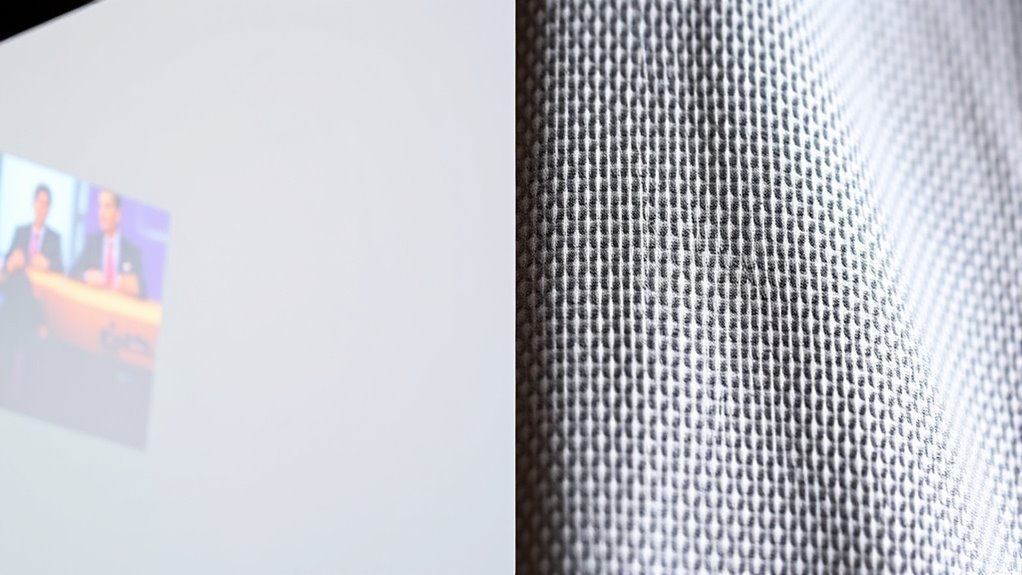
Choosing the right screen material is essential for ensuring ideal display performance and durability. When comparing PVC and fabric screens, you’ll find that each has unique advantages that can impact your viewing experience. One of the most critical factors to contemplate is projection clarity. PVC screens typically offer a smooth, reflective surface that enhances image sharpness and color accuracy, resulting in vibrant visuals with minimal distortion. This makes them excellent for high-definition content and situations where image clarity is crucial. Fabric screens, on the other hand, often provide a matte surface that diffuses light, reducing glare and hotspots. While this can slightly soften the picture, it generally leads to more uniform brightness and better color consistency in environments with ambient light. So, if you prioritize crisp, detailed images, PVC might be the better choice, but if reducing glare is more important, fabric could serve you better.
Installation ease is another crucial aspect that can influence your decision. PVC screens are usually rigid or semi-rigid, which means they can be straightforward to mount on walls or frames. Their sturdiness allows for tight, wrinkle-free installation, and many models come with pre-drilled holes or adhesive backing, simplifying the setup process. However, because they tend to be less flexible, fitting them into certain spaces or creating custom shapes can be more challenging. Fabric screens, in contrast, are typically lightweight and flexible, making them easier to handle and install in diverse environments. They often come with hanging options or tensioning systems that help you achieve a smooth, flat surface. This flexibility can make the installation process quicker and less cumbersome, especially if you’re working with irregular surfaces or need to set up the screen temporarily.
Durability also plays a role in your choice. PVC screens are generally resistant to moisture, scratches, and tearing, which makes them suitable for both indoor and outdoor use. They tend to hold up well over time with minimal maintenance. Fabric screens, depending on the material, can be more susceptible to stains, creases, or damage from environmental factors, but many are treated with fire-retardant and stain-resistant coatings. If you need a screen that withstands frequent handling or outdoor conditions, PVC might be the better option. Conversely, fabric screens often offer a softer look and feel, which can be advantageous in home or theater settings where aesthetics are important.
Additionally, considering content customization can help tailor your setup to your specific needs, whether that involves size, shape, or ambient light conditions. Ultimately, your decision hinges on your specific needs for projection clarity, installation ease, and durability. PVC screens excel in delivering sharp visuals and easy mounting, making them ideal for permanent installations. Fabric screens provide a lightweight, flexible alternative that’s simple to set up and handle, especially in adaptable or temporary spaces. By weighing these factors carefully, you can choose the material that best aligns with your environment and viewing preferences.

NothingProjector Motorized ALR Screen for Ultra Short Throw Projector, 95% Ambient Light Rejecting, 100 inch, Floor Rising, 4K/8K UHD, Active 3D, Anti Daylight, Electric Retractable Automatic NothPJ
✔ Adjustable Height, Zero Installation – Effortlessly adjust the screen to any height with a single press of...
As an affiliate, we earn on qualifying purchases.
Frequently Asked Questions
Which Screen Material Is Easiest to Clean and Maintain?
PVC screens are easier to clean and maintain because they resist stains and dirt better than fabric. You can simply wipe them down with a damp cloth, making cleaning ease and maintenance simplicity straightforward. Fabric screens may require more careful handling and occasional deep cleaning to prevent mold or stains. If you want low effort, PVC is the clear choice for hassle-free upkeep and ongoing maintenance.
How Do PVC and Fabric Screens Perform in Extreme Weather?
You might think both screens excel in extreme weather, but surprise—PVC screens usually handle harsh conditions better. Their weather resistance and durability factors make them more resilient against wind, rain, and sun. Fabric screens, on the other hand, often sag or tear under such stress. So, if you want your outdoor setup to survive a storm or scorching heat, PVC is your best bet for long-lasting performance.
Are There Eco-Friendly Options for PVC or Fabric Screens?
Yes, you can find eco-friendly alternatives for both PVC and fabric screens. Look for sustainable materials like recycled polyester, organic cotton, or biodegradable fabrics that reduce environmental impact. Some manufacturers now offer eco-conscious options made from renewable or recycled resources, helping you minimize your carbon footprint. These eco-friendly choices provide durable, functional screens while supporting sustainability efforts, making them a great option for environmentally conscious consumers.
What Is the Lifespan Difference Between PVC and Fabric Screens?
Imagine your screen lasting years longer—PVC screens generally have a longer lifespan than fabric options, often around 10-15 years with proper care. Isn’t durability comparison important? PVC’s resistance to weathering and UV rays makes it more durable, but installation considerations matter too. Fabric screens may need replacement sooner, around 5-10 years, especially if exposed to harsh conditions. You’ll want to weigh these factors when choosing your ideal screen material.
Can PVC or Fabric Screens Be Repaired if Damaged?
Yes, both PVC and fabric screens can be repaired if damaged. You can use damage repair or patching techniques like adhesive patches or patch kits designed for each material. For PVC screens, heat-sealing patches work well, while fabric screens benefit from fabric patches and strong adhesive. Proper cleaning before patching guarantees better adhesion, and small tears or holes are usually fixable, extending your screen’s lifespan.
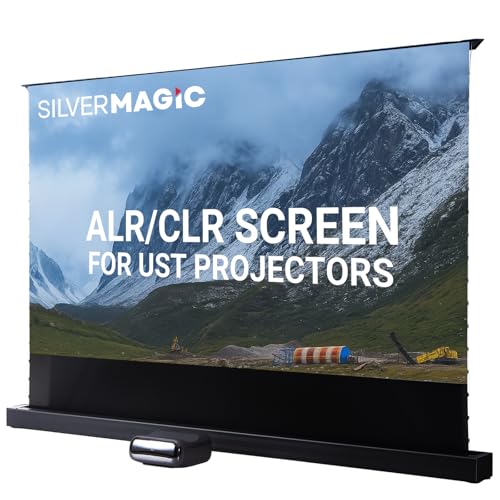
SilverMagic ALR/CLR Motorized Floor Rising Projector Screen for UST Projectors 100”, 95% Ambient Light Rejecting, 4K/8K Ultra HD, Active 3D, for Home Theater Living Room Bedroom Office
★【95% ALR】The precision-engineered optical surface’s micro-structure rejects up to 95% of ambient light, preserving vivid colors, deep contrast,...
As an affiliate, we earn on qualifying purchases.
Conclusion
When choosing between PVC and fabric screens, remember that durability and ease of maintenance matter. While PVC might seem more rugged, fabric screens often offer a softer, more vibrant viewing experience that can truly transform your space. Don’t let concerns about longevity hold you back—fabric screens are designed to last and bring your entertainment to life. Invest in the material that makes your movie nights more immersive and enjoyable, and make your home theater dreams a reality.

ALR Projector Screen for Standard Throw- Wall Mounted - High Contrast 70% ALR High Brightness 2.7X Gain - 120 inch 16:9 Gray Screen-by SilverMagic
★【Ambient Light Rejection】 The screen effectively suppresses ambient light (70%), significantly improving image contrast. This makes it suitable...
As an affiliate, we earn on qualifying purchases.

Elite Screens Lunette Series 110-Inch Curved Projector Screen 16:9, Acoustically Transparent Perforated Weave, Wall Mounted, Compatible with Standard, Short & UST Projectors, CURVE110H-A1080P3
【Dimension Size】: 110-inch diagonal fixed frame projector screen with a 16:9 aspect ratio. Viewing area measures 54.0" H...
As an affiliate, we earn on qualifying purchases.