Before buying an ALR screen, understand how it works and what factors affect its performance, like room lighting, surface texture, and coatings. Not all screens are equal—some perform better in bright environments if they have advanced materials and proper installation. Avoid common mistakes like ignoring compatibility and calibration. To get the best results and long-term satisfaction, it’s essential to consider features, budget, and proper maintenance—continue for more expert insights that can save you time and money.
Ensure the ALR screen’s surface material and coatings suit your room’s ambient light conditions and projector specifications.
Proper installation and calibration are crucial; poor setup can negate the screen’s ambient light rejection benefits.
Consider your room’s lighting environment; ALR screens work best in well-controlled or brighter settings.
Evaluate long-term durability, maintenance needs, and environmental resistance before purchase.
Balance your budget with the screen’s features and quality; cheaper options may compromise performance and lifespan.
What Are ALR Screens and How Do They Work?
Have you ever wondered how ALR (Ambient Light Rejecting) screens improve picture quality in bright rooms? It all comes down to their specialized screen material, designed to reflect ambient light away from the viewer’s line of sight. This material enhances contrast ratio by reducing glare and ambient reflections that wash out images on traditional screens. ALR screens use a layered or textured surface that directs ambient light to the sides, rather than allowing it to flood the screen. This means you get darker blacks and brighter colors, even in well-lit environments. The improved contrast ratio creates a more vivid and immersive viewing experience. Additionally, screen material technology plays a crucial role in how effectively an ALR screen performs under different lighting conditions. Some advanced light-rejecting coatings can further improve performance by enhancing light absorption and reflection properties. Understanding the material composition of ALR screens helps in selecting the most suitable option for your specific environment. Proper installation techniques can also significantly impact the overall effectiveness of ALR screens. For example, surface texture can influence how well the screen rejects ambient light, making it an important factor to consider. However, not all ALR screens perform equally. Understanding how their unique screen material works is the first step in evaluating their potential benefits.
Why Do Some ALR Screens Perform Better Than Others?
While all ALR screens aim to improve picture quality in bright environments, their performance can vary markedly. This depends largely on factors like screen contrast and material reflectivity. Higher contrast enhances image depth, making colors pop even with ambient light. The material’s reflectivity influences how much light bounces back, affecting brightness and clarity. Some screens use specialized coatings or darker materials to absorb ambient light better, reducing washout. Others employ optical coatings to direct light more efficiently toward your eyes. Additionally, ambient light management plays a crucial role in overall screen performance, especially in well-lit rooms. Proper placement and room lighting control can further optimize viewing conditions. Understanding the material properties of the screen can help you select the best option for your environment. Recognizing the importance of reflectivity control can greatly influence your viewing experience. For example, selecting a screen with controlled reflectivity can significantly improve contrast in bright settings. Here’s a quick comparison:
Screen Type
Material Reflectivity
Effect on Performance
High-Reflectivity
Bright, shiny surface
Lower contrast in bright rooms
Low-Reflectivity
Matte, dark surface
Better contrast, less washout
Optical Coatings
Controlled reflectivity
Improved contrast and brightness
Choosing a screen with ideal contrast and reflectivity boosts performance considerably.
How Does Room Lighting Affect ALR Screen Effectiveness?
Room lighting plays a huge role in how well an ALR screen performs. If ambient light levels are high, you’ll need to adjust your screen brightness and optimize your room layout to reduce glare. Without controlling these factors, even the best ALR screens won’t deliver their full potential. Additionally, understanding the lighting conditions can help you choose the right setup for optimal viewing. Proper contrast ratio management is also essential to maintain image quality in varying lighting environments.
Ambient Light Levels
Ambient light levels play a pivotal role in determining how well an ALR (Ambient Light Rejecting) screen performs. Excessive light pollution can wash out images, reducing screen contrast and dulling details you want to see. To maximize your viewing experience, consider these factors:
Bright Room, Dull Picture – High ambient light diminishes contrast, making images look faded.
Shadows of Light – Even small light sources cause glare, reducing clarity and color vibrancy.
The Power of Darkness – Lowering room lighting enhances contrast, allowing the ALR screen to perform at its best.
Screen Brightness Settings
Adjusting your screen brightness is essential for optimizing picture quality, especially when room lighting varies. Proper screen calibration guarantees your display responds well to different lighting conditions, preventing washed-out images or loss of detail. When brightness is too high, contrast may suffer, making dark scenes look gray. Conversely, setting it too low can obscure details in bright scenes. Take time to fine-tune your brightness settings to match your environment, ensuring vibrant colors and deep blacks. This adjustment enhances contrast optimization, making images clearer and more immersive. Remember, a well-calibrated brightness level helps your ALR screen perform at its best, regardless of ambient light changes. Consistent calibration leads to a better viewing experience with sharper images and accurate color reproduction.
Room Layout Impact
Since lighting conditions directly influence how well an ALR screen performs, understanding your room layout is essential. Your room’s lighting design can make or break your viewing experience. Consider these key points:
Minimize ambient light sources that can wash out the screen’s contrast, ensuring a darker environment for ideal performance.
Position lights thoughtfully, using dimmable fixtures or indirect lighting to prevent glare and reflections.
Implement soundproofing strategies that reduce external noise, allowing you to focus on the image without distractions.
A well-planned room layout enhances ALR screen effectiveness by controlling light and sound. This approach creates an immersive viewing environment, making your investment worthwhile. Always tailor your room setup to maximize contrast and minimize interference for the best possible picture quality.
What Features Should You Look for in a High-Performance ALR Screen?
When choosing a high-performance ALR screen, focusing on key features can make a significant difference in your viewing experience. Look for advanced projection technology that enhances contrast and color accuracy, guaranteeing vibrant images even in well-lit rooms. The screen coatings matter greatly; opt for coatings designed to maximize ambient light rejection while maintaining sharp image quality. A high-quality ALR screen should have a durable, scratch-resistant surface that minimizes glare and reflection. Additionally, consider screens with wide viewing angles so everyone gets a clear picture from different positions. Confirm the screen has good uniformity to avoid dark spots or uneven brightness. Finally, check for compatibility with your projector’s resolution and brightness levels to get the best performance out of your investment.
How Much Should You Budget for an ALR Screen?
Budgeting for an ALR screen depends largely on your specific needs and the quality you’re aiming for. Your budget considerations should reflect how much you value picture clarity, durability, and brand reputation. To help you decide, consider these points:
Set a realistic range based on your room size and viewing habits.
Compare brands to see which offer the best features within your price point.
Prioritize quality over price, since a cheaper screen may compromise performance and longevity.
Remember that Free Floating options can provide versatile and adaptable setups for various environments.
Additionally, understanding the material quality of the screen can significantly impact its longevity and performance, so allocate funds accordingly.
Keep in mind that higher-end brands typically cost more but deliver superior performance and durability. Balancing your budget with brand comparisons ensures you get an ALR screen that meets your expectations without overspending.
Which Content Benefits Most From an ALR Screen?
Certain types of content truly shine when displayed on an ALR screen, making them worth the investment. Film projection benefits greatly, especially in bright rooms or spaces with ambient light, where the screen’s ability to reject ambient light enhances picture clarity. If you enjoy outdoor viewing, an ALR screen is a game-changer, as it minimizes sunlight glare and ensures vibrant, sharp images even in daylight. This makes movies and sports events more immersive without needing a dark room. Additionally, presentations with high-contrast visuals or detailed graphics look crisper, giving your content a professional edge. In short, any content that struggles with ambient light or outdoor conditions will see significant improvement on an ALR screen, making it a smart choice for versatile viewing scenarios.
What Common Mistakes Should You Avoid When Buying an ALR Screen?
One common mistake to avoid is overlooking the importance of matching the ALR screen’s specifications to your specific viewing environment. The right projection technology and screen material are vital for peak performance. To guarantee you make the best choice, avoid these pitfalls:
Ignoring ambient light levels, which can diminish contrast if the screen isn’t designed for your environment.
Choosing a screen material incompatible with your projector’s technology, leading to poor image quality.
Overlooking the importance of viewing angles, which can cause color distortion or brightness loss.
Additionally, understanding the home design and architecture details can help you select the optimal placement and size of your screen for an immersive experience.
How Do You Install and Maintain Your ALR Screen Properly?
To guarantee your ALR screen performs well, you need to install it correctly using proper mounting techniques. Regular cleaning helps maintain image quality, and protecting the screen from environmental damage is essential for longevity. Keep these practices in mind to get the most out of your investment. Additionally, understanding outdoor cooling fans can help you create a more comfortable environment for your outdoor space. Properly maintaining your screen can also prevent costly repairs and ensure consistent performance over time. Paying attention to environmental conditions, such as dust and humidity, can further extend the lifespan and clarity of your ALR screen. Using appropriate cleaning tools and methods tailored for delicate screen surfaces will help preserve its optimal performance.
Proper Mounting Techniques
Installing your ALR screen correctly is essential for ideal performance and longevity. Proper mounting techniques ensure a crisp, vibrant picture that lasts. First, choose a smooth wall surface and consider wall treatments that reduce reflections, enhancing image clarity. Second, securely anchor the mounting brackets, making sure they align perfectly to prevent sagging or warping. Third, double-check the tension and positioning of the screen to avoid distortions. Proper wall treatments can make a significant difference in brightness and contrast, so don’t overlook them. When mounting, use the right tools and follow manufacturer instructions carefully. Remember, a well-installed screen not only elevates your viewing experience but also preserves your investment over time. Take your time—precision now means flawless viewing for years to come.
Regular Cleaning Practices
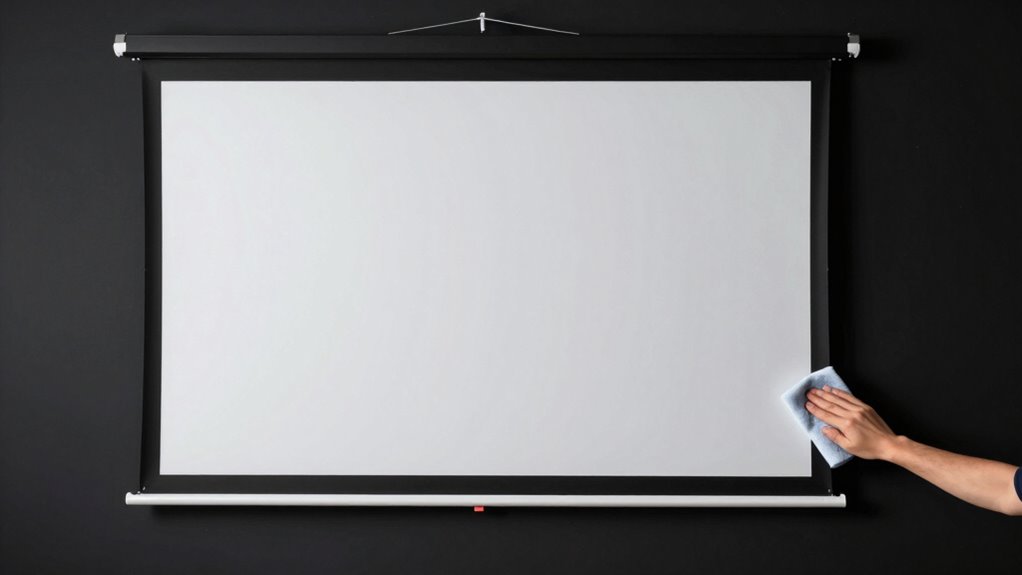
Maintaining your ALR screen’s clarity requires regular cleaning to remove dust, fingerprints, and smudges that can diminish image quality. To keep it pristine, perform gentle screen cleaning using a microfiber cloth designed for delicate surfaces. Avoid harsh chemicals or abrasive materials that might damage the screen’s coating. Dust removal should be done frequently to prevent buildup, which can cause image dimming or spots. Before cleaning, turn off your projector and unplug it for safety. Lightly dampen the cloth with distilled water or a manufacturer-approved cleaner, then gently wipe the surface in a circular motion. Never spray liquids directly onto the screen. Consistent dust removal and careful screen cleaning will preserve your ALR screen’s performance and ensure sharp, vibrant images over time.
Environmental Protection Tips
Ensuring your ALR screen stays in top condition involves more than just regular cleaning; proper installation and ongoing maintenance are crucial for environmental protection. To minimize your ecological footprint, consider these steps:
Use eco-friendly materials during installation to reduce harmful waste and support sustainable practices.
Follow manufacturer guidelines carefully to extend your screen’s lifespan, reducing the need for replacements and waste.
Participate in recycling initiatives for any damaged parts, ensuring materials are properly repurposed instead of ending up in landfills.
Is an ALR Screen Worth It Compared to Alternatives?
Are ALR (Ambient Light Rejecting) screens really worth the extra cost compared to other projection screen options? It depends on your specific setup and room conditions. ALR screens use specialized screen material designed to reject ambient light, which helps improve contrast ratios in bright environments. If your room has lots of windows or unavoidable lighting, an ALR screen can make a noticeable difference, enhancing picture clarity and color vividness. However, if you have a dark room or can control lighting effectively, standard screens with good contrast ratios might suffice and save you money. Consider whether the investment aligns with your viewing habits and room setup. Sometimes, upgrading to a high-quality non-ALR screen provides comparable results without the premium price.
What Questions Should You Ask Sellers Before Buying?
Before making a purchase, ask sellers about the material durability standards to guarantee the screen will last. Confirm that the screen is compatible with your existing equipment to avoid surprises later. Also, inquire about warranty and support terms so you know what assistance you can expect if issues arise.
Material Durability Standards
When evaluating an ALR screen, it’s crucial to ask sellers about the material’s durability standards to guarantee it will withstand regular use. Understanding its material testing and durability standards ensures you’re investing in quality. Ask about:
Resistance to scratches and fingerprints—so your screen stays pristine over time.
Water and moisture resistance—preventing damage in humid environments.
UV stability and fade resistance—keeping the image vibrant in bright spaces.
Knowing these details helps you avoid screens that peel, warp, or degrade prematurely. Don’t settle for a product that might fail after months of use. Prioritize durability standards to ensure your investment remains reliable, providing you with a high-quality viewing experience that stands the test of time.
Compatibility With Equipment
Ensuring your new ALR screen will work seamlessly with your existing equipment is essential for a smooth setup. Ask sellers about the compatibility of the screen material with your projector type, as some materials perform better with specific light sources. Verify if the screen supports the resolution and brightness of your projector to maintain ideal color accuracy. Clarify whether the screen’s gain level matches your viewing environment to prevent washed-out images or poor contrast. Additionally, inquire about the screen’s surface texture, as it impacts how well it preserves color fidelity. Knowing these details beforehand helps you avoid compatibility issues that could compromise your viewing experience. Being proactive in these questions ensures your investment delivers the best performance aligned with your equipment’s capabilities.
Warranty and Support Terms
Understanding the warranty and support terms offered by the seller can save you headaches down the line. When evaluating ALR screens, ask these critical questions:
How does the warranty cover issues related to projection technology and screen materials, especially if colors or contrast degrade over time?
What support options are available if you encounter installation problems or compatibility issues with your equipment?
Are repairs or replacements covered, and how long does the process typically take?
Knowing these details ensures you’re protected if the projection technology or screen materials fail prematurely. A solid warranty and responsive support give you peace of mind, so you can enjoy your ALR screen without unexpected expenses or frustration. Don’t overlook this essential step before making a purchase.
Frequently Asked Questions
Can ALR Screens Be Used Outdoors Effectively?
Yes, you can use ALR screens outdoors effectively if they feature strong outdoor durability and weather resistance. Look for models with sealed enclosures, UV-resistant coatings, and corrosion-proof materials. These features help prevent damage from sun, rain, and humidity. Keep in mind that not all ALR screens are designed for outdoor use, so choose one specifically rated for outdoor durability to guarantee long-lasting performance and clear images even in challenging weather conditions.
How Long Do ALR Screens Typically Last?
You can expect an ALR screen to last around 10 to 15 years with proper care. Its durability lifespan depends on the quality of materials and how well you maintain it, like cleaning regularly and protecting it from extreme weather if used outdoors. Generally, ALR screens require minimal maintenance, but avoiding harsh chemicals and physical damage will ensure they stay in good condition longer, maximizing your investment.
Are There Health Concerns With Certain ALR Screen Materials?
Think of ALR screen materials as a double-edged sword; they can enhance your viewing but may also pose health concerns. Some materials contain chemicals that could be harmful if inhaled or touched regularly, raising material safety and chemical concern issues. Always check the product’s safety data sheet, opt for low-VOC options, and prioritize screens made from non-toxic, eco-friendly materials to protect your health while enjoying your home theater.
Do ALR Screens Work With All Projector Types?
ALR screens work with most projector types, but you should check their projection compatibility first. They enhance screen brightness by reducing ambient light, making your images clearer. However, some models may not perform as well with ultra-short-throw or certain high-lumen projectors. To get the best results, choose an ALR screen designed for your projector’s specifications, ensuring supreme picture quality and brightness during your viewing experience.
Can I Upgrade My Existing Projector to Improve ALR Screen Performance?
Yes, you can upgrade your existing projector to improve ALR screen performance, but it depends on projector compatibility. Check your projector’s brightness, resolution, and throw ratio to verify it pairs well with ALR screens. If your current projector isn’t ideal, consider screen upgrade options like higher gain or specialized ALR materials. Upgrading your projector or choosing a better screen enhances contrast and image clarity for a better viewing experience.
Conclusion
Before you rush into buying an ALR screen, remember to do your homework—just like a wise old owl in the forest. Consider your room’s lighting, features, and budget carefully. Avoid the pitfalls of impulse buying and ask sellers the right questions. An ALR screen can be a game-changer, but only if you choose wisely. Don’t be as blind as a bat—make an informed decision, and your home theater will thank you for it.
What you need to know about screen gain and reflection can dramatically improve your viewing experience; discover how to choose the right screen for your setup.