The subwoofer crawl is a simple way to find the best spot in your room for your subwoofer to get deep, clear bass. You move the sub around slowly, listening for the spot where the bass sounds most natural and even. This helps prevent boomy or weak spots, creating a better overall sound. Keep going, and you’ll discover how proper placement and tuning can dramatically improve your listening experience.

Get business pricing on your home office setup
- Business-only prices and quantity discounts
- Tax-exempt purchasing
- Multiple users, one account, clear invoices
Key Takeaways
- The subwoofer crawl is a simple method to find the best spot for your subwoofer in the room.
- It involves moving the subwoofer around and listening for the deepest, clearest bass sounds.
- The goal is to place the sub where bass sounds natural, balanced, and even throughout the space.
- Proper placement reduces boomy or weak bass and helps the sound blend smoothly with other speakers.
- This technique improves overall sound quality, making music and movies feel more immersive and natural.
What Is the Subwoofer Crawl and Why Is It Important?

Have you ever wondered how to optimize your subwoofer’s sound for the best bass response? That’s where the subwoofer crawl comes in. It’s a simple method to find the ideal subwoofer placement by moving it around your room while listening for the deepest, clearest bass. This process helps you identify the spot that delivers the best sound calibration, ensuring your bass isn’t boomy or weak. By performing a subwoofer crawl, you can fine-tune your setup for prime performance. Proper placement directly influences how well your subwoofer integrates with your speakers, providing a balanced and immersive sound experience. In short, this technique is key to achieving rich, accurate bass that fills your space perfectly. Additionally, understanding the contrast ratio of your subwoofer can further enhance its performance and integration within your home theater setup. Knowing the room acoustics can also impact how effectively your subwoofer performs. A thorough understanding of speaker placement principles can help you maximize the benefits of the crawl technique, especially when considering the room’s size and shape.
Preparing Your Room and Equipment for the Crawl
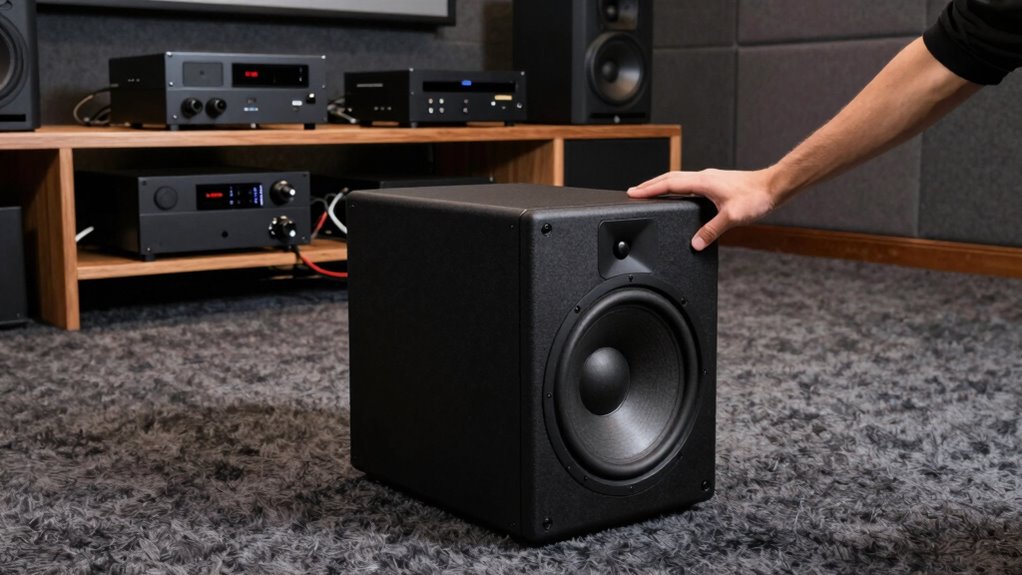
Before you start moving your subwoofer around, it’s important to prepare your room and equipment for the crawl. Good room acoustics play a key role, so consider adding carpets, curtains, or acoustic panels to reduce sound reflections and improve bass response. Make sure your subwoofer is properly isolated from the floor and other surfaces to prevent vibrations that can skew your results. Speaker isolation pads or platforms help minimize unwanted resonance, giving you a clearer picture of how the subwoofer interacts with your room. Clear the area around your setup to avoid obstructions. These steps ensure accurate measurements during the crawl and help you find the best position for balanced, tight bass. Proper preparation makes the entire process more effective and less frustrating. Additionally, understanding room acoustics can further enhance your results by addressing how sound behaves in your specific space. Being aware of sound reflections can also help you make more informed decisions about acoustic treatment adjustments. Knowing how room dimensions influence sound can guide you in optimizing your setup for the best bass response. Considering room layout can also aid in achieving optimal sound distribution and minimizing dead spots. To optimize your setup, it’s beneficial to learn about sound absorption techniques that can further refine your room’s acoustics.
How to Perform the Subwoofer Crawl in Simple Steps
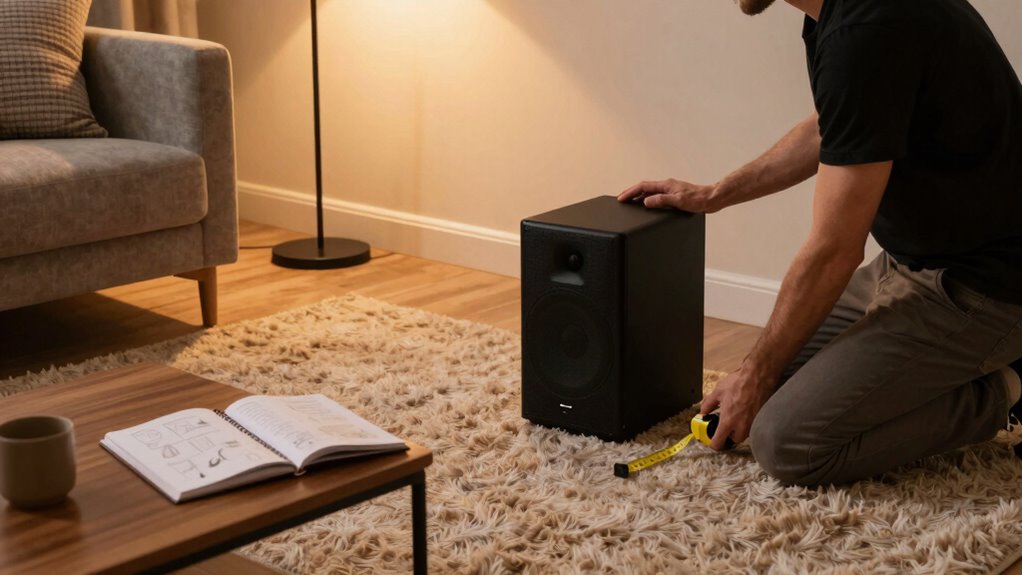
Performing the subwoofer crawl is a straightforward process that helps you find the most effective placement for your subwoofer. First, place your subwoofer near your usual listening position. Play a bass-heavy track at a moderate volume. Then, crawl around the room on your hands and knees, listening carefully. Pay attention to where the bass sounds most balanced and full. This spot typically offers ideal subwoofer placement, considering room acoustics. Once you find the area where bass sounds best, mark that position. Keep in mind that room acoustics can influence bass response, so trust your ears over measurements alone. Moving your subwoofer even slightly can improve sound quality, making this simple crawl essential for achieving deep, even bass throughout your space. Additionally, understanding room acoustics can further enhance your subwoofer setup. Recognizing how room layout affects sound can help you optimize placement beyond just the crawl, especially when considering subwoofer positioning techniques to maximize bass performance. In fact, experimenting with different subwoofer placement strategies can help you tailor the sound to your specific room for the best overall experience. Being aware of smart home technology can also assist in controlling and adjusting your audio setup for optimal bass response.
What Audio Cues to Listen For During the Crawl
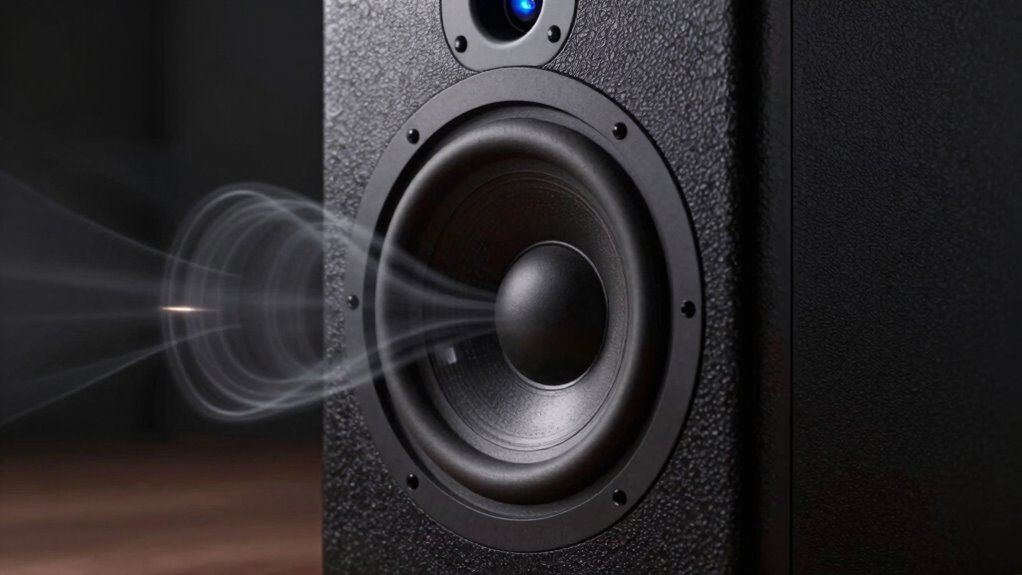
As you crawl around your room, your ears will pick up specific audio cues that indicate the best subwoofer placement. Listen for subtle audio cues, like a smooth, even bass response without boominess or rattling. Pay attention to bass frequency changes as you move; ideal spots often produce a consistent, deep sound without exaggerated peaks. If the bass sounds muffled or uneven, it signals you’re not in the most suitable location. Notice when the bass feels more precise and well-defined—this is a sign you’re getting closer to the best position. Your goal is to find a spot where the bass sounds balanced, tight, and natural. Trust these subtle cues, and avoid places where bass feels overly boomy or hollow. Additionally, understanding measurement tools can help you fine-tune your setup for optimal sound quality. Incorporating room acoustics considerations can further enhance the clarity and depth of your bass response. Using these cues alongside speaker positioning techniques can help you achieve the best possible sound experience. Recognizing audio cues during the crawl is essential for achieving a seamless integration of your subwoofer into the room.
Fine-Tuning Your Subwoofer Placement After the Crawl
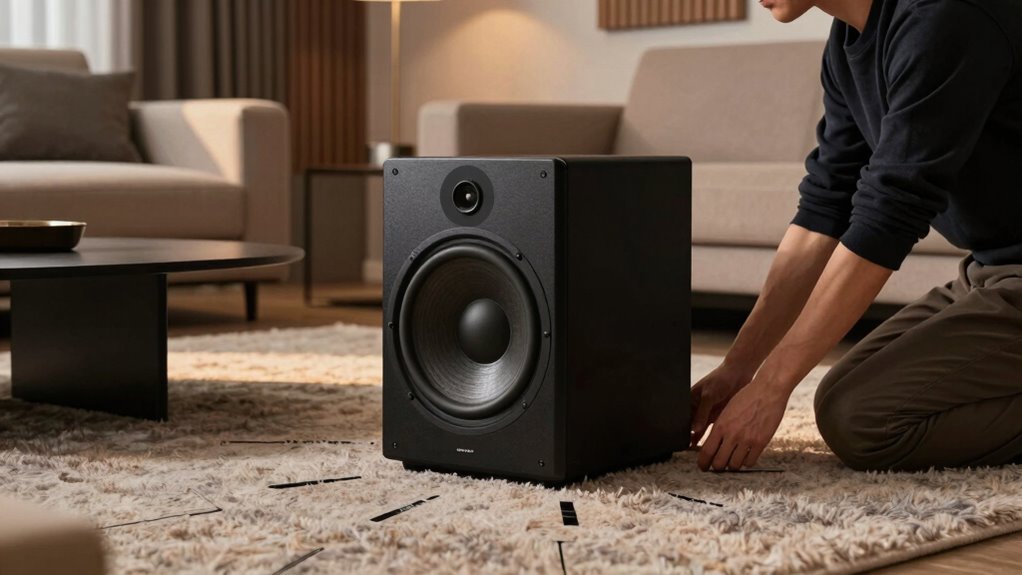
Once you’ve identified a promising spot through the crawl method, fine-tuning involves making small adjustments to optimize your subwoofer’s sound. You’ll want to take into account room acoustics and how they affect bass response, as well as speaker calibration to ensure balanced sound. Move the sub slightly and listen for improvements or distortions. Use your receiver’s calibration tools for precise adjustments, matching levels with other speakers. Keep in mind that even small shifts can dramatically change the bass quality. To deepen your understanding, consider:
- How room acoustics influence bass clarity and resonance
- The importance of proper speaker calibration for balanced sound
- The impact of subtle placement changes on overall audio quality
- Sound waves and how they interact with room surfaces to shape bass response, emphasizing the significance of room acoustics in achieving optimal sound quality. Additionally, understanding how room reflections can cause bass interference helps in making more informed placement decisions. Recognizing how standing waves develop in a room can further assist in optimizing subwoofer placement for even bass distribution.
Common Mistakes to Avoid When Doing the Crawl
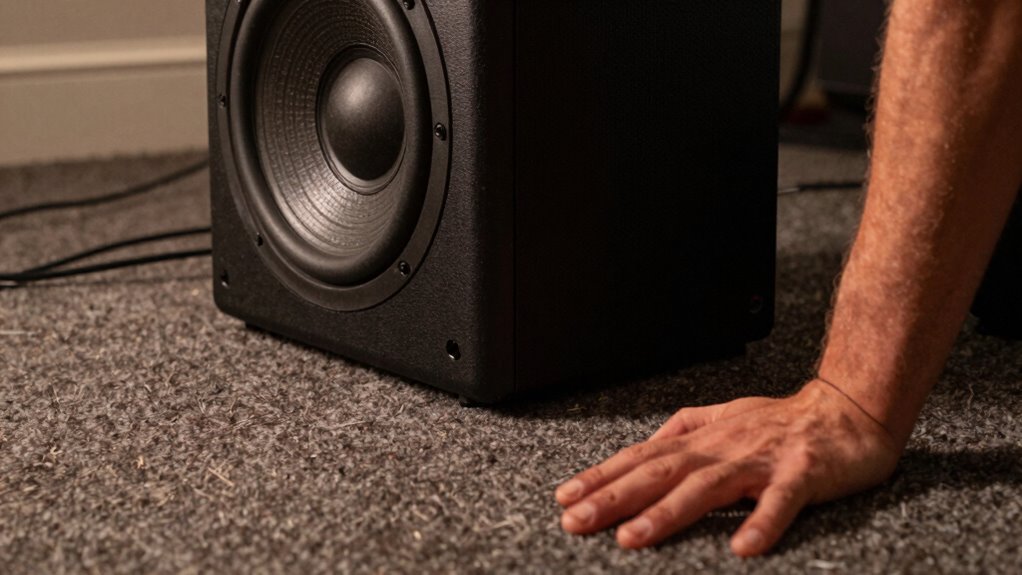
To get the most accurate results from the crawl method, you need to be aware of common mistakes that can lead you astray. One major error is incorrect placement; placing the subwoofer in the wrong spot can distort the crawl’s effectiveness and produce misleading sound cues. Also, avoid skipping calibration steps. Proper calibration ensures your system accurately reflects the subwoofer’s true position and sound quality, making the crawl more reliable. Rushing through the process or not paying attention to the details can result in poor placement and suboptimal performance. Remember, the goal is to identify the best spot for your subwoofer, so take your time, use proper calibration, and avoid these common pitfalls to get the most accurate and helpful results.
How the Subwoofer Crawl Enhances Your Sound Experience

The subwoofer crawl helps you achieve better bass integration, making low frequencies feel seamless with your main speakers. As you position your subwoofer correctly, your sound becomes more balanced and natural. This adjustment guarantees every part of your music or movie sounds clear and immersive.
Better Bass Integration
When you perform a subwoofer crawl, you directly influence how well your bass blends with the rest of your sound system. Proper subwoofer positioning helps you find the sweet spot where bass feels seamless and natural. Room acoustics play an essential role, as walls and furniture can reflect or absorb sound, affecting bass clarity. By experimenting with placement, you can minimize boominess and dead spots, achieving smoother integration. This process guarantees that your subwoofer complements your speakers, rather than overpowering or sounding disconnected. The key is understanding how sound interacts within your space and adjusting accordingly. Ultimately, better bass integration results in a more immersive listening experience, making every note feel balanced and true to life.
- Optimizes sound clarity and depth
- Reduces unwanted resonances
- Creates a cohesive, balanced soundstage
More Balanced Sound
Performing a subwoofer crawl helps you achieve a more balanced sound across your entire listening space. When you properly position your subwoofer, it improves bass calibration, ensuring consistent low-frequency response throughout the room. This process minimizes dead spots and boomy areas caused by poor room acoustics. As a result, your music and movies sound clearer, with bass that’s evenly distributed and integrated seamlessly with your main speakers. By addressing room acoustics during the crawl, you eliminate peaks and dips in bass response, creating a richer, more natural soundstage. Overall, the subwoofer crawl enhances your listening experience by delivering a well-balanced, immersive sound that fills the room evenly and accurately.
Frequently Asked Questions
Can the Subwoofer Crawl Be Performed With Any Type of Subwoofer?
Yes, you can perform the subwoofer crawl with any type of subwoofer. This method helps you find the best subwoofer placement for peak sound quality. Simply move the subwoofer around your room, listening for the spot where bass sounds most balanced and clear. It works regardless of subwoofer size or model, ensuring you get the best sound quality by finding the ideal location for your setup.
How Long Does the Subwoofer Crawl Typically Take?
On average, the subwoofer crawl takes about 15 to 30 minutes, depending on your space and experience. Notably, proper subwoofer placement can boost sound quality by up to 30%, making this quick process worthwhile. During the crawl, you’ll move the sub around your room to find the spot with the deepest, richest bass. This simple step ensures your sound quality is optimized, giving you the best listening experience.
Is Special Equipment Needed to Perform the Crawl Accurately?
You don’t need special equipment to perform the subwoofer crawl accurately. Just use basic measurement tools like a tape measure or a sound level meter to identify the best spot. Follow calibration procedures such as adjusting your subwoofer’s volume and phase to guarantee the best sound. Focus on listening carefully during the crawl, and you’ll find the sweet spot without any complex devices.
Should I Perform the Crawl With the Audio System Powered on or Off?
You should perform the crawl with your audio system powered on, as most experts recommend. Did you know that proper speaker placement can improve sound quality by up to 20%? Keep your system on to accurately assess bass response during audio calibration. This allows you to hear true subwoofer performance, ensuring your subwoofer is ideally positioned for the best sound experience during the crawl.
How Often Should I Repeat the Subwoofer Crawl for Optimal Results?
You should repeat the subwoofer crawl whenever you notice changes in room acoustics or after equipment calibration. Typically, doing it once every few months helps maintain ideal sound. If you move furniture, add new equipment, or experience sound inconsistencies, repeat the crawl to fine-tune your subwoofer. Regularly performing the crawl ensures your system stays balanced, providing consistent bass performance and accurate audio reproduction in your space.
Conclusion
Think of the subwoofer crawl as your treasure map to perfect sound. By carefully exploring your room and fine-tuning your subwoofer’s placement, you’re revealing a hidden world of rich, deep bass. When you follow these simple steps, you’ll turn your space into a concert hall. Remember, patience is your compass—so stay curious and attentive. The better you map your room, the more your sound will shine like a well-tuned orchestra.
Halloween Picks
halloween
As an affiliate, we earn on qualifying purchases.