To achieve deeper, more controlled bass, start by positioning your speakers away from walls and corners to reduce room mode effects. Incorporate bass traps and acoustic panels in key reflection points to absorb low-frequency energy and smooth out resonances. Experiment with speaker placement and your listening position, using tools or measurements to fine-tune the setup. Proper room treatment and alignment can notably tighten your bass, and exploring these techniques further can help you optimize your sound even more.

Get business pricing on your home office setup
- Business-only prices and quantity discounts
- Tax-exempt purchasing
- Multiple users, one account, clear invoices
Key Takeaways
- Proper speaker placement away from walls and corners reduces room mode effects, enhancing bass depth.
- Incorporate bass traps and acoustic panels in corners and along walls to absorb low-frequency resonances.
- Use measurement tools and room correction software to identify and target problematic low frequencies.
- Fine-tune listening and speaker positions to minimize resonances and improve low-frequency clarity.
- Combining strategic placement with acoustic treatments creates tighter, deeper, and more controlled bass response.
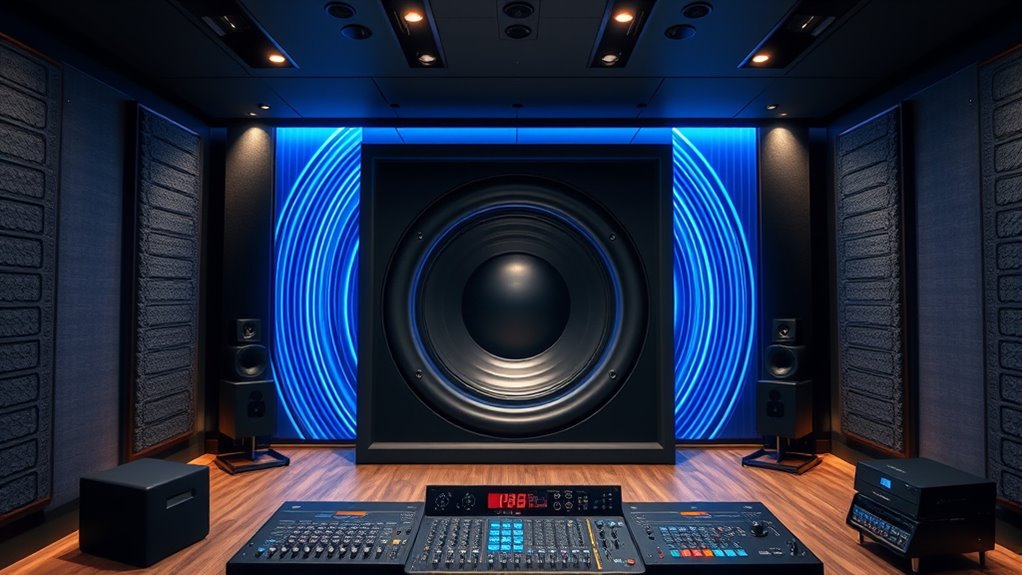
Low-frequency control involves managing and manipulating signals at the lower end of the audio or electromagnetic spectrum. When aiming for deeper, more punchy bass, understanding how room modes and speaker placement influence sound is vital. Room modes are resonances caused by sound waves bouncing between parallel surfaces like walls, floors, and ceilings. These modes can cause peaks and nulls in your bass response, making certain frequencies overly prominent or completely absent. If you notice your bass sounds uneven or boomy in some spots but weak elsewhere, room modes are likely the cause. To combat this, you need to optimize your speaker placement and consider acoustic treatments. Moving your speakers slightly away from walls or corners can help reduce the impact of room modes by shifting the resonance frequencies. Placing speakers at specific distances from walls, often called “quarter-wave” positioning, can minimize problematic resonances and lead to more balanced bass.
You should also pay attention to where you sit in the room. The listening position plays an essential role in how room modes manifest. Ideally, you want to position yourself where the bass response feels even and controlled, avoiding spots where bass sounds exaggerated or hollow. One effective approach is to use a mirror or a piece of paper to find ideal speaker locations; if you can see the speakers in your mirror from your listening spot, they’re likely too close to the wall, and moving them slightly inward can improve the sound. Similarly, placing bass traps and acoustic panels at reflection points and corners can absorb excess low-frequency energy, smoothing out the response and reducing boominess caused by room modes. Additionally, employing vacuums designed for home use can help maintain a clean environment that doesn’t interfere with sound quality or acoustic treatments.
Another key to low-frequency control is experimenting with speaker placement. Start by placing your speakers away from walls, then fine-tune their position until you notice a more even bass response. Using measurement tools like a handheld microphone and room correction software can help identify specific problem frequencies tied to room modes. Once you know where these resonances occur, you can make targeted adjustments, such as moving speakers or adding bass traps, to tame those peaks. Remember, achieving deep, controlled bass isn’t just about having powerful speakers; it’s equally about how you place them and treat your room. With some careful positioning and acoustic treatments, you can considerably improve your low-frequency response, making your music or home theater sound tighter, fuller, and more accurate.
Frequently Asked Questions
How Does Room Size Affect Low-Frequency Control?
Room size markedly affects low-frequency control because larger rooms tend to have more room resonance, which can cause bass to sound boomy or uneven. Smaller rooms often have more sound absorption, reducing resonance but possibly dulling bass clarity. To manage these effects, you should add bass traps and acoustic treatments, which help control resonance and improve low-frequency response, ensuring your bass sounds tight and balanced regardless of room size.
Can Low-Frequency Control Improve Sound Quality in Small Spaces?
Yes, low-frequency control can improve sound quality in small spaces. By managing room acoustics and optimizing speaker placement, you can reduce boomy bass and achieve a clearer, more balanced sound. Proper low-frequency control minimizes resonances and standing waves, enhancing clarity and depth. You’ll notice better bass response, improved audio accuracy, and a more immersive listening experience, making your small space sound fuller and more professional.
What Materials Are Best for Bass Trapping?
You should choose bass trapping materials like mineral wool or fiberglass because they effectively absorb low frequencies. Resonance tuning is essential, so select membrane materials like stretched fabric or specialized membranes that help target specific resonances. These materials help control resonance, reducing boomy sounds and improving overall sound clarity. Guarantee your traps are thick enough, typically 4-6 inches, to maximize low-frequency absorption for a more balanced bass response.
How Do Digital Processors Enhance Low-Frequency Management?
Imagine your sound system as a bustling city street, where chaos reigns at night. Digital signal processing steps in like a skilled traffic cop, directing low frequencies precisely. It fine-tunes your frequency response, reducing muddiness and boominess. By dynamically adjusting and filtering signals, digital processors give you tighter, clearer bass, making the deep lows feel more controlled, powerful, and immersive — transforming your listening experience into a perfectly orchestrated symphony.
Are There Portable Solutions for Low-Frequency Control?
Yes, there are portable solutions for bass management that let you control low-frequency output on the go. You can find compact portable processors, such as handheld digital equalizers or small subwoofer controllers, designed specifically for this purpose. These devices enable you to fine-tune bass levels and manage low-frequency response easily, making them perfect for portable setups, live events, or adjusting sound in different environments without sacrificing audio quality.
Conclusion
Now that you understand how low-frequency control works, you hold the key to releasing deeper, richer bass that resonates like a heartbeat in your music. Think of your sound system as a garden; with proper control, you’re pruning the wild branches to let the true depth bloom. Embrace these techniques, and you’ll transform your space into a sonic sanctuary where every thump and rumble feels alive, pulsing through your bones like a powerful tide.
Fall Picks
fall essentials
As an affiliate, we earn on qualifying purchases.