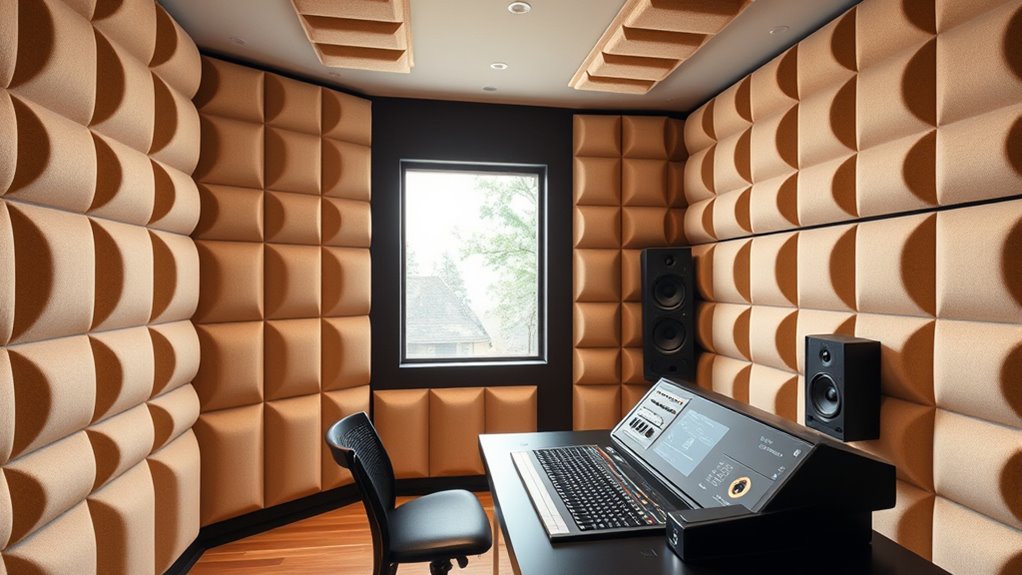

To optimize acoustic treatment in dedicated rooms, first focus on soundproofing by sealing gaps and adding mass to walls. Shape the room with non-parallel walls or irregular surfaces to prevent standing waves and echoes. Use strategically placed acoustic panels, bass traps, and diffusers at reflection points to control reflections and reverberation. Combining these techniques creates a balanced sound environment. Keep exploring to discover how these strategies can transform your space into an ideal audio haven.

Get business pricing on your home office setup
- Business-only prices and quantity discounts
- Tax-exempt purchasing
- Multiple users, one account, clear invoices
Key Takeaways
- Strategically place acoustic panels at reflection points to reduce unwanted echoes and improve sound clarity.
- Incorporate bass traps in corners to control low-frequency resonances and enhance overall sound balance.
- Use diffusers to break up standing waves and distribute sound evenly throughout the room.
- Optimize room shape by avoiding parallel walls and adding irregular surfaces to minimize flutter echoes.
- Combine soundproofing with absorption treatments for a quiet environment and improved acoustic performance.
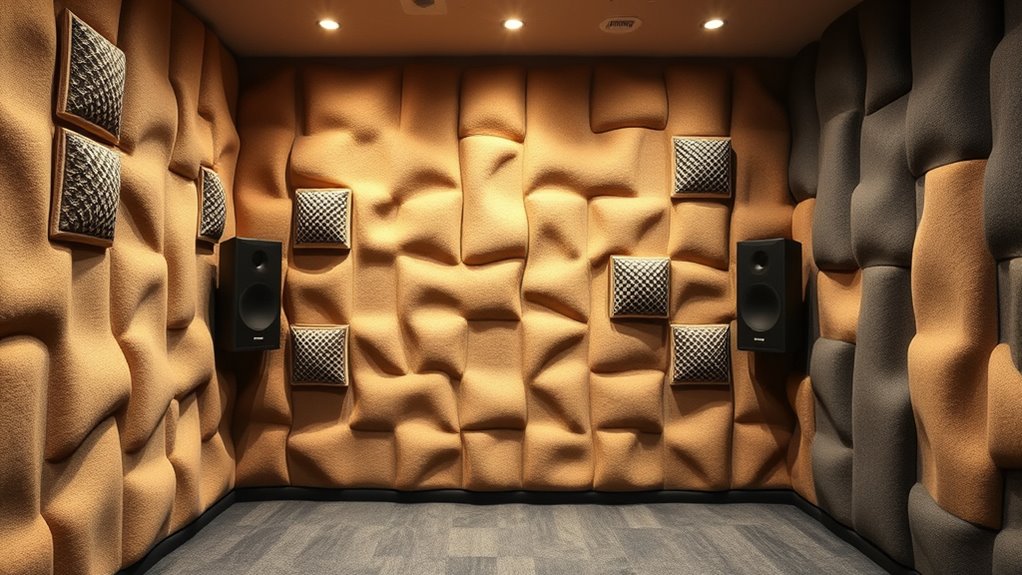
Achieving ideal sound quality in any space begins with effective acoustic treatment strategies. Whether you’re setting up a music studio, home theater, or podcast room, controlling sound reflections and external noise is essential. One of the first steps is to implement soundproofing techniques that prevent unwanted sound from entering or leaving the room. This involves sealing gaps around doors, windows, and vents, and adding mass to walls using materials like acoustic drywall or specialized soundproofing panels. These methods reduce noise transmission, ensuring your space remains quiet and free from disturbances. Additionally, installing soundproof doors and using isolation mounts for equipment can further enhance your room’s sound insulation.
Beyond soundproofing, room shape optimization plays a critical role in achieving clear, balanced audio. The shape and dimensions of your space influence how sound waves behave inside it. Rectangular rooms, for instance, often cause standing waves and flutter echoes, which can muddy the sound. To counter this, you might consider adjusting the room’s shape by adding built-in or movable acoustic diffusers and absorbers. These elements help break up standing waves and distribute sound more evenly. When designing or modifying your space, aim for non-parallel walls or asymmetrical layouts to minimize acoustic anomalies. Even small tweaks, like angling walls or incorporating irregular surfaces, can markedly improve sound clarity. Incorporating sound absorption techniques can further enhance the room’s acoustics by reducing unwanted reflections and reverberation. Strategically placing acoustic panels and bass traps is another essential aspect. Position panels at reflection points—such as the wall behind your speakers or your listening position—to absorb sound before it bounces around the room. Bass traps placed in corners help control low-frequency resonances that can muddy audio. While these treatments are important, they work best when combined with soundproofing techniques and thoughtful room shape optimization.
Frequently Asked Questions
How Do I Measure Room Acoustics Accurately?
To measure room acoustics accurately, start with room measurement techniques like using a calibrated microphone and a sound level meter. Apply acoustic analysis tools such as REW (Room EQ Wizard) or EASE to analyze your measurements. These tools help you identify issues like echoes, standing waves, and reverberation times. Make sure to take measurements at multiple points and frequencies, then interpret the data to plan effective acoustic treatments.
What Are Cost-Effective Acoustic Treatment Options?
You can explore DIY solutions and use budget-friendly materials like foam panels, thick curtains, or even bookshelves filled with books to improve acoustics. Hanging rugs or carpets also absorb sound reflections effectively. These options are affordable and easy to install, making them perfect for reducing echo and enhancing sound quality without breaking the bank. With a little effort, you can markedly improve your room’s acoustics on a budget.
How Can I Prevent Sound Leakage Between Rooms?
Like a fortress guarding its secrets, you can prevent sound leakage between rooms by employing effective soundproofing techniques. Start with high-quality door sealing, ensuring gaps are sealed with weatherstripping or acoustic seals. Add mass-loaded vinyl or acoustic panels to walls, and consider door sweeps to block airborne and impact noise. These steps create a barrier, keeping sounds contained and preserving your room’s acoustic integrity.
What Are Common Mistakes in Acoustic Treatment?
You might make the mistake of overusing diffusion techniques, which can cause uneven sound distribution, or neglecting bass trapping, leading to boomy or muddy lows. Avoid placing treatments too close to walls or corners, as this diminishes effectiveness. Instead, balance diffusion with proper bass traps and strategic placement. Remember, careful planning and avoiding common pitfalls ensure your room sounds clear, balanced, and professional.
How Often Should Acoustic Treatments Be Replaced or Maintained?
You should check your acoustic treatments regularly—at least every 6 to 12 months—to make sure they’re still effective. On average, treatments have a lifespan of 5 to 10 years, but wear and environmental factors can shorten that. Stick to a maintenance schedule by cleaning and inspecting your panels, and replace or repair any damaged ones promptly. Don’t wait until it’s too late; proactive care keeps your sound quality of the highest caliber.
Conclusion
Now that you understand these acoustic treatment strategies, you’ve revealed the secret to transforming your room into an acoustic paradise—so perfect, even the whispers of the universe will sound clearer! With the right treatments, you’ll create a sonic sanctuary where every note, beat, and word resonates flawlessly. Don’t settle for mediocre sound—you’re now equipped to conquer any space and make your room the legendary audio haven it was destined to be!
Halloween Picks
halloween
As an affiliate, we earn on qualifying purchases.