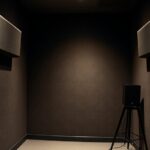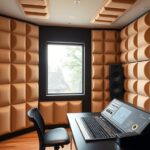
To maximize performance in small rooms, you should focus on strategic acoustic treatments that reduce reflections and control bass buildup. Use bass traps in corners to address low frequencies and wall panels at reflection points to absorb sound energy. Avoid placing gear or listening positions directly in reflective areas. Combining diffusers with absorption creates a balanced, clearer space. Keep exploring ways to optimize your setup for the best sound quality and clarity.
Key Takeaways
- Strategically position acoustic panels at reflection points to reduce wall and ceiling bounce, enhancing clarity.
- Use bass traps in corners to control low-frequency buildup and achieve a balanced sound.
- Avoid placing listening or recording spots directly against reflective surfaces to minimize echo.
- Combine diffusers and absorbers for effective sound diffusion and reflection management.
- Incorporate treatments gradually, evaluating room response to maximize acoustic performance efficiently.

Have you ever noticed how small rooms can sound cluttered or echoey? It’s a common problem, especially when you’re trying to enjoy music, record your vocals, or simply create a comfortable space. The issue often comes down to how sound behaves within confined spaces—specifically, how room reflection impacts your listening experience. When sound waves bounce off walls, ceilings, and furniture, they create overlapping echoes that muddle clarity. To combat this, effective acoustic treatments are essential. One of the most impactful solutions is managing room reflection through strategic placement of acoustic panels. These panels absorb sound energy, reducing the bounce-back that causes echo and muddiness. Positioning them at critical reflection points—like the wall directly opposite your speakers or around reflective surfaces—can make a notable difference in clarity.
In small rooms, bass frequencies tend to build up, creating a boomy or muddy sound. This is where bass trapping comes into play. Bass traps are specialized acoustic panels designed to absorb low-frequency sound waves that traditional panels often miss. Installing bass traps in corners—where low frequencies tend to concentrate—can markedly improve the overall sound. Not only do they tame the boominess, but they also create a more balanced and accurate listening environment. The key is to use enough bass trapping to address your room’s specific issues; sometimes, a single bass trap isn’t enough, especially if the room is particularly small or has irregular dimensions.
Beyond just adding panels, you should think about the overall layout. Avoid placing your listening or recording spot directly in a corner or against a wall that’s heavily reflective. Instead, aim for a setup that minimizes direct sound reflection and maximizes sound absorption. Rugs, curtains, and furniture can also help diffuse sound, but they’re often less effective than dedicated acoustic treatments. Still, combining these elements with room reflection management and bass trapping creates a more controlled environment. With these adjustments, you’ll notice more clarity, tighter bass response, and a more natural sound. It’s about controlling how sound interacts within your space, so you can enjoy your music, recordings, or conversations without distraction or distortion. Small rooms may be challenging, but with the right acoustic treatments—targeting room reflection and bass trapping—you can maximize their performance and make your space sound much bigger and better than it actually is. Additionally, understanding how sound waves reflect within small environments can help you make more informed decisions about treatment placement for optimal results.

Klipsch R-12SW Powerful Deep Bass Front Firing 12" Copper-Spun Driver 400W Digital Power Subwoofer 14" X 18.5" X 16"
Powerful 12" copper-spun front-firing woofer
As an affiliate, we earn on qualifying purchases.
Frequently Asked Questions
How Do I Choose the Right Acoustic Treatment for My Room Size?
To choose the right acoustic treatment, start by measuring your room dimensions to identify problem areas. Use this info to determine treatment placement, focusing on walls, corners, and ceilings where sound reflections bounce. Smaller rooms benefit from bass traps and diffusers, while larger spaces may need absorptive panels. Prioritize strategic placement to optimize sound quality, ensuring your treatments target where reflections and echoes are most problematic.
Can DIY Acoustic Panels Be as Effective as Professional Options?
DIY acoustic panels can be surprisingly effective, acting like a sturdy shield against unwanted echoes and reverberations. While they might not match the precision of professional options, your homemade solutions often come close, especially with quality materials and clever design. Think of DIY effectiveness as a homemade recipe—passable and satisfying—whereas professional options are the gourmet feast. With effort and care, your DIY panels can markedly improve your room’s sound quality.
How Often Should I Replace or Upgrade My Acoustic Treatments?
You should review your acoustic treatments every 1-2 years, depending on your maintenance schedule and aesthetic considerations. Over time, treatments may lose effectiveness due to dust, damage, or changes in room use. If you notice a decline in sound quality or damage, it’s time to upgrade or replace. Regular cleaning and careful selection of treatments that match your aesthetic preferences can extend their lifespan and performance.
Are There Specific Materials Best Suited for Small Room Acoustics?
For small room acoustics, you should choose materials with high material density, like mineral wool or dense foam, to absorb sound effectively. Incorporate sound diffusion panels to scatter reflections and improve clarity. These materials prevent sound from bouncing excessively, creating a balanced environment. By combining dense absorptive materials with diffusers, you enhance sound quality, making your small room sound richer and more controlled without over-muffling your space.
How Do I Balance Sound Absorption and Diffusion in a Small Space?
To balance sound absorption and diffusion, you should optimize your room layout and consider your listener position. Place absorption panels where sound reflections are strongest, usually behind or beside speakers, to control echo. Use diffusers on the rear wall or ceiling to scatter sound evenly, enhancing clarity. Adjust your seating to avoid dead spots or overly reflective areas, creating a balanced acoustic environment that improves overall sound quality.

Klipsch R-120SW Subwoofer, Black
12" high excursion spun-copper Imp woofer
As an affiliate, we earn on qualifying purchases.
Conclusion
Think of your small room as a blank canvas, waiting for the right strokes of acoustic treatments. When you carefully position panels and diffusers, you’re painting a space where sound flows harmoniously, like a gentle river carving a clear path through rocks. These treatments aren’t just tools—they’re the brushstrokes that turn chaos into clarity. With patience and precision, you’ll create a sanctuary where every note resonates perfectly, transforming your small room into a symphony of sound.

Rockville Rock Shaker 15" Powered Subwoofer, 1000W Peak / 500W RMS, Class-D, MDF Enclosure, RCA, Speaker Inputs, Phase & Crossover Control, Black, for Home Theater & Studio
POWERFUL 1000W SUBWOOFER - 1000 watts peak / 500 watts RMS delivers deep, thumping bass ideal for home...
As an affiliate, we earn on qualifying purchases.
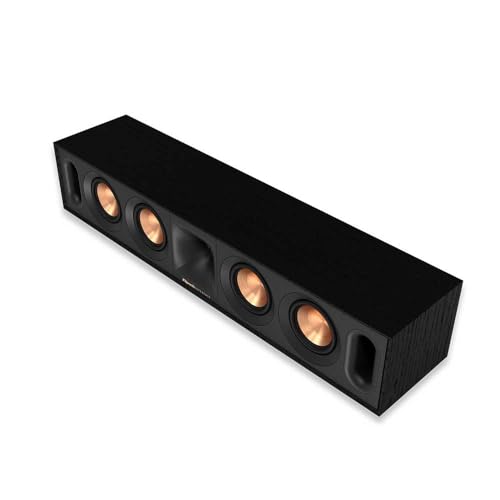
Klipsch Reference Next-Generation R-30C Horn-Loaded Center Channel Speakers for Crystal-Clear Home Theater Dialogue in Black
ALL NEW 90° x 90° TRACTRIX HORN: Experience the cleanest, most natural sound possible. The increased outer horn...
As an affiliate, we earn on qualifying purchases.