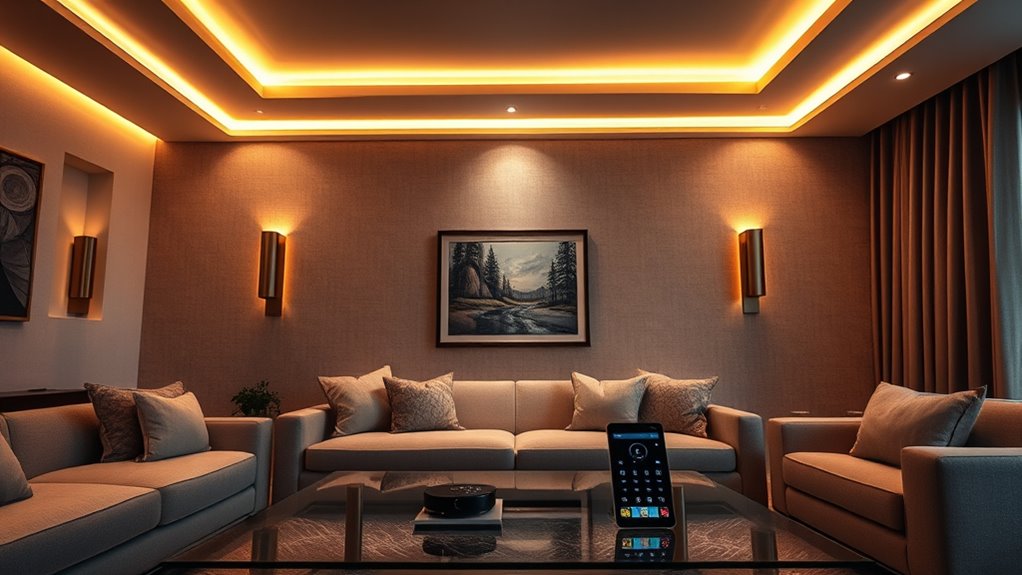

When planning lighting and ambiance, choose LED strips with dimming capabilities to customize brightness and mood easily. Pair them with wall sconces for layered lighting that adds depth and soft highlights. Select color temperatures suitable for each space—cooler tones for energy and warmer tones for comfort. Confirm your fixtures and controls are compatible for smooth operation. Focusing on these elements helps create inviting, functional environments; exploring further will reveal additional tips to perfect your lighting design.
Key Takeaways
- Select appropriate LED strip color temperatures (cooler for activity, warmer for relaxation) to set desired mood.
- Incorporate dimming features in LED strips and sconces for adjustable ambiance and energy efficiency.
- Ensure compatibility between LED strips, dimmers, and control options for seamless operation.
- Layer lighting with sconces and LED strips to create depth and versatile lighting schemes.
- Plan placement and control systems to customize lighting based on room purpose and atmosphere.
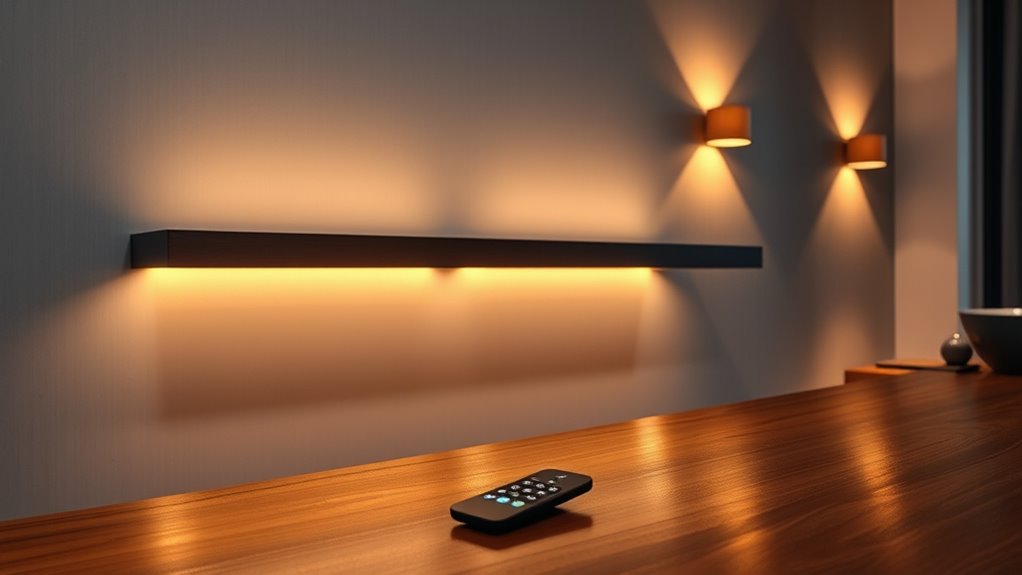
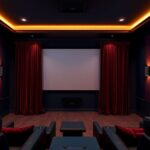
Creating the right lighting and ambience is essential to transforming any space into a welcoming and functional environment. When planning your lighting, understanding how color temperature influences mood and perception can make a significant difference. Cooler temperatures, like daylight white, create a fresh, energetic atmosphere, perfect for workspaces or kitchens. Warmer tones, such as soft white or amber, foster relaxation and intimacy, making them ideal for living rooms or bedrooms. By selecting the appropriate color temperature, you can set the tone for each room and enhance its purpose.
Choosing the right color temperature sets the mood and defines each room’s purpose.
Dimming options further refine your lighting scheme, offering flexibility to suit different activities and times of day. With dimmable lights, you control brightness levels, which helps create cozy evenings or bright mornings. LED strips, in particular, benefit from dimming capabilities because they can be customized to emit just the right amount of light without sacrificing energy efficiency. When you incorporate dimming options, you’re not limited to a single lighting intensity; instead, you can easily adjust to match your mood or task. This adaptability makes your space more versatile and comfortable.
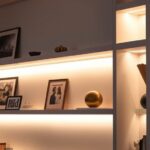
In choosing LED strips, consider their compatibility with dimmers. Not all LED strips are dimmable, so verify this feature before purchasing. Once installed, integrated dimming controls allow you to fine-tune your lighting with a simple switch or remote, giving you instant control over the ambiance. This setup also helps you save energy by reducing unnecessary brightness when full illumination isn’t needed. Plus, adjustable lighting can highlight specific architectural features or decor elements, adding depth and visual interest to your environment.
Incorporating wall sconces provides additional layers of lighting that can be easily integrated with dimming controls. Sconces add a decorative touch while offering soft, ambient light that complements your main fixtures. When you pair sconces with dimmable LED strips, you can create a layered lighting scheme that adapts seamlessly to different occasions. For instance, you might keep brighter lighting during gatherings and switch to softer, dimmed settings for relaxing evenings. This combination allows you to craft a dynamic and inviting atmosphere without complicating your setup.
Ultimately, investing in adjustable lighting options like dimming controls and selecting the right color temperature ensures your space feels just right at any moment. It empowers you to create the perfect balance between functionality and ambiance, making your environment both welcoming and adaptable. With thoughtful planning, your lighting can do more than illuminate; it can transform your entire space into a sanctuary tailored to your needs and mood. Additionally, understanding how lighting and ambience planning can influence the overall aesthetic can help you make more informed decisions for your home.

HOUHUI USB LED Strip Lights Kit, 4 Pre-Cut 1.64ft/6.56ft RGB LED Light Strips, Color Changing TV Backlights with Remote, RGB 5050 Bias Lighting for TV, PC, Monitor, Home Theater, DIY Decoration
RGB Multi-Color LED Strip Lights: Behind TV/PC lighting, Multi-color RGB led strip lights with the 44 keys IR...
As an affiliate, we earn on qualifying purchases.
Frequently Asked Questions
Can LED Strips Be Used Outdoors Safely?
Yes, you can use LED strips outdoors safely if you choose weatherproofed ones rated for outdoor use. Make sure to follow weatherproofing tips, like sealing connections and avoiding direct exposure to water. Select power supply options designed for outdoor environments, such as waterproof cords and enclosures. Properly installed and protected, outdoor LED strips will provide beautiful lighting without risking damage or safety hazards.
How Do I Synchronize Multiple Lighting Zones?
To synchronize multiple lighting zones, you should use a system that supports multi-zone synchronization and wireless control integration. First, choose a compatible smart lighting hub or app that connects all zones. Then, set up your zones within the app and link them to the hub. This allows you to control and synchronize lighting scenes across zones seamlessly, creating a cohesive and dynamic ambiance with ease.
What Are the Best Color Temperatures for Relaxation?
You’ll feel like you’re floating on a cloud when you use warm color temperatures for relaxation. For ultimate calm, set your lighting to around 2700K to 3000K, as it creates a cozy, soothing glow. These color temperatures enhance relaxation benefits by reducing stress and promoting sleep. Stick to these warm tones in living spaces and bedrooms for a peaceful atmosphere that melts away daily tension.
How Do I Install Dimmers for LED Strips?
To install a dimmer switch for your LED strips, first, turn off the power at the breaker. Then, follow the installation guide provided with your dimmer switch, typically connecting the dimmer’s wires to your LED strip’s power supply. Make certain you choose a compatible dimmer switch designed for LED lighting. Once wired, mount the switch, turn the power back on, and test the dimming functionality to guarantee proper operation.
Are Smart Controls Compatible With All Lighting Types?
Smart controls are generally compatible with most lighting types, but it’s worth investigating since some fixtures, like certain LED strips or antique bulbs, may not support lighting automation. In your smart home, check compatibility before installation to guarantee seamless integration. Not all smart controls work with every bulb or fixture, so verify specifications or consider universal dimmers and switches to maximize your lighting automation options.

Lytmi Fantasy 3 TV Backlight Kit HDMI 2.1 with Sync Box Wi-Fi for 65-70 inch 8K 60Hz Color Lights Compatible Alexa and Google Assistant, App Control, Music RGB (Red, Green, Blue) LDD21
An Evolution for Gaming : Comes with the first-ever sync box that supports 8K resolution. Enjoy ultra-immersive viewing...
As an affiliate, we earn on qualifying purchases.
Conclusion
By thoughtfully planning your lighting and ambience, you create a space that gently soothes and welcomes. The subtle glow of LED strips, sconces, and smart controls can transform your home into a sanctuary of comfort and tranquility. When you pay attention to these details, you invite warmth and harmony to settle softly around you, making every moment at home feel just a little more special. Embrace the glow, and let your space whisper serenity.

Inspired LED Bias Light | Home Theater | Accent Light Kit | Ambient Light TV LED Backlight | with USB Switch | Large - 231.5" Flexible LED Strip Light | Fits up to 85" Flat Screen TVs
NORMAL BRIGHT - COOL WHITE | TV kit by Inspired LED Make this kit an addition to your...
As an affiliate, we earn on qualifying purchases.

Led Strip Lights 6.56ft for 40-60in TV USB Backlight Kit with Remote, 16 Color 5050 Bias HDTV, for 40-60
Easy to install-strong double sided adhesive tape Installation, we made the mark on the light strip, just connected...
As an affiliate, we earn on qualifying purchases.