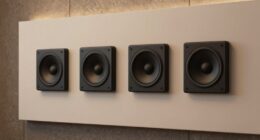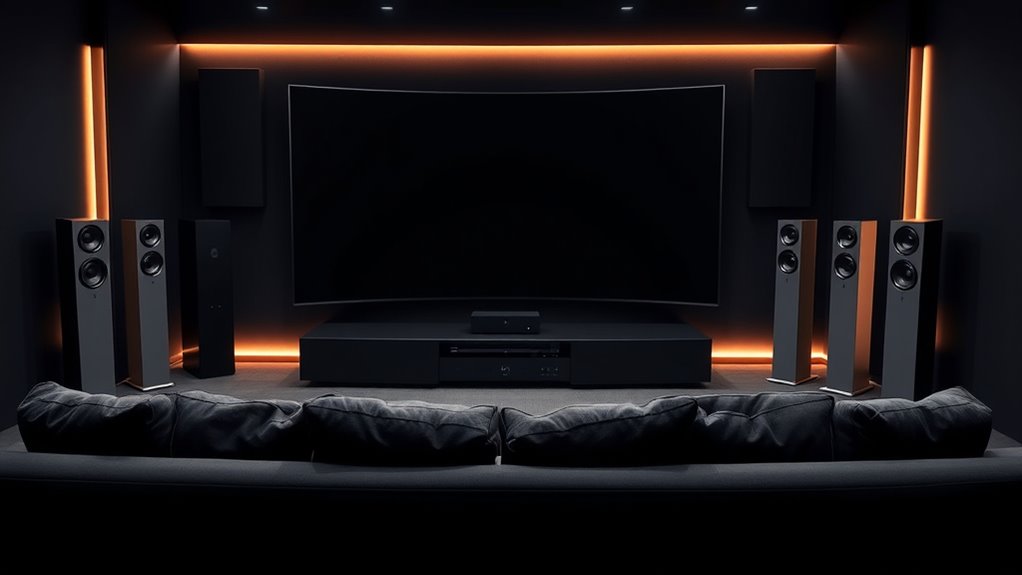
To choose a cinema-quality sound system, focus on high-quality speakers that deliver clear, balanced sound across all channels. Proper calibration is essential to guarantee even sound distribution and correct tonal balance, especially considering your room’s acoustics. Optimize your space with acoustic treatments and smart placement for immersive audio. Combining these elements creates professional-grade sound. Keep exploring to discover how to fine-tune your setup and achieve the ultimate home theater experience.
Key Takeaways
- Prioritize systems with advanced room calibration features for balanced sound tailored to your space.
- Select speakers designed for high fidelity and clear dialogue to enhance movie immersion.
- Consider acoustic treatments and proper placement to optimize sound quality and reduce reflections.
- Choose a system with support for multiple channels and immersive formats like Dolby Atmos.
- Match your budget with reputable brands known for cinema-quality audio performance and reliability.
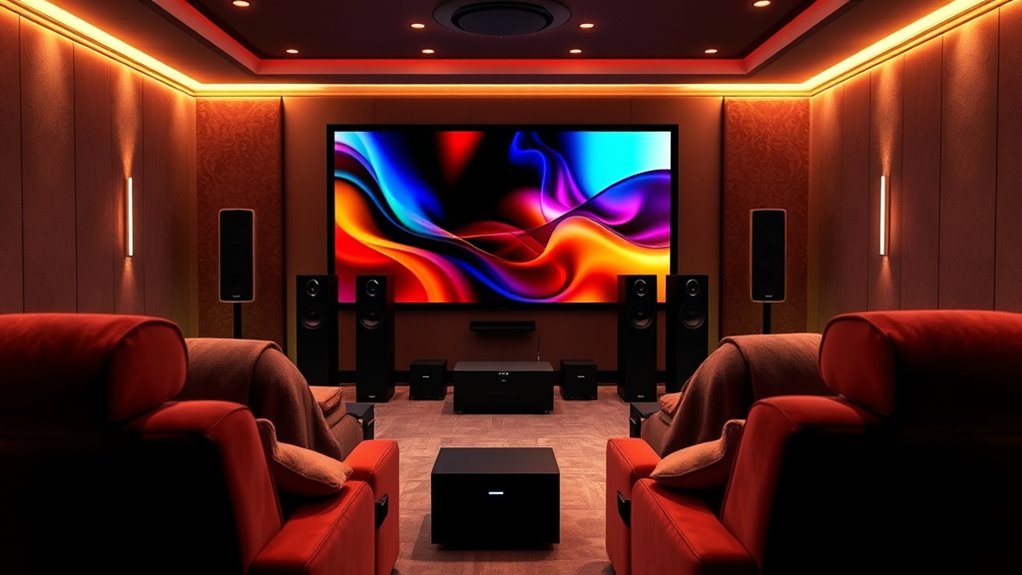
When it comes to creating an immersive home theater experience, choosing the right cinema-quality sound system is vital. The most essential step in achieving that perfect audio environment is proper speaker calibration. This process ensures that each speaker produces balanced sound levels and corrects any inconsistencies caused by room acoustics. With calibrated speakers, you’ll enjoy clear dialogue, rich sound effects, and a seamless audio experience that feels like you’re right in the middle of the action. Speaker calibration involves using specialized tools or automatic room correction systems, which analyze how sound waves interact with your space, then adjust the output accordingly. Ignoring calibration can lead to uneven sound distribution, muddled dialogue, and a loss of audio detail, no matter how high-end your equipment is. Regular practice and adjustments can help maintain optimal sound quality over time.
Room acoustics play a pivotal role in how sound travels and is perceived within your home theater. Every room has unique features—walls, furniture, windows—that influence sound reflection, absorption, and diffusion. If you overlook room acoustics, even the best speakers can sound dull, echoey, or unbalanced. To optimize your setup, consider treating your room with acoustic panels, bass traps, or diffusers, which help control sound reflections and reduce unwanted reverberations. Positioning your speakers correctly also makes a significant difference; placing them at ear level and ensuring they’re spaced appropriately creates a more natural and immersive soundstage. Additionally, the shape and size of your room can either enhance or hinder your audio experience, so understanding how sound behaves in your space helps you make smarter choices about speaker placement and room treatment. Furthermore, understanding Deaf Vibes concepts such as auditory processing can assist in designing a sound system that caters to diverse listening needs.
When you combine thoughtful speaker calibration with an understanding of your room’s acoustics, you set the foundation for a truly cinematic sound environment. Calibration ensures your speakers deliver accurate, balanced audio, while room treatments minimize distortions and echo. This synergy guarantees that every sound detail, from subtle whispers to thunderous explosions, is captured and reproduced exactly as intended. Investing time in fine-tuning these elements might seem technical, but it pays off by transforming your home into a personal theater with professional-grade audio quality. Remember, a well-calibrated system isn’t just about having powerful speakers; it’s about making sure they work harmoniously within your space to produce crystal-clear, immersive sound that elevates your viewing experience to a whole new level.

Klipsch R-12SW Powerful Deep Bass Front Firing 12" Copper-Spun Driver 400W Digital Power Subwoofer 14" X 18.5" X 16"
Powerful 12" copper-spun front-firing woofer
As an affiliate, we earn on qualifying purchases.
Frequently Asked Questions
How Do I Calibrate My Home Theater Sound System Effectively?
To calibrate your home theater sound system effectively, start by optimizing speaker placement for balanced sound distribution. Use calibration tools like a sound meter or auto-calibration feature on your receiver to fine-tune the levels. Run the calibration process, ensuring each speaker is set to the correct distance and volume. Listen carefully afterward, making minor manual adjustments if needed, to achieve clear, immersive audio that rivals cinema quality.
What Are the Latest Advancements in Cinema Audio Technology?
Imagine experiencing movies with immersive audio that transports you right into the scene. The latest advancements include enhanced surround sound formats like Dolby Atmos and DTS:X, which add height channels for a three-dimensional soundscape. These technologies create more realistic, dynamic audio, making every whisper and explosion feel more lifelike. By embracing these innovations, you can enjoy a cinema-quality experience right in your home, with sound that fully immerses you in every frame.
Can I Upgrade My Existing System Without Replacing All Components?
Yes, you can upgrade your existing system without replacing all components. Focus on optimizing speaker placement to improve sound clarity and balance. Adding acoustic treatments like bass traps and diffusers can also markedly enhance audio quality by reducing echoes and unwanted reflections. These adjustments are cost-effective ways to upgrade your setup, providing a more immersive cinema experience without the need for a complete overhaul.
How Much Should I Budget for a Professional-Grade Sound Setup?
Think of a professional sound setup as building a house—your budget is the foundation. You should plan to spend between $2,000 and $5,000 for top-tier cinema-quality sound, considering a cost breakdown of speakers, amplifiers, and acoustics. Budget considerations mean prioritizing components that impact sound clarity and immersion, ensuring you get the best experience without overspending. Investing wisely transforms your space into a true cinematic escape.
What Room Acoustics Best Enhance Cinema-Quality Sound Performance?
To enhance cinema-quality sound, focus on soundproofing techniques like acoustic panels and bass traps to reduce noise interference. Optimize room size by avoiding overly large or small spaces; aim for a medium-sized room with proper dimensions for sound distribution. Position speakers correctly and consider diffusers to improve sound clarity. These adjustments will create an immersive experience, ensuring your setup delivers professional-grade audio performance.

Klipsch R-120SW Subwoofer, Black
12" high excursion spun-copper Imp woofer
As an affiliate, we earn on qualifying purchases.
Conclusion
Ultimately, selecting a cinema-quality sound system is like choosing the heartbeat of your home theater. It’s the symphony that breathes life into every scene, turning your space into a gateway to another world. Trust your instincts, and remember that the right system is a mirror reflecting your passion for immersive entertainment. When you find it, you’ll feel the pulse of cinema in every moment—your own personal portal to unforgettable stories.

Denon AVR-X1700H 7.2 Channel AV Receiver - 80W/Channel, Advanced 8K HDMI Video w/eARC, Dolby Atmos, DTS:X, Built-in HEOS, Amazon Alexa Voice Control
HIGH-PERFORMANCE 7-CHANNEL AMPLIFIER WITH NEXT-GEN MOVIE IMMERSION - Enjoy Denon sound in movies, games, and music with full...
As an affiliate, we earn on qualifying purchases.

Rockville Rock Shaker 15" Powered Subwoofer, 1000W Peak / 500W RMS, Class-D, MDF Enclosure, RCA, Speaker Inputs, Phase & Crossover Control, Black, for Home Theater & Studio
POWERFUL 1000W SUBWOOFER - 1000 watts peak / 500 watts RMS delivers deep, thumping bass ideal for home...
As an affiliate, we earn on qualifying purchases.