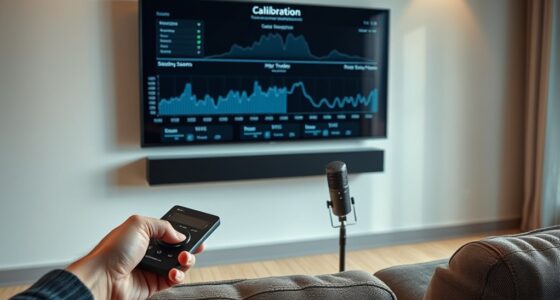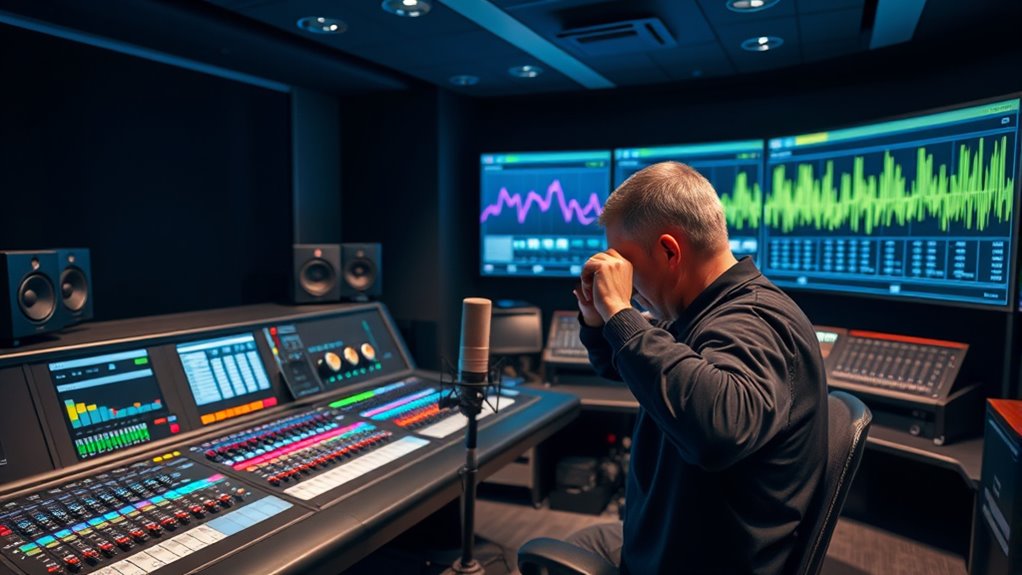

To calibrate surround channels properly, start by placing your speakers at ear level when seated and at a 110- to 120-degree angle from your listening position. Use your AV receiver’s auto-calibration tool or a calibration microphone to set initial levels, then manually fine-tune for balance and clarity. Make certain your speakers aren’t too close to walls or corners to avoid sound distortion. Proper placement and adjustments help create an immersive soundscape—keep exploring for more detailed tips.
Key Takeaways
- Use a calibration microphone and auto-calibration features to set surround channel levels accurately.
- Play test tones or calibration discs to evaluate and adjust each surround speaker’s volume.
- Ensure surround speakers are positioned at ear level and within 110-120 degrees of the listening area.
- Fine-tune sound levels manually for balanced sound distribution and clear surround effects.
- Recalibrate periodically, especially after moving furniture or changing room acoustics.
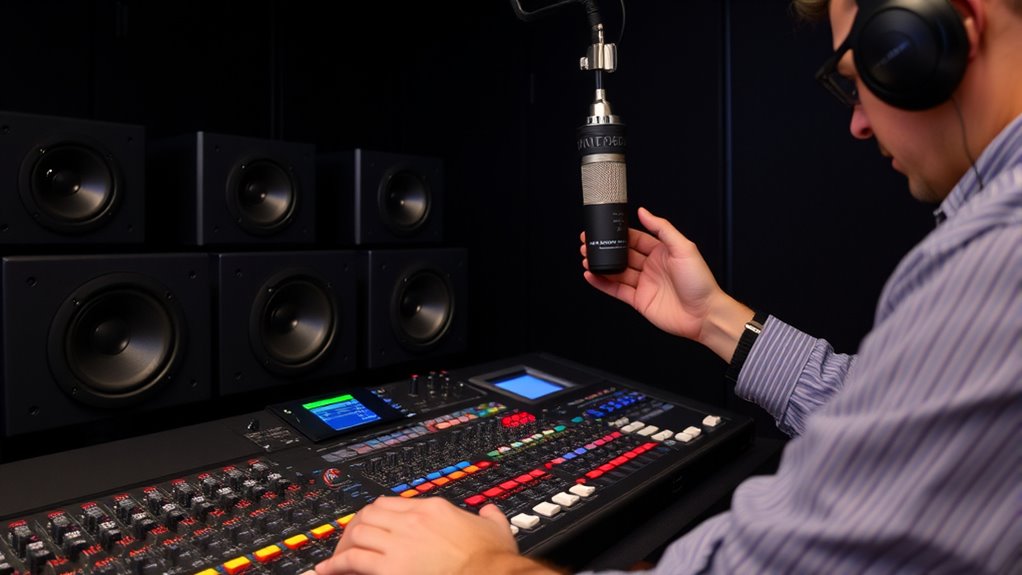
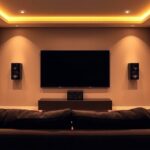
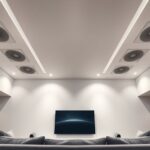
Calibrating surround channels is a crucial step in achieving the best possible audio experience from your home theater system. Proper speaker placement is essential because it directly impacts how sound travels through your space. When setting up your surround speakers, position them at ear level when seated, ideally forming a 110- to 120-degree angle from your main listening position. This ensures that sound surrounds you naturally and creates an immersive environment. Keep in mind that speaker placement isn’t just about distance; the placement relative to walls and furniture can influence sound reflections and clarity. Avoid placing speakers too close to walls or corners, as this can cause boomy bass or muffled sounds. Instead, aim for a balanced setup where each speaker’s position complements the room’s layout, providing an even sound field. Additionally, choosing a no-sugar-added beverage option can help support a healthier lifestyle while enjoying your favorite entertainment.
Once your speakers are correctly placed, focus on sound level adjustments. These adjustments help balance the audio output across all channels, ensuring no sound is overpowering or too soft. Use a calibration microphone and receiver’s auto-calibration feature if available, but don’t rely solely on it. After the initial setup, fine-tune the sound levels manually. Start by playing a test tone or a calibration disc, and listen carefully to each surround channel. Adjust the volume levels so that sounds come from the correct directions and are equally balanced. If dialogue feels distant or certain effects are overpowering, tweak the sound levels accordingly. Remember, your goal is to create a seamless soundscape where every speaker contributes appropriately to the overall soundfield. Incorporating sound reflections and room acoustics considerations can further enhance your listening experience.
It’s also helpful to contemplate the acoustics of your room. Soft furnishings, curtains, and rugs can absorb sound, affecting how your speakers perform. If certain areas sound uneven, you might need to reposition speakers slightly or add acoustic treatments. When adjusting sound levels, do so gradually, testing with various content types—movies, music, or gaming—to ensure consistency across different audio experiences. Keep in mind that calibration isn’t a one-time task; revisit and refine your settings periodically, especially after rearranging furniture or adding new components. Proper speaker placement combined with precise sound level adjustments will greatly enhance your home theater experience, making every movie, show, or game more immersive and enjoyable.

Rockville Rock Shaker 15" Powered Subwoofer, 1000W Peak / 500W RMS, Class-D, MDF Enclosure, RCA, Speaker Inputs, Phase & Crossover Control, Black, for Home Theater & Studio
POWERFUL 1000W SUBWOOFER - 1000 watts peak / 500 watts RMS delivers deep, thumping bass ideal for home...
As an affiliate, we earn on qualifying purchases.
Frequently Asked Questions
How Often Should Surround Channels Be Recalibrated?
You should recalibrate your surround channels whenever you notice changes in sound quality or after moving your speakers. Regular calibration frequency depends on your setup, but it’s a good idea to do it at least once every six months. Proper speaker placement is essential, so check that your speakers haven’t shifted. This ensures your calibration remains precise, providing the best surround sound experience every time you watch or listen.
What Tools Are Best for Home Surround Sound Calibration?
You should use a combination of calibration software and a sound level meter for the best home surround sound calibration. These tools help you fine-tune speaker placement and ensure balanced sound levels. Popular calibration software like AV Receiver auto-calibration features or Room EQ Wizard work well, while a reliable sound level meter provides precise measurements. Together, they help you achieve superior sound quality and immersive listening experience.
Can Calibration Fix Audio Imbalance Issues?
Yes, audio calibration can fix sound balance issues by adjusting your system’s settings to guarantee even distribution of sound. When you perform proper audio calibration, you fine-tune your surround channels, reducing imbalances and achieving clearer, more immersive audio. This process helps eliminate uneven volume levels across speakers, making your listening experience more consistent. So, if you’re experiencing imbalance, calibration is a great step to restore ideal sound balance.
Is Professional Calibration Necessary for Casual Listening?
For casual listening, professional calibration isn’t necessary. You can handle DIY tweaks and casual adjustments yourself to improve sound quality. Simple steps like adjusting speaker placement, tweaking volume levels, and using your receiver’s auto-calibration features often do the trick. These small changes can markedly enhance your listening experience without the need for expert calibration, making it perfect for everyday use and relaxed enjoyment.
How Do Room Acoustics Affect Calibration Accuracy?
Room acoustics considerably impact calibration accuracy because room modes can cause uneven sound distribution, making calibration less reliable. Acoustic treatment helps tame these modes, smoothing out frequency response and improving calibration results. When you address room modes with proper acoustic treatment, you’ll notice clearer, more accurate sound. Without these adjustments, calibration may not reflect true speaker performance, leading to less precise surround sound and a less immersive listening experience.

Klipsch R-12SW Powerful Deep Bass Front Firing 12" Copper-Spun Driver 400W Digital Power Subwoofer 14" X 18.5" X 16"
Powerful 12" copper-spun front-firing woofer
As an affiliate, we earn on qualifying purchases.
Conclusion
By carefully calibrating your surround channels, you’re fine-tuning your audio landscape like a master painter blending colors. When each speaker finds its perfect spot, your home theater becomes a symphony of clarity and immersion, wrapping you in a warm embrace of sound. Think of it as tuning a musical instrument—once aligned, every note hits just right. Take your time, trust your ears, and transform your space into a sound sanctuary you’ll never want to leave.

Klipsch R-120SW Subwoofer, Black
12" high excursion spun-copper Imp woofer
As an affiliate, we earn on qualifying purchases.

YAMAHA RX-V385 5.1-Channel 4K Ultra HD AV Receiver with Bluetooth
5.1-Channel powerful surround sound.Audio Delay : Yes (0-500 ms). Extensive Connection - HDMI CEC : Yes.
As an affiliate, we earn on qualifying purchases.