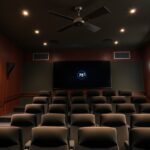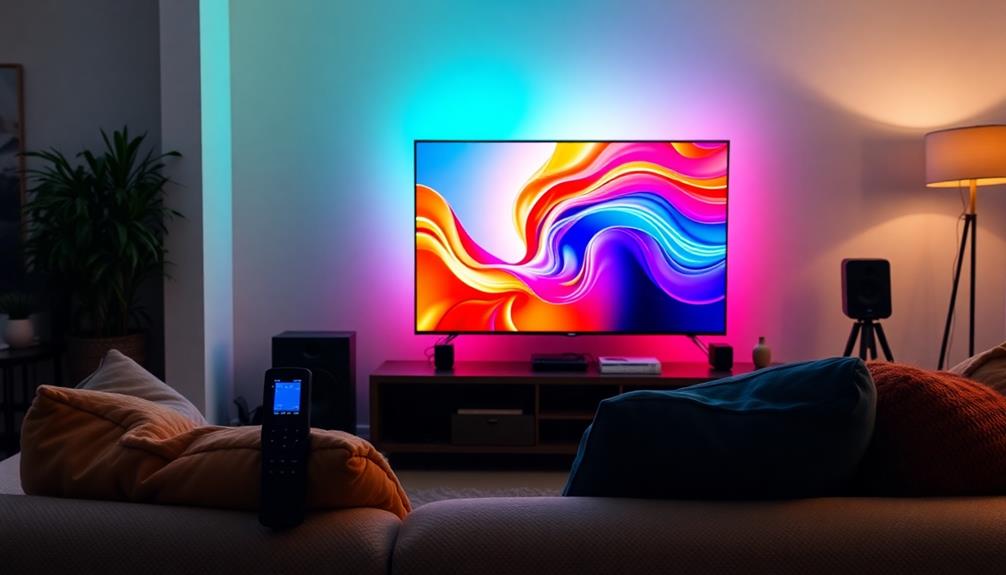
To guarantee your enclosed theater room stays comfortable and healthy, focus on proper ventilation and airflow management. Install an appropriately sized HVAC system and position vents and fans strategically to promote even air circulation. Use fresh air intakes placed away from exhaust outlets to prevent short-circuiting, and keep filters clean for better air quality. Regular maintenance prevents blockages and ensures everything functions efficiently. Keep your system optimized—discover more ways to improve airflow and create the perfect environment.
Key Takeaways
- Install an appropriately sized HVAC system with strategically placed vents for even airflow distribution.
- Use ceiling or wall-mounted fans to promote circular air movement and prevent stagnant zones.
- Position fresh air intake away from exhaust outlets to avoid short-circuiting and ensure fresh air circulation.
- Incorporate air purifiers with HEPA filters to remove airborne pollutants and improve indoor air quality.
- Regularly inspect and maintain ventilation components to ensure optimal airflow and compliance with safety standards.
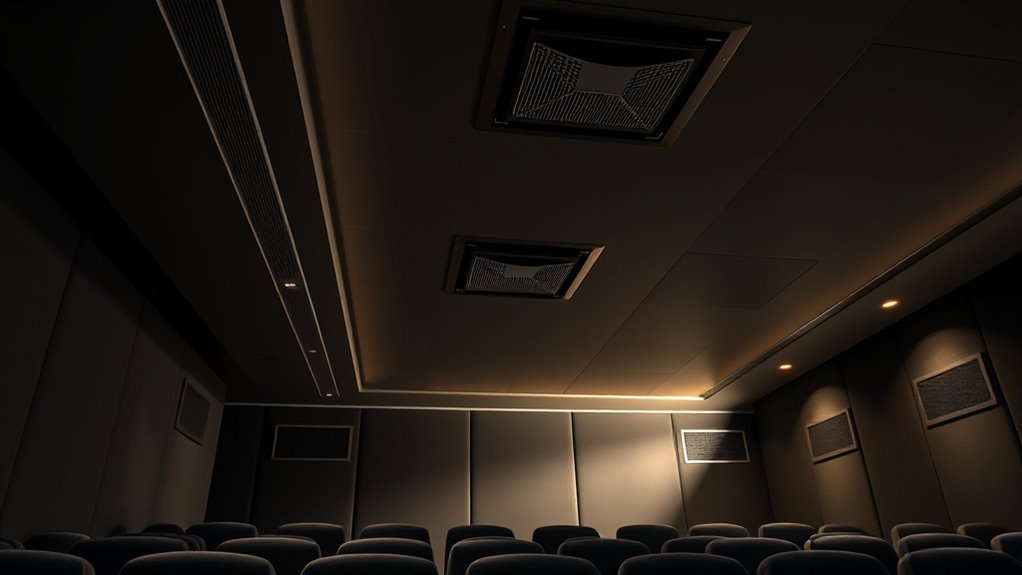
Proper ventilation and airflow are vital for maintaining a comfortable and healthy environment in enclosed theater rooms. When you’re watching a movie or hosting a gathering, you want the space to feel fresh and inviting. To achieve this, you need to ensure proper air exchange, which involves the continuous movement of fresh air into the room and stale air out. This process helps remove indoor pollutants, control humidity, and prevent stuffiness that can make the environment uncomfortable or even unhealthy. The key to effective ventilation lies in understanding and managing airflow patterns within your theater.
Proper airflow keeps your theater fresh, healthy, and comfortable during every movie night.
Airflow patterns determine how air moves around the space, influencing temperature distribution, odor control, and overall air quality. If the airflow isn’t properly directed, you might notice uneven temperatures or lingering odors. For example, if warm air rises to the ceiling and stagnates there, it can cause discomfort, especially during long viewing sessions. Conversely, poor airflow can trap dust, allergens, or other airborne particles, which can irritate sensitive individuals or exacerbate respiratory issues. To optimize airflow, you should strategically position vents, fans, and air return outlets to promote a steady, uniform circulation.
One effective way to enhance airflow patterns is to install an HVAC system that’s appropriately sized for your room. This system should include adjustable vents so you can control where and how air enters and exits. Ideally, fresh air intake should be located away from exhaust outlets to prevent short-circuiting, where incoming air immediately exits without mixing thoroughly. Additionally, ceiling or wall-mounted fans can help distribute air more evenly, preventing dead zones where airflow stagnates. When you consider the placement of these devices, think about creating a gentle, circular airflow that encourages air to move across the entire space rather than just in one corner or along one wall.
Maintaining a consistent air exchange rate is paramount, especially if your theater room is heavily used or crowded. A higher air exchange rate means more fresh air circulates through the space, reducing the buildup of carbon dioxide and indoor pollutants. You might also consider adding air purifiers equipped with HEPA filters, which can trap airborne particles and allergens, further improving indoor air quality. Regularly inspecting and cleaning your ventilation system guarantees it functions efficiently, preventing blockages or mechanical failures that could compromise airflow patterns. Additionally, understanding local building codes and building regulations can help ensure your ventilation setup complies with safety standards and optimizes airflow efficiency.

Douk Audio BS-1 Bass Shaker: 50W High Power Tactile Transducer - Subwoofer Lows for Home Theater, Car Audio & Gaming Chair Vibration Immersion (1 PC)
The fully upgraded version of Douk Audio BS-1 bass shaker, released in May 2025, the performance is greatly...
As an affiliate, we earn on qualifying purchases.
Frequently Asked Questions
How Does Humidity Affect Airflow in Theater Rooms?
Humidity affects airflow in theater rooms by altering humidity control and changing airflow patterns. High humidity can cause air to become denser, reducing circulation and making the room feel damp. Low humidity can dry out air, creating uneven airflow and static. Maintaining ideal humidity levels helps guarantee proper airflow patterns, keeps the environment comfortable, and prevents issues like mold growth or static buildup, enhancing the overall theater experience.
What Are the Best Air Filtration Options for Theaters?
You should consider high-efficiency particulate air (HEPA) purifiers or UV-C light filtration options, as they effectively capture airborne particles and kill germs. Regular filtration system maintenance is essential to keep air clean and prevent buildup. Look for air purifier options with proper size ratings for your theater, and schedule routine filter changes to ensure superior performance and healthy air quality for your audience.
How Often Should Ventilation Systems Be Maintained?
You should maintain your ventilation systems at least twice a year to keep the air fresh and healthy. Follow strict ventilation schedules and never skip filter replacement intervals, as clogged filters can turn your theater into a breeding ground for allergens and germs. Regular maintenance prevents airborne hazards, ensuring your audience breathes easy and enjoys the show without worry. Don’t wait—schedule professional check-ups now for peak airflow performance!
Can Poor Airflow Impact Sound Quality?
Poor airflow can definitely impact your sound quality. When airflow is restricted, it can cause temperature fluctuations and humidity issues that affect acoustic insulation and soundproof barriers. This may lead to muffled sounds or unwanted echoes, disrupting your listening experience. Ensuring proper ventilation helps maintain a stable environment, preserving ideal sound quality. So, don’t overlook airflow; it’s a key factor in achieving clear, high-quality audio in your theater room.
What Are the Energy Costs of Advanced Ventilation Systems?
A penny saved is a penny earned, and advanced ventilation systems can be quite costly. They often have higher energy consumption due to increased system efficiency, which means your energy bills might rise initially. However, the investment can pay off over time through better airflow and reduced energy waste. Balancing system efficiency with operational costs is key to managing long-term expenses and maintaining a comfortable theater environment.

Yaber K300s Ultra Short Throw Projector, 4K Support Triple Laser Projector, 100" Image at 9", Dolby Vision, 150% NTSC, Google TV, 30W JBL Speaker, for Home Theater Gaming
[Ultra Short Throw & Space-Saving Design] Experience a 100-inch giant screen from just 9 inches away with the...
As an affiliate, we earn on qualifying purchases.
Conclusion
By mastering ventilation and airflow, you guarantee an environment that’s inviting, invigorating, and entirely safe. Properly planned airflow fosters fresh feelings, fights foul odors, and fosters fanfare for film fans. When ventilation is vigilant and vents are vigilant, you create a comfortable, clean, and engaging cinema space. So, stay strategic, scrutinize systems, and safeguard your theater’s air. With wise wiliness, you’ll win the war against worry, welcoming audiences with fresh, flawless airflow.
Douk Audio BS-1 Bass Shaker: 50W High Power Tactile Transducer - Subwoofer Lows for Home Theater, Car Audio & Gaming Chair Vibration Immersion (1 Pair)
The fully upgraded version of Douk Audio BS-1 bass shaker, released in May 2025, the performance is greatly...
As an affiliate, we earn on qualifying purchases.

Silicone Speaker Isolation Feet (4-Pack, 1") – Non-Skid Adhesive Pads for Turntable, Subwoofer & Audio Gear – Anti-Vibration Damping, 20 Duro Rubber
REDUCE VIBRATION and RESONANCE. Absorbing up to 95.32% of vibration and resonance, Hudson Hi-Fi’s Isolation Feet offer an...
As an affiliate, we earn on qualifying purchases.