
Adaptive noise cancellation enhances your movie-watching by actively reducing background sounds, so you can enjoy clearer audio at lower volumes without missing important hearing cues. It detects ambient noise and generates inverse sound waves to cancel out unwanted sounds in real-time, adjusting automatically as your environment changes. This technology creates a more immersive experience, protects your ears from loud volume levels, and minimizes distractions. Keep exploring to discover how this innovative feature can transform your viewing experience.
Key Takeaways
- Adaptive noise cancellation reduces background sounds, creating a clearer, more immersive movie-watching experience.
- It automatically adjusts to ambient noise levels, maintaining consistent sound quality without manual intervention.
- By filtering out unwanted noise, it allows lower volume settings, protecting ear health during extended viewing.
- It minimizes distractions from external sounds like conversations or traffic, enhancing focus on the movie.
- The technology adapts in real-time, ensuring optimal audio clarity regardless of changing environments.
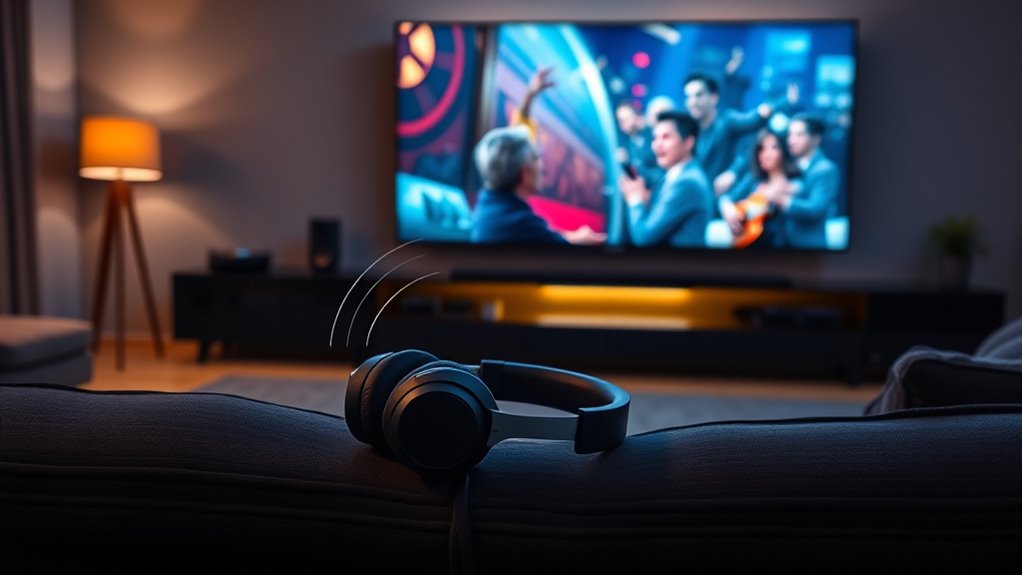
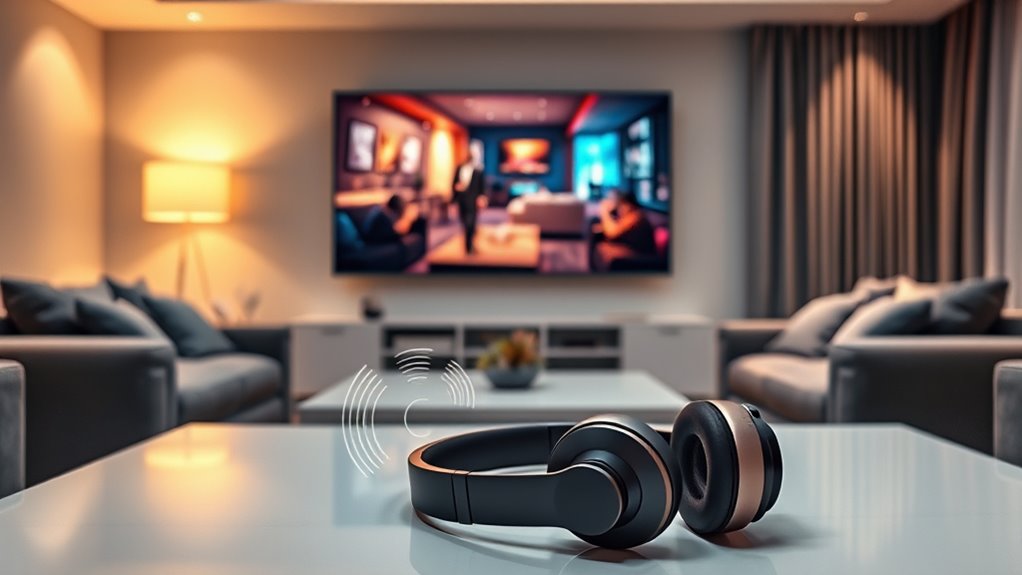
When watching movies, background noise can often disrupt your experience and diminish sound quality. It’s frustrating when extraneous sounds interfere with dialogue, music, or special effects, making it hard to fully immerse yourself in the story. That’s where adaptive noise cancellation comes into play, offering a solution that enhances your listening environment while also prioritizing ear protection. Instead of static noise reduction, adaptive systems analyze the sound environment in real-time, adjusting their performance to block out unwanted sounds effectively. Whether you’re in a bustling coffee shop or a noisy household, this technology ensures you get a clearer, more focused audio experience without needing to crank up the volume, which could damage your ears over time.
Adaptive noise cancellation enhances sound quality and protects ears by analyzing and reducing background noise in real-time.
You might not realize it, but your ears are vulnerable to damage from loud or prolonged exposure to noise. Adaptive noise cancellation helps preserve your ear health by allowing you to enjoy improved sound clarity at lower volumes. This technology works by detecting background sounds and generating inverse sound waves to cancel them out, creating a quieter listening environment. Unlike passive ear protection, which just blocks sound physically, adaptive noise cancellation intelligently filters out specific noise frequencies without muffling the entire soundscape. This means you can still hear important ambient sounds or conversations if needed, making it a versatile choice for various situations. Additionally, tuning technologies like those used in Kia Tuning often include sound optimization features that can complement noise-canceling devices for an even better audio experience.
As you settle into your movie-watching setup, adaptive noise cancellation devices can seamlessly blend into your environment. They continuously monitor the sound environment, adjusting in real-time to changing noise levels. This dynamic response ensures consistent sound quality, especially when external sounds fluctuate unexpectedly, like a siren passing by or a conversation nearby. With these systems, you don’t have to manually switch modes or worry about settings becoming outdated; they adapt automatically to give you ideal sound clarity and ear protection. This allows you to focus entirely on your movie without distractions, feeling more engaged and less fatigued by loud or persistent background noise.
In essence, adaptive noise cancellation enhances your viewing experience by creating a personalized, controlled sound environment. It safeguards your ears from potential damage caused by loud volumes while delivering crisp, clear audio that keeps you immersed in the story. By intelligently adjusting to your surroundings, it ensures you get the best of both worlds: excellent sound quality and ear protection. Whether you’re streaming at home or watching in a public space, this technology helps you enjoy movies more comfortably and safely, giving you a true sense of immersion without sacrificing your hearing health.
Frequently Asked Questions
Can Adaptive Noise Cancellation Cause Audio Lag During Movies?
Yes, adaptive noise cancellation can cause audio delay during movies. When the system actively filters out background noise, it may introduce slight synchronization issues, leading to audio delay. You might notice the sound lagging behind the picture, which can disrupt your viewing experience. To minimize this, make sure your device’s firmware is updated and check your audio settings, as proper calibration helps reduce audio delay caused by noise cancellation features.
How Does Adaptive Noise Cancellation Affect Dialogue Clarity?
Adaptive noise cancellation generally improves dialogue clarity by reducing background noise, making speech more intelligible. You notice clearer conversations and less distraction from ambient sounds, especially in noisy environments. This technology dynamically adjusts to changing noise levels, ensuring you don’t miss important details. As a result, your overall movie-watching experience becomes more immersive, with dialogue standing out sharply against any background noise, enhancing your enjoyment and understanding.
Is Adaptive Noise Cancellation Suitable for All Types of Headphones?
Adaptive noise cancellation isn’t suitable for all headphones. You need to check the headphone compatibility, as some models lack the necessary technology. Different noise cancellation types, like active or passive, also influence effectiveness. If your headphones support adaptive noise cancellation, you’ll enjoy better sound quality and clearer dialogue. However, non-compatible headphones may not benefit from this feature, so always verify compatibility before relying on it.
Does Adaptive Noise Cancellation Impact Overall Sound Quality?
Yes, adaptive noise cancellation can impact overall sound quality, but it often improves your listening experience by reducing ambient noise. While some may notice a slight change in sound fidelity, most modern systems are designed to minimize this effect, maintaining clear audio. You benefit by enjoying movies with less background distraction, allowing you to focus on dialogue and sound effects, even in noisy environments.
Can Adaptive Noise Cancellation Be Turned off if Needed?
Yes, you can turn off adaptive noise cancellation if needed. Most devices offer a manual override or user control feature, allowing you to disable it easily. Check your device’s settings or control panel, where you’ll find options to customize sound features. Simply toggle the noise cancellation feature off when you want to enjoy pure audio without interference, giving you full control over your listening experience.
Conclusion
As you immerse yourself in your favorite movie, adaptive noise cancellation quietly works behind the scenes, cutting out distractions and enhancing clarity. It’s a seamless blend of technology and entertainment, turning chaos into calm. While the world around you roars, your viewing experience remains crisp and immersive. In this quiet battle against noise, you find focus and enjoyment—proof that sometimes, the most powerful innovations are the ones you hardly notice.

XHF 120 PCS Adhesive Cable Wire Clips Black, Outdoor Christmas Light Clips, Cable Management Wire Organizer Cord Holder for Under Desk, Car, Wall, TV PC Ethernet Cable
- High quality material:XHF Adhesive Cable Clips are manufactured...
- Widely used: USB Cable, Ethernet Cable, Outdoor...
- Size: Base 5/8" x 5/8", inner...
As an affiliate, we earn on qualifying purchases.