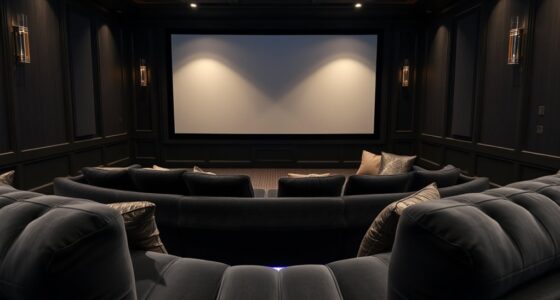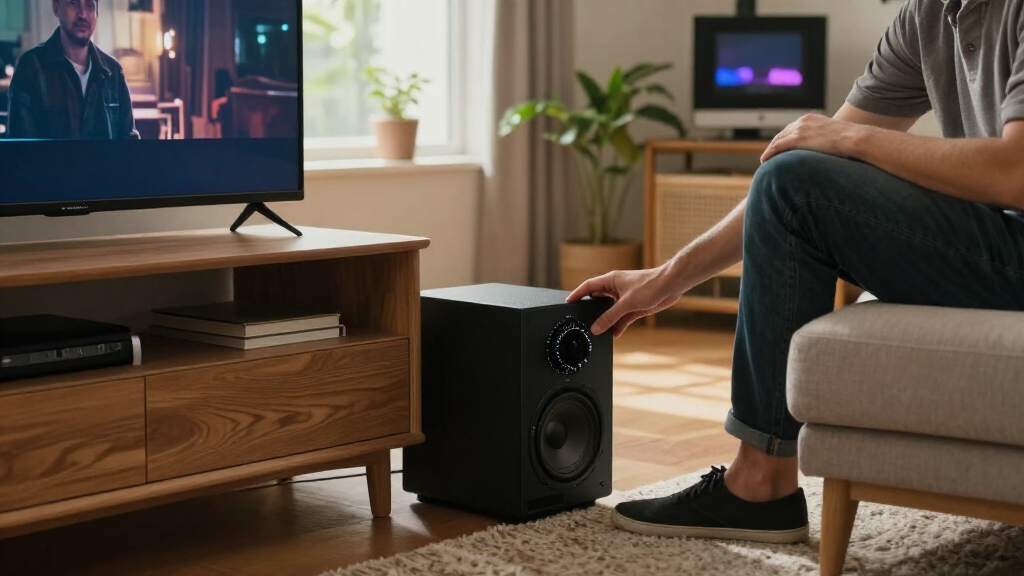
Compact home theater subwoofers add low-frequency impact without taking over a room, but cabinet size, placement, and output all affect how well they fit. I rank the Klipsch Synergy Black Label Sub-100 as the best overall for buyers who want a conventional 10-inch powered sub, while the Audioengine S6 Mini suits tighter spaces and the Monoprice SSW-8 offers a slim placement option. Smaller models save floor space, but may give up some deep-bass reach; larger cabinets can play with more authority but need room around them. Read on for the full comparison, selection criteria, and advice for matching a subwoofer to your room and receiver.

Get business pricing on your home office setup
- Business-only prices and quantity discounts
- Tax-exempt purchasing
- Multiple users, one account, clear invoices
Complete the kit


Key Takeaways
- The Sub-100 is my best overall pick for shoppers who can fit a standard 10-inch front-firing cabinet and want a straightforward home theater option.
- The Audioengine S6 Mini prioritizes footprint; its compact form is a stronger fit for tight layouts than the larger Audioengine S8.
- Slim and compact are different advantages: the Monoprice SSW-8 and Rockville Slim Shaker address low-profile placement, while 6.5-inch BESTISAN models favor small cabinets.
- Eight-inch models form the middle ground: the Edifier T5s and BESTISAN Basscore 80 offer more driver area than the 6.5-inch options without moving to a 10-inch enclosure.
- The list includes duplicate or near-duplicate entries for the Audioengine S6 Mini and Edifier T5s, so buyers should compare the actual listing and version rather than treating those names as distinct designs.
| Sony SA-CS9M2 10-Inch Active Subwoofer |  | Best for Full-Size Bass | Brand: Sony | Model: SA-CS9M2 | Type: Active subwoofer | VIEW LATEST PRICE | See Our Full Breakdown |
| Klipsch Synergy Black Label Sub-100 10-Inch Front-Firing Subwoofer |  | Best for Receiver-Based Theaters | Brand: Klipsch | Model: Sub-100 | Driver size: 10 inches | VIEW LATEST PRICE | See Our Full Breakdown |
| BESTISAN SW65D 6.5-Inch Powered Subwoofer |  | Best for Flexible Connections | Model: SW65D | Woofer size: 6.5 inches | Frequency response: 35 Hz–200 Hz | VIEW LATEST PRICE | See Our Full Breakdown |
| Audioengine S6 Mini Subwoofer |  | Best for Desks and Tight Rooms | Brand: Audioengine | Model: S6 | Power: 210 watts | VIEW LATEST PRICE | See Our Full Breakdown |
| Rockville Slim Shaker 10-Inch Powered Subwoofer |  | Best for Hidden Placement | Brand: Rockville | Model: SLIM SHAKER 10 | Woofer size: 10 inches | VIEW LATEST PRICE | See Our Full Breakdown |
| BESTISAN SW65C 6.5-inch Powered Home Audio Subwoofer |  | Best for Tight Spaces | Woofer: 6.5-inch down-firing | Maximum output power: 400 watts | Dimensions: 9.3 × 9.3 × 13 inches (H × W × D) | VIEW LATEST PRICE | See Our Full Breakdown |
| Edifier T5s Powered Subwoofer, 70W RMS, 8-Inch Woofer, Brown |  | Best for Straightforward System Tuning | Woofer: 8-inch long-throw | Power output: 70W RMS | Frequency response: Down to 35 Hz | VIEW LATEST PRICE | See Our Full Breakdown |
| BESTISAN Basscore 80 Powered 8-Inch Subwoofer, 100W RMS |  | Best for Flexible Connections | Woofer: 8-inch side-firing | Amplifier: Class-D | Power: 100W RMS, 150W peak | VIEW LATEST PRICE | See Our Full Breakdown |
| Audioengine S8 Powered 8-Inch Subwoofer |  | Best for Deeper Specified Bass | Woofer: 8-inch down-firing | Power output: 250 watts | Frequency response: 27 Hz | VIEW LATEST PRICE | See Our Full Breakdown |
| BESTISAN Basscore 65 Powered 6.5-Inch Compact Home Audio Subwoofer |  | Best for Desk and Small-Room Setups | Driver: 6.5-inch side-firing | Maximum output power: 100 watts | Inputs: Line/LFE and speaker-level | VIEW LATEST PRICE | See Our Full Breakdown |
| 6.5-inch Powered Subwoofer with DSP and Class-D Amplifier |  | Best for Tight Spaces | Driver: 6.5-inch down-firing | Power: 60W RMS / 100W peak | Frequency response: 40–250Hz | VIEW LATEST PRICE | See Our Full Breakdown |
| Audioengine S6 Mini Subwoofer | 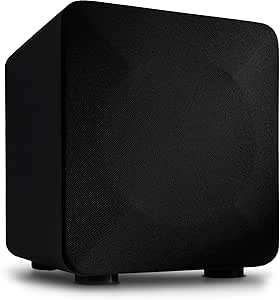 | Best Premium Compact Pick | Model: S6 | Woofer: 6 inches | Power: 210 watts | VIEW LATEST PRICE | See Our Full Breakdown |
| Edifier T5s 70W Powered Subwoofer with 8-Inch Woofer |  | Best for Easy System Matching | Woofer: 8-inch | Amplifier output: 70W RMS | Frequency response: 35Hz | VIEW LATEST PRICE | See Our Full Breakdown |
| Polk Audio PSW10 10-inch Powered Subwoofer | 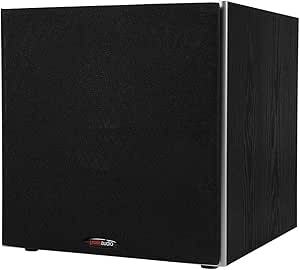 | Best for Small-to-Mid-Sized Rooms | Woofer: 10-inch | Amplifier power: 50W RMS / 100W dynamic | Frequency response: 40–160Hz (-3dB) | VIEW LATEST PRICE | See Our Full Breakdown |
| Monoprice SSW-8 Slim Powered Subwoofer |  | Best for Hidden Placement | Woofer: 8-inch | Power output: 100 watts | Frequency response: 30Hz | VIEW LATEST PRICE | See Our Full Breakdown |
| compact home theater subwoofer | Dimensions | Frequency response | Woofer |
|---|---|---|---|
| Sony SA-CS9M2 10-Inch Active S | 18.7 x 14.8 x 17.4 inches | — | — |
| Klipsch Synergy Black Label Su | 14 x 12.5 x 15.7 inches | — | — |
| BESTISAN SW65D 6.5-Inch Powere | 12.5 x 6.3 x 12.6 inches | 35 Hz–200 Hz | — |
| Audioengine S6 Mini Subwoofer | 9.92 x 8.74 x 9.96 inches | — | — |
| Rockville Slim Shaker 10-Inch | 22 x 18 x 8.3 inches | 30 Hz–150 Hz | — |
| BESTISAN SW65C 6.5-inch Powere | 9.3 × 9.3 × 13 inches (H × W × D) | — | 6.5-inch down-firing |
| Edifier T5s Powered Subwoofer | 15.71 × 6.69 × 16.14 inches | Down to 35 Hz | 8-inch long-throw |
| BESTISAN Basscore 80 Powered 8 | 11.3 × 6.2 × 15.4 inches (H × W × D) | — | 8-inch side-firing |
| Audioengine S8 Powered 8-Inch | — | 27 Hz | 8-inch down-firing |
| BESTISAN Basscore 65 Powered 6 | 11.3 × 6 × 15 inches (D × W × H) | — | — |
| 6.5-inch Powered Subwoofer wit | 9.96 × 12.92 inches | 40–250Hz | — |
| Audioengine S6 Mini Subwoofer | — | 33Hz | 6 inches |
| Edifier T5s 70W Powered Subwoo | — | 35Hz | 8-inch |
| Polk Audio PSW10 10-inch Power | 17 × 14.25 × 14.5 inches | 40–160Hz (-3dB) | 10-inch |
| Monoprice SSW-8 Slim Powered S | — | 30Hz | 8-inch |
More Details on Our Top Picks
Sony SA-CS9M2 10-Inch Active Subwoofer
The Sony SA-CS9M2 suits a buyer who wants a 10-inch driver and bass-reflex design for movie impact, and has room for a substantial cabinet. Its 230-watt maximum output gives it a different emphasis from the smaller Audioengine S6, which is easier to place near a desk or in a tight room. Sony’s low-vibration design is intended to keep bass controlled, while the included RCA cord makes initial setup more convenient. The tradeoff is its footprint: at 18.7 inches wide and 17.4 inches deep, it may be hard to tuck away despite the compact positioning. Connectivity is also limited to coaxial, so check that your receiver offers a compatible connection before choosing it.
Pros:- 10-inch reinforced driver is suited to fuller low-frequency output than the 6-inch Audioengine S6.
- Bass-reflex enclosure is designed to reduce unwanted cabinet noise.
- Low-vibration design aims for tighter, more controlled bass.
- RCA cord is included for setup.
Cons:- Large 18.7 x 14.8 x 17.4-inch footprint is awkward for a subwoofer positioned as compact.
- Coaxial connectivity limits integration options.
- One-year warranty is shorter than the Klipsch Sub-100’s listed five-year parts and labor coverage.
Best for: Home theater owners with space for a larger cabinet who want a 10-inch subwoofer for movie and music bass.
Not ideal for: Apartment listeners or desk users with little floor space, and buyers whose system lacks a compatible coaxial connection.
- Brand:Sony
- Model:SA-CS9M2
- Type:Active subwoofer
- Driver diameter:10 inches (25.4 cm)
- Maximum output power:230 watts
- Enclosure:Bass reflex
- Connectivity:Coaxial
- Dimensions:18.7 x 14.8 x 17.4 inches
- Weight:9.45 kg
Our verdict“Choose the Sony if you want a 10-inch driver and can accommodate its large cabinet and coaxial connection.”
Klipsch Synergy Black Label Sub-100 10-Inch Front-Firing Subwoofer
The Klipsch Sub-100 is a receiver-based theater pick for buyers who want a conventional front-firing 10-inch subwoofer. Its 150 watts of continuous power and 300 watts of dynamic power are clearly specified, while the all-digital amplifier and spun-copper Cerametallic woofer distinguish it from the Sony SA-CS9M2, whose supplied data emphasizes a low-vibration design and 230 watts maximum output. A removable grille gives placement a tidier look, but the Klipsch still needs an external receiver, processor, or preamp; it is not a standalone TV solution. The wired connection also means buyers need to supply their own connection wires. Its 14-inch height is more manageable than the Sony’s cabinet dimensions, though the 15.7-inch depth still takes meaningful floor space.
Pros:- 10-inch front-firing woofer is designed for home theater placement.
- Continuous and dynamic power are specified separately at 150 and 300 watts.
- All-digital amplifier and spun-copper Cerametallic woofer are distinctive hardware features.
- Removable grille allows a cleaner appearance when the driver is exposed.
Cons:- Requires an external AV receiver, processor, or preamp.
- Connection wires are not included.
- Still needs floor space, with a 15.7-inch depth.
Best for: Home theater owners with an AV receiver or processor who want a front-firing 10-inch subwoofer with specified continuous and dynamic power.
Not ideal for: TV owners seeking a self-contained or wireless bass upgrade, or buyers without a receiver and connection wires.
- Brand:Klipsch
- Model:Sub-100
- Driver size:10 inches
- Continuous power:150 watts
- Dynamic power:300 watts
- Amplifier:All-digital
- Woofer material:Spun Copper Cerametallic
- Dimensions:14 x 12.5 x 15.7 inches
- Warranty:5 years labor, 5 years parts
Our verdict“Pick the Klipsch for a receiver-led theater setup that can accommodate a wired, front-firing 10-inch subwoofer.”
BESTISAN SW65D 6.5-Inch Powered Subwoofer
For a compact setup with mismatched or older components, the BESTISAN SW65D offers more connection paths than the other picks here: RCA, AUX, LFE, and high-level speaker input. That flexibility helps it fit a TV, soundbar, or receiver without relying on the Klipsch Sub-100’s receiver-based approach. Its 6.5-inch side-firing woofer and braced bass-reflex cabinet fit a smaller footprint than the Sony SA-CS9M2, though the supplied 35 Hz to 200 Hz response range signals a different scale of bass than a 10-inch model. This is the practical choice for a modest room, gaming corner, or mixed-brand system. Check your source level, however: the product data specifies input levels of 850 mV or less for best performance.
Pros:- RCA, 3.5 mm AUX, LFE, and high-level speaker inputs suit varied systems.
- Compact 6.5-inch driver and cabinet take less room than the Sony SA-CS9M2.
- Braced bass-reflex cabinet is designed to limit resonance.
- Remote control is included as a control method.
Cons:- 6.5-inch woofer is a smaller-scale option than the 10-inch Sony and Klipsch models.
- Best performance calls for input signal levels of 850 mV or less.
- Product data notes strongest synergy with select BESTISAN soundbars or speakers.
Best for: Buyers pairing a compact subwoofer with a TV, soundbar, or mixed-brand setup that needs several analog and speaker-level input options.
Not ideal for: Listeners seeking the stronger low-end scale of a 10-inch subwoofer or using a high-output source that exceeds the stated input level.
- Model:SW65D
- Woofer size:6.5 inches
- Frequency response:35 Hz–200 Hz
- Inputs:RCA, 3.5 mm AUX, LFE, high-level speaker input
- Output:High-level speaker output
- Enclosure:Wood, black oak finish
- Dimensions:12.5 x 6.3 x 12.6 inches
- Weight:9.2 lbs
- Power source:Corded electric
Our verdict“Choose the SW65D when connection flexibility and a small cabinet matter more than the output scale of a 10-inch subwoofer.”
Audioengine S6 Mini Subwoofer
The Audioengine S6 is the easiest fit in this group for a desktop, dorm room, or small living area: its cabinet is under 10 inches in each listed dimension. The 6-inch driver and 210-watt power rating give it a different balance from the BESTISAN SW65D, which uses a 6.5-inch woofer and offers more input types. Audioengine keeps its inputs to RCA and 3.5 mm, making it straightforward for common analog sources but less adaptable to systems that need LFE or speaker-level connections. The metal enclosure adds a sturdy construction detail without making this a lightweight unit; at 15.4 pounds, it is heavier than the BESTISAN. Wireless use also depends on buying the compatible W3 adapter separately.
Pros:- Cabinet dimensions under 10 inches suit tight desktop and small-room placements.
- 210-watt power rating in a compact enclosure.
- Metal enclosure offers a durable alternative to the wood cabinet of the BESTISAN SW65D.
- RCA and 3.5 mm inputs support common analog connections.
Cons:- 6-inch driver is smaller than the BESTISAN SW65D’s 6.5-inch woofer and the 10-inch options.
- Wireless audio requires a separate W3 adapter.
- At 15.4 pounds, it is relatively heavy for its compact size.
Best for: Desktop listeners, dorm residents, and small-room theater owners who need a very compact powered subwoofer with analog inputs.
Not ideal for: Buyers who need LFE or high-level speaker inputs, built-in wireless audio, or the stronger driver scale of a 10-inch model.
- Brand:Audioengine
- Model:S6
- Power:210 watts
- Speaker size:6 inches
- Enclosure material:Metal
- Connectivity:RCA, 3.5 mm auxiliary
- Dimensions:9.92 x 8.74 x 9.96 inches
- Weight:15.4 pounds
- Warranty:3 years
Our verdict“The S6 is a strong fit for tight desktop or dorm setups if its limited analog inputs and adapter-based wireless suit your system.”
Rockville Slim Shaker 10-Inch Powered Subwoofer
The Rockville Slim Shaker 10 addresses a placement problem the box-shaped Sony SA-CS9M2 does not: its low profile is designed to fit under or behind furniture, with brackets and EVA foam included for mounting or stable positioning. Its 10-inch woofer and 30 Hz–150 Hz response target theater bass, while the 150-watt RMS rating gives a more useful continuous-power reference than the 600-watt peak figure alone. The tradeoff is that this is a long, heavy unit at 22 inches deep and 26 pounds, so hidden placement still requires measuring and planning. Up-firing use needs 4.9 inches of clearance, and RCA-only connectivity limits system options compared with the BESTISAN SW65D.
Pros:- Low-profile format supports discreet placement under or behind furniture.
- 10-inch woofer and 30 Hz–150 Hz response are aimed at home theater bass.
- Multiple orientations and included wall brackets offer placement flexibility.
- 150-watt RMS rating is specified alongside the 600-watt peak figure.
Cons:- At 26 pounds and 22 inches deep, it is heavy and long for a hidden-placement unit.
- RCA is the only listed connection, unlike the BESTISAN SW65D’s multiple inputs.
- Up-firing orientation requires 4.9 inches of clearance.
Best for: Home theater or gaming buyers who need a low-profile 10-inch subwoofer that can sit beneath furniture or mount to a wall.
Not ideal for: Buyers with limited clearance, light-duty mounting surfaces, or systems that need digital, optical, or HDMI audio inputs.
- Brand:Rockville
- Model:SLIM SHAKER 10
- Woofer size:10 inches
- Peak power:600 watts
- RMS power:150 watts
- Frequency response:30 Hz–150 Hz
- Dimensions:22 x 18 x 8.3 inches
- Weight:26 lbs
- Connectivity:RCA
Our verdict“Choose the Rockville when a low-profile 10-inch subwoofer solves your placement problem and you can accommodate its weight and RCA input.”
BESTISAN SW65C 6.5-inch Powered Home Audio Subwoofer
The BESTISAN SW65C is the smallest-footprint choice in this group, with a 9.3-inch-square base that suits a cramped media corner or a spot beneath furniture. Its down-firing 6.5-inch woofer couples bass to the floor, while separate bass and master-volume controls let me tune the low end without changing the rest of the system. RCA, auxiliary, and LFE connections offer more setup flexibility than the Audioengine S8, which is listed with wired RCA connectivity. The tradeoff is its plastic enclosure, which may feel less solid than the Edifier T5s’s MDF cabinet. I would also treat the listed frequency-response figure with caution: the supplied 35,200 Hz value appears unsuitable for describing subwoofer bass response.
Pros:- Compact 9.3 × 9.3-inch footprint fits tight placements
- Down-firing woofer is designed to couple bass to the floor
- RCA, auxiliary, and LFE connections accommodate varied systems
- Separate bass and master-volume controls simplify tuning
Cons:- Plastic enclosure may feel less rigid than the Edifier T5s’s MDF cabinet
- Supplied frequency-response figure of 35,200 Hz is unclear for subwoofer use
Best for: Apartment listeners who need a small subwoofer with flexible inputs and independent bass adjustment
Not ideal for: Buyers seeking a substantial, rigid cabinet or a clearly documented bass-response range
- Woofer:6.5-inch down-firing
- Maximum output power:400 watts
- Dimensions:9.3 × 9.3 × 13 inches (H × W × D)
- Connectivity:RCA, auxiliary, and LFE
- Enclosure material:Plastic
- Color:Black
- Warranty:1 year limited
Our verdict“Choose the SW65C when a compact footprint and varied inputs matter more than cabinet heft or a reliable published response range.”
Edifier T5s Powered Subwoofer, 70W RMS, 8-Inch Woofer, Brown
The Edifier T5s suits listeners who want useful integration controls in a conventional powered subwoofer. Its adjustable low-pass filter and 0°/180° phase selector help match bass to the main speakers, while the MDF cabinet offers a more substantial enclosure than the plastic BESTISAN SW65C. The 8-inch driver and response down to 35 Hz give it a larger-driver approach than the SW65C’s 6.5-inch woofer, though the T5s is longer and heavier than its compact rival. Its 70W RMS output is also modest beside the Audioengine S8’s listed 250 watts, so I’d favor the S8 for a more output-oriented setup. The T5s makes more sense for a tidy living-room system where tuning controls and included cables matter more than maximum power.
Pros:- 8-inch long-throw woofer with response down to 35 Hz
- Adjustable low-pass filter and 0°/180° phase selector aid integration
- 18mm MDF cabinet
- Included RCA and 3.5mm-to-RCA cables support setup
Cons:- Larger and heavier than the BESTISAN SW65C
- 70W RMS output is lower than the Audioengine S8’s listed 250 watts
- Without a subwoofer output, compatible main-speaker LINE IN is required
Best for: Living-room listeners who want an MDF-cabinet subwoofer with phase and crossover controls for blending into a speaker setup
Not ideal for: Buyers with very limited floor space or those prioritizing higher listed amplifier output
- Woofer:8-inch long-throw
- Power output:70W RMS
- Frequency response:Down to 35 Hz
- Low-pass filter:30–160 Hz
- Phase selector:0°/180°
- Cabinet material:18mm MDF
- Dimensions:15.71 × 6.69 × 16.14 inches
- Connections:RCA signal in/out
- Auto-standby:After 15 minutes of inactivity
Our verdict“Pick the T5s for a well-controlled 8-inch subwoofer setup when its larger cabinet fits and tuning matters more than high output.”
BESTISAN Basscore 80 Powered 8-Inch Subwoofer, 100W RMS
The BESTISAN Basscore 80 is a slim 8-inch option for setups that need more input choices than a standard RCA connection. Its LFE, AUX/RCA, and speaker-level inputs can accommodate a receiver, compatible soundbar, or older system, and the adjustable low-pass filter helps blend bass with different speakers. At 6.2 inches wide, it is narrower than the Edifier T5s, though its 15.4-inch depth still calls for a deliberate placement check. The 100W RMS Class-D amplifier and stated extension to 35 Hz make it a step up in listed power from the T5s’s 70W RMS, but the supplied data does not establish how that translates to real-room output. It fits buyers who value connection flexibility and a narrow profile; the external power adapter adds one more item to place.
Pros:- LFE, AUX/RCA, and high-level speaker inputs broaden compatibility
- 100W RMS Class-D amplifier
- Adjustable low-pass filter supports speaker integration
- Automatic standby activates after 15 minutes without signal
Cons:- Requires an external 24V/1.5A power adapter
- 15.4-inch depth may limit placement despite the narrow width
- Specified bass extension reaches down to 35 Hz
Best for: Listeners connecting a subwoofer to a mix of newer and older equipment who need a narrow cabinet
Not ideal for: Buyers who need a fully self-contained power setup or a particularly shallow unit
- Woofer:8-inch side-firing
- Amplifier:Class-D
- Power:100W RMS, 150W peak
- Bass extension:Down to 35 Hz
- Inputs:LFE, AUX/RCA, and high-level speaker
- Dimensions:11.3 × 6.2 × 15.4 inches (H × W × D)
- Auto-standby:After 15 minutes without signal
- Power adapter:24V/1.5A external adapter
Our verdict“Choose the Basscore 80 if varied inputs and a narrow 8-inch design matter more than minimizing setup components or depth.”
Audioengine S8 Powered 8-Inch Subwoofer
The Audioengine S8 stands apart for its stated 27 Hz frequency response and 250-watt output, giving it the strongest listed low-frequency and power figures among these five products. That makes it the option I’d shortlist when compact placement still needs to support a more ambitious home-theater or gaming setup. Its down-firing 8-inch woofer shares a floor-coupling approach with the smaller BESTISAN SW65C, but the S8 pairs that design with substantially higher listed output. Connectivity is less flexible than the Basscore 80: wired RCA is specified, and wireless operation requires a separate W3 adapter kit. The supplied data gives no dimensions, so buyers with strict space limits should confirm fit before choosing it. Its strength is performance-oriented specification; its compromise is a narrower connection path.
Pros:- 250-watt output
- Specified frequency response reaches 27 Hz
- Down-firing 8-inch woofer
- Automatic sleep mode reduces idle operation
Cons:- Wired RCA connectivity is less varied than the Basscore 80’s inputs
- Wireless use requires a separate W3 adapter kit
- Dimensions are not provided in the supplied product data
Best for: Home-theater and gaming listeners who want an 8-inch subwoofer with high listed output and a stated 27 Hz response
Not ideal for: Buyers who need speaker-level or multiple input options, built-in wireless, or verified cabinet dimensions
- Woofer:8-inch down-firing
- Power output:250 watts
- Frequency response:27 Hz
- Connectivity:Wired RCA
- Audio output mode:Mono
- Signal-to-noise ratio:95 dB
- Impedance:10,000 ohms
- Warranty:3 years
Our verdict“Choose the S8 for its strong listed output and 27 Hz response if RCA connectivity and separately verified fit work for your setup.”
BESTISAN Basscore 65 Powered 6.5-Inch Compact Home Audio Subwoofer
The BESTISAN Basscore 65 is the compact, practical pick for a desk or small room where an 8-inch cabinet like the Edifier T5s would take up too much space. Its 6.5-inch side-firing driver and slim 6-inch width make placement beside furniture easier, while line/LFE and speaker-level inputs suit both newer receivers and some older systems. Adjustable crossover and volume controls help keep bass from overwhelming smaller speakers. The tradeoff is scale: its 100-watt maximum output and smaller driver make it less suited to buyers seeking the Audioengine S8’s higher listed output and 27 Hz response. Auto-standby engages after 15 minutes without a signal, which saves power but may interrupt use in systems with long quiet intervals.
Pros:- 6-inch width supports placement beside furniture or under a desk
- Side-firing 6.5-inch driver
- Line/LFE and speaker-level inputs accommodate varied systems
- Adjustable crossover and volume controls
Cons:- 100-watt maximum output and 6.5-inch driver are less suited to large rooms than the Audioengine S8’s listed output
- Auto-standby activates after 15 minutes without a signal
Best for: Desk listeners and small-room owners who need a narrow subwoofer with both line/LFE and speaker-level inputs
Not ideal for: Home-theater buyers seeking stronger low-bass specifications or large-room output
- Driver:6.5-inch side-firing
- Maximum output power:100 watts
- Inputs:Line/LFE and speaker-level
- Controls:Adjustable crossover and volume
- Dimensions:11.3 × 6 × 15 inches (D × W × H)
- Mounting type:Tabletop
- Auto-standby:After 15 minutes without signal
- Warranty:1 year
Our verdict“Pick the Basscore 65 for a tight desktop or small-room setup where its narrow footprint and flexible inputs outweigh lower-bass ambitions.”
6.5-inch Powered Subwoofer with DSP and Class-D Amplifier
I’d put this 6.5-inch model near the top for a setup where cabinet size matters more than room-filling bass. Its down-firing driver and compact dimensions make it easier to tuck under a TV or into an entertainment center than the larger Polk Audio PSW10. The 60W RMS Class-D amplifier and DSP are aimed at controlled, punchy output, while the MDF enclosure helps limit cabinet resonance. It also accepts either LFE or line-level connections, which gives it more wired flexibility than a subwoofer with only one input type. The tradeoff is its 40Hz lower response limit and modest power: it is better suited to adding weight to dialogue, games, and music in a small room than to delivering the deepest effects at high volume. I’d skip it if wireless connections are a must.
Pros:- Compact 9.96-by-12.92-inch footprint suits tight entertainment areas.
- LFE and line inputs support a range of wired audio sources.
- Class-D amplification and DSP target controlled bass output.
- MDF cabinet helps reduce enclosure resonance.
Cons:- 40Hz lower response limit offers less deep-bass reach than the Monoprice SSW-8’s listed 30Hz.
- 60W RMS output may not satisfy listeners seeking high-volume bass in a larger room.
- No wireless connection or optical input.
Best for: Apartment dwellers and TV owners who need a small wired subwoofer for a compact listening area.
Not ideal for: Home theater listeners in larger rooms who want strong deep-bass impact or wireless setup.
- Driver:6.5-inch down-firing
- Power:60W RMS / 100W peak
- Frequency response:40–250Hz
- Amplifier:Class-D
- Cabinet:MDF
- Dimensions:9.96 × 12.92 inches
- Connectivity:LFE In; Line In (RCA/3.5mm)
- Included accessories:RCA-to-3.5mm cable, AC power cord, quick-start guide
Our verdict“Choose this model when a compact wired subwoofer and tidy placement matter more than deep, high-output bass.”
Audioengine S6 Mini Subwoofer
The Audioengine S6 makes the strongest case for buyers who want substantial stated power in a small enclosure. Its 210-watt rating and listed 33Hz low-frequency response give it more headroom on paper than the 6.5-inch powered subwoofer in this group, whose response starts at 40Hz. The S6’s slim metal enclosure also suits a desktop, dorm room, or small apartment where a bulky wood cabinet would be awkward. Its wireless option depends on the separate Audioengine W3 adapter, so the subwoofer does not offer built-in wireless convenience. The listed 6-inch woofer keeps the package compact, but buyers should not assume it will match a larger driver’s output in a big theater room. I’d choose it for a polished small-room system, and pass if I needed broad multi-channel flexibility or wireless included in the box.
Pros:- 210-watt power rating in a compact design.
- Slim metal enclosure fits desktop and small-room setups.
- Listed 33Hz response reaches lower than the 6.5-inch DSP model’s 40Hz limit.
- Compatible with the Audioengine W3 wireless adapter.
Cons:- Wireless connectivity requires a separate W3 adapter.
- 6-inch woofer may be a limitation for buyers seeking larger-driver output.
- Mono output may require additional components in more complex systems.
Best for: Desktop, dorm, and small-apartment listeners seeking a compact subwoofer with a metal enclosure and high stated power.
Not ideal for: Buyers who need built-in wireless, water resistance, or a subwoofer for a large home theater room.
- Model:S6
- Woofer:6 inches
- Power:210 watts
- Frequency response:33Hz
- Enclosure:Metal
- Audio output mode:Mono
- Wireless compatibility:Audioengine W3 adapter
- Warranty:3-year limited
Our verdict“Pick the S6 for a compact, higher-powered small-room system if you are comfortable adding the wireless adapter separately.”
Edifier T5s 70W Powered Subwoofer with 8-Inch Woofer
The Edifier T5s is a sensible choice when adjustable integration matters more than hiding a subwoofer completely. Its 8-inch woofer and 70W RMS amplifier give it a larger-driver approach than the Audioengine S6’s 6-inch design, while its compact MDF cabinet keeps it more manageable than the 10-inch Polk Audio PSW10. The useful distinction is the adjustable low-pass filter and 0°/180° phase selector: these controls help tune the handoff to your main speakers and adapt to placement. Auto-standby after 15 minutes of inactivity is convenient in a living room. Its 35Hz listed response offers deeper reach than the Polk’s 40Hz figure, though the Edifier remains a wired RCA subwoofer. Buyers whose speakers lack suitable line connections should check compatibility before choosing it.
Pros:- 8-inch long-throw woofer and 70W RMS amplifier suit compact home theater setups.
- Adjustable 30–160Hz low-pass filter supports speaker matching.
- 0°/180° phase selector helps adapt to subwoofer placement.
- Auto-standby and included RCA cables simplify everyday use.
Cons:- Wired RCA connectivity only; no wireless option.
- Series connection requires main speakers with LINE IN.
- May be less suitable for buyers who need the flexibility of speaker-level inputs.
Best for: Small-room home theater owners who want an 8-inch driver and hands-on crossover and phase controls for matching wired speakers.
Not ideal for: Buyers who need wireless placement or a subwoofer that connects easily to speakers without compatible line inputs.
- Woofer:8-inch
- Amplifier output:70W RMS
- Frequency response:35Hz
- Low-pass filter:30–160Hz
- Phase selector:0° / 180°
- Cabinet:18mm MDF
- Connectivity:Wired RCA
- Auto-standby:After 15 minutes of inactivity
Our verdict“Choose the T5s for a compact wired setup where crossover and phase adjustments will help you integrate the subwoofer with your speakers.”
Polk Audio PSW10 10-inch Powered Subwoofer
Although it is the largest driver in this batch, the Polk PSW10 earns a place for buyers who can give a 10-inch subwoofer a dedicated floor spot. Its 50W RMS amplifier and directed port are built for adding body to a small- or mid-sized room, and the continuously variable crossover lets you tune how it blends with the main speakers. It is more connection-friendly than the RCA-only Edifier T5s, with both line-level and speaker-level inputs for different system types. The compromise is physical: at 17 inches deep and 14.25 inches wide, it is harder to tuck away than the slim Audioengine S6 or low-profile Monoprice SSW-8. Its 40Hz lower response limit also makes the stated bass reach less ambitious than the Monoprice’s 30Hz. I’d skip it when discreet placement is the main goal.
Pros:- 10-inch woofer provides a larger-driver option than the 6- and 8-inch models here.
- Line-level and speaker-level inputs support varied system connections.
- Continuously variable 80–160Hz crossover aids integration with main speakers.
- Directed port and non-resonant cabinet materials are designed to limit distortion.
Cons:- 17-inch depth makes it less discreet than the Audioengine S6 or Monoprice SSW-8.
- 40Hz lower response limit is higher than the Monoprice SSW-8’s listed 30Hz.
- Not intended for large rooms that demand higher output.
Best for: Owners of small-to-mid-sized rooms who can reserve floor space and want both line-level and speaker-level connections.
Not ideal for: Apartment or media-room buyers who need a slim, hidden subwoofer or want deeper listed bass response.
- Woofer:10-inch
- Amplifier power:50W RMS / 100W dynamic
- Frequency response:40–160Hz (-3dB)
- Crossover:Continuously variable 80–160Hz
- Dimensions:17 × 14.25 × 14.5 inches
- Weight:11.8kg
- Inputs:Line-level and speaker-level
- Mounting:Floor mount
Our verdict“Choose the PSW10 if your room can accommodate a floor-standing cabinet and you value flexible wired inputs over a low-profile design.”
Monoprice SSW-8 Slim Powered Subwoofer
For a theater where a conventional cube would block a walkway or dominate the room, the SSW-8’s low-profile cabinet is its clearest advantage. The 8-inch woofer and ported bass-reflex enclosure are designed to make the most of a compact form, with a listed response down to 30Hz—lower than the Polk PSW10’s stated 40Hz limit. Floor and wall mounting options also give it more placement flexibility than the floor-mount-only Polk. It has both RCA line-level and speaker-level inputs, plus adjustable low-pass and phase controls for fitting it into a wired system. The tradeoff is that its slim format may not suit listeners who prioritize a more substantial cabinet, and its 100-watt amplifier may fall short in a large room at high volume. This is a placement-first pick, not a room-filling powerhouse.
Pros:- Low-profile design supports discreet placement under furniture or behind a TV stand.
- Ported bass-reflex enclosure and listed 30Hz response target deep bass from a compact cabinet.
- RCA and speaker-level inputs support different wired systems.
- Floor and wall mounting options expand placement choices.
Cons:- 100-watt output may be insufficient for high-volume listening in a large room.
- Plastic and wood enclosure materials may feel less substantial than an all-wood cabinet.
- One-year replacement warranty is shorter than the Audioengine S6’s listed three-year limited warranty.
Best for: Apartment residents and media-room owners who need to place a subwoofer under furniture, behind a stand, or on a wall.
Not ideal for: Listeners setting up a large room or expecting high-volume output from a compact 100-watt subwoofer.
- Woofer:8-inch
- Power output:100 watts
- Frequency response:30Hz
- Enclosure:Ported, bass-reflex
- Inputs:RCA line-level and speaker-level terminals
- Mounting options:Floor or wall; brackets included
- Controls:Push-button controls; adjustable low-pass filter and phase
- Warranty:1-year replacement
Our verdict“Pick the SSW-8 when a discreet, flexible mounting position matters more than maximum output for a large theater room.”
How We Picked
I ranked these models around the demands of compact home theater use: how much space the enclosure asks for, the balance of driver size and stated power, and whether the design appears suited to practical placement in a living room or media room. I also weighed setup flexibility and the role each format can fill, from small 6.5-inch units to larger 10-inch cabinets and low-profile designs. Product claims alone cannot predict bass quality in a particular room, so my recommendations focus on fit and intended use rather than unverified listening results.
The order favors options that appear to balance useful output, manageable size, and clear home theater fit. Smaller models rank well for space-constrained rooms but are not treated as equivalent to larger drivers for deep, forceful effects. Slim units receive credit for placement flexibility, with the tradeoff that shape and mounting position can limit where they work best. Where the supplied product names repeat, I treat them as duplicate entries rather than separate design advantages.
Factors to Consider When Choosing Compact Home Theater Subwoofers
Before choosing a compact subwoofer, I would start with the room and system rather than the wattage on the box. These broader checks help avoid buying a cabinet that is hard to place, mismatched to the receiver, or too small for the kind of movie bass you want.
Match Cabinet Size to the Room You Actually Have
A compact label does not tell you whether a sub will fit beside a media console, under a desk, or behind a sofa. Measure the full footprint, including space for cables and any airflow or port clearance the manufacturer calls for. A small enclosure can be easier to tuck away, but a very tight enclosure may not deliver the same low-frequency weight as a larger model. Check the planned location before choosing by driver diameter alone. Also account for the route into the room: stairs, narrow doors, and furniture can make a larger cabinet inconvenient even when it fits at the destination. Choose the smallest size that meets your space needs without expecting it to behave like a much larger subwoofer.
Choose Driver Size for Your Listening Priorities
Driver size is a useful clue, not a direct measure of how low or loud a sub will play. Enclosure design, amplifier, tuning, and room interaction all shape the result. A 6.5-inch model may make sense for modest listening and a small room, while an 8-inch or 10-inch option can be a better starting point for action films or a larger seating area. One common mistake is choosing only by wattage, since power figures do not reveal frequency response or output at a given bass depth. Consider whether you want subtle support for dialogue and music or audible impact from effects. If strong movie bass is the priority, leave room in your plan for a larger cabinet or a second subwoofer.
Check Connections Before Buying
Confirm that the subwoofer can connect to your receiver or sound system using an input both devices share. Many home theater receivers provide a dedicated subwoofer output, while some compact or older systems may rely on stereo outputs or different connection methods. Check the manuals for both pieces of equipment instead of assuming that every powered sub accepts the same signal. A mismatch can call for an adapter or may prevent the setup from working as intended. Look at the cable path as well, especially if the sub will sit across the room from the receiver. Connection compatibility is a basic check that can save considerable setup trouble.
Plan Placement Around Bass and Neighbors
Low-frequency sound interacts strongly with walls, floors, and room shape, so a subwoofer’s location can change what listeners hear. A corner may increase perceived bass, but it can also make the sound uneven or boomy. A low-profile design can solve a furniture or walkway problem, yet a hidden position may limit access to controls and connections. In shared buildings, floor coupling can carry bass to neighboring rooms even when the sub itself is compact. Think about isolation pads or placement on a solid surface if vibration is a concern. Leave enough flexibility to try a few locations after setup.
Know When a Compact Model Is the Wrong Compromise
Compactness is valuable when floor space is scarce, but it should not be the only goal. A small unit may fill out music or television sound without delivering the physical impact some buyers expect from cinema effects. If you listen at high levels, have an open-plan room, or sit far from the sub, prioritize output capability and room coverage over the smallest dimensions. Paying for a larger enclosure can make sense when deep bass matters more than concealment. Conversely, an apartment listener at moderate levels may prefer a smaller sub that is easier to place and control. Set expectations around how you listen before deciding which tradeoff is acceptable.
Treat Setup Features as Part of the System
Controls for crossover, phase, and level help a subwoofer blend with the main speakers, but they cannot fix every room or system mismatch. Check whether your receiver already handles bass management; duplicating crossover adjustments can make setup confusing. If your system has room calibration, confirm how it handles the subwoofer and be ready to adjust level by ear afterward. A simple control layout can help a first-time buyer, while experienced users may want more adjustment options. Also consider access: controls placed on the back can be awkward when a sub sits in a narrow gap. Good placement and sensible settings often matter more than adding another feature to the spec sheet.
Frequently Asked Questions
Is a 6.5-inch subwoofer enough for a small home theater?
It can be enough when the room is small, listening levels are moderate, and the goal is to add bass support rather than recreate theater-level impact. A 6.5-inch driver generally gives you a smaller enclosure, which can make placement easier. For heavy action-film effects or a larger seating area, an 8-inch or 10-inch model is a more sensible starting point. Check the sub’s stated frequency response and your room layout, since driver size by itself does not settle the question. If possible, buy from a seller with a clear return policy so you can judge the fit in your own room.
Should I choose a slim subwoofer or a conventional cube?
Choose a slim design when height or depth is the main obstacle, such as placing a sub beneath furniture or along a narrow wall. A conventional cabinet may be easier to position in a corner and can offer more flexibility in driver and enclosure design. Do not assume a slim shape will fit under every sofa; measure its height with feet and cable clearance included. Check whether the intended orientation is supported and whether controls remain reachable. The right choice depends on the exact space available and how much bass output you expect.
Can I connect a powered subwoofer to a soundbar or compact stereo?
Only if the soundbar or stereo provides a compatible subwoofer output, or the sub accepts a signal that the system can supply. Some systems use a proprietary wireless subwoofer connection, which will not pair with a standard powered sub. Check the connection diagrams in both manuals before purchasing and confirm whether a cable or adapter is needed. A subwoofer’s amplifier does not make every source connection compatible. If the system lacks a sub output, a model with speaker-level inputs may help in some setups, but verify this against the equipment manuals.
Will a compact subwoofer bother neighbors in an apartment?
It can, because bass travels through floors and walls even when the cabinet is small. Lowering the sub level and avoiding late-night use can reduce disturbance, while an isolation pad may lessen vibration transferred to the floor. Placement away from shared walls can also help, though it will not block all low-frequency sound. Consider whether you need strong movie effects or mainly fuller television and music playback. A smaller sub gives you more control over its footprint, but it is not automatically quiet.
Does buying a higher-wattage compact sub guarantee deeper bass?
No. Wattage describes amplifier power under particular conditions, not the complete low-frequency performance of a subwoofer. Driver, enclosure, tuning, and frequency response all affect how deep and forceful bass sounds. Room size and placement can change the result further. Compare published frequency response and dimensions alongside power, and treat manufacturer figures as specifications rather than a promise of a particular listening experience. For movie impact, a well-matched larger design may serve you better than a compact model selected by wattage alone.
Conclusion
I would choose the Klipsch Sub-100 as the best overall if a conventional 10-inch cabinet fits and home theater impact is the priority. For a best value choice, compare the Edifier T5s and BESTISAN Basscore 80 as 8-inch middle-ground options, checking the exact listing and connection needs. The Audioengine S8 is my premium-leaning pick for buyers who want an established 8-inch format, while the S6 Mini is the better fit when compact size leads the decision. Beginners with limited space should start with the BESTISAN SW65C or SW65D and confirm system compatibility before ordering. For furniture-constrained placement, look at the Monoprice SSW-8 or Rockville Slim Shaker; for the most forceful bass among these size classes, focus on the 10-inch choices and accept their larger footprint.