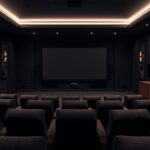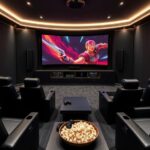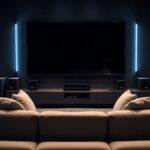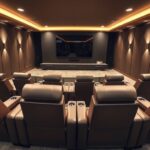
To design a dedicated home theater room, start by planning your layout carefully, considering seating comfort and sightlines. Focus on soundproofing and placing acoustic treatments like panels and bass traps to improve audio quality. Position speakers at ear level and create an even sound distribution. Control lighting with dimmable fixtures or blackout curtains. Combine smart seating arrangements with proper room treatments to achieve an immersive viewing experience. Exploring these steps further will help you craft the perfect home theater.
Key Takeaways
- Plan room dimensions and layout, considering optimal speaker placement and viewing angles for immersive experience.
- Incorporate acoustic treatments like panels, bass traps, and diffusers to enhance sound clarity and reduce echoes.
- Arrange seating to ensure unobstructed sightlines, comfortable distances from the screen, and even sound distribution.
- Optimize lighting with dimmable fixtures and blackout options to prevent glare and enhance visual quality.
- Integrate acoustics, seating, and lighting thoughtfully to create a balanced, immersive, and enjoyable home theater environment.

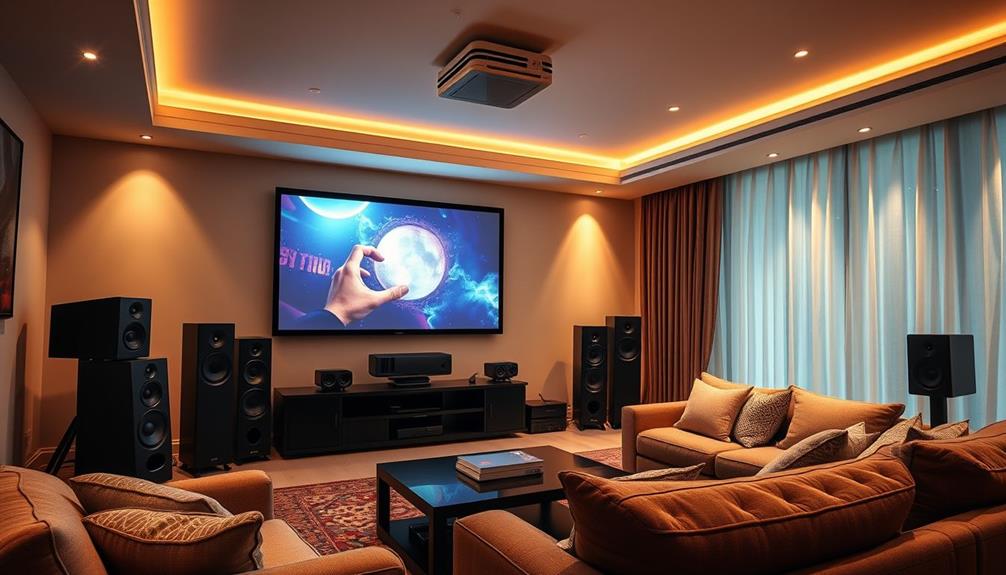
Creating a dedicated home theater room transforms your entertainment experience, but it requires careful planning from the start. One of the most important aspects to consider early on is how you’ll enhance the room’s acoustics and seating arrangements. Acoustic treatments are essential for delivering clear, immersive sound, so you’ll want to think about panel placement, bass traps, and diffusers that absorb or scatter sound waves. These treatments help eliminate echoes, reduce sound reflections, and prevent sound from leaking into other areas, creating a more authentic theater experience. Positioning your speakers and viewing area with sound in mind is key; you should aim for a symmetrical setup that places the speakers at ear level when seated, ensuring balanced audio across the room. Combining acoustic treatments with strategic seating arrangements guarantees that everyone enjoys a consistent audio experience, regardless of where they sit.
Once you’ve addressed acoustics, focus on the layout of your seating. Your goal is to create an arrangement that maximizes comfort and sightlines while maintaining ideal sound quality. Start by measuring the room’s dimensions and then select seats that fit comfortably without overcrowding the space. Consider tiered seating if you have a larger room, so everyone gets an unobstructed view of the screen. Keep in mind that the distance between the seats and the display should be proportionate to the size of the screen; generally, the viewing distance should be about 1.5 to 2.5 times the diagonal size of your display. Arrange seats in a way that allows for easy access and movement, avoiding placing them too close to walls or corners where sound can bounce or where the room might feel cramped. Additionally, reviewing retail hours for related services like lighting or furniture stores can help you plan your shopping trips efficiently.
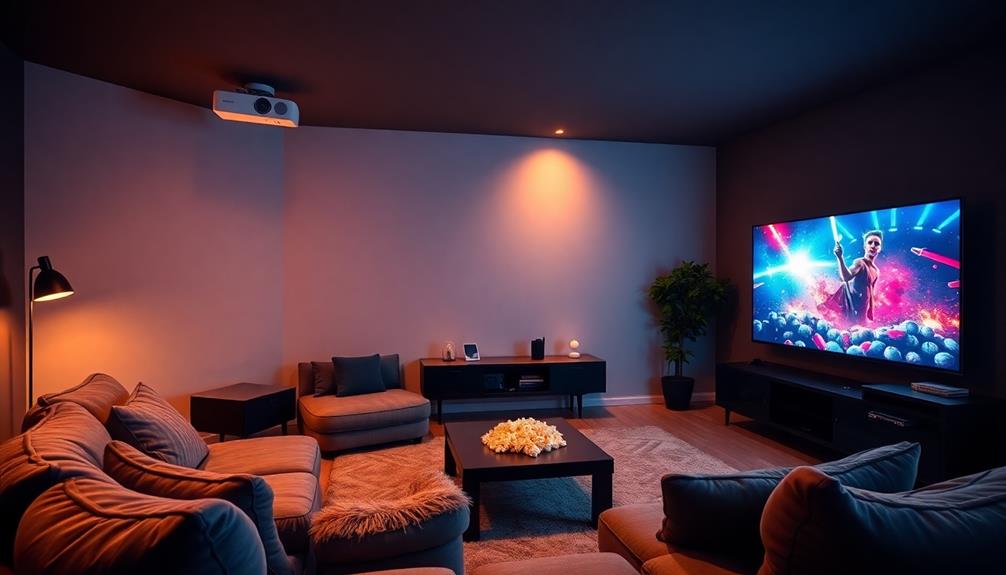
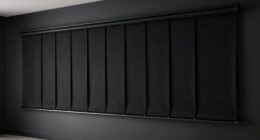
Lighting also plays a crucial role in your theater design. Incorporate dimmable lights or blackout window treatments to control ambient lighting, which can wash out images or disturb the viewing experience. When planning your seating, think about how lighting will interact with the space—avoid placing seats directly beneath bright lights or near reflective surfaces. Overall, your goal is to craft a layout that complements the room’s acoustics, provides comfort, and offers an unobstructed view of the screen from every seat. By carefully integrating acoustic treatments with thoughtful seating arrangements, you set a solid foundation for an enjoyable, immersive home theater that’s tailored precisely to your preferences and space.
Frequently Asked Questions
What Is the Ideal Room Size for a Home Theater?
You should aim for a room around 200 to 400 square feet for a home theater. This size balances room acoustics and seating comfort, ensuring sound isn’t muffled or overly echoey. A space of this size lets you arrange comfortable seating without feeling cramped, while also allowing proper speaker placement for ideal audio quality. Keep in mind, larger rooms may require additional acoustic treatment for the best experience.
How Can I Soundproof My Home Theater Effectively?
To soundproof your home theater effectively, start by sealing gaps around doors and windows with weatherstripping or acoustic caulk. Use soundproofing materials like mass-loaded vinyl or resilient channels on walls, and add acoustic treatments such as bass traps and foam panels to absorb sound. You can also install a floating floor or ceiling to minimize vibrations. These steps create a quieter, immersive experience by reducing sound leakage and echo.
What Lighting Options Are Best for a Theater Room?
Lighting is key to creating the perfect theater vibe, so don’t put all your eggs in one basket. Opt for LED strips for customizable, ambient lighting that lines the ceiling or floor. Add dimmable sconces for soft, focused illumination that you can control easily. This combo allows you to set the mood effortlessly, making your theater room both functional and cozy, and ensuring you’re always in the right light.
How Do I Choose the Right Projector or TV?
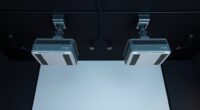
To choose the right projector or TV, consider your screen resolution needs; opt for 4K for crisp, detailed images. If you prefer a projector, verify it has sufficient brightness—at least 2,000 lumens—to handle ambient light. For TVs, size and picture quality matter; pick a model that fits your space and offers excellent contrast. Ultimately, match the device’s specs to your room’s lighting and viewing preferences for the best experience.
What Are the Best Seating Arrangements for Optimal Viewing?
Imagine you’re hosting movie night, and everyone’s comfortable with perfect theater comfort. A popular seating arrangement is tiered rows with plush recliners or sectional sofas, facing the screen directly. This setup maximizes sightlines and minimizes distractions. Opt for a mix of seating styles, like individual seats and loveseats, to accommodate different preferences. Prioritize spacing to make certain of clear views and easy movement, creating an inviting, immersive home theater experience.
Conclusion
Creating your perfect home theater is about more than just tech; it’s about crafting an experience tailored to you. From lighting to acoustics, every detail matters. Are you ready to transform your space into a personal cinematic oasis? With careful planning and passion, you can turn any room into a stunning escape. So, why settle for less when your ultimate movie nights are just a few steps away?