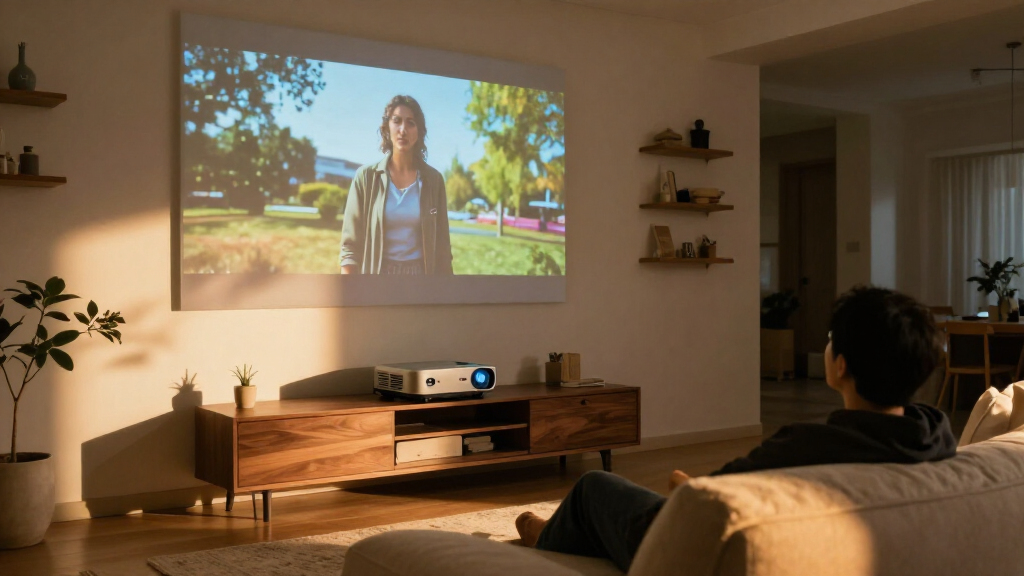
Ultra short throw projectors can create a large image from a spot close to the wall, though picture quality, room lighting, and setup demands vary widely. I’d put the Hisense PX3-PRO at the top for a premium home cinema, while the Hisense PT1 and AWOL VISION LTV-3000 Pro stand out for buyers weighing triple-laser color and theater-focused features. The lineup also includes classroom-oriented and portable short-throw options, but those serve different needs from a living-room UST system. The main tradeoffs are brightness, color performance, installation flexibility, and whether the projector’s smart features suit your setup. Read on for the full breakdown and a guide to choosing the right fit.

Get business pricing on your home office setup
- Business-only prices and quantity discounts
- Tax-exempt purchasing
- Multiple users, one account, clear invoices
Complete the kit


Key Takeaways
- The Hisense PX3-PRO is my best overall pick because it pairs a home-cinema focus with triple-laser color, making it a strong starting point for buyers who want a dedicated large-screen setup.
- The Hisense PT1 and AWOL VISION LTV-3000 Pro offer distinct alternatives: the PT1 is another triple-laser home option, while the LTV-3000 Pro adds 3D support for viewers who want that specific feature.
- AWOL VISION’s Aetherion Pro and Aetherion Max target premium buyers, while the lineup’s more portable and compact models trade some theater-first emphasis for easier placement or transport.
- Not every short-throw projector here is an ultra short throw model: products such as the BenQ TH671ST and Optoma GT2000HDR have different placement expectations, so check the throw distance before planning a UST-style installation.
- The Epson PowerLite 760W is aimed at presentation settings, and the portable smart models focus on convenience; neither should be chosen solely because the broader list centers on home cinema.


| ultra short throw projector | Brightness | Native resolution | Throw ratio |
|---|---|---|---|
| Portable Smart Projector with | — | 1080p | 0.8:1 |
| Hisense PT1 4K Ultra Short Thr | 2,500 ANSI lumens | 3840 × 2160 | — |
| BenQ TH671ST 1080p Short Throw | 3,000 ANSI lumens | 1920 × 1080 | 0.69–0.83 |
| AWOL VISION Aetherion Pro 4K U | Description: 2,600 ISO lumens; specifications: 3,000 lm | 3840 × 2160 | — |
| Hisense PX3-PRO Ultra Short Th | 3,000 ANSI lumens | — | — |
| Epson PowerLite 760W Ultra Sho | 4,100 lumens | 1280 × 800 (WXGA) | — |
| Optoma GT2000HDR Ultra-Compact | 3,500 lumens | 1920 × 1080 (Full HD) | — |
| iSinbox Short-Throw Smart Proj | — | 1080p | 1.1:1 |
| GO2 Upgrade 4K Short Throw Pro | 5,000 ANSI lumens | — | 1:1 |
| Nova Pro 4K Ultra Short Throw | 2,100 ISO lumens | — | 0.23:1 |
| GO2 White Short Throw 4K Proje | 8000 ANSI lumens | — | 1:1 |
| AWOL VISION Aetherion Max 4K U | 3,300 ISO lumens | 3840 x 2160 | 0.2:1 |
| JMGO O2S Ultra 4K Ultra Short | 3,600 ISO lumens | — | 0.16:1 |
| AWOL VISION LTV-3000 Pro 4K 3D | 2,000 lm; maximum white brightness 3,000 ANSI lumens | 3840 x 2160 | 0.25:1 |
| Optoma Photon GO ML1080UST Por | 650 ANSI lumens | 1920 x 1080 | — |
More Details on Our Top Picks
Portable Smart Projector with Google TV, Native 1080p, 4K Support, HDR10, WiFi 6, and Bluetooth 5.3
Portability and flexible placement give this model a distinct place in an ultra short throw roundup. Its 0.8:1 ratio can create a large image from less distance than a conventional projector, while the 2.6-pound body and rotatable stand make it easier to move between rooms or take on a trip. Google TV, voice control, and automatic focus and alignment cut down on setup steps. Compared with the Hisense PT1, it trades native 4K and a much larger screen ceiling for a lighter, more adaptable setup. That tradeoff matters: 4K input is decoded but displayed at native 1080p, and the description warns that the image may soften at larger projection distances. I’d choose it for flexible viewing, not a fixed, premium theater installation.
Pros:- Google TV and voice control provide built-in access to streaming apps
- Automatic focus, keystone correction, obstacle avoidance, and screen alignment simplify setup
- Lightweight body and rotatable stand support portable placement
- WiFi 6, Bluetooth 5.3, HDMI ARC/CEC, and USB offer flexible connections
Cons:- Native 1080p resolution means 4K content is displayed at 1080p
- Image quality may soften at larger projection distances
- A 60–120-inch image range is more limited than the Hisense PT1’s 80–150-inch range
Best for: Renters and frequent travelers who want a lightweight projector with built-in streaming and flexible tabletop or tripod placement
Not ideal for: Home theater buyers prioritizing native 4K detail, large fixed screens, or the image scale of the Hisense PT1
- Native resolution:1080p
- 4K support:4K decoding
- Throw ratio:0.8:1
- Screen size:60–120 inches
- Smart platform:Android 14.0 / Google TV
- Connectivity:WiFi 6, Bluetooth 5.3, HDMI ARC/CEC, USB
- Weight:2.6 lb (1.2 kg)
- Automatic setup:Auto focus, keystone correction, obstacle avoidance, screen alignment
Our verdict“Choose this compact model if easy transport and automatic setup matter more than native 4K or a very large screen.”
Hisense PT1 4K Ultra Short Throw Triple Laser Projector
The Hisense PT1 makes the strongest all-around case here for a dedicated ultra short throw home theater. Its native 4K resolution, triple laser color, 2,500 ANSI lumens, and 80–150-inch image range combine high detail with the room-saving placement UST buyers want. Google TV is built in, while Dolby Vision, Dolby Atmos, IMAX Enhanced, and 3D support give compatible films and shows more ways to use the system. Compared with the Hisense PX3-PRO, the PT1’s listed brightness is lower, so the PX3-PRO may suit buyers leaning harder toward gaming and brightness. The PT1 still offers a compelling theater-focused balance, but its 150-inch ceiling is smaller than the AWOL VISION Aetherion Pro’s 200-inch maximum. An ALR screen is sold separately, and placement needs to fit its stated throw range.
Pros:- Native 4K resolution supports detailed large-screen viewing
- Triple laser engine covers 110% of the BT.2020 color space
- Google TV, Dolby Vision, Dolby Atmos, and IMAX Enhanced bring extensive home theater features
- 80–150-inch projection range accommodates a broad range of UST setups
Cons:- Compatible ALR screen is sold separately
- Maximum image size is 150 inches, below the AWOL VISION Aetherion Pro’s listed 200 inches
- The listing’s minimum and maximum throw-distance labels appear reversed, so installation distance needs confirmation
Best for: Home theater buyers who want native 4K, triple-laser color, built-in Google TV, and a large screen from a short room depth
Not ideal for: Viewers who need a screen larger than 150 inches or expect a compatible ALR screen to be included
- Native resolution:3840 × 2160
- Brightness:2,500 ANSI lumens
- Contrast ratio:3000:1
- Image size:80–150 inches
- Minimum throw distance:1.32 feet
- Light source life:25,000 hours
- Smart platform:Google TV
- Features:Triple laser, Dolby Vision, Dolby Atmos, IMAX Enhanced, 3D, AI upscaling
Our verdict“Pick the PT1 for a balanced 4K UST theater setup if a 150-inch limit and separate screen purchase fit your room and plans.”
BenQ TH671ST 1080p Short Throw Home Entertainment Projector
The BenQ TH671ST suits buyers who want a short-throw image for games or films without making native 4K the priority. Its 3,000 ANSI lumens and 1080p DLP picture help it serve brighter everyday spaces, and the 0.69–0.83 throw ratio can form a 100-inch picture from about five feet. That placement is useful, but it is not the near-wall setup offered by the Hisense PT1 or Hisense PX3-PRO, both purpose-built ultra short throw models. The BenQ’s two HDMI ports and vertical keystone adjustment make it practical to position and connect, while its 5W speaker is best treated as a fallback. The lamp’s rated life ranges from 4,000 hours in normal mode to 15,000 in Lampsave, so heavy use involves a more conventional lamp-life tradeoff than the laser models.
Pros:- 3,000 ANSI lumens support viewing in brighter rooms
- Short-throw lens can project a 100-inch image from about five feet
- Native 1080p and over 92% Rec. 709 color coverage suit HD entertainment
- Two HDMI ports, 1.2x zoom, and vertical keystone adjustment aid setup
Cons:- Requires substantially more distance from the screen than the Hisense PT1 or PX3-PRO
- Native resolution is 1080p rather than 4K
- Lamp life is 4,000 hours in normal mode and depends on using Lampsave mode for the longer rating
Best for: Buyers setting up a 1080p gaming or movie space who have about five feet of throw distance and value brightness over native 4K
Not ideal for: Shoppers who need an ultra short throw projector placed just inches from the screen or want a long-life laser light source
- Native resolution:1920 × 1080
- Brightness:3,000 ANSI lumens
- Native contrast ratio:10,000:1
- Throw ratio:0.69–0.83
- Projection size:30–300 inches
- Color coverage:More than 92% Rec. 709
- Lamp life:4,000 hours normal; up to 15,000 hours Lampsave
- Connectivity:2 HDMI, VGA in/out, USB Type-A, USB mini-B, 3.5 mm audio in/out, RS232
Our verdict“Choose the TH671ST for a bright 1080p short-throw setup when you have more room depth than an ultra short throw installation allows.”
AWOL VISION Aetherion Pro 4K Ultra Short Throw Laser Projector
Screen scale is the Aetherion Pro’s clearest advantage: its stated 80–200-inch range reaches beyond the 150-inch ceiling of both the Hisense PT1 and Hisense PX3-PRO. It pairs that capacity with native 4K, Dolby Vision and HDR10+, and gaming features including VRR, ALLM, and 1 ms latency. The listed color gamut and contrast figures also point toward a projector aimed at ambitious theater setups, while anti-rainbow-effect technology may help viewers sensitive to that distraction. Brightness needs careful interpretation: the description says 2,600 ISO lumens, while the specifications list 3,000 lm, so the data does not provide one consistent figure. Compared with the Hisense models, installation details are also less settled; the listing gives a broad throw range without tying distances to specific screen sizes.
Pros:- Listed image range reaches up to 200 inches, beyond the Hisense PT1 and PX3-PRO
- Native 4K with Dolby Vision, HDR10+, HDR10, and HLG support
- VRR, ALLM, and 1 ms latency support responsive gaming
- Anti-rainbow-effect technology is designed to reduce visual distractions
Cons:- Brightness is inconsistent between the 2,600 ISO lumens description and 3,000 lm specification
- The listing does not tie a fixed throw distance to a specific image size
- Its 200-inch maximum may exceed the needs of buyers with more typical UST screen plans
Best for: Dedicated theater and gaming buyers planning an 80–200-inch image who can confirm placement and brightness details before installation
Not ideal for: Buyers who want clearly stated screen-to-projector measurements or consistent brightness information for a tightly planned room
- Native resolution:3840 × 2160
- Maximum image size:200 inches
- Minimum image size:80 inches
- Brightness:Description: 2,600 ISO lumens; specifications: 3,000 lm
- Color gamut:110% Rec.2020
- Contrast:Up to 6,000:1 native with IRIS; up to 60,000:1 viewing contrast
- Gaming features:1 ms latency, VRR, ALLM, Dolby Vision Gaming
- Supported HDR formats:Dolby Vision, HDR10+, HDR10, HLG
Our verdict“Choose the Aetherion Pro if you want a 4K UST image beyond 150 inches and can verify the installation measurements and brightness with the seller.”
Hisense PX3-PRO Ultra Short Throw Triple Laser Projector
The Hisense PX3-PRO is the lineup’s gaming-led UST pick, pairing native 4K with a listed 240Hz refresh rate and Xbox-focused positioning. Its 80–150-inch range keeps it in the same general installation class as the Hisense PT1, while triple-laser color, 3,000 ANSI lumens, and Google TV give it broader appeal for films and streaming too. Dolby Vision, Dolby Atmos, and IMAX Enhanced add theater credentials, though the AWOL VISION Aetherion Pro has the more expansive stated screen ceiling at 200 inches and lists VRR and ALLM explicitly. The PX3-PRO’s 3,000 lumens may not overcome significant ambient light, and the description recommends an ALR screen for best results. Its 250W power consumption is also a notable part of a permanent setup.
Pros:- Native 4K resolution and listed 240Hz refresh rate target detailed, responsive gaming
- Triple laser engine is specified at 110% BT.2020 color gamut and approximately ΔE 0.9 color accuracy
- Google TV plus Dolby Vision, Dolby Atmos, and IMAX Enhanced suit mixed gaming and movie use
- 80–150-inch UST range supports large images from a tabletop placement
Cons:- Maximum image size is 150 inches, smaller than the AWOL VISION Aetherion Pro’s stated 200 inches
- 3,000 ANSI lumens may be insufficient in rooms with significant ambient light
- The description recommends an ALR screen, and power consumption is listed at 250 watts
Best for: Xbox and console gamers who want a native 4K UST projector with a large screen and integrated Google TV
Not ideal for: Buyers planning screens larger than 150 inches, very bright-room viewing, or a setup without room for an ALR screen
- Resolution:4K UHD (3840 × 2160)
- Brightness:3,000 ANSI lumens
- Contrast ratio:3000:1
- Projection size:80–150 inches
- Refresh rate:240Hz
- Color gamut:110% BT.2020
- Smart platform:Google TV
- Power consumption:250 watts
Our verdict“Pick the PX3-PRO for a gaming-first 4K UST setup if its 150-inch limit and screen requirements suit your room.”
Epson PowerLite 760W Ultra Short Throw WXGA 3LCD Laser Projector
The PowerLite 760W makes the most sense where readable lessons and dependable daytime visibility matter more than home-cinema detail. Its 4,100 lumens of color and white brightness and 3LCD imaging suit presentations, while the short throw helps keep a presenter from casting shadows across the screen. Wireless casting for up to 50 devices and split screen from as many as four sources support shared classroom work. Compared with the Optoma GT2000HDR, the Epson prioritizes classroom collaboration and placement flexibility over Full HD video and game features. The tradeoff is its 1280 × 800 WXGA resolution, which is less suited to fine text or films than 1080p and 4K options. Its image size also tops out at 150 inches, and the listed throw distance is limited to 3.04 feet.
Pros:- 4,100 lumens of color and white brightness support visibility in lit classrooms
- Ultra short throw placement helps reduce presenter shadows
- Wireless casting supports up to 50 devices
- Split-screen support can show up to four device sources
Cons:- WXGA resolution provides less detail than the lineup’s 1080p and 4K models
- Maximum listed image size is 150 inches
- Listed throw distance tops out at 3.04 feet
Best for: Teachers and training rooms that need bright, shadow-reduced projection with wireless sharing from multiple devices
Not ideal for: Home theater buyers who want Full HD or 4K detail, or anyone needing a very large image beyond 150 inches
- Native resolution:1280 × 800 (WXGA)
- Brightness:4,100 lumens
- Display technology:3LCD
- Light source:Laser diode; 20,000-hour life
- Image size:60–150 inches
- Throw distance:1.11–3.04 feet
- Connectivity:Ethernet, HDMI, USB, Wi-Fi
- Placement:Wall mountable; 360-degree placement
Our verdict“Choose the PowerLite 760W for bright, collaborative classroom projection; skip it if home-video resolution is your priority.”
Optoma GT2000HDR Ultra-Compact Short-Throw Full HD Laser Projector
The GT2000HDR is the more focused choice for a compact gaming or movie setup where Full HD sharpness and short-throw placement count more than built-in streaming. It can form a 120-inch image from 4 feet 4 inches, while enhanced game mode targets responsive play. Its 3,500 lumens and laser light source rated for up to 30,000 hours make it a practical fixed-room option, and IPX6 dust resistance adds protection in dusty spaces. Compared with the Epson PowerLite 760W, it trades classroom sharing tools and higher stated brightness for 1920 × 1080 resolution and gaming features. The key limit is that 4K HDR input is not native 4K display; detail is limited to 1080p. It is also a short-throw model, not an ultra-short-throw projector, so it needs more room from screen to projector than the Nova Pro.
Pros:- Full HD native resolution for sharper detail than WXGA models
- Projects a 120-inch image from 4 feet 4 inches
- Enhanced game mode is aimed at gaming use
- Laser light source is rated for up to 30,000 hours
Cons:- 4K HDR input is accepted but displayed at native 1080p resolution
- Short-throw placement requires more distance than ultra-short-throw models
- No built-in smart TV platform is listed
Best for: Console players and film viewers fitting a 1080p laser projector into a smaller room with about four and a half feet of placement depth
Not ideal for: Buyers who need an ultra-short-throw setup directly beside the screen or native 4K detail
- Native resolution:1920 × 1080 (Full HD)
- Brightness:3,500 lumens
- Light source:DuraCore laser; up to 30,000 hours
- Contrast ratio:300,000:1
- 120-inch image distance:4 feet 4 inches
- Maximum image size:300 inches
- Dust resistance:IPX6
- Connectivity:HDMI, USB, RCA, 3.5 mm audio
Our verdict“Pick the GT2000HDR for compact-room 1080p gaming, but choose an ultra-short-throw model if the projector must sit close to the wall.”
iSinbox Short-Throw Smart Projector with Native 1080p, 4K Input Support, Netflix, Auto Focus, HDR10+, Dolby Audio, and 360° Stand
The iSinbox is aimed at viewers who want a portable all-in-one setup and value flexible aiming as much as a big picture. Its 360-degree stand doubles as a carry handle, while autofocus, automatic keystone correction, and obstacle avoidance can cut down on manual adjustments when moving between rooms. Built-in streaming apps and speakers make casual viewing possible without extra gear, and its stated 100-inch image distance of 7.9 feet suits rooms where a conventional long-throw projector would need even more space. Compared with the Optoma GT2000HDR, it adds smart viewing and easier repositioning, but lacks the Optoma’s stated brightness and gaming emphasis. The tradeoff is that 4K is decoding support, not native resolution: output remains 1080p. At 7.9 feet for 100 inches, it also needs more placement depth than the Nova Pro, whose 0.23:1 ratio is true ultra short throw.
Pros:- 360-degree stand provides flexible aiming and works as a carry handle
- Autofocus and automatic keystone correction simplify setup
- Built-in streaming apps and speakers support standalone viewing
- Wi-Fi 6, Bluetooth 5.4, and eARC provide several connection options
Cons:- Native output is 1080p despite 4K decoding support
- A 100-inch image requires 7.9 feet of throw distance
- Remote batteries are not included
Best for: Renters and casual viewers who move a 1080p projector between rooms and want built-in streaming with quick setup
Not ideal for: Buyers who need a projector close to the screen, native 4K display, or verified brightness for a lit room
- Native resolution:1080p
- 4K support:4K decoding
- Throw ratio:1.1:1
- 100-inch image distance:7.9 feet
- HDR:HDR10+
- Keystone correction:6D automatic
- Connectivity:Wi-Fi 6, Bluetooth 5.4, eARC
- Stand:Adjustable 360-degree stand with carry handle
Our verdict“Choose the iSinbox for portable, self-contained 1080p viewing, but skip it if you need true ultra-short-throw placement or native 4K.”
GO2 Upgrade 4K Short Throw Projector with VIDAA OS, 5000 ANSI Lumens, 65W Dolby Audio, Voice Control, and Auto Focus
The GO2 Upgrade makes a case for buyers who want a short-throw projector with substantial built-in audio. Its 65W stereo speakers and Dolby Audio reduce the need to plan around an external sound system, while VIDAA provides onboard access to major streaming apps and Apple AirPlay support. The listed 1:1 throw ratio and 100-inch image from 8 feet help it fit rooms that cannot accommodate a conventional long-throw setup. Against the iSinbox, the GO2 lists 4K resolution and much higher claimed brightness, but gives up the iSinbox’s 360-degree stand and Wi-Fi 6 detail. Its 50,000:1 contrast ratio is also a different claim from the Nova Pro’s 3,000:1, so those figures alone do not establish which will look better. This is still a short-throw, not ultra-short-throw pick: eight feet for 100 inches is far more distance than the Nova Pro requires. Its maker also cautions against bright-room use, and VIDAA may lack niche apps.
Pros:- 65W stereo speakers with Dolby Audio can reduce reliance on separate speakers
- VIDAA includes access to major streaming apps and Apple AirPlay support
- 1:1 throw ratio supports a 100-inch image from 8 feet
- Lists voice control, autofocus, and two HDMI 2.1 ports
Cons:- Requires about 8 feet for a 100-inch image, unlike true ultra-short-throw options
- The description says it is not suited to brightly lit rooms despite its lumen claim
- Proprietary VIDAA may not include niche apps some viewers use
Best for: Viewers who want a short-throw living-room or outdoor setup with strong onboard sound and built-in streaming
Not ideal for: Buyers with almost no space between projector and screen, or those who need a broad selection of niche streaming apps
- Resolution:4K
- Brightness:5,000 ANSI lumens
- Contrast ratio:50,000:1
- Throw ratio:1:1
- 100-inch image distance:8 feet
- Audio:65W stereo speakers; Dolby Audio
- Operating system:VIDAA
- Connectivity:Wi-Fi, Bluetooth, 2 × HDMI 2.1, 2 × USB, AV, 3.5 mm
Our verdict“Choose the GO2 Upgrade if onboard audio and streaming matter most, but opt for the Nova Pro when the projector must sit close to the screen.”
Nova Pro 4K Ultra Short Throw Laser Projector with Google TV
The Nova Pro is the clearest fit for the roundup because its 0.23:1 throw ratio places a 4K image close to the screen: the listed throw distance is 0.13 to 0.49 meters for 80- to 150-inch images. That placement can make a large screen workable in a shallow room and keeps the projector out of the main viewing area. Native 3840 × 2160 resolution, HDR10 and HLG, plus Google TV and Netflix give it a complete home-entertainment focus. Compared with the GO2 Upgrade, the Nova Pro needs dramatically less room to form a large image and has a more familiar Google TV platform, though the GO2 claims much higher brightness and more powerful onboard speakers. The Nova Pro’s 2,100 ISO lumens and 3,000:1 contrast ratio make light control important; the product data recommends an ALR screen, and direct sunlight can interfere with viewing.
Pros:- 0.23:1 throw ratio supports large images from very close placement
- Native 3840 × 2160 resolution with HDR10 and HLG
- Google TV, Netflix, Google Assistant, and Google Cast are built in
- Dual 15W speakers support Dolby Audio and DTS-HD
Cons:- 2,100 ISO lumens make room light control important
- Direct sunlight can affect viewing, and an ALR screen is suggested
- Tabletop placement may not suit buyers planning a wall-mounted installation
Best for: Home theater buyers with limited room depth who want native 4K and integrated Google TV
Not ideal for: Viewers who need strong performance in direct sunlight or a bright room without controlling ambient light
- Resolution:3840 × 2160
- Display technology:DLP
- Light source:ALPD laser
- Brightness:2,100 ISO lumens
- Throw ratio:0.23:1
- Image size:80–150 inches
- Throw distance:0.13–0.49 meters
- Smart features:Google TV, Netflix, Google Assistant, Google Cast
- Audio:Dual 15W speakers; Dolby Audio and DTS-HD
Our verdict“Choose the Nova Pro for native 4K ultra-short-throw viewing in a light-controlled room with limited projector-to-screen space.”
GO2 White Short Throw 4K Projector with 8000 ANSI Lumens, 100W Dolby Audio, and AI Smart TV OS
The GO2 combines a 1:1 throw ratio, built-in streaming, and unusually powerful speakers, making it a flexible choice for buyers who want one unit for movies, games, and occasional outdoor viewing. Its 100-inch image from eight feet needs more room than the JMGO O2S Ultra, whose 0.16:1 ratio is designed to sit very close to the wall. In exchange, the GO2 offers a broader stated image range and dual 100W Dolby Audio speakers, so a separate sound system may be less urgent. The claimed 8,000 ANSI lumens is a strong headline, but the product data still says direct sunlight can wash out the picture; controlled light matters. Autofocus and keystone tools ease placement, though the AI setup features must be enabled manually.
Pros:- Dual 100W Dolby Audio speakers can reduce the need for separate speakers
- Built-in AI Smart TV OS includes access to apps and live TV
- 1:1 throw ratio can produce a 100-inch image from eight feet
- Autofocus, keystone correction, and obstacle avoidance support setup
Cons:- Needs controlled ambient light for a clear picture, especially away from direct sunlight
- AI setup features must be enabled manually
- Its one-to-one throw ratio requires more distance than the JMGO O2S Ultra
Best for: Buyers who want a short-throw projector with integrated streaming and room-filling sound for a flexible indoor and outdoor setup
Not ideal for: Living rooms where the projector must sit inches from the wall, or daytime spaces with direct sunlight
- Brightness:8000 ANSI lumens
- Resolution support:4K support
- Throw ratio:1:1
- Image size:50 to 500 inches
- Audio:Dual 100W Dolby Audio speakers
- Contrast ratio:50,000:1
- Light source life:100,000 hours
- Connectivity:Wi-Fi, Bluetooth, HDMI ARC/CEC, USB, 3.5 mm audio
Our verdict“Choose the GO2 if you want streaming and powerful built-in audio in a short-throw package and can give it several feet of setup distance.”
AWOL VISION Aetherion Max 4K Ultra Short Throw Laser Projector
The Aetherion Max stands out for pairing 0.2:1 ultra-short-throw placement with 4K RGB triple-laser projection and a gaming feature set built around 240Hz support, VRR, and ALLM. That makes it a more compelling fit for players who want a large image close to the wall than the GO2, which needs substantially more throw distance. Dolby Vision and other HDR formats broaden its appeal for films, while anti-rainbow-effect technology addresses a visual distraction sometimes associated with laser projection. The tradeoff is a 150-inch image-size ceiling, below the larger maximum claimed for the GO2. Bright overhead lighting can also reduce clarity; the supplied product information recommends an ALR screen for that setting. Its listed contrast ratio is a specification claim, not a substitute for room control.
Pros:- 0.2:1 throw ratio supports close-to-wall placement
- Gaming features include 240Hz support, VRR, ALLM, and 1ms-class input latency
- RGB triple-laser source and 4K resolution support detailed, colorful images
- Supports Dolby Vision, HDR10+, HDR10, and HLG
Cons:- Maximum image size is limited to 150 inches
- An ALR screen is recommended under direct overhead lighting
- Its close placement leaves less flexibility to adjust image size by moving the projector
Best for: Console and PC gamers who want a large 4K image close to the wall, with high refresh and variable refresh support
Not ideal for: Buyers who need an image larger than 150 inches or plan to watch under strong overhead lighting without an ALR screen
- Native resolution:3840 x 2160
- Brightness:3,300 ISO lumens
- Light source:RGB triple laser
- Throw ratio:0.2:1
- Maximum image size:150 inches
- Gaming features:240Hz support, VRR, ALLM, 1ms-class input latency
- HDR formats:Dolby Vision, HDR10+, HDR10, HLG
- Warranty:2 years
Our verdict“Pick the Aetherion Max if gaming responsiveness and close placement matter more than exceeding a 150-inch image.”
JMGO O2S Ultra 4K Ultra Short Throw Triple Laser Projector
With a 0.16:1 throw ratio, the O2S Ultra is the most placement-focused option in this group: it is designed to deliver a large picture from inches away, where the GO2’s 1:1 ratio needs several feet. Its 4K UHD resolution, RGB triple laser, and Dolby Vision support make it a strong fit for a dedicated close-wall setup, and native Google TV with Netflix integration keeps streaming simple. The 20W Dynaudio system also gives it a useful audio starting point, though the GO2’s stated 100W speaker system is the stronger choice for buyers prioritizing built-in sound. The O2S Ultra’s highly specific placement can make installation less forgiving, and the product data does not specify how long software updates will continue. It supports images from 80 to 150 inches.
Pros:- 0.16:1 throw ratio supports very close placement
- 4K UHD resolution and RGB triple-laser light source
- Dolby Vision support
- Google TV and Netflix are integrated, with 20W Dynaudio audio
Cons:- Specific close-wall placement limits setup flexibility
- Software update support duration is unspecified
- Its 20W audio system is less powerful on paper than the GO2’s dual 100W speakers
Best for: Viewers with very little space between the projector and wall who want built-in streaming and a 4K image
Not ideal for: Buyers who need flexible projector placement, stronger built-in audio, or a stated long-term software support commitment
- Resolution:3840 x 2160 (4K UHD)
- Brightness:3,600 ISO lumens
- Throw ratio:0.16:1
- Image size:80 to 150 inches
- Contrast ratio:4,000:1
- Sound system:20W Dynaudio, Dolby Atmos and DTS:X compatible
- Operating system:Google TV
- Mounting type:Tabletop
Our verdict“Choose the O2S Ultra when the projector must sit very close to the wall and you want 4K streaming in one unit.”
AWOL VISION LTV-3000 Pro 4K 3D Ultra Short Throw Triple Laser Projector
The LTV-3000 Pro takes a home-cinema approach to ultra-short throw: it combines 4K triple-laser projection with Dolby Vision, HDR10+, 3D, and a built-in center-channel speaker intended to keep dialogue clear. Its 0.25:1 ratio places it close to the wall, though the JMGO O2S Ultra’s 0.16:1 ratio allows an even tighter setup. The AWOL’s center channel gives it a distinct advantage for dialogue-focused viewing, while its stated 150-inch maximum matches the Aetherion Max. Room lighting is the key compromise: the product data says it performs best in darker rooms and suggests an ALR screen for brighter spaces. The fixed throw ratio also narrows placement options, so it suits a planned projection area better than a room where the unit needs to move around.
Pros:- Triple-laser light source with 4K, Dolby Vision, HDR10+, and 3D support
- Built-in center-channel speaker is designed to clarify dialogue
- 0.25:1 throw ratio supports close placement
- Control4, app, remote, and voice control compatibility
Cons:- Best suited to darker rooms; brighter spaces may need an ALR screen
- Fixed 0.25:1 throw ratio limits placement flexibility
- Maximum image size is 150 inches
Best for: Home-cinema viewers who want 3D support and clearer dialogue from a built-in center channel
Not ideal for: People who watch in bright rooms without an ALR screen or need flexible placement and image sizing
- Native resolution:3840 x 2160
- Throw ratio:0.25:1
- Image size:80 to 150 inches
- Brightness:2,000 lm; maximum white brightness 3,000 ANSI lumens
- Contrast ratio:2,500:1
- Color gamut:107% BT.2020; 147% DCI-P3
- Supported formats:3D, Dolby Vision, Dolby Atmos, HDR10+, H.265/HEVC
- Light source life:25,000 hours
Our verdict“Choose the LTV-3000 Pro for a darker-room cinema setup where 3D and dialogue clarity take priority.”
Optoma Photon GO ML1080UST Portable Ultra Short Throw 1080p Projector
The Photon GO makes ultra-short-throw viewing portable: its 0.34-to-0.81-foot throw range supports a 60-to-100-inch image, and its built-in battery allows up to 1.5 hours of cordless use. That makes it a better fit for temporary rooms or outdoor movie setups than the LTV-3000 Pro, which is designed around a fixed home-cinema installation. The tradeoff is resolution: the Optoma is native 1080p, while the AWOL and JMGO models offer native 4K. Its 650 ANSI lumens also favor dim settings over bright living rooms. Google TV, Cast, autofocus, and auto keystone simplify casual use, but the battery runtime is short enough that longer screenings will need a power connection.
Pros:- Portable tabletop design with a built-in battery
- Projects a 60-to-100-inch image from less than a foot away
- Google TV, Google Cast, Wi-Fi, and Bluetooth are built in
- Autofocus and auto keystone help with temporary setups
Cons:- Native resolution is 1920 x 1080, below the 4K AWOL and JMGO models
- 650 ANSI lumens favor dim rooms
- Battery runtime is up to 1.5 hours
Best for: People who want to move a short-throw projector between rooms or use it for brief cordless viewing
Not ideal for: Buyers seeking native 4K detail, bright-room performance, or cordless viewing longer than about 1.5 hours
- Native resolution:1920 x 1080
- Brightness:650 ANSI lumens
- Throw distance:0.34 to 0.81 feet
- Image size:60 to 100 inches
- Light source:RGB triple laser
- Battery life:Up to 1.5 hours
- Built-in speakers:20 watts
- Features:Google TV, Google Cast, autofocus, auto keystone, Game Mode
Our verdict“Pick the Photon GO for portable, close-wall viewing when convenience matters more than native 4K resolution or long battery runtime.”
How We Picked
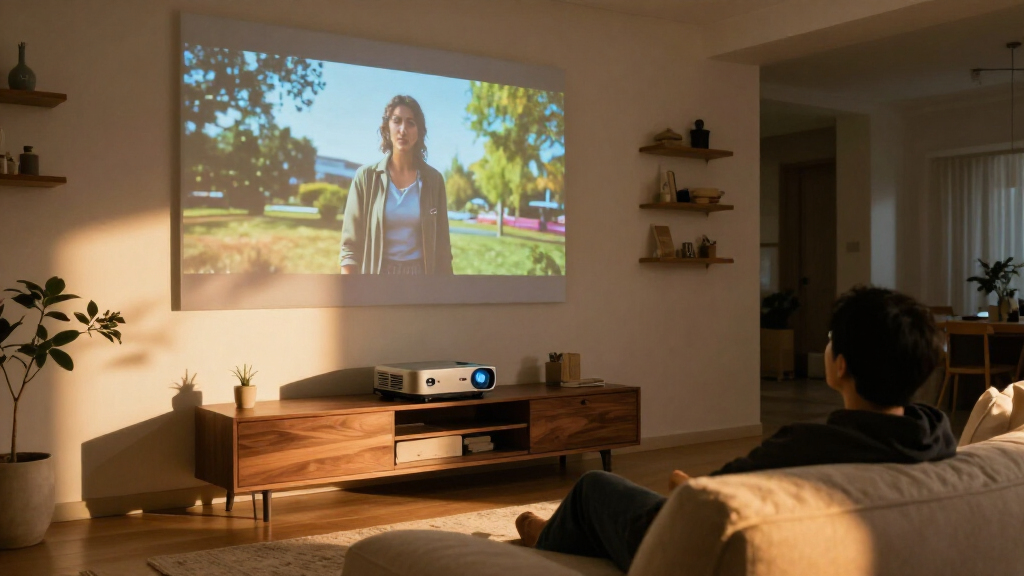
I ranked these models around how well they fit the promise of an ultra short throw projector: making a large image from very close to the screen or wall. I weighed stated resolution and light source, image and color capabilities, smart platform and connectivity, audio and setup features, and the intended use implied by each product. A feature only counted as an advantage when it addressed a real buyer need, such as 3D playback, portability, or classroom presentation.
The ranking gives priority to models positioned for home theater and UST viewing, then distinguishes premium options by their feature sets and likely audience. Products described as short throw, compact, portable, or classroom-oriented sit lower for this specific roundup because their stated purpose or placement differs from a dedicated UST living-room setup. Product names and listed specifications informed this comparison; I do not present it as hands-on testing, and buyers should confirm throw ratio, image size, and compatibility for their room before purchase.
Factors to Consider When Choosing Ultra Short Throw Projectors
Before choosing a model, I’d start with the room and the screen position, then match image and feature priorities to that setup. A projector labeled short throw may still need more distance than an ultra short throw unit, so the category name alone does not settle fit.
Measure the Wall-to-Projector Gap
Measure the depth of the cabinet or shelf where the projector will sit, including room for cables and ventilation. Then compare that distance with the manufacturer’s throw chart for your target screen size; a model’s headline label does not tell you how large an image it makes from your exact spot. UST placement is sensitive, so even a small shift can change image geometry and alignment. Avoid assuming that a short-throw model can sit as close as a UST model. If the projector will be moved or the furniture may change, favor a setup with enough placement flexibility to tolerate those changes. Confirm the chart for your intended aspect ratio and screen before committing.
Match Brightness to the Room and Screen
Room light changes how much brightness you need: a darkened room can support a cinema-focused image, while daytime viewing puts more pressure on light output and screen choice. Treat advertised brightness figures as one input, not a guarantee that colors and contrast will look equally strong under every condition. A suitable screen can help, especially where ambient light is difficult to control, but it cannot fix poor placement or unsuitable viewing conditions. Think about whether you can use curtains or dim lights during viewing. If not, prioritize a model and screen combination designed for that environment. This can be a better use of your budget than paying for a feature you will rarely use.
Choose Resolution and Color for What You Watch
Native resolution affects the detail the projector can display; support for a higher-resolution input does not mean the image is natively rendered at that resolution. For large screens and close viewing, fine detail becomes easier to notice, so check both the native resolution and supported formats. Triple-laser systems can appeal to buyers focused on color reproduction, but that advantage may matter less for casual viewing than reliable setup and the right image size. Consider your usual content, seating distance, and whether you watch films, sports, presentations, or a mix. Check HDR format support against your streaming devices and sources. Spend more on image capabilities only when your room and viewing habits let you benefit from them.
Plan the Screen and Installation Together
A flat, suitable screen surface matters because UST projection makes image distortions from wall texture or unevenness more apparent. Check whether your room needs an ambient-light-rejecting screen, and confirm that its material works with the projector’s light source and placement. A screen designed for a conventional projector may not behave the same way at a sharp upward projection angle. Measure the screen’s height and width against furniture, outlets, and the projector’s required position. Correcting alignment digitally can help with small adjustments, but it is not a substitute for proper physical placement. Include the screen and installation needs in your plan before settling on a projector.
Decide How Much Smart Functionality You Need
Built-in TV software can reduce the number of devices and remotes in a simple setup, while an external streaming player may be easier to replace or upgrade later. Check that the apps and services you rely on are available on the listed platform, and verify how it handles updates and connectivity. Wi-Fi, Bluetooth, voice control, and autofocus are convenient, but each matters only if it fits your routine. For a presentation or gaming setup, source connections and response characteristics may deserve more attention than streaming features. Also consider where speakers will sit and whether the projector’s audio is enough for your room. Choosing only by a long feature list can leave a mismatch between the projector and your actual use.
Set Priorities Before Paying for Premium Features
Premium models make the most sense when their image features, screen size, or specialized capabilities will see regular use. A buyer who mainly streams shows in a controlled room may gain less from a high-end feature set than someone building a dedicated theater. Conversely, a feature such as 3D support or a presentation-oriented format can be decisive for a narrower use case. Portable models may suit occasional viewing away from home, but portability can bring compromises in image scale, installation stability, or sound. Write down your two or three must-haves and use them to filter the field. This keeps secondary conveniences from overshadowing the placement and image requirements that determine whether a projector works in your room.
Frequently Asked Questions
How do I tell whether a short-throw model is truly suitable for an ultra short throw setup?
Check the manufacturer’s throw ratio and distance chart for the screen size you want, then compare it with your available shelf depth. The words “short throw” alone do not establish that a unit can sit directly below the screen. This lineup includes models explicitly presented as ultra short throw alongside products described as short throw or portable, so placement needs vary. Confirm the required gap, image height, and any installation constraints before buying. If the chart does not cover your planned size and distance, ask the manufacturer rather than estimating from the category name.
Can I use an ultra short throw projector on a regular painted wall?
You can project onto a wall, but the finish and flatness affect the result. UST projection angles can make texture, bumps, and slight unevenness more visible than expected, particularly across a large image. A dedicated screen may produce a more consistent surface, and an ambient-light-rejecting model can help in rooms that are not fully dark. The right choice depends on the room, viewing habits, and projector compatibility. Check the screen guidance for the specific model before pairing it with a screen.
Do I need a special screen for daytime viewing?
A special screen can help manage ambient light, but it cannot make every bright room look like a dark theater. Start by considering how much daylight reaches the screen and whether you can reduce it with blinds or curtains. Then check whether a screen designed for UST projection is recommended and compatible with the projector. Brightness claims should not be treated as a promise of strong contrast under direct sunlight. If daytime viewing is frequent, compare the complete projector, screen, and room setup rather than choosing by brightness alone.
Is 4K input support the same as native 4K resolution?
No. A projector may accept a 4K signal while displaying it at a lower native resolution, so those specifications describe different capabilities. Check the product’s stated native resolution and how it processes higher-resolution sources. This matters most when you plan a large image, sit relatively close, or watch detailed film content. Also confirm that your streaming device or player can output a format the projector supports. Treat “4K support” as a compatibility clue, not a stand-in for native 4K detail.
Should I choose a portable model or a dedicated living-room UST projector?
Choose based on how often the projector will move and how important a stable, large-screen setup is. Portable models in this roundup emphasize easier transport or flexible placement, while the home-theater-focused UST options are aimed at a more permanent screen position. Moving a projector can mean repeating alignment and setup, and the screen or room may not be consistent between locations. A fixed home setup may benefit more from dedicated image and installation features. If you need both, compare the portable model’s stated throw distance and resolution carefully before expecting theater-style results in every room.
Conclusion
For a home theater centerpiece, I’d choose the Hisense PX3-PRO as my best overall recommendation, with the Hisense PT1 as another triple-laser option to compare. Buyers seeking premium features should look at the AWOL VISION Aetherion Pro or Aetherion Max, while the AWOL VISION LTV-3000 Pro fits viewers who specifically want 3D support. For beginners, I’d favor a model whose smart platform and setup aids match their room, then verify the throw chart before purchase. The Epson PowerLite 760W is the better fit for presentation needs, and portable picks such as the Optoma Photon GO suit buyers who value mobility. For any choice, confirm placement, screen compatibility, and native resolution against your own viewing plan.
Veterans Day Picks

Shark Matrix Plus 2-in-1 Robot Vacuum and Mop with 60-Day Self-Emptying Base
As an affiliate, we earn on qualifying purchases.