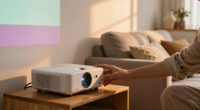
Short throw laser projectors can create a large image from close to the screen, but the right choice depends on whether you prioritize gaming, home theater, or flexible placement. My best overall pick is the BenQ TH671ST for its straightforward, gaming-friendly 1080p approach, while the Hisense PX3-PRO stands out for premium 4K ultra-short-throw viewing and the Optoma ML1080UST Photon GO for portable convenience. The main tradeoffs are image detail and smart features versus setup flexibility, room brightness, and the cost of moving up to an ultra-short-throw laser model. Read on for how all 15 options differ and which one best fits your room.

Get business pricing on your home office setup
- Business-only prices and quantity discounts
- Tax-exempt purchasing
- Multiple users, one account, clear invoices
Complete the kit


Key Takeaways
- The lineup splits into distinct use cases: BenQ TH671ST and the Optoma GT models focus on short-throw gaming, while the AWOL, Formovie, Hisense, and JMGO models target 4K ultra-short-throw home theater.
- Ultra-short-throw convenience depends on furniture and screen geometry: these projectors sit near the wall, but small placement changes can affect image alignment, so a stable, suitable surface matters.
- Native resolution and supported input are not interchangeable: some portable models advertise 4K support while using a 1080p imaging system, unlike the roundup’s 4K-class home-theater options.
- Laser does not mean every model is equally suited to a bright room: published brightness, room lighting, screen choice, and image size all shape viewing results.
- Extra features bring tradeoffs: integrated smart platforms and portability simplify some setups, while purpose-built gaming or installation models may better suit buyers who already have their own sources and audio.
| BenQ TH671ST 1080p Short-Throw Home Entertainment Projector |  | Best for Gaming on a Budget | Display technology: DLP | Native resolution: 1920 × 1080 | Brightness: 3,000 ANSI lumens | VIEW LATEST PRICE | See Our Full Breakdown |
| AWOL Aetherion Pro 4K Ultra Short Throw Triple Laser Projector |  | Best Premium UST for Gaming and HDR | Native resolution: 3840 × 2160 | Brightness: 2,600 ISO lumens in title; product information also lists 3,000 lumens | Maximum image size: 200 inches | VIEW LATEST PRICE | See Our Full Breakdown |
| GO2 4K Short-Throw Projector with VIDAA, Voice Control, Wi-Fi, and Bluetooth |  | Best Built-In Entertainment Package | Resolution: 4K stated; native versus supported is unspecified | Operating system: VIDAA | Brightness: 5,000 ANSI lumens | VIEW LATEST PRICE | See Our Full Breakdown |
| Portable Smart Projector with Google TV, Native 1080p, 4K Support, HDR10, Wi-Fi 6, and Bluetooth |  | Best Compact Projector for Small Rooms | Native resolution: 1080p | 4K support: 4K decoding | Throw ratio: 0.8:1 | VIEW LATEST PRICE | See Our Full Breakdown |
| AWOL VISION LTV-3000 Pro 4K 3D Ultra Short Throw Triple Laser Projector |  | Best for a Dedicated 3D Home Theater | Native resolution: 3840 × 2160 | Throw ratio: 0.25:1 | Image size: 80–150 inches | VIEW LATEST PRICE | See Our Full Breakdown |
| Formovie Theater 4K Ultra Short Throw Laser Projector |  | Best for a Premium Fixed Home Theater | Display type: DLP | Native resolution: 3840 × 2160 | Brightness: 1,800 lumens | VIEW LATEST PRICE | See Our Full Breakdown |
| ViewSonic LS740HD Full HD Laser Projector |  | Best for Bright, Large-Venue Projection | Native resolution: 1920 × 1080 | Brightness: 5,500 ANSI lumens | Throw ratio: 1.13–1.47 | VIEW LATEST PRICE | See Our Full Breakdown |
| Optoma GT2300HDR Full HD Short-Throw Laser Projector |  | Best for Short-Throw Gaming and Golf Simulation | Native resolution: 1920 × 1080 | Brightness: 3,600 lumens | Throw ratio: 0.49 | VIEW LATEST PRICE | See Our Full Breakdown |
| ViewSonic LSD400HD-ST 1080p Short Throw Laser Projector |  | Best for Managed Golf and Education Installations | Native resolution: 1920 × 1080 | Brightness: 4,000 ANSI lumens | Contrast ratio: 3,000,000:1 | VIEW LATEST PRICE | See Our Full Breakdown |
| Optoma ML1080UST Photon GO Portable Ultra Short Throw 1080p Projector |  | Best Portable Ultra-Short-Throw Pick | Native resolution: 1920 × 1080 | Brightness: 650 ANSI lumens | Image size: 60–100 inches | VIEW LATEST PRICE | See Our Full Breakdown |
| Optoma GT2000HDR Full HD Short Throw Laser Projector |  | Best for Dust-Prone Rooms | Native resolution: 1920 × 1080 | Brightness: 3,500 lumens | Light source: Laser; up to 30,000 hours | VIEW LATEST PRICE | See Our Full Breakdown |
| JMGO O2S Ultra 4K Ultra Short Throw Triple Laser Projector |  | Best All-in-One Ultra-Short-Throw Pick | Native resolution: 3840 × 2160 | Brightness: 3,600 ISO lumens | Throw ratio: 0.16:1 | VIEW LATEST PRICE | See Our Full Breakdown |
| Epson EpiqVision Ultra LS650 4K PRO-UHD Ultra Short Throw Laser Projector |  | Best for Bright Living Rooms | Resolution: 4K PRO-UHD with pixel shifting | Display technology: 3-chip 3LCD | Brightness: 3,600 lumens | VIEW LATEST PRICE | See Our Full Breakdown |
| Optoma GT2400HDR Full HD Short Throw Laser Projector | | Best for Bright-Room Gaming | Native resolution: 1920 × 1080 | Maximum display resolution: 3840 × 2160 input | Brightness: 4,200 lumens | VIEW LATEST PRICE | See Our Full Breakdown |
| Hisense PX3-PRO 4K Ultra Short Throw Triple Laser Projector |  | Best for 4K Home Theater Gaming | Native resolution: 3840 × 2160 | Projection size: 80–150 inches | Brightness: 3,000 lumens | VIEW LATEST PRICE | See Our Full Breakdown |
| short throw laser projector | Brightness | Native resolution | Connectivity | Image size |
|---|---|---|---|---|
| BenQ TH671ST 1080p Short-Throw | 3,000 ANSI lumens | 1920 × 1080 | — | 30–300 inches |
| AWOL Aetherion Pro 4K Ultra Sh | 2,600 ISO lumens in title; product information also lists 3,000 lumens | 3840 × 2160 | — | — |
| GO2 4K Short-Throw Projector w | 5,000 ANSI lumens | — | Wi-Fi, Bluetooth, 2 HDMI 2.1, 2 USB, AV and 3.5 mm headphone jack | 50–500 inches |
| Portable Smart Projector with | — | 1080p | Wi-Fi 6, Bluetooth 5.3, HDMI ARC/CEC and USB | — |
| AWOL VISION LTV-3000 Pro 4K 3D | 2,000 lm; maximum white brightness listed as 3,000 ANSI lumens | 3840 × 2160 | — | 80–150 inches |
| Formovie Theater 4K Ultra Shor | 1,800 lumens | 3840 × 2160 | — | 80–150 inches |
| ViewSonic LS740HD Full HD Lase | 5,500 ANSI lumens | 1920 × 1080 | Dual HDMI 1.4, USB Type-A, RS232, 3.5 mm audio out | 30–300 inches |
| Optoma GT2300HDR Full HD Short | 3,600 lumens | 1920 × 1080 | HDMI | — |
| ViewSonic LSD400HD-ST 1080p Sh | 4,000 ANSI lumens | 1920 × 1080 | Ethernet, HDMI, USB 2.0 Type-A, 3.5 mm audio | 40–300 inches |
| Optoma ML1080UST Photon GO Por | 650 ANSI lumens | 1920 × 1080 | Wi-Fi, Bluetooth, HDMI, RCA, USB-A | 60–100 inches |
| Optoma GT2000HDR Full HD Short | 3,500 lumens | 1920 × 1080 | HDMI, USB, RCA, 3.5 mm audio | — |
| JMGO O2S Ultra 4K Ultra Short | 3,600 ISO lumens | 3840 × 2160 | — | 80–150 inches |
| Epson EpiqVision Ultra LS650 4 | 3,600 lumens | — | HDMI, USB | 60–120 inches |
| Optoma GT2400HDR Full HD Short | 4,200 lumens | 1920 × 1080 | Ethernet, HDMI, USB, VGA | — |
| Hisense PX3-PRO 4K Ultra Short | 3,000 lumens | 3840 × 2160 | Bluetooth, Ethernet, HDMI, USB, Wi-Fi | — |
More Details on Our Top Picks
BenQ TH671ST 1080p Short-Throw Home Entertainment Projector
The BenQ TH671ST is the clearest fit here for gamers who want a large picture without moving a projector far behind the seating area. Its 0.69–0.83 throw ratio can produce a 100-inch image from about five feet, while low input lag keeps controls responsive. The 3,000 ANSI-lumen rating and native 1080p resolution make it a more straightforward gaming choice than the premium 4K AWOL Aetherion Pro, which adds laser color and HDR features but targets a different home-theater budget and setup. The BenQ’s tradeoff is its lamp-based light source: lamp life varies by mode, unlike the long-life laser systems elsewhere in this roundup. Its 5W speaker is also modest, so I would pair it with external audio for movie nights.
Pros:- Short-throw lens reaches a 100-inch image from about five feet
- Native 1080p resolution and 3,000 ANSI lumens suit gaming and everyday viewing
- Low input lag supports responsive gameplay
- More than 92% Rec. 709 coverage supports familiar, balanced color
Cons:- Lamp life ranges from 4,000 to 15,000 hours depending on operating mode
- The built-in 5W speaker is limited for room-filling movie sound
- Lacks the 4K resolution and laser light source offered by premium models such as the AWOL Aetherion Pro
Best for: Console and PC gamers who want a responsive 1080p picture in a small or medium room and can add separate audio.
Not ideal for: Buyers seeking a laser light source, built-in cinematic sound, or 4K detail; this is a lamp-based 1080p projector with a small speaker.
- Display technology:DLP
- Native resolution:1920 × 1080
- Brightness:3,000 ANSI lumens
- Throw ratio:0.69–0.83
- Image size:30–300 inches
- Contrast ratio:10,000:1
- Speaker:5W × 1
- Weight:2.7 kg (5.95 lb)
Our verdict“Choose the TH671ST if responsive 1080p gaming and a short setup distance matter more than laser longevity or built-in sound.”
AWOL Aetherion Pro 4K Ultra Short Throw Triple Laser Projector
The AWOL Aetherion Pro is the feature-heavy premium pick for buyers building a large-screen theater who also want gaming capability. Its 4K resolution, 110% Rec.2020 gamut, Dolby Vision and HDR10+ support offer a broader color and HDR feature set than the 1080p BenQ TH671ST. Gaming features are unusually prominent for this class: the listed 1 ms latency, VRR and ALLM are aimed at keeping play responsive on a big image. I would not treat the advertised brightness as settled, though: the supplied data lists both 2,600 ISO lumens and 3,000 lumens. There is also a stated 20.19-foot maximum throw distance that sits awkwardly beside the ultra-short-throw description. Those specification ambiguities make placement verification especially important before buying.
Pros:- 4K resolution supports detailed images on a large screen
- Dolby Vision, HDR10+, HDR10 and HLG cover multiple HDR formats
- Listed 1 ms latency, VRR and ALLM target responsive gaming
- 110% Rec.2020 gamut and 25,000-hour light-source life support an ambitious home-theater setup
Cons:- Brightness is inconsistently listed as 2,600 ISO lumens and 3,000 lumens
- The listed 20.19-foot maximum throw distance conflicts with the ultra-short-throw positioning
- The 80-inch minimum image size may not suit buyers wanting a smaller projection
Best for: Home-theater buyers who want a 4K ultra-short-throw system with broad HDR format support and gaming features, and who can confirm fit for their room.
Not ideal for: Buyers who need unambiguous brightness and throw-distance specifications before planning a fixed installation, or who want a simpler 1080p gaming projector.
- Native resolution:3840 × 2160
- Brightness:2,600 ISO lumens in title; product information also lists 3,000 lumens
- Maximum image size:200 inches
- Minimum image size:80 inches
- Color gamut:110% Rec.2020
- Latency:1 ms
- Light-source life:25,000 hours
- Warranty:2 years
Our verdict“Pick the Aetherion Pro for premium 4K HDR and gaming features if you can confirm its brightness and placement specifications for your room.”
GO2 4K Short-Throw Projector with VIDAA, Voice Control, Wi-Fi, and Bluetooth
The GO2 is aimed at households that want streaming, controls and substantial onboard audio in one short-throw package. VIDAA OS brings streaming apps, live TV channels and games directly to the projector, while the 65W Dolby-supported stereo system is a major step up from the BenQ TH671ST’s single 5W speaker. Its rotatable stand and voice or phone controls also make it more flexible for casual room-to-room use than a fixed home-theater installation such as the AWOL VISION LTV-3000 Pro. The main caveat is resolution wording: the product is described as 4K, but the supplied data does not say whether 4K is native or supported. The stated 5,000 ANSI lumens also does not erase the warning that it is not suited to bright rooms, so I would plan around controlled lighting.
Pros:- VIDAA OS includes streaming apps, live TV channels and built-in games
- 65W Dolby-supported stereo speakers may reduce the need for separate audio
- Voice and smartphone controls offer convenient operation
- 360° rotatable stand supports flexible placement
Cons:- The product data does not clarify whether its stated 4K resolution is native or supported
- Not recommended for bright rooms despite the stated 5,000 ANSI-lumen rating
- Its 100-inch image is listed at eight feet, farther back than the portable 0.8:1 Google TV model
Best for: Families who want built-in streaming, live channels, voice controls and strong onboard speakers for a flexible indoor setup.
Not ideal for: Buyers who need confirmed native 4K resolution or expect a clear image in a brightly lit room.
- Resolution:4K stated; native versus supported is unspecified
- Operating system:VIDAA
- Brightness:5,000 ANSI lumens
- Throw distance for 100-inch image:8 feet
- Image size:50–500 inches
- Recommended image size:100 inches
- Audio:65W Dolby-supported stereo speakers
- Connectivity:Wi-Fi, Bluetooth, 2 HDMI 2.1, 2 USB, AV and 3.5 mm headphone jack
Our verdict“Choose the GO2 if built-in streaming and powerful integrated audio matter more than confirmed native 4K or bright-room use.”
Portable Smart Projector with Google TV, Native 1080p, 4K Support, HDR10, Wi-Fi 6, and Bluetooth
This compact Google TV model is the most room-friendly choice in this group for buyers who need short throw without installing a dedicated theater projector. At 2.6 pounds, it is easier to move than the AWOL VISION LTV-3000 Pro, while its 0.8:1 ratio reaches a 100-inch image from 5.9 feet. Autofocus, keystone correction, obstacle avoidance and screen fit reduce manual setup work, and the rotatable stand helps when the projector needs to sit on a shelf or table. Google TV and voice control add a ready-to-stream feel, but this remains a native 1080p projector: 4K decoding does not deliver native 4K detail. The supplied description also warns that clarity may soften at larger projection distances, so I would keep expectations centered on its recommended room-scale image sizes.
Pros:- Light 2.6-pound body and rotatable stand suit portable setups
- 0.8:1 throw ratio produces a 100-inch image at 5.9 feet
- Autofocus, keystone correction, obstacle avoidance and screen fit simplify positioning
- Google TV, Wi-Fi 6 and Bluetooth support convenient streaming and connections
Cons:- Native resolution is 1080p, so 4K content is not displayed at native 4K detail
- Image clarity may soften at larger projection distances
- Its portable form does not provide the dedicated 4K theater format of the AWOL VISION LTV-3000 Pro
Best for: Apartment dwellers and frequent movers who want a lightweight, self-adjusting projector with Google TV and a short throw.
Not ideal for: Home-theater buyers seeking native 4K sharpness, a very large crisp image, or a fixed ultra-short-throw installation.
- Native resolution:1080p
- 4K support:4K decoding
- Throw ratio:0.8:1
- Projection distance:100 inches at 5.9 feet
- Maximum image size:Up to 120 inches
- Operating system:Google TV
- Connectivity:Wi-Fi 6, Bluetooth 5.3, HDMI ARC/CEC and USB
- Weight:2.6 lb (1.2 kg)
Our verdict“Choose this model for portable short-throw viewing and easy Google TV setup, not for native 4K home-theater detail.”
AWOL VISION LTV-3000 Pro 4K 3D Ultra Short Throw Triple Laser Projector
The AWOL VISION LTV-3000 Pro is the specialist pick for buyers who want a 4K ultra-short-throw theater with 3D playback and home-automation integration. Its 0.25:1 throw ratio places an 80–150-inch image close to the screen, a very different arrangement from the BenQ TH671ST, which needs about five feet for a 100-inch picture. Triple-laser color, Dolby Vision and HDR10+ give the AWOL a more cinema-focused feature set, while its built-in center-channel speaker and PJ Link control are useful for integrated rooms. It is less flexible in ambient light: the product data says darker rooms are best and brighter spaces may call for an ALR screen. Buyers also need compatible 3D glasses and a capable source for 3D, plus enough cabinet depth or an adjustable slider to position the projector precisely.
Pros:- 0.25:1 throw ratio supports large images from very close to the screen
- 4K UHD, triple laser, Dolby Vision and HDR10+ target cinematic viewing
- Supports 3D playback for buyers with compatible glasses and a source
- Built-in center-channel speaker and PJ Link IP control suit integrated theater systems
Cons:- Works best in a dark room; brighter environments may need an ALR screen
- 3D viewing requires compatible glasses and a 3D-capable source
- Close placement may require adequate cabinet depth or an adjustable slider
Best for: Home-theater owners with a dark or controlled-light room who want 4K, 3D support, ultra-short placement and automation integration.
Not ideal for: Buyers who need a bright-room setup, a portable projector, or 3D playback without sourcing compatible glasses and content.
- Native resolution:3840 × 2160
- Throw ratio:0.25:1
- Image size:80–150 inches
- Brightness:2,000 lm; maximum white brightness listed as 3,000 ANSI lumens
- Contrast ratio:2,500:1
- Color gamut:107% BT.2020; 147% DCI-P3
- Light-source life:25,000 hours
- Connectivity and control:HDMI; PJ Link IP control
Our verdict“Choose the LTV-3000 Pro for a carefully planned, dark-room 4K theater with 3D and automation features, rather than casual portable viewing.”
Formovie Theater 4K Ultra Short Throw Laser Projector
The Formovie Theater is the strongest fit here for a permanent, cinema-focused setup: its 4K resolution, Dolby Vision and HDR10+, and built-in Dolby Atmos audio create a more complete home theater package than the Full HD Optoma GT2300HDR. Its ultra-short-throw design can fill an 80–150-inch screen from just 1.4 to 2.5 feet away, keeping the projector near the wall rather than across the room. Android TV 11, Chromecast, and Google Play also reduce the need for a separate streaming device. The tradeoff is flexibility: this is a stationary tabletop model, not a portable projector, and its stated brightness of 1,800 lumens makes room-light control more relevant than with the brighter ViewSonic LS740HD. Choose it for image detail and integrated entertainment, not for bright venues or frequent moves.
Pros:- Native 4K resolution with Dolby Vision and HDR10+ support
- Ultra-short-throw placement supports large images from close to the screen
- Android TV 11, Google Play, and Chromecast are built in
- Dual 15W speakers tuned by Bowers & Wilkins support Dolby Atmos
Cons:- Stationary tabletop design is less adaptable than portable options
- Brightness is lower than the 5,500 ANSI-lumen ViewSonic LS740HD
- Maximum throw distance is only 2.5 feet
Best for: Home theater buyers who want 4K HDR, streaming apps, and built-in audio in a fixed, close-to-wall setup.
Not ideal for: People who need a projector for bright classrooms, frequent relocation, or a standard long-throw installation.
- Display type:DLP
- Native resolution:3840 × 2160
- Brightness:1,800 lumens
- Throw type:Ultra short throw
- Throw distance:1.4–2.5 feet
- Image size:80–150 inches
- Light source life:20,000 hours
- Operating system:Android TV 11
- Audio:Dual 15W speakers, Dolby Atmos
Our verdict“Choose the Formovie Theater for a fixed home cinema where 4K HDR and integrated streaming matter more than portability or high ambient-light brightness.”
ViewSonic LS740HD Full HD Laser Projector
The LS740HD is the lineup’s venue-oriented pick, built around 5,500 ANSI lumens and images reaching 300 inches rather than a close-to-wall home theater setup. Its 1.13–1.47 throw ratio and 1.3x optical zoom give installers more placement range than the Optoma GT2300HDR, while keystone correction, corner adjustment, portrait mode, and 360-degree projection help it adapt to classrooms, presentations, and golf simulation. That flexibility comes with a clear distinction: despite its laser light source, it is not an ultra-short-throw projector, so it needs more room than the Formovie Theater or Optoma ML1080UST. It is also a stationary ceiling-mount design, not a grab-and-go option. Pick it when brightness, large-screen reach, and installation controls matter more than compact placement or 4K detail.
Pros:- 5,500 ANSI lumens suit rooms with ambient light
- Supports image sizes up to 300 inches
- Optical zoom, keystone, corner adjustment, portrait mode, and 360-degree projection expand installation options
- Laser light source avoids routine lamp replacement
Cons:- Standard throw ratio requires more distance from the screen than UST models
- Native resolution is Full HD rather than 4K
- Stationary design is poorly suited to portable use
Best for: Schools, event spaces, and golf-simulation setups needing a bright Full HD image and flexible installation controls.
Not ideal for: Small-room home theater buyers seeking an ultra-short-throw layout, 4K resolution, or portable use.
- Native resolution:1920 × 1080
- Brightness:5,500 ANSI lumens
- Throw ratio:1.13–1.47
- Optical zoom:1.3x
- Image size:30–300 inches
- Maximum throw distance:8 meters
- Light source life:Up to 30,000 hours in Dynamic Eco mode
- Connectivity:Dual HDMI 1.4, USB Type-A, RS232, 3.5 mm audio out
- Built-in speaker:15 W
Our verdict“Pick the LS740HD for bright, large-scale presentations or simulation rooms where installation flexibility matters more than short-throw placement.”
Optoma GT2300HDR Full HD Short-Throw Laser Projector
The GT2300HDR balances a genuinely short placement range with features aimed at gaming and simulation: its 0.49 throw ratio can produce a large image from 2.6–3.7 feet away, while low input lag and 1080p at 120Hz suit responsive play. Compared with the ultra-short-throw Optoma ML1080UST, it needs more distance but offers 3,600 lumens, making it the more practical choice when a room cannot stay fully dark. It also accepts 4K HDR input, though its native display remains 1920 × 1080; buyers should not mistake input compatibility for 4K projection. The laser source is rated for up to 30,000 hours, but the supplied connectivity list is limited to HDMI. This is a focused short-throw option, not an all-in-one smart theater like the Formovie Theater.
Pros:- 0.49 throw ratio supports large images in smaller rooms
- 3,600 lumens provide more brightness than the 650-lumen Optoma ML1080UST
- Low input lag and 1080p 120Hz support benefit gaming
- DuraCore laser source is rated for up to 30,000 hours
Cons:- Native resolution is 1920 × 1080 despite 4K HDR input compatibility
- Requires 2.6–3.7 feet of throw distance, farther than UST models
- Supplied connectivity details list HDMI only
Best for: Gamers and golf-simulation users who need a bright Full HD short-throw image and responsive play in a compact room.
Not ideal for: Buyers who require native 4K projection, built-in streaming apps, or a very close-to-wall UST setup.
- Native resolution:1920 × 1080
- Brightness:3,600 lumens
- Throw ratio:0.49
- Throw distance:2.6–3.7 feet
- Light source:DuraCore laser
- Light source life:Up to 30,000 hours
- Connectivity:HDMI
- Weight:9.9 pounds
- Mounting options:Tabletop, wall, or floor mount
Our verdict“Choose the GT2300HDR for short-throw gaming or golf simulation when brightness and responsiveness outweigh native 4K and built-in smart TV features.”
ViewSonic LSD400HD-ST 1080p Short Throw Laser Projector
The LSD400HD-ST is a purpose-built installation pick for buyers who want a 0.5 short-throw lens, Full HD resolution, and network management in one lamp-free unit. Its 4,000 ANSI lumens and image range up to 300 inches make it better suited to classrooms, simulation rooms, and other spaces with some ambient light than the lower-brightness Optoma ML1080UST. Golf Mode and Ethernet support also give it a clearer institutional and simulation focus than the more entertainment-oriented Optoma GT2300HDR. The sealed IP6X optical engine is aimed at keeping dust out of the projection system, though this is a ceiling-mount model rather than a portable choice. Published light-source life is inconsistent: the specs state 20,000 hours, while the description claims up to 30,000. I would prioritize its installation features, not assume the longer figure.
Pros:- 4,000 ANSI lumens support Full HD viewing in rooms with ambient light
- 0.5 throw lens fits large images into more compact spaces
- Golf Mode and network management suit specialized installations
- IP6X-sealed optical engine and lamp-free laser design reduce maintenance concerns
Cons:- Native resolution is 1920 × 1080 rather than 4K
- Published light-source life conflicts between 20,000 and up to 30,000 hours
- Ceiling-mount orientation and installation focus limit portability
Best for: Schools, golf-simulation operators, and managed venues that need a bright short-throw projector with network administration.
Not ideal for: Home viewers seeking 4K, integrated streaming, or a portable projector with a battery.
- Native resolution:1920 × 1080
- Brightness:4,000 ANSI lumens
- Contrast ratio:3,000,000:1
- Throw ratio:0.5
- Image size:40–300 inches
- Throw distance:0.44–3.29 meters
- Light source life:20,000 hours listed; description claims up to 30,000 hours
- Connectivity:Ethernet, HDMI, USB 2.0 Type-A, 3.5 mm audio
- Mounting type:Ceiling mount
Our verdict“Choose the LSD400HD-ST for a managed classroom or simulation installation that needs short-throw placement, useful brightness, and network support.”
Optoma ML1080UST Photon GO Portable Ultra Short Throw 1080p Projector
The Photon GO is the most flexible option here for people who want ultra-short-throw placement without a permanent installation. It can project a 60–100-inch image from 0.34–0.81 feet, and its built-in battery, autofocus, and auto keystone make setup easier to manage than with the fixed Formovie Theater. Google TV includes certified Netflix and Disney+ apps, while 20W stereo speakers make casual viewing possible without extra equipment. The main compromise is brightness: at 650 ANSI lumens, it is better suited to dim rooms than the 3,600-lumen Optoma GT2300HDR or the brighter ViewSonic models. Its battery lasts up to 1.5 hours, so longer sessions need power nearby. This is the pick for mobile, close-range viewing—not the best match for a bright room or a screen larger than 100 inches.
Pros:- Projects a 60–100-inch image from less than one foot away
- Built-in battery supports portable use without immediate access to power
- Google TV includes certified Netflix and Disney+ apps
- Autofocus, auto keystone, and 20W stereo speakers simplify setup
Cons:- 650 ANSI lumens are much dimmer than the ViewSonic LS740HD and LSD400HD-ST
- Battery life is rated for only up to 1.5 hours
- Maximum image size is 100 inches, below the larger fixed-installation models
Best for: Apartment dwellers and travelers who want a battery-powered UST projector with built-in streaming for dim-room viewing.
Not ideal for: Buyers planning bright-room viewing, sessions longer than the battery runtime without nearby power, or screens above 100 inches.
- Native resolution:1920 × 1080
- Brightness:650 ANSI lumens
- Image size:60–100 inches
- Throw distance:0.34–0.81 feet
- Light source:Triple RGB laser
- Battery life:Up to 1.5 hours
- Built-in speakers:20W stereo
- Connectivity:Wi-Fi, Bluetooth, HDMI, RCA, USB-A
- Features:Google TV, Google Cast, HDR10, autofocus, auto keystone, Game Mode
Our verdict“Choose the Photon GO for portable, close-range streaming in dim spaces, but skip it if you need high brightness or extended battery-powered viewing.”
Optoma GT2000HDR Full HD Short Throw Laser Projector
The Optoma GT2000HDR stands out for combining a short-throw setup with IPX6 dust resistance, a useful distinction for garages, workshops, and golf-simulation spaces where dust can complicate projector ownership. Its 3,500-lumen output gives it more headroom for some ambient light than the JMGO O2S Ultra, though the JMGO offers native 4K and a much shorter 0.16:1 throw ratio. The Optoma can make a 120-inch image from 4 feet 4 inches away, but its native resolution is 1080p; 4K HDR input compatibility does not make it a 4K projector. Long laser life and game mode add practical appeal, while inconsistent minimum-image-size information makes placement planning less certain. I’d pick it for a tough, flexible room rather than a premium 4K theater.
Pros:- IPX6 dust resistance suits spaces where airborne dust is a concern.
- 3,500-lumen brightness provides useful flexibility in less-than-dark rooms.
- Projects a 120-inch image from 4 feet 4 inches away.
- Laser light source is rated for up to 30,000 hours.
Cons:- Native resolution is 1080p, despite accepting 4K HDR input.
- Listed minimum image-size information is inconsistent, complicating placement planning.
- Its throw distance is longer than the ultra-short-throw JMGO O2S Ultra.
Best for: Buyers setting up a short-throw projector in a dusty garage, multipurpose room, or golf-simulation space who value laser longevity and 1080p gaming.
Not ideal for: Viewers who want native 4K detail or a very large image from a wall-hugging placement; the JMGO O2S Ultra and Epson LS650 are better fits for ultra-short-throw living-room setups.
- Native resolution:1920 × 1080
- Brightness:3,500 lumens
- Light source:Laser; up to 30,000 hours
- Contrast ratio:300,000:1
- Short-throw example:120-inch image from 4 ft 4 in
- Maximum image size:300 inches
- Connectivity:HDMI, USB, RCA, 3.5 mm audio
- Dust resistance:IPX6
Our verdict“Choose the GT2000HDR for a dust-resistant, long-life short-throw setup, but skip it if native 4K or the closest possible wall placement matters most.”
JMGO O2S Ultra 4K Ultra Short Throw Triple Laser Projector
The JMGO O2S Ultra is the most self-contained entertainment option in this group: its 0.16:1 throw ratio supports a large picture close to the wall, while Google TV, native Netflix, and 20W Dynaudio speakers reduce the need for extra boxes and audio gear. Native 4K, RGB triple lasers, and Dolby Vision give it a higher-spec picture package than the 1080p Optoma GT2400HDR, which instead prioritizes brightness and responsive gaming. The JMGO’s 3,600 ISO lumens and listed 80- to 150-inch image range make it suited to a dedicated living-room setup, but it is not a pocketable projector just because its description calls it portable. Its 4-meter maximum throw distance is also worth checking against the room layout, and the supplied information does not state a warranty duration.
Pros:- Native 4K resolution with RGB triple-laser display technology.
- 0.16:1 throw ratio places a large image close to the wall.
- Google TV includes native Netflix access.
- 20W Dynaudio speakers support Dolby Atmos and DTS:X.
Cons:- Listed maximum throw distance is 4 meters, so room placement still needs planning.
- Warranty duration is not specified in the available product information.
- Its 150-inch maximum image size is smaller than the Hisense PX3-PRO’s listed 150-inch upper limit only in range flexibility, with the Hisense starting at 80 inches too.
Best for: Living-room viewers who want native 4K, built-in streaming, and integrated speakers in an ultra-short-throw tabletop projector.
Not ideal for: Buyers who need a documented warranty, a lightweight travel projector, or a gaming-first model with specified low input lag; the Optoma GT2400HDR is the more clearly gaming-oriented option.
- Native resolution:3840 × 2160
- Brightness:3,600 ISO lumens
- Throw ratio:0.16:1
- Image size:80–150 inches
- Contrast ratio:4,000:1
- Audio:20W Dynaudio speakers; Dolby Atmos and DTS:X support
- Smart platform:Google TV with native Netflix
- Maximum throw distance:4 meters
Our verdict“Pick the JMGO O2S Ultra if you want a close-to-wall 4K setup with streaming and sound built in, and pass if warranty details or portability are priorities.”
Epson EpiqVision Ultra LS650 4K PRO-UHD Ultra Short Throw Laser Projector
The Epson EpiqVision Ultra LS650 is the room-friendly pick for buyers who want a big screen without relying on a fully dark theater. Its 3,600 lumens of color and white brightness, 3-chip 3LCD design, Android TV, and Yamaha 2.1 virtual surround sound make it a complete living-room package. Compared with the JMGO O2S Ultra, the Epson’s listed image range tops out at 120 inches rather than 150, but its 3LCD approach and bright-room positioning may matter more to viewers who watch with some light on. The 4K PRO-UHD image uses pixel shifting, not native 4K panels, and an ambient-light-rejecting screen is sold separately. Its very close placement suits compact rooms, though buyers should check the stated throw-distance figure against their intended screen size and setup.
Pros:- 3,600 lumens of color and white brightness support viewing in rooms with some ambient light.
- 3-chip 3LCD display technology avoids relying on a single-chip color system.
- Android TV provides built-in streaming.
- Built-in Yamaha 2.1 virtual surround sound and HDMI eARC support simplify a living-room setup.
Cons:- 4K PRO-UHD is produced through pixel shifting rather than native 4K imaging.
- Ambient-light-rejecting screen is sold separately.
- Maximum image size is 120 inches, below the JMGO O2S Ultra’s 150-inch limit.
Best for: Households that want a bright, tabletop ultra-short-throw projector with built-in streaming and audio for everyday living-room viewing.
Not ideal for: Buyers seeking native 4K, a 150-inch image, or a setup that includes an ambient-light-rejecting screen; the JMGO O2S Ultra offers native 4K and a larger listed image range.
- Resolution:4K PRO-UHD with pixel shifting
- Display technology:3-chip 3LCD
- Brightness:3,600 lumens
- Image size:60–120 inches
- Maximum throw distance:0.41 feet
- Smart TV platform:Android TV
- Audio:Built-in Yamaha 2.1 virtual surround sound
- Connectivity:HDMI, USB
Our verdict“Choose the LS650 for a bright, convenient living-room setup up to 120 inches, but look elsewhere if native 4K or a larger image is your priority.”
Optoma GT2400HDR Full HD Short Throw Laser Projector
For a short-throw projector built around gaming and flexible placement, the Optoma GT2400HDR is the clearest fit here. Its 4,200-lumen output is the highest listed among these five models, which helps when the room cannot be fully darkened, and low input lag targets responsive play. The 2.6- to 3.7-foot throw range also makes it practical for a compact gaming area or golf simulator. Compared with the Optoma GT2000HDR, it adds brightness and a more explicitly gaming-focused pitch, but both remain native 1080p projectors that accept 4K input rather than displaying native 4K. Its short maximum throw range limits where it can sit, and buyers wanting a large 4K living-room image are better served by the Hisense PX3-PRO or JMGO O2S Ultra.
Pros:- 4,200 lumens provide the brightest listed output among these five projectors.
- Low input lag is suited to responsive gaming.
- Short throw range supports compact room layouts.
- DuraCore laser light source is rated for 30,000 hours.
Cons:- Native resolution is 1080p; 4K compatibility refers to input support.
- Maximum throw distance is only 3.7 feet, limiting placement flexibility.
- Its 9.4-pound weight is less convenient to move than a compact portable projector.
Best for: Gamers and golf-simulation users who need strong brightness, low input lag, and a short setup distance in a compact room.
Not ideal for: Viewers prioritizing native 4K or an ultra-short-throw living-room installation; the Hisense PX3-PRO and JMGO O2S Ultra provide native 4K imaging.
- Native resolution:1920 × 1080
- Maximum display resolution:3840 × 2160 input
- Brightness:4,200 lumens
- Light source:DuraCore laser; 30,000-hour life
- Throw distance:2.6–3.7 feet
- Connectivity:Ethernet, HDMI, USB, VGA
- Weight:9.4 pounds
- Mounting:Tabletop, wall, or floor
Our verdict“Choose the GT2400HDR for bright, responsive 1080p gaming in a small space, but skip it if you want native 4K or more flexible placement.”
Hisense PX3-PRO 4K Ultra Short Throw Triple Laser Projector
The Hisense PX3-PRO is the native-4K choice for buyers who want a large-screen home theater with gaming features, rather than the brighter but 1080p-focused Optoma GT2400HDR. Its triple-laser light source, Dolby Vision, Dolby Atmos, IMAX Enhanced, Google TV, and Xbox compatibility bring picture, sound, streaming, and gaming into one system. The 80- to 150-inch image range makes it more adaptable than a projector with a single fixed screen target, though the room still needs a suitable wall and space for the unit near it. At 3,000 lumens, it has less listed brightness than the Optoma GT2400HDR’s 4,200 lumens, so it is a less obvious match for rooms with substantial ambient light. The specified 25,000-hour light-source life is also shorter than the Optoma’s 30,000-hour rating.
Pros:- Native 4K resolution with a triple-laser light source.
- Supports Dolby Vision, Dolby Atmos, and IMAX Enhanced.
- Google TV and Xbox compatibility serve streaming and gaming needs.
- Projects images from 80 to 150 inches.
Cons:- Listed brightness is 3,000 lumens, below the Optoma GT2400HDR’s 4,200 lumens.
- Requires a suitable projection surface and enough space near the wall.
- Rated light-source life of 25,000 hours is shorter than the Optoma GT2400HDR’s 30,000 hours.
Best for: Home-theater gamers who want native 4K, Google TV, premium HDR and audio formats, and a flexible 80- to 150-inch ultra-short-throw image.
Not ideal for: Buyers with bright rooms, limited wall-side setup space, or a preference for higher listed brightness and longer rated light-source life; the Optoma GT2400HDR is brighter and rated for 30,000 hours.
- Native resolution:3840 × 2160
- Projection size:80–150 inches
- Brightness:3,000 lumens
- Contrast ratio:3,000:1
- Light-source life:25,000 hours
- Connectivity:Bluetooth, Ethernet, HDMI, USB, Wi-Fi
- Audio:Harman Kardon speaker brand; Dolby Atmos support
- Maximum throw distance:0.12 meters
Our verdict“Pick the PX3-PRO for a feature-rich native-4K ultra-short-throw theater and gaming setup, but choose a brighter model for rooms with substantial ambient light.”

How We Picked
I compared these short throw laser projectors by how well their placement, resolution, brightness claims, and feature sets match real buyer needs. I separated standard short-throw models from ultra-short-throw designs because their room requirements and setup habits differ. I also distinguished native 1080p imaging from 4K-class home-theater options, and treated 4K signal support as different from native resolution.
The ranking favors options with a clear use case, practical setup, and a strong balance of image capability and day-to-day usability. Gaming-focused models rise when responsiveness and a short projection distance are central; premium UST models rank higher for buyers building a fixed theater around 4K viewing. Portability, built-in smart functions, and installation flexibility count when they solve a real problem, while limits such as resolution, dependence on a controlled room, or a narrower audience keep a product from ranking higher. I have not treated every projector as interchangeable: the best pick depends on the room and viewing priorities.
Factors to Consider When Choosing Short Throw Laser Projectors
Before choosing a model, I would start with the room and the screen position, not the feature list. Throw distance, image size, lighting, and source devices determine whether a projector’s headline specifications will matter in your setup. These factors can prevent a costly mismatch between a projector designed for gaming, a fixed home theater, and a portable viewing arrangement.
Match Throw Type to Your Room Layout
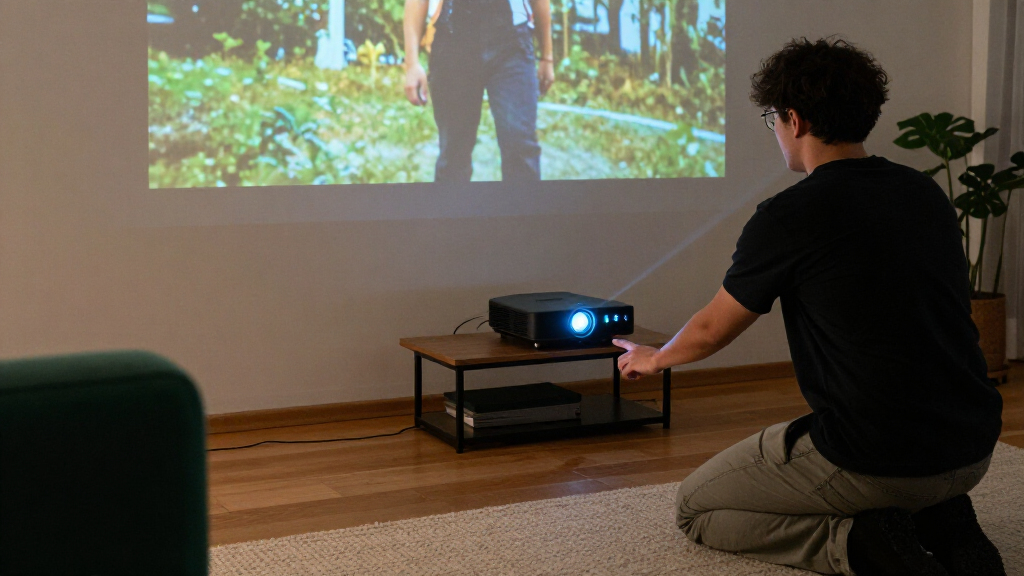
Short throw and ultra-short throw describe different placement needs, not just different marketing labels. A conventional short-throw unit can sit several feet from the screen, while a UST model is designed to project from very close to the wall. Measure the projector-to-screen distance and desired image width before narrowing the list, then check the manufacturer’s projection calculator for that exact model. Do not assume that two projectors with similar labels will make the same image from the same spot. UST setups also benefit from a rigid, level surface because small shifts can change alignment across a large image. If your room layout is fixed, prioritize a model whose throw range fits it rather than relying on digital correction to compensate.
Choose Resolution for Your Viewing Distance and Sources
Resolution matters most when the image is large and viewers sit close enough to notice fine detail. A 1080p projector can be a sensible fit for gaming or casual viewing, while a 4K-class UST model makes more sense for a dedicated movie setup and high-resolution sources. Read specifications carefully: support for a 4K input does not automatically mean the projector displays native 4K detail. Also check the formats your streaming box, console, or receiver can send, since compatibility can affect what the projector actually receives. If most of your content is compressed streaming video viewed from across the room, spending more for extra resolution may yield less benefit than improving screen choice or room control.
Plan for Ambient Light and Screen Choice
A projector’s brightness specification is only part of the picture; room light, screen material, and image size influence perceived contrast and color. A very large image spreads the available light over more area, which can make a bright-room setup look less vivid than expected. UST buyers should check screen compatibility rather than assume any wall or screen will work equally well, especially when daylight is part of the plan. A plain wall can be convenient for testing, but its texture and color may soften or alter the image. Before paying extra for a brighter model, consider whether curtains, a smaller image, or a screen suited to your placement would address the problem more effectively.
Decide Whether Gaming Performance or Theater Features Come First
Gaming buyers should compare supported refresh rates, input lag information, and the connections needed for their console or PC, rather than choosing by resolution alone. A model built around responsive 1080p play may be a better match than a premium theater projector if fast interaction is the priority. Movie viewers may care more about 4K-class detail, HDR handling, color performance, and quiet operation. Check whether the stated gaming features apply at the resolution and refresh rate you plan to use; specifications can vary by signal mode. If a projector will serve both roles, rank the use you do most often first and confirm the second use is supported without major compromises.
Compare Smart Features, Connections, and Audio
Built-in platforms can reduce setup steps, but they do not replace checking app availability, updates, and connection needs. If you already use a streaming device or receiver, a simpler projector may be a better fit than paying for features you will leave unused. Review the number and type of HDMI ports, wireless options, and audio outputs against the devices you actually own. Integrated speakers can help in a portable room or a quick setup, but they may not deliver the scale or clarity expected for a theater. For a permanent installation, plan the audio system and cable routing before choosing a projector so the final setup does not depend on awkward adapters.
Budget for the Whole Setup, Not Just the Projector
The projector is only one part of a large-screen system. A suitable screen, stable cabinet or mount, audio equipment, long cable runs, and room-darkening measures can all affect the final result. UST projectors can simplify placement but may call for a carefully aligned cabinet and a screen designed for close projection. A portable model can avoid fixed installation, though you may need separate audio or a suitable surface wherever you use it. Compare total setup requirements before deciding that a higher-tier projector is automatically the better value. Spending on the right supporting equipment can improve viewing more than moving up one projector class.
Frequently Asked Questions
Can I place an ultra-short-throw projector on an ordinary TV stand?
Often, but the stand must be stable, level, and deep enough for the projector and its ventilation needs. UST projectors are sensitive to placement, so a stand that shifts or flexes can make the image difficult to align. Measure the intended image size and compare it with the model’s distance and height guidance before buying. A suitable UST screen can also affect where the projector and furniture need to sit. If you cannot dedicate a firm surface near the wall, a standard short-throw model may be easier to position.
Is a short-throw laser projector a good choice for daytime viewing?
It can work in a bright room, but daylight reduces contrast and makes dark scenes harder to see. A brighter specification may help, yet screen size and window light still have a major effect. Consider curtains, a smaller image, and a screen intended for your projector’s placement before assuming the projector alone will solve the issue. For frequent daytime viewing, compare brightness information and room conditions together. If you cannot control the light, a television may be a more consistent choice for that room.
Does a projector that supports 4K display native 4K detail?
Not necessarily. Some projectors accept a 4K signal and process it for a lower-resolution imaging system, so input support is not the same as native resolution. Check the manufacturer’s specification for the imaging resolution and any pixel-shifting method. This distinction matters most with a large image, close seating, or detailed 4K sources. If you mainly watch standard streaming video from farther away, the practical gap may matter less than brightness, contrast, or placement fit.
Should I choose a gaming-focused short-throw projector or a 4K UST model?
Choose based on what you do most often and what your room can support. A gaming-focused short-throw model may prioritize responsiveness and practical console placement, while a 4K UST projector is aimed more at a fixed, large-screen home-theater setup. Check input lag and supported signal modes for gaming, since a high resolution alone does not promise a responsive experience. For movies, consider resolution, HDR handling, screen compatibility, and room lighting. If you expect both uses, verify that the projector’s gaming performance and available connections suit your exact devices.
Do I need a special screen for a short-throw or ultra-short-throw projector?
Not every setup requires a special screen, but the right surface can improve image consistency and make installation easier. UST models project at a steep angle, so a screen designed for that geometry can help manage ambient light and preserve the image. A flat, neutral wall may work for casual viewing, though wall texture and color can affect sharpness and color balance. Standard short-throw projectors may offer more screen flexibility, but the manufacturer’s guidance still matters. Check screen compatibility before purchasing, especially if the room has windows or strong overhead lighting.
Conclusion
For most buyers seeking a clearly defined short-throw use case, I’d start with the BenQ TH671ST as the best overall pick, particularly for straightforward 1080p gaming and entertainment. The best premium choices are the Hisense PX3-PRO, AWOL Aetherion Pro, and Formovie Theater for buyers prioritizing 4K-class UST home theater; compare their room fit and feature needs before deciding. For a value-minded gaming setup, the Optoma GT models and ViewSonic short-throw options offer more focused alternatives to a premium UST system. Beginners who want a more self-contained setup can look at the GO2 or Google TV portable projector, while buyers who need portability should start with the Optoma ML1080UST Photon GO. Choose the model that fits your room, screen distance, and main source first; then decide whether higher resolution or added features are worth the setup tradeoffs.