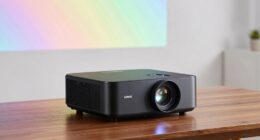
Integrating smart blinds with your projector system allows you to create a seamless, automated home theater experience. With voice control or scheduled routines, your blinds can automatically adjust to reduce glare, optimize lighting, and enhance picture clarity. This setup not only offers convenience and a better viewing environment but also saves energy by minimizing artificial lighting and climate needs. Keep exploring to discover how to make this integration simple and effective for your space.
Key Takeaways
- Use voice commands or automation to synchronize blind adjustments with projector operation for seamless viewing.
- Integrate smart blinds with home automation systems to schedule blind positions before or during projector use.
- Automate blinds to close during movie start and open afterward, enhancing contrast and reducing glare.
- Leverage environmental sensors for adaptive control, adjusting blinds based on sunlight and room conditions for optimal viewing.
- Combine smart blinds with energy management features to maintain ideal lighting while minimizing energy consumption during projection.
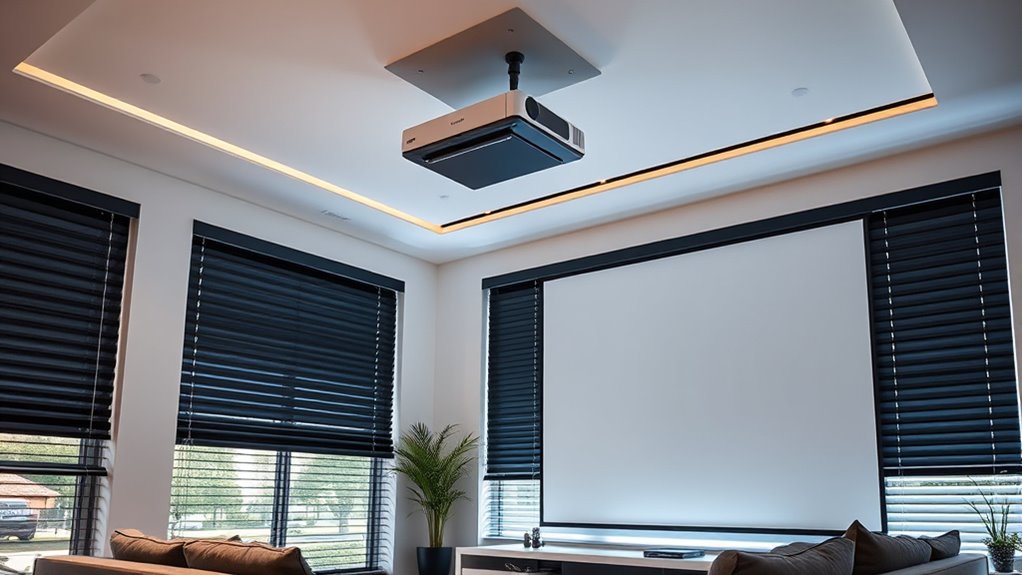
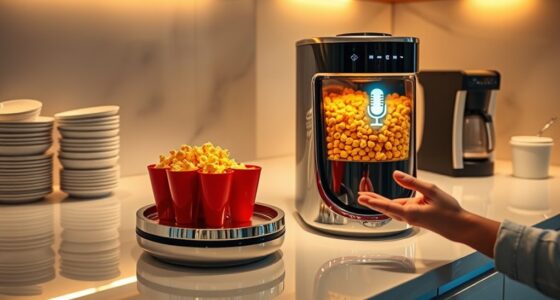
Smart blinds are transforming the way you control natural light and privacy in your home. When you integrate them with your projector system, you create a seamless entertainment experience that adapts instantly to your needs. One of the key features that makes this integration so intuitive is voice control. Instead of fumbling for a remote or manually adjusting the blinds, you can simply speak commands to open or close them. For example, saying “Close the blinds” or “Open the blinds halfway” instantly adjusts your window coverings, allowing you to set the perfect lighting conditions for viewing. Voice control not only adds convenience but also enhances your overall experience by enabling hands-free operation, which is especially useful when you’re in the middle of a movie or presentation. It’s like having a personal assistant that manages your environment with just your voice.
Beyond convenience, smart blinds contribute considerably to energy efficiency. When integrated with your projector system, they can automatically adjust based on the time of day or the amount of sunlight entering the room. During bright afternoons, your blinds can close partially or fully to reduce glare on the screen, ensuring your visuals stay clear and vibrant. This automatic adjustment minimizes the need for artificial lighting or air conditioning, helping you cut down on energy consumption. When the sun sets or clouds move away, the blinds can open back up, letting in natural light and reducing the need for artificial illumination. This dynamic control not only improves your viewing experience but also helps lower your utility bills over time. Studies show that smart technology can significantly optimize energy use and reduce costs.
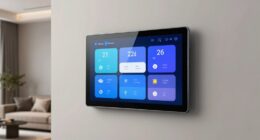
Connecting smart blinds to your projector system makes your space smarter and more responsive. You can set schedules or routines, so your blinds automatically adjust when you start a movie or turn on your projector. For instance, as you power up your system, the blinds can close to create an ideal viewing environment without you having to lift a finger. This integration ensures that everything works harmoniously, creating a more immersive and comfortable space. Plus, with energy efficiency baked into the system, you’re not just making your home smarter but also more eco-friendly.

Valerion StreamMaster Plus 4K Laser Projector - 300" IMAX Enhanced Home Theater, 4ms |240Hz Response, Gaming Projector with 3D & Dolby Vision, HDR10, GTV, Smart Home & AI Assistant
Speed and Power Like Never Before - Experience unmatched speed with the AI-9618 chipset, 4GB RAM/ 128GB ROM—delivering...
As an affiliate, we earn on qualifying purchases.
Frequently Asked Questions
Can Smart Blinds Be Controlled Manually if the System Fails?
Yes, you can control smart blinds manually if the system fails. Most smart blinds come with a manual override feature, allowing you to operate them without relying on the digital system. This acts as a system fallback, ensuring you maintain control even during outages or malfunctions. You simply use the manual controls, such as a wand or switch, to adjust your blinds, providing peace of mind and uninterrupted privacy or light control.
What Safety Features Are Included in Smart Blind Systems?
Smart blind systems include safety features like safety sensors that detect obstructions or sudden movements, preventing accidents. If a problem occurs, an emergency shutdown activates automatically to stop blind operation instantly. You can also manually override the system if needed, ensuring safety and control at all times. These features help protect you and your property, making smart blind systems reliable and secure in any situation.
Are Smart Blinds Compatible With All Projector Brands?
Sure, your dreams of universal compatibility are safe—smart blinds aren’t quite there yet. While some brands support broad blind compatibility and easy brand integration, not all projectors play nice. You’ll want to check if your specific projector brand supports smart blind integration before investing. Otherwise, you might end up with a high-tech blind system that refuses to cooperate—like a pet that just won’t fetch.
How Energy-Efficient Are Smart Blinds in Reducing Lighting Costs?
Smart blinds substantially boost energy savings by enhancing lighting control in your space. They automatically adjust based on sunlight, reducing the need for artificial lighting and lowering your electricity bills. By optimizing natural light, you not only cut costs but also create a more comfortable environment. Overall, smart blinds are a smart investment for energy efficiency, helping you save money while maintaining ideal lighting conditions effortlessly.
What Is the Typical Installation Process for Integrating Smart Blinds?
Think of installation like assembling a puzzle; you’ll start with the installation steps, which typically involve mounting the smart blinds, connecting them to your Wi-Fi, and syncing with your projector system. Make certain to verify compatibility considerations—some blinds work only with specific smart home platforms. Usually, you follow manufacturer instructions carefully, and a quick calibration ensures seamless operation, turning your space into a smart, automated environment effortlessly.

Official Licensed Google TV Smart Projector, HAPPRUN 4K UHD Home Theater with Dolby Sound, Wi-Fi & Bluetooth, Built-in Streaming Apps, Compatible with Games Consoles & Smartphone, Indoor & Outdoor Use
[ Built-in Official Licensed Google TV ] - Without additional equipment, the smart projector can directly access Netflix,...
As an affiliate, we earn on qualifying purchases.
Conclusion
So, now you can sit back and enjoy your perfectly automated setup, where smart blinds and your projector work in harmony. Ironically, the only thing left to do is trust that the sunlight won’t sneak in and ruin your movie night—because, after all, who needs unpredictable daylight when your smart system has everything under control? Just remember, the real challenge isn’t technology, but resisting the temptation to peek outside at that beautiful, unfiltered sunshine.

Amazon Echo Hub, 8” smart home control panel, Designed for Alexa+, Compatible with thousands of devices
Echo Hub — An easy-to-use Alexa-enabled control panel for your smart home devices—just ask Alexa or tap the...
As an affiliate, we earn on qualifying purchases.
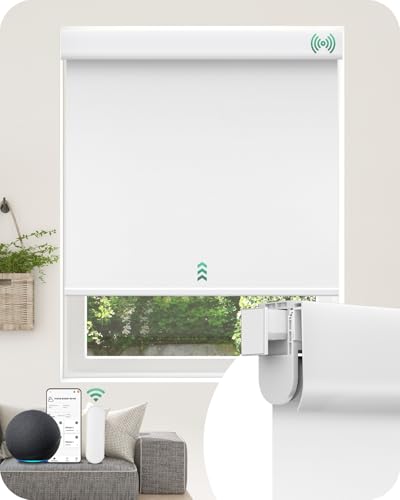
Allesin Motorized Blinds No Drill Automatic Roller Shades with Remote | Rental-Friendly & Easy Install Smart Electric Blackout Window Blinds for Apartment, White 22x72
【No Drill, No Damage, No Problem】Our motorized blinds feature an innovative spring-tension mechanism that secures firmly inside your...
As an affiliate, we earn on qualifying purchases.