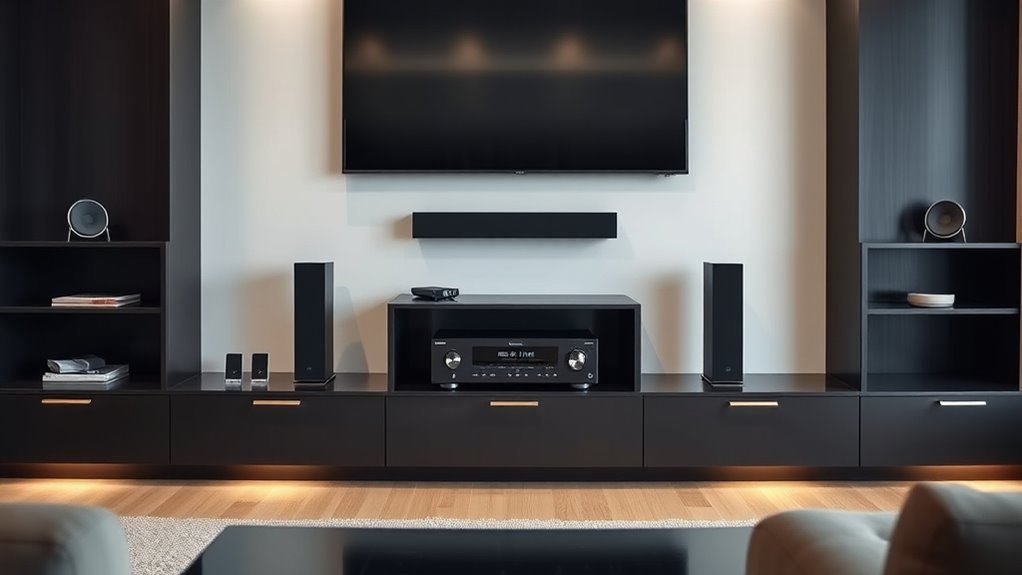
Integrating AV receivers with smart systems lets you control your home entertainment effortlessly using voice commands or automation routines. You can turn on devices, adjust volume, switch sources, and manage multi-room audio with ease, often through platforms like Alexa, Google Assistant, or Apple HomeKit. Modern receivers either have built-in smart features or can be upgraded for compatibility. If you keep exploring, you’ll find how to set up a seamless, intuitive entertainment experience tailored to your preferences.
Key Takeaways
- Ensure AV receivers are compatible with smart platforms like Alexa, Google Assistant, or Apple HomeKit.
- Use built-in smart features or upgrade options to enable voice control and automation capabilities.
- Integrate AV systems into smart home routines for seamless control of audio, video, lighting, and climate.
- Enable multi-room audio distribution for synchronized or independent playback across different zones.
- Set up routines and scenes to automate entertainment, lighting, and climate adjustments with a single voice command.
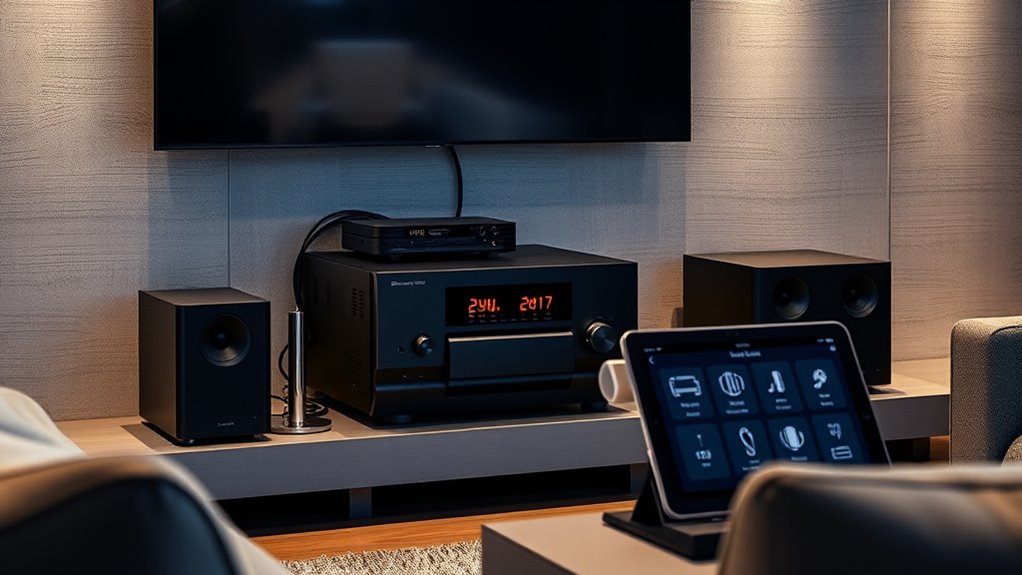
As smart home technology becomes more prevalent, integrating AV receivers with these systems offers a seamless entertainment experience. You can control your entire setup effortlessly, blending your audio and video preferences into a unified system. Voice control plays a pivotal role here, allowing you to command your AV receiver hands-free. Whether you want to turn on your system, adjust the volume, switch inputs, or select a specific source, simply speaking your commands makes everything more intuitive. This hands-free approach not only adds convenience but also enhances accessibility, especially when your hands are occupied or you’re across the room.
Integrating AV receivers with smart home systems enables effortless, voice-controlled entertainment and enhanced accessibility throughout your home.
One of the most compelling benefits of smart integration is multi-room audio. With an AV receiver connected to your smart system, you can distribute music or other audio content throughout different areas of your home. Imagine walking from the living room to the kitchen and effortlessly continuing your favorite playlist without missing a beat. Multi-room audio isn’t just about convenience; it creates an immersive environment where every room becomes part of your entertainment landscape. You can choose to play different audio in each room or synchronize multiple speakers for a unified sound experience, all controlled via your smart device or voice commands.
To achieve this level of integration, you’ll want to ensure your AV receiver is compatible with your smart system, whether it’s Alexa, Google Assistant, or Apple HomeKit. Many modern receivers come with built-in smart features or can be upgraded with compatible hubs or modules. Once integrated, you can use voice commands to select inputs, control volume, or even create scenes that combine lighting, climate, and audio settings. For example, saying, “Hey Google, play jazz in the living room and turn off the upstairs speakers,” simplifies managing multiple zones simultaneously.
Furthermore, integrating your AV receiver with your smart system allows for more advanced automation. You can set routines — like turning on your home theater system when you arrive home or dimming the lights and starting your favorite movie with a single command. This seamless control makes your entertainment setup more responsive and tailored to your daily routines.
In essence, integrating AV receivers with smart systems transforms a traditional home theater into a dynamic, interconnected hub. Voice control streamlines operation, while multi-room audio elevates your listening experience across the house. With the right setup, you gain not just better sound and picture quality but also a smarter, more intuitive way to enjoy your entertainment. Embracing the concept of automation can greatly enhance your overall home entertainment experience.

SOULWIT 50Pcs Self Adhesive Cable Management Clips - Black
- 🔷SUPER EASY TO USE: Stick to clean surface, open...
- 🔷PREMIUM MATERIAL: Made from eco-friendly Polyamide66 material,...
- 🔷STICKY IN MANY SURFACES: Works on all clean surfaces...
As an affiliate, we earn on qualifying purchases.
Frequently Asked Questions
Can All AV Receivers Be Integrated With Smart Home Systems?
Not all AV receivers can be easily integrated with smart home systems. You should check receiver compatibility first, as some models lack the necessary features or support for smart home integration. Be aware of potential integration challenges, like limited compatibility or complex setup processes. To guarantee smooth integration, choose a receiver explicitly designed for smart home compatibility, and consult product specifications or manufacturer support to avoid issues down the line.
What Security Measures Are Necessary for Smart AV System Integration?
Did you know over 60% of smart home devices are vulnerable to cyberattacks? To keep your smart AV system secure, you should use strong network encryption and enforce user authentication. These measures prevent unauthorized access and protect your personal data. Always update firmware regularly, change default passwords, and monitor network activity. Implementing these security practices guarantees your smart AV system remains safe and functions seamlessly within your connected home.
How Does Integration Affect AV Receiver Firmware Updates?
When you integrate your AV receiver with smart systems, firmware updates become more streamlined with proper update scheduling. It can enhance firmware flexibility, allowing you to set updates at convenient times, reducing disruptions. However, you need to stay aware of compatibility issues and guarantee your system supports seamless updates, so your AV receiver maintains ideal performance and security. Proper management helps prevent bugs and keeps your system running smoothly.
Are There Compatibility Issues With Specific Smart Home Brands?
Compatibility isn’t always a smooth road—sometimes it’s like fitting puzzle pieces that don’t quite match. You might face brand compatibility issues with certain smart home brands, especially if firmware concerns aren’t addressed. Make sure your AV receiver supports your preferred brands, and keep firmware updated to avoid hiccups. Checking compatibility guides and firmware update notices helps guarantee seamless integration, so your smart system runs as smoothly as a well-conducted orchestra.
What Is the AVerage Cost to Integrate AV Receivers With Smart Systems?
The cost estimation to integrate AV receivers with smart systems typically ranges from $200 to $600, depending on the complexity and features you want. Vendor options vary, so you should compare compatibility and pricing before choosing. Keep in mind, professional installation might add to the overall cost, but it guarantees smooth integration. Budget accordingly, and consider consulting with a smart home expert to get tailored recommendations.

XHF 120 PCS Adhesive Cable Wire Clips Black, Outdoor Christmas Light Clips, Cable Management Wire Organizer Cord Holder for Under Desk, Car, Wall, TV PC Ethernet Cable
- High quality material:XHF Adhesive Cable Clips are manufactured...
- Widely used: USB Cable, Ethernet Cable, Outdoor...
- Size: Base 5/8" x 5/8", inner...
As an affiliate, we earn on qualifying purchases.
Conclusion
So, now that you’ve masterfully integrated your AV receiver with your smart system, you’re basically the ruler of your castle—if your castle also controlled your lighting, blinds, and fridge. Who knew that pressing a single button could turn your entire home into a symphony of convenience? Just remember, with great power comes great responsibility—like not accidentally turning on the oven when you just wanted to watch a movie. Happy automating!

120PCS XHF Adhesive Cable Wire Clips White, Cable Staples Outdoor Cable Management Wire Organizer Cord Holder for Under Desk, Car, Wall, TV PC Ethernet Cable
- High quality material:XHF Adhesive Cable Clips are manufactured...
- Widely used: USB Cable, Ethernet Cable, Outdoor...
- Size: Base 5/8" x 5/8", inner...
As an affiliate, we earn on qualifying purchases.

Epson Home Cinema 980 3-Chip 3LCD 1080p Movie Projector
- HOME THEATER PROJECTOR — Bring your entertainment experience...
- ULTRA BRIGHT IMAGES — 4,000 Lumens of Color...
- VIVID AND PRECISE COLOR — Advanced 3LCD technology...
As an affiliate, we earn on qualifying purchases.