Choosing between curved and flat screens depends on your priorities. Curved screens offer immersive visuals, better depth perception, and enhance gaming experiences, but can distort at the edges and cost more. Flat screens deliver consistent image quality, are budget-friendly, and suit shared viewing or smaller spaces. If you want a sleek, modern look or a more traditional setup, each has its place. Keep exploring to discover which option fits your needs best.
Key Takeaways
- Curved screens offer immersive viewing and better depth perception, ideal for gaming and enhanced engagement.
- Flat screens provide consistent image quality from different angles and are suitable for shared viewing.
- Curved screens tend to be more expensive and are better for larger displays, while flat screens are budget-friendly and versatile.
- Flat screens maintain visual accuracy without distortion, whereas curved screens may cause edge distortion on bigger models.
- Flat screens have a sleek, modern aesthetic and fit well in various decor styles, contrasting with the bold, futuristic look of curved screens.
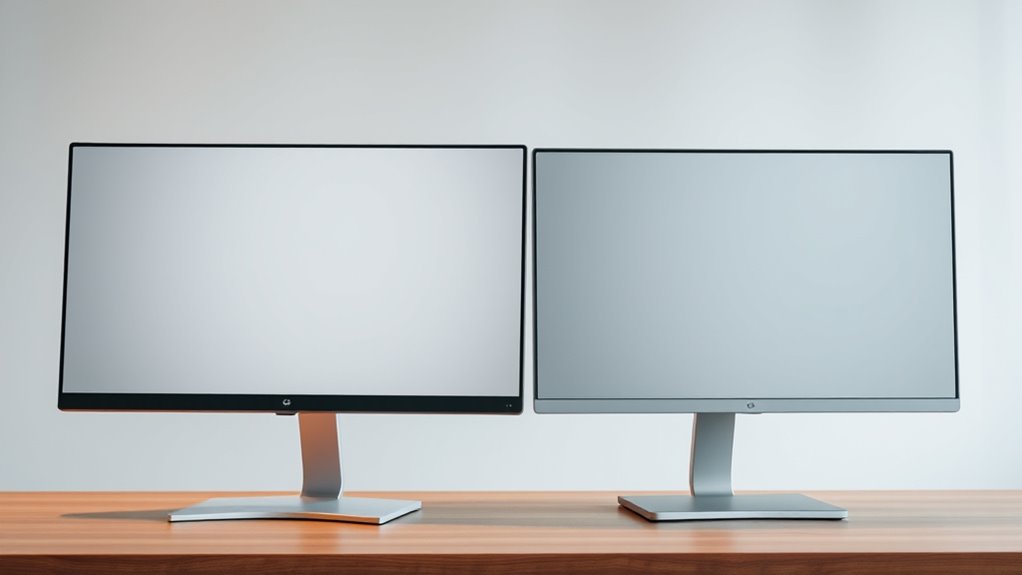
When choosing between curved and flat screens, understanding their differences can help you make a better decision. Both types have unique features that can profoundly impact your overall viewing experience, especially if you’re into gaming or prioritizing aesthetic appeal. Curved screens are designed with a gentle arc that wraps around your field of vision, creating a more immersive experience. This curvature can make you feel more engaged during intense gaming sessions, as it reduces distractions from the surrounding environment and pulls your focus toward the center of the display. As a result, your gaming experience becomes more vibrant and enthralling, with better depth perception and a sense of realism. On the other hand, flat screens offer a more traditional, straightforward viewing surface. They’re known for their consistent image quality and are less likely to distort images or colors when viewed from different angles. If you prefer a minimalist, sleek aesthetic, flat screens often look more streamlined and modern in various setups, blending seamlessly with different decor styles. The aesthetic appeal of flat screens lies in their simplicity and sharpness, making them ideal for those who value a clean, uncluttered look. When it comes to gaming, flat screens can sometimes provide a more predictable visual, but they might not deliver the same immersive effect as curved screens. Additionally, some users find that curved screens can cause distortion at the edges, especially on larger displays, which might affect visual clarity. However, curved screens tend to be more expensive, and their design might not suit every space or setup. They’re best suited for larger displays where the curvature can be fully appreciated without creating distortions at the edges. If your gaming setup is in a smaller room or you prefer a more traditional look, a flat screen might serve you better both in terms of budget and compatibility. Additionally, curved screens can sometimes cause issues with viewing angles, meaning if you share your screen with others sitting at different positions, the image quality could suffer. Flat screens, in contrast, maintain consistent clarity from various angles, making them versatile for shared spaces. When considering aesthetic appeal, think about the overall style of your room and how the screen complements it. Curved screens tend to look more futuristic and bold, while flat screens offer a timeless elegance. Ultimately, your choice hinges on your priorities: if immersive gaming is your goal, a curved screen might be worth the investment; if you value simplicity and versatility, a flat display could be the smarter pick.

Epson Home Cinema 1080 3-chip 3LCD 1080p Projector, 3400 lumens Color and White Brightness, Streaming/Gaming/Home Theater, Built-in Speaker, 16,000:1 Contrast (Renewed)
Epson Certified-Refurbished Product - Epson’s quality-assurance team reviews each refurbished product. They have been inspected and tested to...
As an affiliate, we earn on qualifying purchases.
Frequently Asked Questions
Do Curved Screens Cause Eye Strain Over Long Viewing Periods?
Curved screens can cause eye strain over long viewing periods if you’re not mindful, especially due to potential visual distortion. However, they offer ergonomic benefits by reducing the need for excessive head movement and providing a more natural viewing angle. To minimize strain, take regular breaks and adjust brightness and contrast. Proper positioning helps you enjoy the ergonomic advantages without risking discomfort from visual distortion.
Are Curved Screens Better for Gaming Than Flat Screens?
Curved screens can be better for gaming because they offer ergonomic benefits, reducing eye and neck strain by matching your natural viewing angle. Plus, their aesthetic appeal immerses you more into the game, making visuals feel more lifelike. You might find that curved monitors enhance your gaming experience by providing a wider field of view and less distortion at the edges, helping you stay engaged and comfortable during long sessions.
How Do Curved Screens Affect Viewing Angles?
Curved screens improve viewing angles by providing a more immersive experience, but they can also cause visual distortion if you’re not directly in front of them. You might notice color shifts or blurriness when viewing from sharp angles. Additionally, mounting curved screens can be challenging, as they require special brackets to guarantee they stay aligned properly. Keep these factors in mind to get the best viewing experience.
Can Curved Screens Be Used Effectively in Bright Rooms?
Yes, curved screens can be used effectively in bright rooms. The screen curvature helps minimize reflections and glare by directing light away from your eyes, making the viewing experience clearer. However, room lighting still matters; controlling ambient light and using appropriate screen brightness can enhance visibility. You’ll enjoy immersive visuals with the right balance of screen curvature and room lighting, ensuring your content looks sharp regardless of the environment.
Are Curved Screens More Prone to Glare and Reflections?
Yes, curved screens can be more prone to glare and reflections because their shape catches light differently. This might affect your viewing experience, especially in bright rooms. However, their aesthetic appeal adds a sleek, modern look to your setup. When it comes to screen durability, curved screens are generally just as sturdy as flat ones, but you should still handle them carefully to avoid scratches or damage.
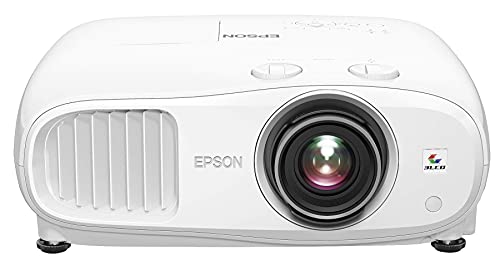
Epson Home Cinema 3800 4K PRO-UHD 3-Chip Projector with HDR
4K PRO-UHD (1) Projection technology — a new type of 4K home theater experience, utilizing advanced technologies for...
As an affiliate, we earn on qualifying purchases.
Conclusion
Choosing between curved and flat screens is like picking a landscape view—you’ll enjoy immersive curves that wrap around you or a sleek flat horizon for clarity. If you crave deep engagement and a cinema-like experience, a curved screen pulls you in like a cozy canyon. But if you prefer sharp detail and minimal distortion, a flat screen offers a steady, open plain. Ultimately, your choice shapes your viewing adventure—so pick what makes your world feel just right.

Epson EpiqVision Flex CO-FH02 Full HD 1080p Smart Streaming Portable Projector 3-Chip 3LCD, 3000 Lumen Color/White Brightness, Android TV, Bluetooth, 5W Speaker, Home Entertainment
Display Stunning Images up to 300" — Full HD 1080p picture four times larger than a 75" flat...
As an affiliate, we earn on qualifying purchases.

Epson Home Cinema 980 3-Chip 3LCD 1080p Projector 4,000 Lumens Color and White Brightness, Streaming/Gaming/ Media Room, Built-In Speaker, Auto Picture Skew, 16000:1 Contrast, 2 HDMI Ports
Exceptional Picture Quality — Provides stunning, detailed 1080p images and fast data processing that’s optimized for fast-action sports,...
As an affiliate, we earn on qualifying purchases.