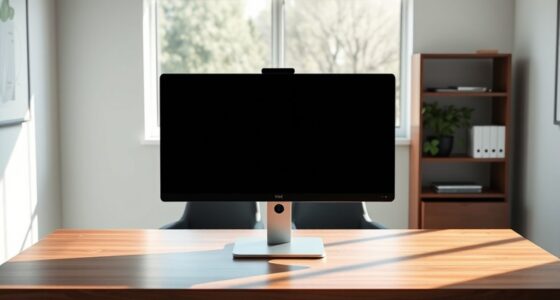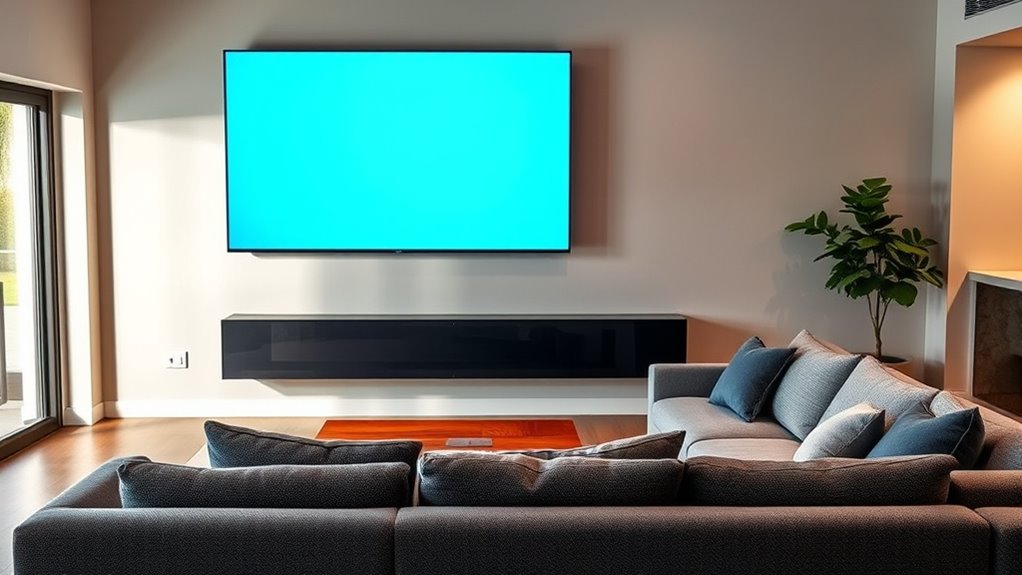

To choose the right screen size for your room, consider your room’s dimensions, how far you’ll sit from the display, and your desired viewing comfort. A good rule is to select a screen that fits well within your space and allows you to view comfortably at about 1.5 to 2.5 times the screen’s diagonal distance. Remember, higher resolutions like 4K can support larger screens without losing clarity. Keep exploring to find the perfect setup for your space.
Key Takeaways
- Measure your room’s dimensions and available space to determine suitable screen size options.
- Consider seating distance; aim for 1.5 to 2.5 times the screen’s diagonal for optimal viewing.
- Match screen resolution with size; higher resolutions support larger displays without pixelation.
- Balance room size and seating placement to ensure comfort and prevent eye strain.
- Choose a screen size that complements your space and enhances picture quality for an immersive experience.
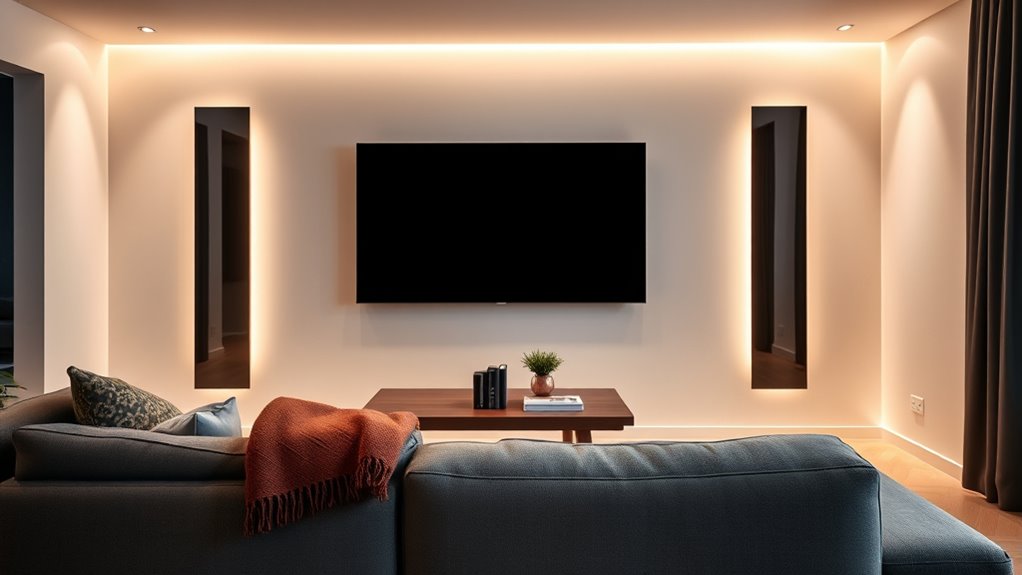
Selecting the right screen size is essential to guarantee a comfortable and enjoyable viewing experience. When choosing a TV or monitor for your space, you need to consider not only the physical dimensions but also how the screen resolution and your viewing distance influence your overall comfort. A screen that’s too large or too small can strain your eyes or diminish picture quality, making it harder to fully enjoy your content. To get it right, start by evaluating your room’s dimensions and where you’ll position your seating. This will help you determine the ideal viewing distance, which is critical when selecting the appropriate screen size.
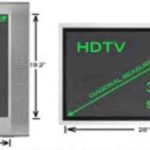
Your viewing distance plays a significant role in how large your screen should be. Generally, sitting closer to a screen demands a smaller size to prevent eye strain, while sitting farther away allows for a larger display without overwhelming your field of vision. Experts recommend a viewing distance that’s roughly 1.5 to 2.5 times the diagonal size of your screen. For example, if you plan to sit about 8 feet away, a screen around 65 inches might be perfect. Keep in mind that this distance also influences how well you can appreciate the screen resolution. Higher resolutions like 4K or 8K provide sharper images and finer detail, which is especially noticeable on larger screens. If your room allows for a bigger display, opting for a higher resolution guarantees you won’t see pixelation or loss of clarity, even at close distances. Additionally, screen resolution plays a vital role in determining how large your display can be while maintaining image quality.
Frequently Asked Questions
How Does Screen Resolution Affect Optimal Size Choice?
Screen resolution directly impacts your ideal size choice because higher resolution provides better visual clarity, even on larger screens. When you select a higher resolution like 4K, you can comfortably opt for a bigger screen without losing detail or sharpness. Conversely, lower resolutions may require a smaller screen to avoid pixelation. By considering resolution, you make sure your screen size enhances your viewing experience with crisp, clear images.
What Is the Ideal Viewing Distance for Different Screen Sizes?
The ideal viewing distance varies with screen size, but it’s essential to stay within comfortable viewing angles to avoid strain. For a 55-inch screen, sit about 6-9 feet away; larger screens benefit from greater distances. Remember, sound quality diminishes if you’re too close or too far, impacting immersion. Keep a balance, ensuring your position enhances both picture clarity and audio experience—your perfect setup awaits.
How Do Room Lighting Conditions Influence Screen Size Selection?
Room lighting conditions greatly influence your screen size choice. If your space has lots of ambient light or natural illumination, opt for a larger screen to guarantee picture clarity and brightness. Bright environments can wash out smaller screens, making details harder to see. Conversely, in darker rooms, smaller screens may suffice. Adjust your screen size to match the lighting, so your viewing experience remains clear and enjoyable regardless of natural illumination.
Can Wall Space Limitations Restrict Certain Screen Sizes?
Wall space can act like a tightrope, balancing your desire for a big screen with the room’s limitations. If your walls are narrow or crowded, certain large screens might not fit comfortably, affecting the aesthetic balance you want to maintain. You might need to opt for a smaller size or consider mounting options to maximize space without overwhelming the room’s proportions. Keep practicality and style in harmony for the best viewing experience.
How Does Content Type Impact the Best Screen Size?
Content type considerably impacts the best screen size for you. For movies or immersive gaming, a larger screen enhances the experience, matching viewer preferences for vivid visuals. If you mainly watch casual TV shows or streaming content, a moderate size may suffice. Consider your preferred content format and how close you sit to the screen; this helps you choose a size that delivers ideal viewing without overwhelming your space.
Conclusion
Choosing the right screen size truly enhances your viewing experience. Did you know that a screen that’s too small can cause eye strain, while one that’s too large might overwhelm your space? Aim for a screen size that fills your field of vision comfortably—about 40 degrees—so you can enjoy immersive entertainment without discomfort. By selecting the perfect size for your room, you’ll enjoy clearer images and more comfortable viewing every time.