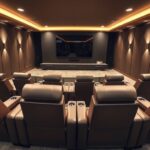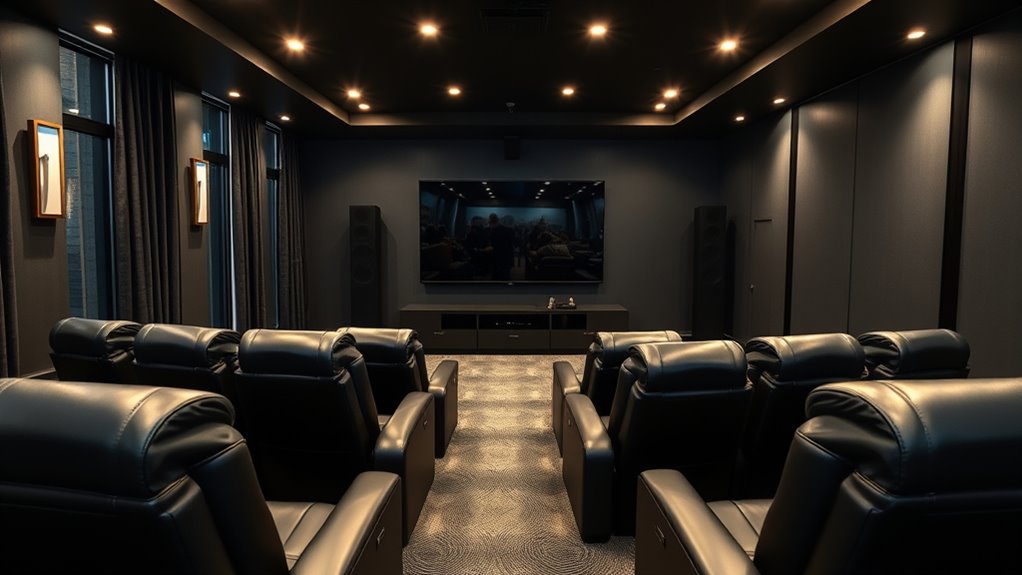

Avoid blocking the screen with seating or furniture, and don’t forget to set up your chairs in an ideal angle for everyone’s view. Be careful with lighting—harsh or direct lights can cause glare and reflections that ruin the picture quality. Poor room layout, like cramped seating or inadequate spacing between rows, can make the experience uncomfortable. Think about proper lighting, seating arrangement, and avoiding glare to create a truly enjoyable home theater—keep exploring to discover how to perfect your space.
Key Takeaways
- Avoid placing seats too close to the screen, which can cause discomfort and obstructed views.
- Do not neglect proper seating arrangement; a slight arc centered on the screen enhances viewing angles.
- Refrain from using harsh, overhead lighting that creates glare and reflections on the screen surface.
- Don’t ignore the importance of dimmable, indirect lighting to improve picture quality and reduce eye strain.
- Avoid cluttered or uneven room layouts that hinder sightlines and diminish the immersive experience.
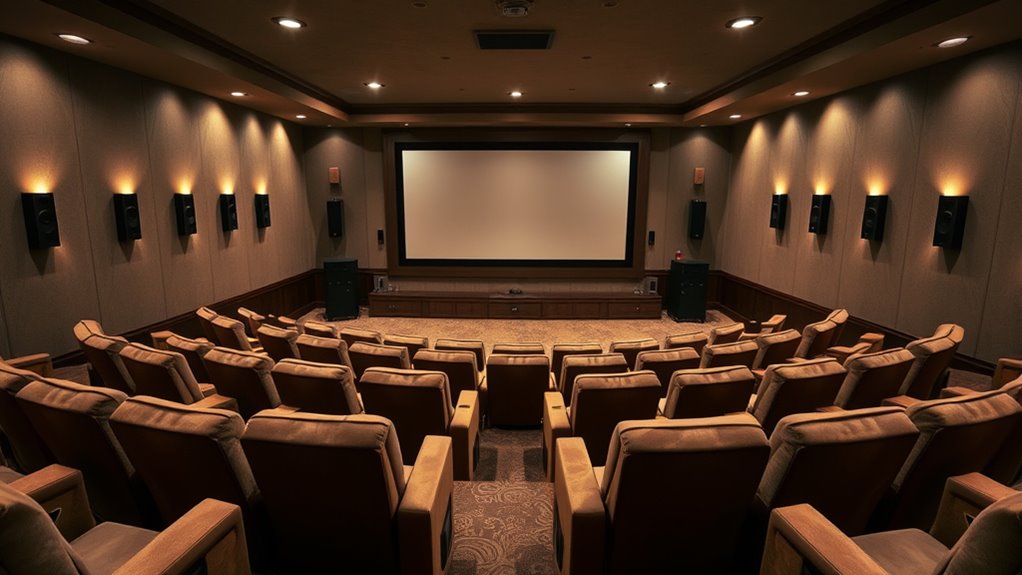
Creating the perfect home theater isn’t just about choosing the right equipment; it also depends on how you arrange everything. One of the most common mistakes people make is neglecting the importance of a smart seating arrangement. Your seats should be positioned to give every viewer a clear, unobstructed view of the screen without feeling cramped or too far away. Ideally, the seating should be arranged in a slight arc, centered around the screen, to guarantee everyone gets an ideal viewing angle. If you have multiple rows, keep the distance between them enough to prevent heads blocking the view, and consider tiered seating if possible. This way, no one has to strain to see or deal with glare from reflections. Remember, comfort matters, so choose seats with good back support and enough space for legroom. Proper planning can help you optimize the layout for both comfort and visual clarity.
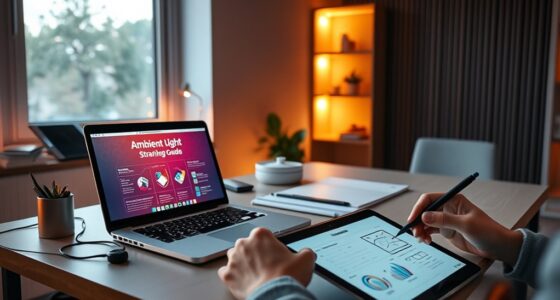
Alongside seating, lighting setup plays a vital role in the overall experience. Many people overlook how lighting impacts picture quality and ambiance. Avoid installing bright, overhead lights that can cause reflections on the screen or make it difficult to see details. Instead, opt for dimmable, soft lighting options that can be easily controlled to create the right mood. Recessed lighting or wall sconces are excellent choices because they don’t interfere with the viewing experience. Also, consider placing some indirect lighting around the room, like LED strips behind the screen or along the ceiling edges, to prevent harsh shadows and reduce eye strain. Proper lighting setup helps you avoid situations where glare or reflections ruin the picture, and it enhances the overall atmosphere, making your theater inviting and immersive.

Official Licensed Google TV Smart Projector, HAPPRUN 4K UHD Home Theater with Dolby Sound, Wi-Fi & Bluetooth, Built-in Streaming Apps, Compatible with Games Consoles & Smartphone, Indoor & Outdoor Use
[ Built-in Official Licensed Google TV ] - Without additional equipment, the smart projector can directly access Netflix,...
As an affiliate, we earn on qualifying purchases.
Frequently Asked Questions
How Can Lighting Affect My Home Theater Experience?
Lighting design markedly impacts your home theater experience. Poor ambient illumination can cause glare on the screen, making it harder to see details clearly. By carefully planning your lighting, you create the right ambiance and reduce eye strain. Use dimmable lights or LED strips to control brightness, ensuring the room stays dark enough for ideal viewing while still providing enough ambient illumination for safety and comfort.
What Are the Best Seating Arrangements for Sound Quality?
For ideal sound quality, you should arrange your seating to guarantee everyone has good viewing angles and comfort. Position seats slightly away from walls to reduce sound reflections, and place the main seats directly in line with the speakers for balanced audio. Choose comfortable seats with adjustable angles so viewers can sit back and enjoy the experience without sacrificing sound clarity. This setup enhances both comfort and acoustic performance.
How Do Room Size and Shape Impact Acoustics?
Room size and shape greatly impact acoustics because larger rooms can cause echo and sound diffusion issues, while smaller rooms may sound cramped and muffled. Pay attention to room dimensions, ensuring they’re proportional to avoid standing waves. Shape considerations, like avoiding irregular or highly reflective surfaces, help improve sound clarity. Properly managing these factors creates a balanced sound environment, enhancing your home theater experience with richer, cleaner audio.
What Equipment Placement Minimizes Glare and Reflections?
Want glare and reflections to vanish before your eyes? Place your projector carefully—preferably on a stable, non-reflective surface—and angle it to avoid direct sunlight or bright lamps. For screen positioning, keep it away from windows and shiny surfaces that bounce light your way. Think of your equipment as a stealthy ninja, sneaking into perfect spots that keep glare at bay and reflections out of your cinematic nirvana.
How Do I Prevent Sound From Leaking Into Other Rooms?
To prevent sound from leaking into other rooms, you should install soundproof barriers around your home theater. Add acoustic panels or insulation to absorb sound effectively. Make sure your door has proper seals—install door seals or weatherstripping to close gaps. Consider using a solid core door, which blocks sound better than hollow ones. Combining these methods creates a soundproof environment, keeping your theater acoustics private and enhancing your viewing experience.

Valerion StreamMaster Plus 4K Laser Projector - 300" IMAX Enhanced Home Theater, 4ms |240Hz Response, Gaming Projector with 3D & Dolby Vision, HDR10, GTV, Smart Home & AI Assistant
Speed and Power Like Never Before - Experience unmatched speed with the AI-9618 chipset, 4GB RAM/ 128GB ROM—delivering...
As an affiliate, we earn on qualifying purchases.
Conclusion
Think of your home theater as a symphony—each element must harmonize perfectly. Avoid common layout mistakes like poor seating placement or bad acoustics, which can turn your experience into dissonance. When everything is balanced and thoughtfully arranged, your space becomes a concert hall where every note resonates clearly. With attention to detail, you’ll create a personal sanctuary where every movie feels like a front-row performance, inviting you to sit back, relax, and enjoy the show.
![[Built-in Official Apps/4K Support] Smart Outdoor Projector with WiFi and Bluetooth, 800ANSI Movie Projector, DoIby Audio with Dual Speaker, Auto Focus w/ YouTube&PrimeVideo Proyector, Upgrad P62 Pro](https://m.media-amazon.com/images/I/51h241YxtmL._SL500_.jpg)
[Built-in Official Apps/4K Support] Smart Outdoor Projector with WiFi and Bluetooth, 800ANSI Movie Projector, DoIby Audio with Dual Speaker, Auto Focus w/ YouTube&PrimeVideo Proyector, Upgrad P62 Pro
[Upgraded Classic – P62 Pro Movie Projector] Building on the reliability and low return rate of the classic...
As an affiliate, we earn on qualifying purchases.

TOWOND Projector Screen and Stand, 150 inch Indoor Outdoor Projection Screen, Portable 16:9 4K HD Rear Front Movie Screen with Carry Bag Wrinkle-Free Design for Home Theater Backyard Cinema
Projector Screen with Stand. 150-inch diagonal, 160°wide viewing angle, aspect ratio 1:1 and 16:9 4k HD portable projector...
As an affiliate, we earn on qualifying purchases.