Understanding aspect ratios like 16:9 and 21:9 helps you see how screens and images are framed, affecting your viewing experience and content creation. The 16:9 ratio is standard for most TVs and monitors, offering versatile, crisp images, while 21:9 provides a wider, cinematic feel with immersive visuals. Beyond these, ratios like 4:3 or 2.35:1 shape how content is shot and displayed. Exploring these differences can elevate how you watch and produce media—keep going to learn more.
Open a free Amazon Business account
Business pricing, bulk buying and tax-exempt orders.
As an affiliate, we earn on qualifying purchases.
Key Takeaways
- 16:9 is the standard aspect ratio for most modern TVs and monitors, offering a versatile and widely compatible viewing experience.
- 21:9 is an ultra-widescreen ratio that enhances cinematic immersion and panoramic landscape shots, ideal for immersive entertainment.
- Aspect ratios influence content framing, with wider ratios like 21:9 emphasizing expansive scenes and artistic composition.
- Beyond 16:9 and 21:9, ratios like 4:3 and 2.35:1 serve specific purposes in older or cinematic filmmaking styles.
- Understanding various aspect ratios helps in selecting suitable devices and optimizing content presentation for different viewing preferences.
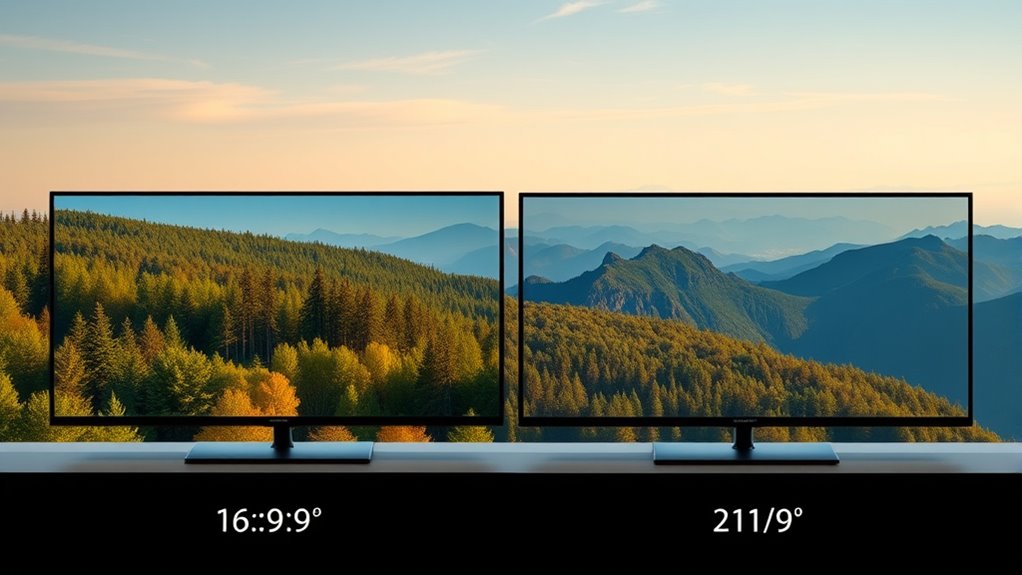
Have you ever wondered what makes a screen or image look just right? It all comes down to aspect ratios, the ratio of a display’s width to its height. When you watch movies, play games, or browse photos, you’re experiencing these ratios firsthand, even if you don’t realize it. Understanding aspect ratios helps you grasp how different screens are designed and why certain visuals feel more immersive or natural. The choice of aspect ratio ties directly into display technology and filmmaking techniques, which influence how content is created and viewed.
Understanding aspect ratios reveals how screen design influences your viewing experience.
The most common aspect ratio today is 16:9, which has become the standard for TVs, computer monitors, and streaming platforms. Its popularity stems from its versatility, fitting well with modern display technology to produce crisp, widescreen images suitable for most content. Filmmakers often use 16:9 for its balance—it’s wide enough to create a cinematic feel but still compatible with a broad range of devices. This ratio supports efficient filming techniques, allowing creators to shoot comfortably without excessive cropping or letterboxing, making editing and distribution easier. When you watch videos or play games on a 16:9 screen, everything feels natural, and the visuals appear proportionate, providing a comfortable viewing experience.
However, as technology advanced and content demands grew, filmmakers and designers began exploring wider aspect ratios. The 21:9 ratio, often called ultra-widescreen, offers a much broader canvas, providing a more immersive experience, especially for cinematic content. This aspect ratio mimics the scope of a traditional movie theater screen, making films feel more expansive and engaging. Filmmaking techniques adapt to this ratio by framing shots to maximize the wide field of view, which can heighten tension or emphasize landscape scenes. Using a 21:9 display enhances your viewing by reducing letterboxing and giving you a more panoramic perspective, perfect for gaming, movies, or even multitasking on a single screen. Additionally, understanding how content is composed in different aspect ratios can deepen your appreciation for the artistic choices made by creators.
Beyond these, other aspect ratios exist for specific purposes, such as 4:3 for older TVs or 2.35:1 for epic filmmaking. Each ratio influences how content is shot, composed, and eventually displayed, shaping your overall experience. When you choose a device or content format, understanding aspect ratios helps you select the best viewing experience. Whether it’s a standard 16:9 screen or a wider 21:9 display, your viewing pleasure depends on how well the aspect ratio aligns with the content and the display technology behind it. Ultimately, knowing the differences allows you to appreciate the artistry behind filmmaking techniques and how they’re designed to make images look just right on your screen.
Frequently Asked Questions
How Do Aspect Ratios Impact Gaming Experiences?
Aspect ratios greatly influence your gaming experience by enhancing cinematic immersion and widescreen compatibility. A wider ratio like 21:9 offers a more immersive, panoramic view that draws you into the game world, making visuals more engaging. Conversely, 16:9 is standard and widely compatible with most monitors and games. Choosing the right aspect ratio ensures you get the best balance between immersive gameplay and compatibility with your setup.
Can Aspect Ratios Affect Video Editing Workflows?
Yes, aspect ratios can considerably affect your video editing workflows. When you choose an aspect ratio, you need to make certain of aspect ratio compatibility with your editing software. Some software handles different ratios better than others, making it easier to edit and export your projects without issues. Always check your software’s capabilities and set the correct aspect ratio early to avoid unnecessary adjustments later, saving you time and ensuring quality.
Are There Smartphones With Unique Aspect Ratios?
Yes, some smartphones feature unique aspect ratios like 19.5:9 or even 20:9, tailored for better screen ergonomics and aesthetic design. These aspect ratios help you enjoy immersive visuals while making the device easier to hold. They also enhance multimedia experiences, providing a sleek look. If you prioritize comfort and style, these phones offer a distinct advantage, blending innovative design with practical ergonomics for everyday use.
How Do Aspect Ratios Influence Virtual Reality Displays?
Think of aspect ratios in VR like the frame of a grand window through which you view a vivid landscape. A wider aspect ratio offers immersive visuals, wrapping your field of view and enhancing realism. It also influences ergonomic design, ensuring comfort during extended use. You’ll find that choosing the right aspect ratio balances immersive experience with comfort, making your VR sessions more engaging and less tiring.
What Are Future Trends in Aspect Ratio Development?
Future trends in aspect ratio development will likely see a shift toward more immersive cinema aspect ratios, enhancing your viewing experience. As aspect ratio evolution continues, expect wider formats that mimic cinema’s grandeur, such as ultra-wide or unconventional ratios. These changes aim to create more engaging visuals, catering to both entertainment and virtual reality, making your content feel more realistic and immersive while pushing the boundaries of traditional displays.
Conclusion
Now that you understand the differences between 16:9, 21:9, and beyond, you can choose the perfect aspect ratio for your needs. Whether you’re watching movies or working on creative projects, imagine your content filling the screen seamlessly, pulling you in. Isn’t it amazing how a simple ratio can transform your viewing experience? So, next time you pick a display, ask yourself—are you ready to see the world in a whole new proportion?
Fall Picks
fall essentials
As an affiliate, we earn on qualifying purchases.