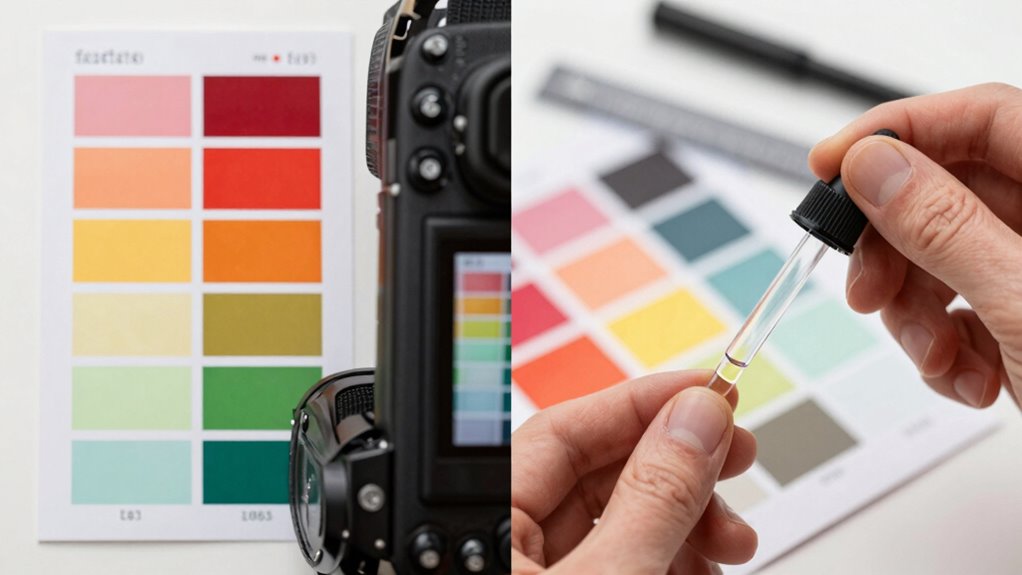
If accuracy and consistency are essential in your color matching, a colorimeter is worth the investment because it provides objective, repeatable results unaffected by lighting or fatigue. Relying on your eyes works well for casual tasks or in controlled conditions, but it can lead to inaccuracies in complex or critical situations. To find out when a device is truly necessary and how to choose the right tools, keep exploring the details below.

Get business pricing on your home office setup
- Business-only prices and quantity discounts
- Tax-exempt purchasing
- Multiple users, one account, clear invoices
Key Takeaways
- A colorimeter offers objective, precise color matching essential for industries requiring consistency, unlike subjective eye judgment.
- Human eye judgment suffices for casual, non-critical tasks but may miss subtle color differences in professional settings.
- Investing in a colorimeter improves accuracy, reduces errors, and maintains long-term color consistency over manual visual assessments.
- Cost and ease of use favor eye judgment for simple, everyday tasks, while a colorimeter is valuable for complex, high-stakes applications.
- The choice depends on project needs: for critical, reproducible results, a colorimeter is worth the investment over “by eye” methods.
What Is a Colorimeter and How Does It Work?

A colorimeter is a device designed to measure color accurately by analyzing how light interacts with a surface or liquid. It works by shining specific wavelengths of light onto the sample and detecting the reflected or transmitted light. This process allows the device to quantify color based on standardized color spaces, ensuring precise color matching. Unlike relying solely on human visual perception, which can vary due to lighting conditions and individual differences, a colorimeter offers consistent, objective measurements. It captures subtle differences in hue, saturation, and brightness that might be missed or misjudged by the eye. Calibration processes are essential for maintaining the device’s accuracy over time. Proper calibration helps account for device drift, ensuring ongoing reliability in measurements. The importance of color consistency across various industries highlights how critical accurate color measurement is for quality control and branding. This precision is especially important in industries like manufacturing, printing, and quality control, where accurate color matching is critical for maintaining standards and consistency. Regular calibration and understanding of measurement accuracy are vital for achieving reliable results. Additionally, advancements in color measurement technology continue to improve the ease and precision of color assessments in different applications.
When Do You Really Need a Colorimeter? Scenarios for Human Judgment
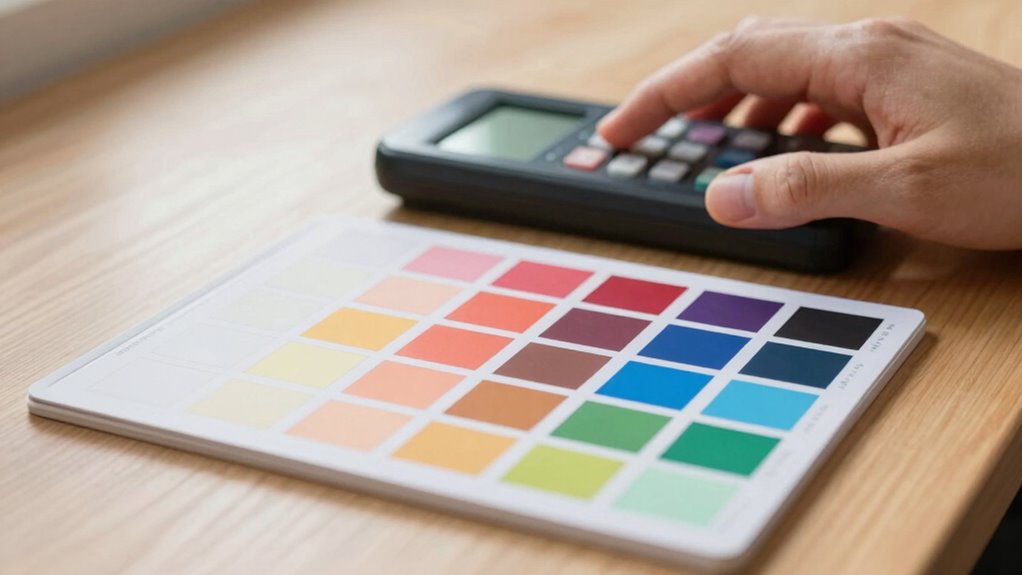
You might depend on your eyes when color differences are obvious, but subtle variations can easily escape notice. In complex color matching situations, human judgment can be inconsistent and imprecise. That’s when a colorimeter becomes essential to guarantee accuracy and consistency. Understanding fan culture helps industry professionals recognize how visual details influence fan experiences and preferences. Additionally, awareness of essential oils and their properties can enhance product development that appeals to discerning consumers. Recognizing the limitations of human perception underscores the importance of instrumental measurement for precise color analysis. Incorporating perceptual differences into quality control processes can lead to more reliable results and improved customer satisfaction. Moreover, considering ethical implications in measurement practices ensures responsible and trustworthy use of color data in various industries.
Subtle Color Differences
When color differences are subtle, human judgment can often suffice, especially in everyday situations where slight variations go unnoticed. Your perception of perceived hue relies on visual perception, which can handle minor discrepancies effectively. For example, matching paint shades or selecting clothing colors usually doesn’t require a precise instrument. Your eyes can detect small differences in shade and tone, allowing quick and accurate assessments without tools. Additionally, human visual perception benefits from contextual cues that can aid in making accurate judgments visual context. However, keep in mind that visual perception has limits; factors like lighting conditions and fatigue may influence your judgment. In cases where consistency matters—such as branding or product quality—it’s better to rely on a colorimeter. For most routine tasks involving subtle color differences, your eye’s ability to discern perceived hue is usually enough. Color matching accuracy can be improved with the use of a colorimeter when precision is crucial. Moreover, instrument calibration ensures that colorimeters provide reliable and consistent measurements, which is especially important in professional settings. Furthermore, Free Floating colorimeters can adapt to various lighting environments, enhancing measurement reliability. In situations requiring exact color matching, instrument precision becomes a key factor in achieving the desired results.
Complex Color Matching
While human judgment handles subtle color differences well, complex color matching demands a higher degree of accuracy. Perception biases can lead you astray, especially when matching colors in intricate designs or critical applications. In these cases, relying solely on the eye might result in inconsistencies, since your perception isn’t always aligned with objective color standards. Understanding color theory helps you recognize when visual judgment isn’t enough—such as in printing, branding, or product development. When precision matters, and subtle variations could affect quality or brand integrity, a colorimeter becomes essential. It eliminates subjective errors, ensuring consistent color accuracy across batches. In scenarios where perception biases threaten to skew results, investing in a colorimeter is a wise choice for reliable, repeatable color matching. Additionally, color measurement tools play a crucial role in maintaining standards and reducing errors in professional workflows. Recognizing when to rely on objective color data rather than human perception is vital for achieving optimal results. Sometimes, even the most seasoned eyes can be deceived, highlighting the importance of instrumental measurement in critical applications.
What Are the Benefits of Using a Colorimeter for Color Matching?
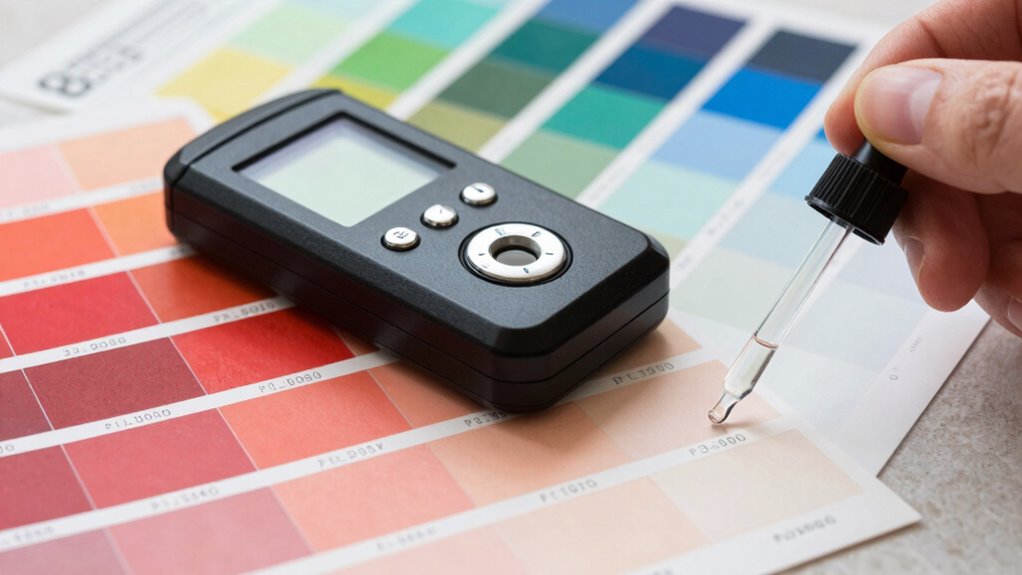
Using a colorimeter for color matching offers significant advantages over relying solely on the human eye. Your visual perception can be influenced by lighting conditions, fatigue, and individual differences, leading to inconsistent results. A colorimeter quantifies color data precisely, eliminating guesswork. By applying color theory, it guarantees that colors are matched accurately according to standardized parameters. This standardization process is essential for maintaining consistency across different batches and projects. Additionally, a colorimeter is designed to account for lighting conditions, which can vary greatly and affect color perception. This consistency is vital in industries like printing, manufacturing, and design, where exact color reproduction matters. Moreover, a colorimeter speeds up workflows by providing immediate, objective readings instead of subjective assessments. It minimizes errors caused by human bias, making your color matching more reliable. Incorporating industry standards ensures your results meet professional quality benchmarks. Furthermore, using a colorimeter can help in quality control by ensuring color accuracy throughout production. Overall, using a colorimeter enhances precision, saves time, and aligns your work with industry standards more effectively.
How Do Cost, Ease of Use, and Learning Curve Compare?
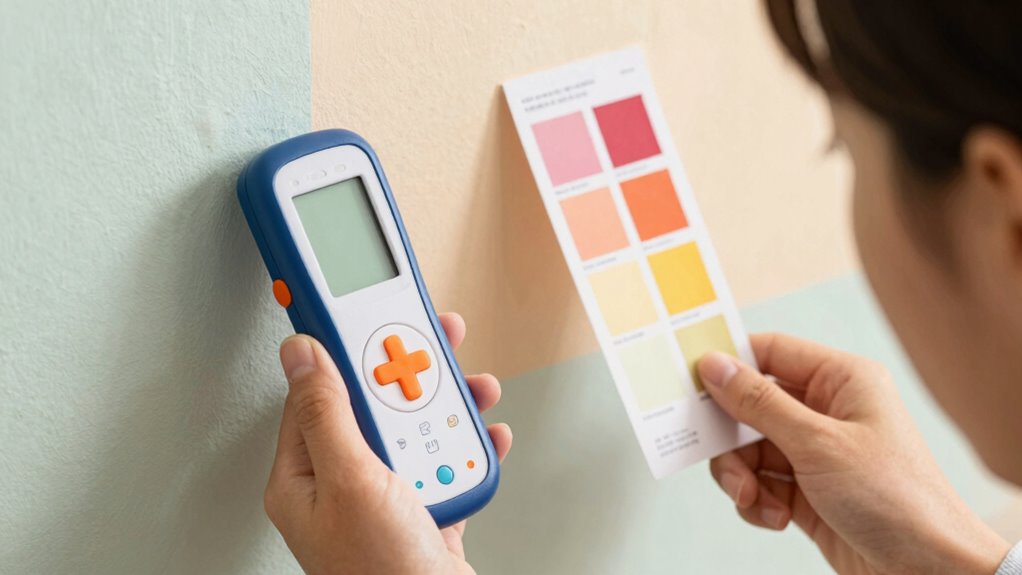
Investing in a colorimeter involves considering not just its accuracy but also the costs and effort required to implement it. These devices can be expensive upfront, but they streamline color matching by providing objective, repeatable measurements. They are generally straightforward to operate, with user-friendly interfaces that reduce the learning curve. You’ll find that colorimeters require minimal training compared to honing visual assessment skills, which depend heavily on experience and subjective judgment. While initial costs may seem high, they can save time and improve consistency over time. In contrast, visual assessment is more affordable and easier to start but demands a keen eye and practice to achieve reliable results. Ultimately, balance your budget, skill level, and need for precision when choosing between the two.
Does a Colorimeter Help Maintain Color Consistency Over Time?
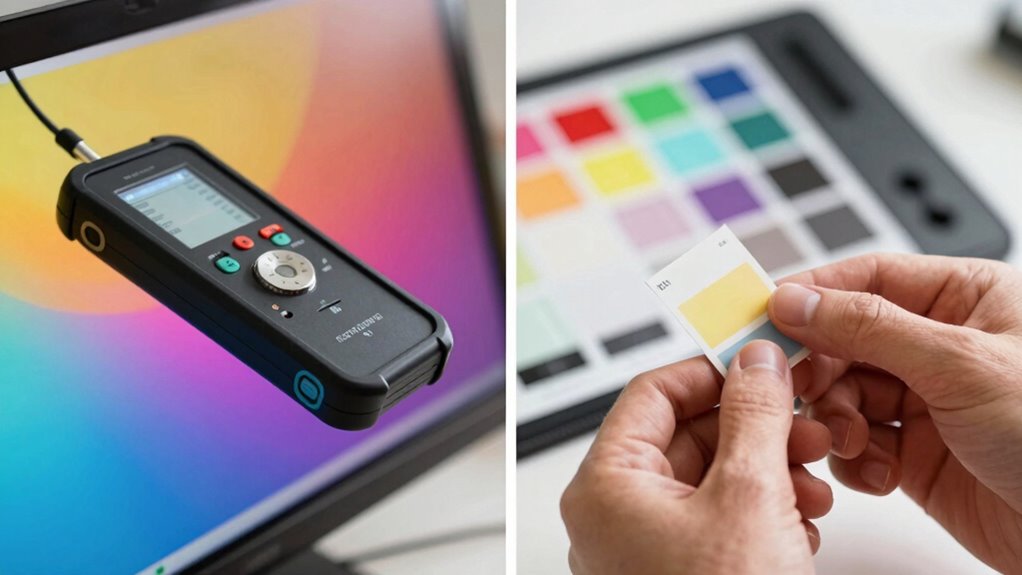
A colorimeter can substantially help maintain color consistency over time by providing objective, repeatable measurements that catch even subtle shifts in color. This aids in managing color stability, ensuring your colors stay true across different batches or over extended periods. Without a colorimeter, small color drift may go unnoticed, leading to inconsistencies that affect your work’s quality. By regularly calibrating with a colorimeter, you can detect and correct color deviations early, preventing long-term issues. This proactive approach keeps your colors consistent and reliable. While visual assessments can miss minor changes, a colorimeter offers precise data, making it an invaluable tool for maintaining consistent color performance over time. Additionally, color measurement tools can help identify environmental factors affecting color accuracy, further supporting long-term color management.
Key Situations Where a Colorimeter Makes a Difference
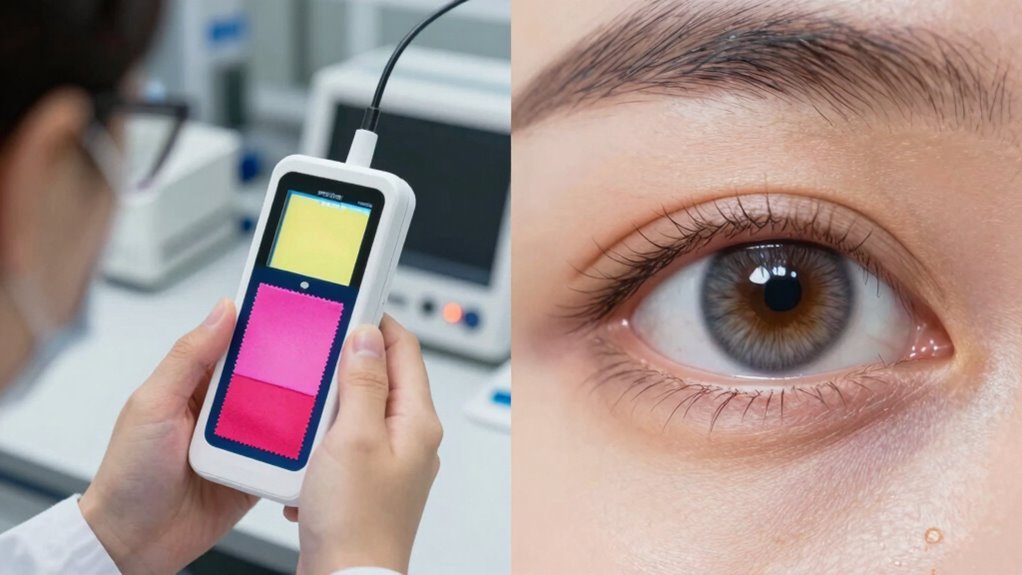
Certain situations demand the precision that only a colorimeter can provide. When visual perception alone isn’t enough—such as matching colors across different materials or lighting conditions—a colorimeter guarantees consistency. It takes the guesswork out of color matching, eliminating errors that can arise from subjective judgment. This is especially important in industries like branding, where color psychology influences consumer perception, and every shade must evoke the intended emotional response. In printing, manufacturing, or quality control, relying on your eyes could lead to subtle discrepancies that affect product quality or brand integrity. Using a colorimeter guarantees accurate readings, aligning colors precisely with specifications. When exact color matching impacts reputation or safety, a colorimeter becomes an indispensable tool.
When Is Relying on Your Eyes Good Enough? Recognizing Limitations
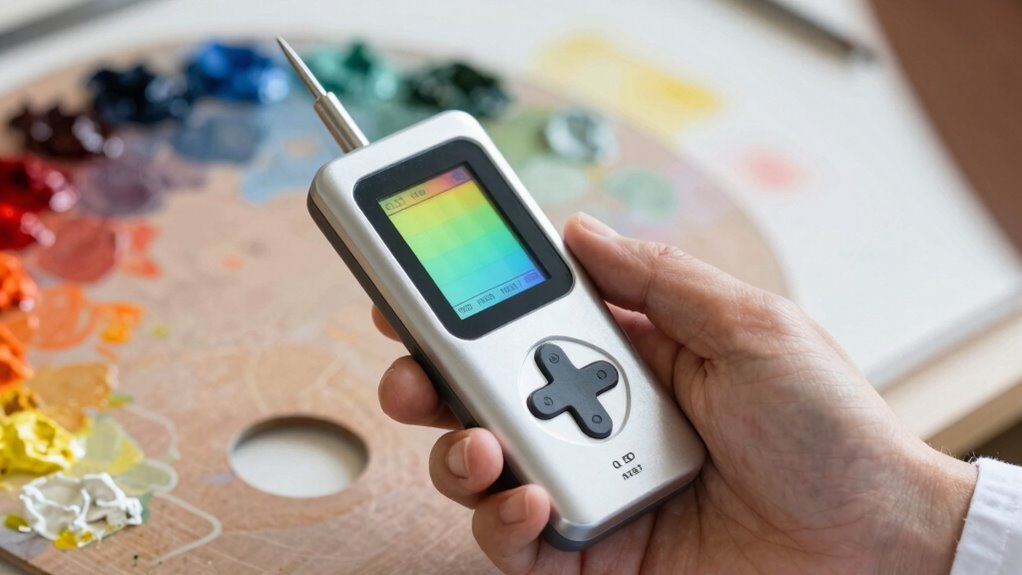
While a colorimeter offers unmatched accuracy, there are times when relying on your eyes can be good enough. Your perception accuracy can be surprisingly reliable in everyday situations, especially when subtle color differences aren’t critical. If you’re making quick assessments or working in controlled lighting conditions, subjective judgment often suffices. For example, matching paint shades or selecting clothing colors typically doesn’t require precise measurements. However, be aware of your limitations; factors like lighting, fatigue, or personal bias can distort perception accuracy. Recognizing when these influences matter helps you decide if your eye-based judgment is sufficient or if a colorimeter is necessary. Trust your instincts for casual, non-critical tasks, but remember that precision often benefits from objective tools.
Is Investing in a Colorimeter Worth It? Factors to Consider
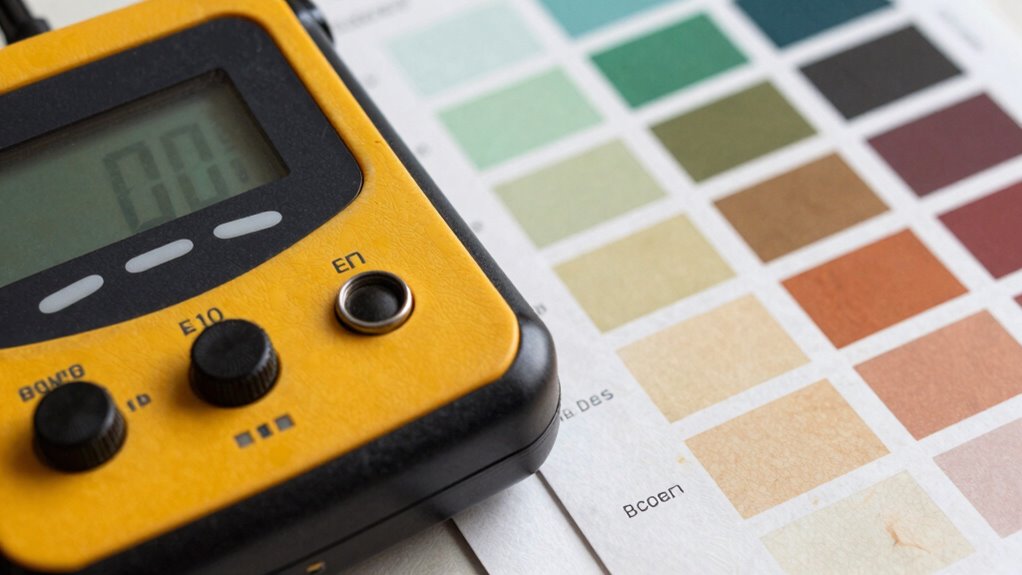
Deciding whether to invest in a colorimeter depends on how you plan to use it and the level of accuracy you need. If precision in color matching is essential for your work, a colorimeter offers consistent and reliable results, enhancing color accuracy beyond what visual perception alone can achieve. Consider these factors:
Invest in a colorimeter if precise, consistent color matching is crucial for your work.
- Your project’s demand for exact color reproduction
- The importance of minimizing human error in color assessment
- Budget constraints and long-term value
A colorimeter helps standardize color measurements, reducing inconsistencies caused by visual perception or lighting conditions. If your work requires precise color matching or calibration, investing in a device is worthwhile. However, if casual or subjective evaluations suffice, relying on your eyes might be enough. Ultimately, weigh your needs against the benefits a colorimeter provides for achieving accurate, reproducible colors.
Final Tips: Choosing Between a Device and Your Eyes for Color Accuracy
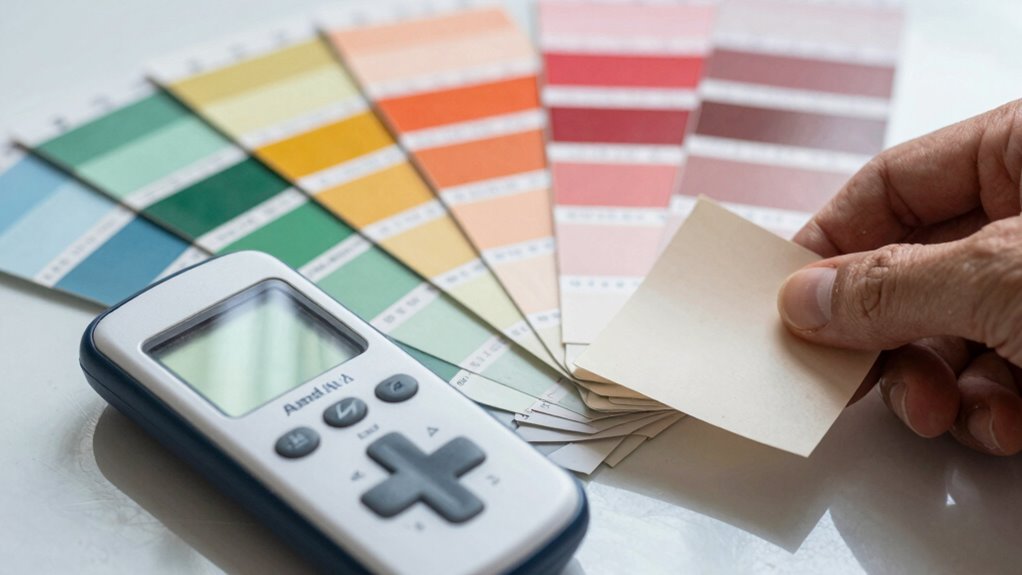
When choosing between a colorimeter and your eyes for color accuracy, consider the specific demands of your project and the level of consistency you need. Your visual perception can be influenced by lighting conditions, fatigue, and personal bias, making subjective judgment less reliable for precise tasks. If accuracy and repeatability are vital, a colorimeter ensures consistent results aligned with color psychology principles, helping you achieve intended emotional and aesthetic effects. However, for quick assessments or less critical work, trusting your eyes might suffice, especially if you’re experienced and familiar with the environment. Ultimately, weigh the importance of precision against convenience. For projects requiring strict color fidelity, a device is worth it; for more flexible tasks, your visual perception might be enough.
Frequently Asked Questions
How Accurate Are Human Color Judgments Compared to a Colorimeter?
Human color judgments are less accurate than a colorimeter because of subjectivity bias and calibration challenges. You might perceive colors differently based on lighting, surroundings, or fatigue, leading to inconsistent results. A colorimeter provides objective, standardized measurements, reducing errors caused by personal bias. While humans excel at quick visual assessments, for precise and repeatable color evaluation, a colorimeter is definitely worth it for the accuracy it offers.
Can a Colorimeter Replace Visual Inspection Entirely?
A colorimeter can’t fully replace visual inspection because subjectivity bias and calibration challenges still influence its accuracy. While it provides consistent, objective measurements, it may miss nuances a trained eye detects, especially with complex colors or finishes. You should rely on a colorimeter for routine, precise tasks, but keep visual inspection as a complementary method to catch subtleties and ensure overall quality.
What Industries Benefit Most From Using Colorimeters?
You’ll find that industries like cosmetics, food, and textiles benefit most from using colorimeters because they demand precise quality control and color matching. Without them, it’s like trying to find a needle in a haystack! Colorimeters provide consistent, objective results that guarantee products meet exact standards, reducing errors and waste. They’re essential for maintaining brand reputation and customer satisfaction in these sectors, where perfect color is everything.
Are There Any Limitations to Relying Solely on a Colorimeter?
Relying solely on a colorimeter has limitations, as it can be affected by subjectivity bias and calibration challenges. You might find it difficult to achieve perfect accuracy if the device isn’t regularly calibrated or if lighting conditions vary. Additionally, colorimeters may not capture subtle nuances that the human eye detects. So, while useful, they shouldn’t completely replace visual assessment, especially in quality-critical applications.
How Much Training Is Needed to Effectively Use a Colorimeter?
Think of learning a colorimeter as planting a seed—you’ll need patience and consistent care. Typically, it takes about a few hours to a few days for you to develop basic skills, depending on your prior experience. Focused training duration and hands-on practice accelerate skill development, helping you use the device accurately. With steady effort, you’ll become confident in obtaining precise measurements and making better decisions based on color data.
Conclusion
Ultimately, whether you opt for a colorimeter or trust your taste, remember your decision depends on precision, patience, and purpose. While devices deliver documentary detail, human eyes offer intuitive insight. Weigh the worth of warmth versus work, cost versus control. By balancing boldness with basic judgment, you can confidently choose the coloring method that best suits your needs—making your mastery manageable, memorable, and most importantly, your own.
Halloween Picks
halloween
As an affiliate, we earn on qualifying purchases.