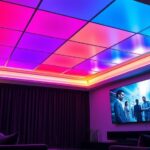
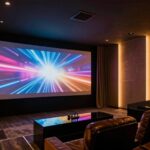
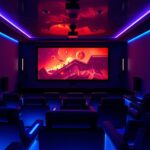
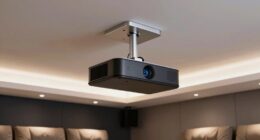
To synchronize lighting scenes with movies, you need to match ambient effects, colors, and progressions to the on-screen action. Use smart lighting systems to adjust color temperature, dimming, and effects in real time, ensuring smooth shifts that reflect mood changes. Focus on timing controls so transitions feel seamless and natural. When done well, this technique creates an immersive environment that enhances emotional impact—if you keep exploring, you’ll discover how to master this process perfectly.
Key Takeaways
- Use automation and dynamic lighting controls to match scene transitions seamlessly.
- Calibrate light color temperatures to reflect on-screen mood and scene tones accurately.
- Synchronize lighting changes with movie timing to enhance emotional impact and immersion.
- Incorporate ambient effects that mirror natural phenomena or scene atmosphere for cohesion.
- Plan lighting cues in advance to ensure smooth transitions that align with cinematic narrative beats.

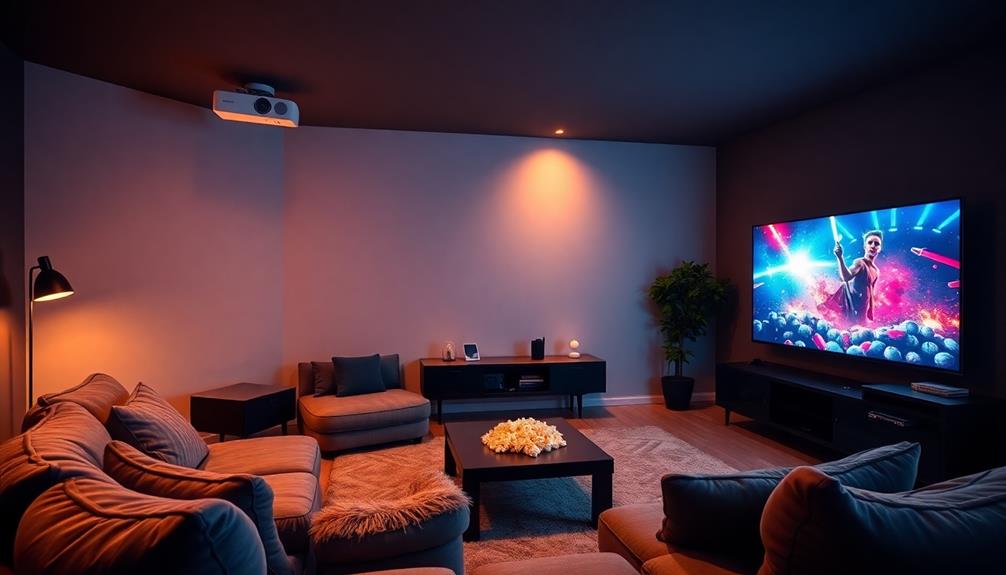
Lighting plays a essential role in setting the mood and enhancing the cinematic experience, especially when it seamlessly syncs with what’s happening on screen. When you coordinate your lighting scenes with the movie, you create an immersive environment that pulls viewers deeper into the story. A key aspect of this synchronization involves using ambient effects to subtly influence the atmosphere. Soft, diffused lighting can mimic the natural glow of a sunset or the flickering of a campfire, making scenes feel more authentic. By adjusting ambient effects in real-time, you can reflect the mood shifts in the film, whether it’s a tense thriller or a romantic sunset. This not only heightens emotional impact but also guarantees your lighting complements the visual storytelling.
Color matching is another essential element in syncing lighting with movies. When the scene calls for a cold, blue hue to evoke a sense of loneliness or suspense, your lights should match that tone precisely. Conversely, warm orange and yellow tones can create feelings of comfort or nostalgia. The idea is to match the color temperature of your lights to the on-screen colors—if the film shifts from daylight to dusk, your lighting should follow suit. This requires careful calibration, often through smart lighting systems that allow you to fine-tune hues effortlessly. When you get the color matching right, it prevents visual dissonance and maintains a cohesive aesthetic that draws viewers into the narrative.
Timing is equally important. As the scene’s mood evolves, your lighting should transition smoothly, avoiding abrupt changes that can jar the audience out of the experience. Using dynamic controls or automation, you can program lighting scenes to change in harmony with the movie’s pace and tone shifts. For example, during a suspenseful chase, dimming ambient effects and shifting to cooler, more stark colors can amplify tension. When the scene shifts to a moment of resolution, warming the lights and softening ambient effects help evoke relief and closure.
In essence, when you master ambient effects and color matching, you create a lighting environment that enhances every cinematic moment. The key isn’t just in controlling individual lights but in orchestrating a seamless, synchronized experience that mirrors the emotional beats of the film. This approach transforms your space into an extension of the movie, making it more engaging and visually compelling for everyone watching.
Top picks for "synchroniz light scen"
Open Amazon search results for this keyword.
As an affiliate, we earn on qualifying purchases.
Frequently Asked Questions
What Equipment Is Necessary for Synchronization?
You need a smart lighting system compatible with your ambient lighting setup, such as smart LEDs or DMX-controlled lights. A hub or controller guarantees hardware compatibility and seamless synchronization. You’ll also require a media server or software like LED syncing apps to coordinate lighting with movie scenes. Make sure all devices are compatible and connected properly, so the lighting responds accurately and enhances your viewing experience.
Can This Setup Work With All Types of Movies?
Think of your setup as a chameleon, adapting to various movies. It can work with most films, enhancing ambient effects and emphasizing color contrast, but some complex scenes might need fine-tuning. Fast-paced action or subtle dialogue scenes could challenge your system’s responsiveness. To guarantee seamless synchronization, customize your lighting cues for each movie type, creating an immersive experience that heightens every visual detail like a painter bringing a canvas to life.
How Do Lighting Scenes Affect Viewer Immersion?
Lighting scenes greatly impact your immersion by enhancing mood and creating a seamless experience. When color harmony is maintained, it amplifies emotional responses, making scenes feel more real. Proper lighting guides your focus and subtly influences your feelings, drawing you deeper into the story. By carefully adjusting lighting to match scenes, you enhance mood and make your viewing experience more engaging and immersive.
Is It Possible to Automate Synchronization Entirely?
Yes, you can automate synchronization entirely. By using ambient lighting systems with advanced software, you can set up real-time adjustments based on the movie’s color calibration and scene changes. Smart lighting devices can detect video content and adapt the lighting automatically, creating an immersive experience without manual input. This tech makes it easy to maintain perfect synchronization, enhancing your viewing with dynamic, responsive lighting that matches every scene seamlessly.
What Safety Precautions Should Be Considered?
Think of safety precautions like a sturdy bridge—essential for smooth sailing. You should prioritize electrical safety by ensuring all wiring is properly insulated and grounded. Keep remote troubleshooting tools accessible but secure, so you can quickly address issues without risking electric shocks. Always turn off power before adjustments, and use protective gear. These steps help prevent accidents and keep your setup safe during synchronization, so you can enjoy seamless lighting scenes confidently.
Conclusion
As you master the art of syncing lighting with movies, you become the conductor of a silent symphony, where each scene’s glow mirrors your emotions. Your lights transform into a mirror, reflecting the story’s heartbeat, guiding your experience like a lighthouse in a storm. With every flicker, you craft a world where shadows dance and colors whisper secrets, turning your space into a canvas of cinematic magic. In this harmony, you’re no longer just watching—you’re part of the story.