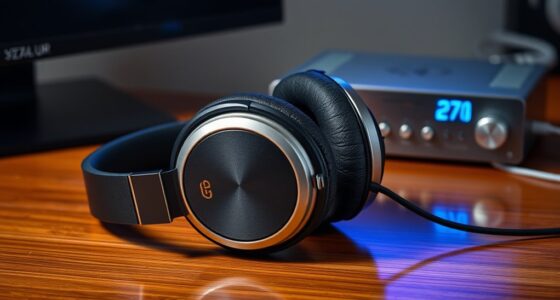
Theories behind Bluetooth audio codecs unlock better sound quality and connection stability—discover how choosing the right one can transform your listening experience.
Bluetooth audio codecs are technology tools that help your wireless devices compress and transmit sound efficiently. They affect your sound quality, latency, and connection stability. Common codecs like SBC, aptX, AAC, and LDAC each have different strengths, with higher-quality options providing richer, clearer audio. To get the best sound, you need compatible devices that support these codecs. Keep going to discover how choosing the right codec can improve your listening experience even more.
Bluetooth codecs determine how audio data is compressed and transmitted, affecting sound quality, latency, and connection stability.
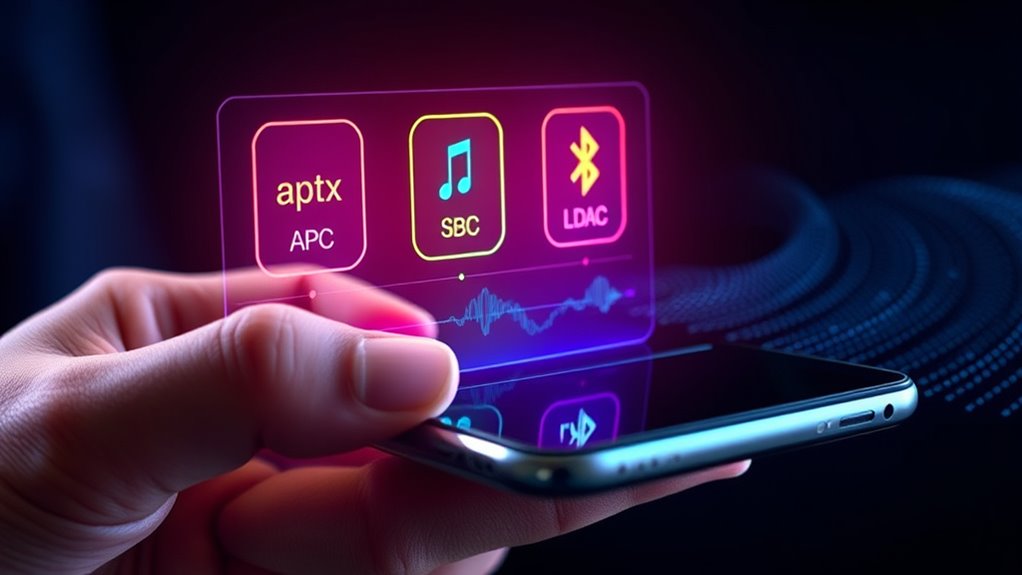
SBC is the default, reliable codec suitable for basic audio, while aptX, aptX HD, LDAC, and AAC offer higher fidelity and better sound clarity.
High-quality codecs like LDAC and aptX HD enable near-lossless or high-resolution audio streaming for richer sound textures.
Compatibility depends on both the transmitting device and receiver supporting specific codecs to unlock their benefits.
Choosing devices with advanced codec support enhances overall wireless audio experience, balancing sound quality and connection performance.
Bluetooth audio codecs are essential for transmitting high-quality sound wirelessly between your devices. When you stream music or take calls through Bluetooth headphones or speakers, these codecs determine how efficiently and accurately the audio data is compressed and sent. Understanding how wireless streaming works with different codecs can help you choose the best devices for your needs, especially if sound quality and latency matter to you.
Bluetooth codecs optimize wireless sound quality by efficiently compressing and transmitting audio data for clearer, more accurate music and calls.
A codec, short for coder-decoder, is a software or hardware algorithm that compresses audio signals into a digital format suitable for wireless transmission. Not all codecs are created equal, so it’s helpful to compare their capabilities to see which ones deliver the best balance of sound quality, latency, and connection stability. For instance, SBC (Subband Codec) is the default codec supported by most Bluetooth devices. While it offers reliable wireless streaming with decent sound, it’s not the best for high-fidelity audio. It’s suitable for casual listening but falls short if you want richer, more detailed sound.
On the other hand, aptX and aptX HD are popular among audiophiles who prioritize quality. They provide a significant upgrade over SBC by offering higher bit rates and better compression techniques, resulting in clearer, more dynamic sound. If you’re using compatible devices, aptX can deliver near-lossless quality, making your wireless listening experience feel more natural and immersive. aptX HD takes this a step further by supporting even higher bit rates, which means you get the most detailed sound possible over Bluetooth.
LDAC, developed by Sony, is another advanced codec that excels in wireless streaming. It can transmit up to three times the data of standard SBC, allowing for near-high-resolution audio. If your device supportsLDAC, you’ll notice richer textures and more precise instrument separation, especially with high-quality files. AAC, commonly used with Apple devices, also offers good sound quality and efficient performance, though it doesn’t quite match the high bit rates of aptX or LDAC.
When choosing your devices, it’s worth comparing these codecs to see which ones are supported and how they perform in real-world scenarios. Your experience depends on both the codec and the hardware you use. High-quality codecs like aptX HD and LDAC can make a notable difference in the clarity and depth of your wireless audio, but only if your device and headphones support them. So, when shopping, pay attention to the codec comparison to ensure you get the best wireless streaming experience for your budget and preferences.
Denon AVR-X1700H 7.2 Channel AV Receiver - 80W/Channel, Advanced 8K HDMI Video w/eARC, Dolby Atmos, DTS:X, Built-in HEOS, Amazon Alexa Voice Control
HIGH-PERFORMANCE 7-CHANNEL AMPLIFIER WITH NEXT-GEN MOVIE IMMERSION - Enjoy Denon sound in movies, games, and music with full...
As an affiliate, we earn on qualifying purchases.
Frequently Asked Questions
How Do Bluetooth Codecs Affect Battery Life?
Bluetooth codecs impact your device’s battery life through their codec selection. Opting for more efficient codecs, like aptX or AAC, helps with battery optimization by reducing power consumption during audio streaming. Higher-quality codecs, such as LDAC, might drain your battery faster because they require more processing power. To extend your device’s battery life, choose codecs that balance sound quality and efficiency based on your listening needs.
Can I Upgrade My Device’s Bluetooth Codec Support?
You can upgrade your device’s Bluetooth codec support if it’s compatible with newer codecs. Check your device’s specifications and see if it supports firmware updates or hardware upgrades that enable codec support. Keep in mind that not all devices allow codec upgrades due to hardware limitations. To guarantee compatibility and optimize audio quality, research your device’s compatibility and available codec upgrade options before making any changes.
Are There Compatibility Issues Between Different Bluetooth Codecs?
Yes, there can be compatibility issues between different Bluetooth codecs due to device limitations. Not all devices support every codec, which means your device might automatically switch to a less suitable codec if the preferred one isn’t compatible. To guarantee smooth playback, you should check your device’s maximum codec support and confirm that both your device and headphones or speakers support the same codecs for better compatibility.
How Do I Test Which Codec My Device Is Using?
Think of your device as a radio tuner; to test which codec it’s using, you need to tune in. First, check your device’s settings or use a specialized app to identify the active codec. Some devices display codec info in Bluetooth settings, while apps like Bluetooth Audio Codec Info help with codec identification. This way, you guarantee your device compatibility is optimized for the best audio experience.
Do All Bluetooth Headphones Support All Codecs?
Not all Bluetooth headphones support every codec due to device limitations and compatibility issues. You’ll find that some headphones only support basic codecs like SBC, while premium models often include AAC, aptX, or LDAC. To verify your headphones work with your device’s preferred codec, check their specifications and compatibility. Keep in mind, the codec used also depends on your device’s capabilities and the Bluetooth version, which can impact audio quality.
Onkyo TX-NR6100 7.2 Channel 8K Smart AV Receiver - THX Certified, Works with Sonos Certified, and Ultimate 4K Gaming Experience
WORKS WITH SONOS CERTIFIED: This receiver can join your existing Sonos Home Sound System, or be the start...
As an affiliate, we earn on qualifying purchases.
Conclusion
Now that you know the basics of Bluetooth audio codecs, you can confidently choose the best for your needs. Remember, mastering the mechanics means more marvelous sound and a more meaningful listening experience. So, whether you prefer pristine, seamless sound or simple, speedy connections, your selection shapes your soundscape. Explore the details, discover your device’s dynamics, and delight in the delicious difference a good codec can make. Your perfect playback is just a codec away!
Onkyo TX-RZ50 9.2-Channel AV Receiver - 120 Watts Per Channel, Dirac Live Out of Box, Works with Sonos Certified, THX Certified and More
TAKE THE ROOM OUT OF THE EQUATION: Dirac Live automatically calibrates sound in your room using either your...
As an affiliate, we earn on qualifying purchases.
Onkyo TX-RZ70 11.2-Channel AV Receiver - 140 Watts Per Channel, Dirac Live Out of Box, Works with Sonos Certified, THX Certified and More
11 CHANNELS, 140 WATTS: Home theater buffs rejoice! The Onkyo TX-RZ70 is our most powerful AVR yet, giving...
Prevent audio lag with wireless headsets by optimizing device compatibility and environment; discover essential tips to ensure seamless sound synchronization.