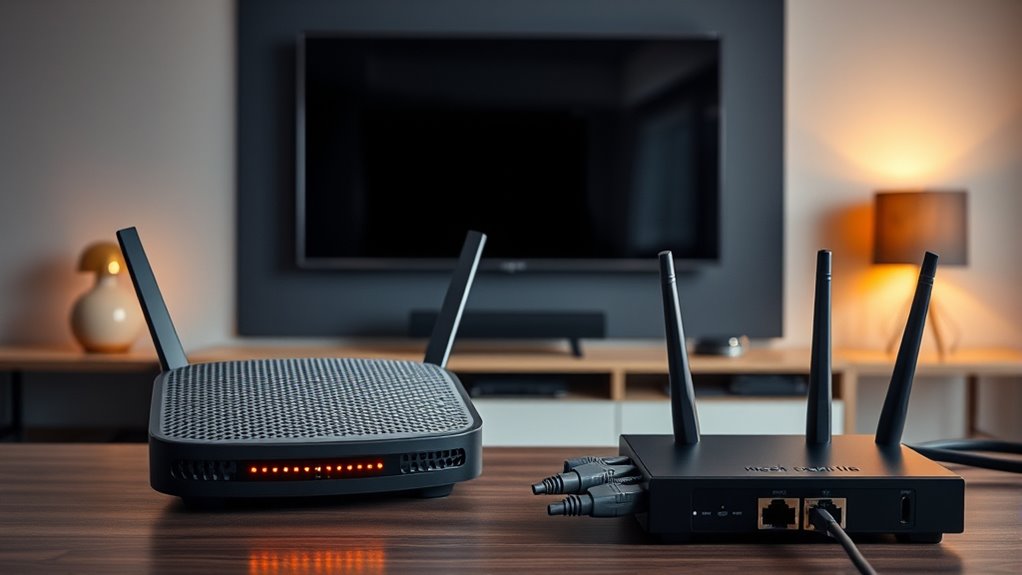

For your home theater, wired Ethernet is generally better because it offers a more stable, high-speed connection with less interference, ensuring smooth streaming of 4K or higher quality content. Mesh Wi‑Fi provides flexible, whole-home coverage and easy setup, but may experience slight fluctuations in performance during heavy data use. To get the best audiovisual experience, consider Ethernet for performance and use Mesh Wi‑Fi for overall coverage; details here can help you decide.
Key Takeaways
- Wired Ethernet offers more stable, high-speed connections ideal for uninterrupted 4K/8K streaming and gaming in home theaters.
- Mesh Wi‑Fi provides seamless, flexible coverage that easily extends to multiple rooms, reducing dead zones around the home.
- Ethernet minimizes latency and signal fluctuations, ensuring consistent audio and video quality for high-performance home theater setups.
- Mesh Wi‑Fi allows for simple expansion and device mobility, suitable for dynamic home environments and multiple smart devices.
- The choice depends on whether prioritizing maximum connection stability (Ethernet) or flexible, broad coverage (Mesh Wi‑Fi).

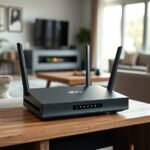
When choosing the best home network setup, understanding the differences between Mesh Wi‑Fi and wired Ethernet is vital. For a home theater, where smooth streaming and minimal lag are essential, your choice impacts your viewing experience considerably. Mesh Wi‑Fi systems are designed to blanket your entire home with seamless wireless coverage, making them ideal if you want flexibility and scalability. They utilize multiple nodes that communicate with each other to extend coverage, which is especially useful if your home has thick walls or multiple floors. This setup boosts the wireless signal range, ensuring your streaming devices, smart home integrations, and other gadgets stay connected without dead zones. Plus, Mesh Wi‑Fi systems are generally easy to set up, and you can add more nodes later if your needs grow, maintaining a strong signal throughout your home theater area. Additionally, many Mesh Wi‑Fi systems support security protocols that help protect your network from unauthorized access.
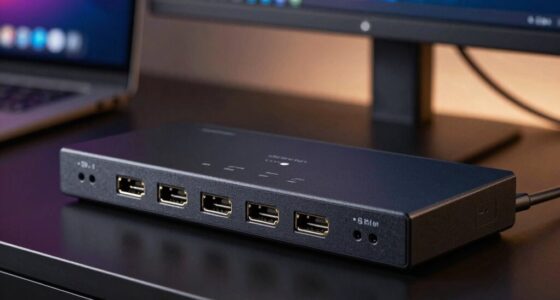
In contrast, wired Ethernet provides a direct, dedicated connection to your devices, which is often superior for high-bandwidth activities like streaming 4K or even 8K content. Because Ethernet cables are not susceptible to interference from walls, appliances, or other wireless signals, they offer more stable and consistently high speeds. This stability is vital for a home theater, where buffering and lag can ruin the experience. You won’t have to worry about signal drops or fluctuations, making Ethernet the preferred choice if you prioritize performance over convenience. Installing Ethernet cables might require more effort and planning, especially if your home isn’t pre-wired, but the payoff is a reliable, high-quality connection.
When it comes to integrating smart home devices, the choice becomes more nuanced. Mesh Wi‑Fi systems often support smart home integration better because they can connect numerous devices wirelessly across a broad area. This allows you to control your smart lights, speakers, and security cameras without worrying about losing connection. However, for devices that demand the highest reliability—like a dedicated streaming box or gaming console—wired Ethernet is often the superior option. It ensures that your home theater’s streaming quality remains pristine, with minimal latency or interruptions.
Ultimately, your decision hinges on your priorities. If you value ease of setup and the flexibility to move devices around, Mesh Wi‑Fi will serve you well, especially with its expanding wireless signal range. If your focus is on top-tier performance and unbreakable connectivity, Ethernet is the clear winner. Both options have their strengths, but for a home theater where picture quality and audio smoothness matter most, understanding these differences helps you choose the setup that best suits your needs.

Klipsch R-12SW Powerful Deep Bass Front Firing 12" Copper-Spun Driver 400W Digital Power Subwoofer 14" X 18.5" X 16"
Powerful 12" copper-spun front-firing woofer
As an affiliate, we earn on qualifying purchases.
Frequently Asked Questions
Can Mesh Wi-Fi Support Multiple Simultaneous 4K Streams Effectively?
Yes, mesh Wi-Fi can support multiple simultaneous 4K streams effectively if it has sufficient bandwidth allocation. It manages multiple devices well, but signal interference from walls or other electronics can impact performance. To guarantee smooth streaming, choose a mesh system with high throughput and strong signals, and position nodes strategically. This way, you’ll enjoy seamless 4K streaming without buffering issues.
How Does Wired Ethernet Impact Overall Home Network Security?
Wired Ethernet enhances your home network security by providing a more secure connection compared to Wi-Fi. It supports stronger network encryption and simplifies device authentication, making it harder for unauthorized users to access your data. With Ethernet, you reduce the risk of wireless hacking attempts, ensuring your devices and personal information stay protected. Overall, a wired connection offers a safer environment for your home network security.
What Is the Cost Difference Between Mesh Wi-Fi and Wired Ethernet Setups?
The cost difference between mesh Wi-Fi and wired Ethernet setups varies based on setup complexity and maintenance costs. Mesh systems are generally more affordable initially, with prices around $100–$300, but may incur higher maintenance over time due to potential node replacements. Wired Ethernet setup costs are higher upfront, often $200–$500 for cabling and installation, but tend to have lower ongoing maintenance costs, providing more reliability for your home theater network.
Are There Any Compatibility Issues With Existing Home Devices for Either Option?
You won’t face major device compatibility issues with either setup, but wired Ethernet often has fewer concerns since it directly connects devices without interference. Mesh Wi-Fi can handle most modern devices, but older gadgets might experience signal interference or connectivity hiccups. Confirm your devices support the network type you choose. For seamless performance, verify compatibility and consider potential signal interference, especially with wireless options.
How Scalable Are Mesh Wi-Fi and Wired Ethernet Networks for Future Upgrades?
You’ll find both mesh Wi-Fi and wired Ethernet quite scalable for future upgrades. Mesh networks excel in easy network expansion, allowing you to add nodes seamlessly without disrupting device compatibility. Wired Ethernet offers a straightforward upgrade path by adding more cables and switches, but it’s less flexible. Overall, mesh Wi-Fi provides a more adaptable solution for expanding your home network as your device needs grow.

Klipsch R-120SW Subwoofer, Black
12" high excursion spun-copper Imp woofer
As an affiliate, we earn on qualifying purchases.
Conclusion
Choosing between mesh Wi-Fi and wired Ethernet is like picking between a smooth river and a sturdy bridge. If you want seamless movement and flexibility around your home, mesh Wi-Fi feels like gliding down a gentle stream. But if you need rock-solid stability for your home theater, wired Ethernet is your dependable bridge. Consider your priorities, and you’ll find the perfect route to a flawless streaming experience.

Denon AVR-X1700H 7.2 Channel AV Receiver - 80W/Channel, Advanced 8K HDMI Video w/eARC, Dolby Atmos, DTS:X, Built-in HEOS, Amazon Alexa Voice Control
HIGH-PERFORMANCE 7-CHANNEL AMPLIFIER WITH NEXT-GEN MOVIE IMMERSION - Enjoy Denon sound in movies, games, and music with full...
As an affiliate, we earn on qualifying purchases.

Rockville Rock Shaker 15" Powered Subwoofer, 1000W Peak / 500W RMS, Class-D, MDF Enclosure, RCA, Speaker Inputs, Phase & Crossover Control, Black, for Home Theater & Studio
POWERFUL 1000W SUBWOOFER - 1000 watts peak / 500 watts RMS delivers deep, thumping bass ideal for home...
As an affiliate, we earn on qualifying purchases.