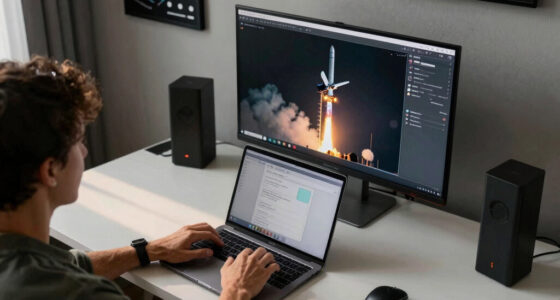
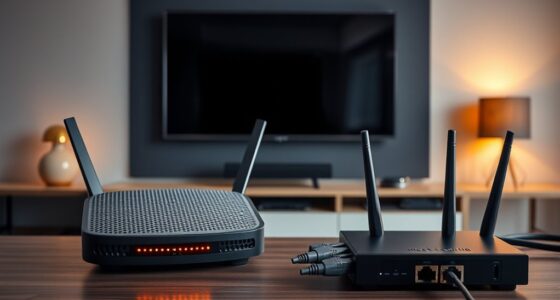
To guarantee streaming stability, place your router in a central, elevated spot away from metal objects, thick walls, and electronic devices that can cause interference. Keep it clear of dense furniture and appliances that block signals. For larger spaces, consider adding mesh nodes or extenders, placing them halfway between the router and dead zones for better coverage. Proper positioning minimizes interruption and boosts signal strength—if you want to discover additional tips, keep exploring this topic.
Open a free Amazon Business account
Business pricing, bulk buying and tax-exempt orders.
As an affiliate, we earn on qualifying purchases.
Key Takeaways
- Place the router centrally and elevated to ensure even Wi-Fi coverage throughout your space.
- Keep the router away from metal objects, dense furniture, and electronic devices that cause interference.
- Use mesh nodes or extenders strategically to improve coverage in dead zones or large areas.
- Position extenders midway between the main router and weak signal zones for optimal performance.
- Regularly adjust placement if buffering or dead zones persist to maintain strong, reliable streaming signals.

A well-placed router can substantially improve your Wi-Fi signal strength and reliability, guaranteeing seamless internet access throughout your home or office. To achieve this, you need to contemplate strategic placement that minimizes interference and maximizes coverage. One effective approach is to leverage mesh networking systems, which use multiple nodes to create a unified, strong Wi-Fi network. Instead of relying on a single router that may struggle to reach every corner of your space, mesh systems allow you to place nodes in different areas, providing consistent signal strength no matter where you are. These systems are especially beneficial in larger homes or buildings with thick walls, where a single device might leave some zones underserved.
Additionally, Wi-Fi extenders can serve as valuable tools in your setup. They work by amplifying your existing signal, effectively extending coverage to areas with weak or no reception. When placing Wi-Fi extenders, it’s vital to position them halfway between your main router and the dead zone. This guarantees they receive a strong enough signal to boost, rather than just amplifying a weak one, which can lead to slower speeds. Combining Wi-Fi extenders with a mesh network can be a game changer, offering both broad coverage and stable streaming, especially if your space has complex layouts or multiple floors.
Avoid placing your router near metal objects, thick walls, or electronic devices like microwaves and cordless phones, as these can interfere with the signal. Instead, position your router in a central, elevated location to guarantee even distribution of Wi-Fi throughout your space. For streaming stability, it’s also wise to keep your router away from dense furniture or appliances that could cause signal blockage. If you notice persistent dead zones or frequent buffering, think about expanding your network with additional mesh nodes or strategically placed Wi-Fi extenders. This layered approach ensures your streaming devices consistently receive strong, reliable signals, minimizing disruptions. Recognizing the importance of signal quality can guide you in optimizing your router placement for the best streaming experience.
Frequently Asked Questions
How Does Router Placement Affect Latency During Streaming?
Router placement directly impacts latency during streaming by minimizing interference sources and signal attenuation. When you position your router away from devices like microwaves or cordless phones, you reduce interference sources, leading to a more stable connection. Placing the router in a central, elevated location also lessens signal attenuation, ensuring a stronger signal. This setup improves streaming stability and reduces latency, giving you a smoother, buffer-free experience.
What Materials Can Block Wi-Fi Signals Near My Router?
Think of Wi-Fi signals as a delicate dance; certain materials can trip up your router’s performance. Metals like aluminum foil, mirrors, and dense materials such as concrete or brick act as interference sources, causing signal attenuation. These materials block or weaken the Wi-Fi signals, leading to slower speeds or dropped connections. Keep your router away from such barriers to guarantee a smooth, uninterrupted streaming experience.
How Often Should I Update My Router’s Firmware?
You should update your router’s firmware at least once every three to six months to guarantee peak performance and security. Regular firmware updates improve router security by fixing vulnerabilities and enhance streaming stability. Check your router’s admin panel or the manufacturer’s website periodically for updates. Staying current with firmware updates keeps your network protected and helps prevent interruptions during streaming, making your online experience smoother and safer.
Can Multiple Devices Impact Streaming Quality With Smart Placement?
Yes, multiple devices can impact your streaming quality, especially if device congestion and signal interference come into play. As more devices connect, your router struggles to allocate bandwidth efficiently, leading to buffering and lag. Smart placement helps, but it’s not a cure-all. Keep an eye on device activity and try to minimize interference sources to maximize streaming stability, ensuring your connection stays smooth even with many devices online.
What Are Signs My Router Needs Repositioning for Better Streaming?
If your streaming keeps buffering or the connection drops frequently, it’s time to reposition your router. Look for signs like weak signals or inconsistent speeds, which often result from signal interference or physical obstructions like walls or furniture. Move your router to a central, open spot away from electronic devices and thick walls. This enhances signal strength, reduces interference, and guarantees smoother streaming for all your devices.
Conclusion
So, after all that, you’d think placing your router anywhere would do the trick. But nope—smart placement is the real secret to streaming smoothly. Ironically, the simplest fix might be just moving that tiny device a few feet or avoiding thick walls. Turns out, the biggest streaming upgrade is almost too easy. Who knew that a little strategic thinking could turn your buffering nightmare into a seamless binge? Happy streaming!
Fall Picks
fall essentials
As an affiliate, we earn on qualifying purchases.