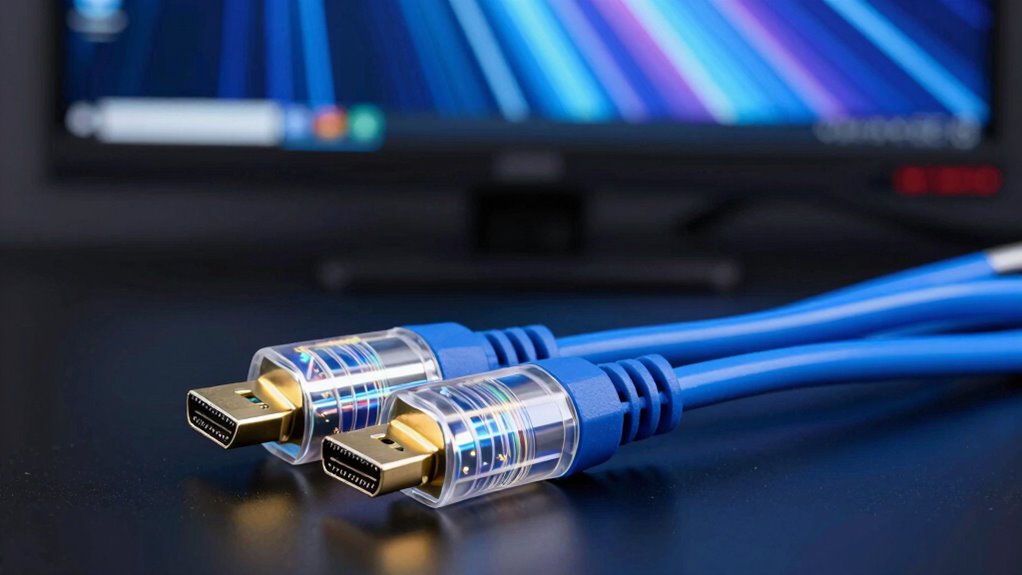

You should consider fiber HDMI cables when you need to transmit high-quality signals over long distances, typically beyond 50 feet, where traditional copper cables start losing quality. They’re ideal if you want sharp images and stable sound in large setups like home theaters, professional AV, or broadcast environments. These cables also excel at handling high bandwidth demands for 4K or 8K content while resisting interference. To find out if they’re right for your situation, continue exploring the details below.
Key Takeaways
- Fiber HDMI cables are essential for transmitting high-quality signals over distances exceeding 50 feet without degradation.
- They are ideal for professional setups like broadcast studios, large conference rooms, and multi-room home theaters.
- Use fiber HDMI when high bandwidth is needed for 4K, 8K, or other high-resolution content without compression loss.
- They are recommended in environments with high electromagnetic interference or where signal integrity is critical.
- Fiber HDMI cables provide durability, longevity, and resistance to physical damage, making them suitable for demanding applications.

Official Licensed Google TV Smart Projector, HAPPRUN 4K UHD Home Theater with Dolby Sound, Wi-Fi & Bluetooth, Built-in Streaming Apps, Compatible with Games Consoles & Smartphone, Indoor & Outdoor Use
[ Built-in Official Licensed Google TV ] - Without additional equipment, the smart projector can directly access Netflix,...
As an affiliate, we earn on qualifying purchases.
What Are Fiber HDMI Cables and Why Are They Needed?
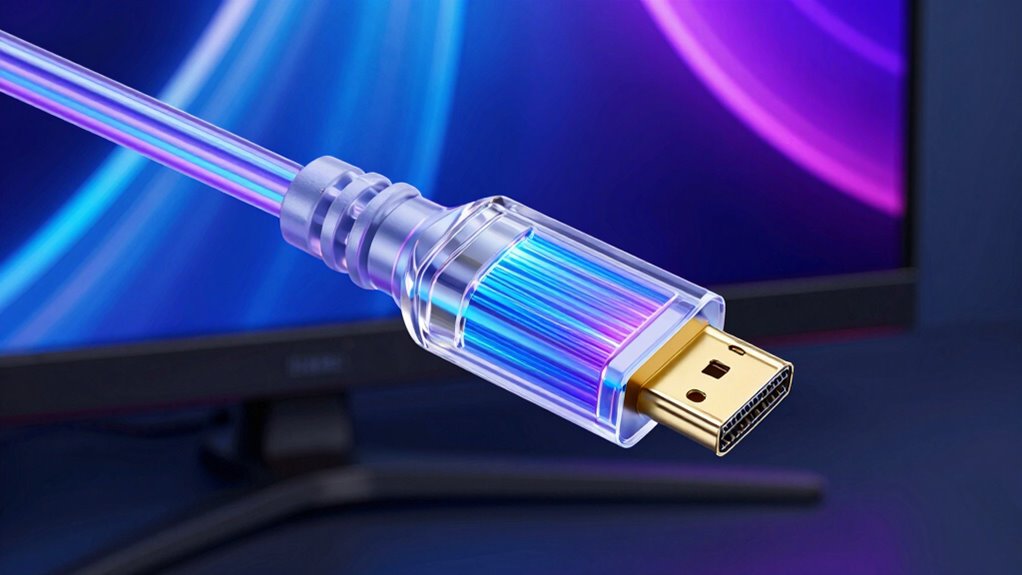
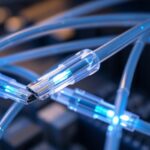
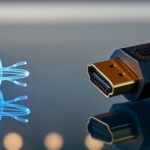
Fiber HDMI cables are advanced cables that use optical fibers to transmit high-definition audio and video signals. Unlike traditional copper HDMI cables, they markedly reduce signal degradation over long distances, ensuring sharp, clear pictures without loss of quality. This makes them ideal for high-resolution displays and professional setups where signal integrity matters most. Additionally, fiber HDMI cables offer superior cable durability; they’re more resistant to electromagnetic interference, bending, and physical damage. You won’t have to worry about signal disruptions or deterioration caused by everyday wear and tear. If you need a reliable, high-performance connection for extended runs or sensitive environments, fiber HDMI cables give you the robustness and clarity that copper cables simply can’t match. Optical fiber technology enhances the overall performance and longevity of these cables, making them a preferred choice for demanding applications. They are particularly beneficial in environments where interference can compromise traditional cables, ensuring consistent quality and reliability. For those with extensive or complex setups, the long-distance transmission capabilities of fiber HDMI cables can be a game-changer, providing consistent high-quality signals across large spaces. In addition, the signal quality provided by fiber optic technology helps maintain optimal performance even in challenging environments. Moreover, the ease of installation of fiber HDMI cables can be advantageous in complex or professional settings.
![[Built-in Official Apps/4K Support] Smart Outdoor Projector with WiFi and Bluetooth, 800ANSI Movie Projector, DoIby Audio with Dual Speaker, Auto Focus w/ YouTube&PrimeVideo Proyector, Upgrad P62 Pro](https://m.media-amazon.com/images/I/51h241YxtmL._SL500_.jpg)
[Built-in Official Apps/4K Support] Smart Outdoor Projector with WiFi and Bluetooth, 800ANSI Movie Projector, DoIby Audio with Dual Speaker, Auto Focus w/ YouTube&PrimeVideo Proyector, Upgrad P62 Pro
[Upgraded Classic – P62 Pro Movie Projector] Building on the reliability and low return rate of the classic...
As an affiliate, we earn on qualifying purchases.
When Do HDMI Cables Hit Length Limits, Making Copper Insufficient?
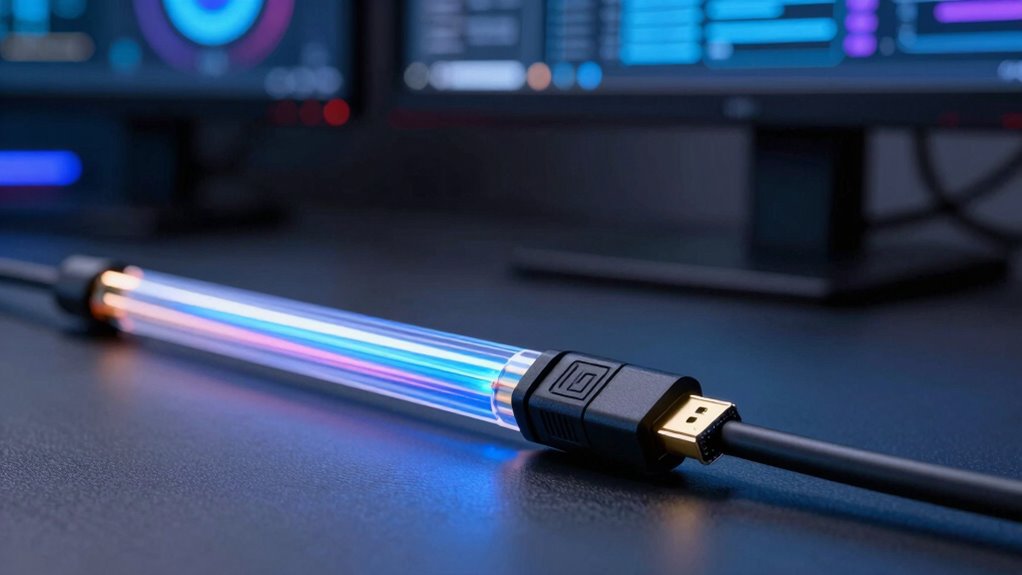
Copper HDMI cables are effective for short distances, but their signal quality diminishes as the length increases. Once you reach around 15 meters (50 feet), you’ll likely notice signal degradation, leading to poor image and sound quality. As cables get longer, the copper’s resistance causes the signal to weaken, making it unreliable for high-bandwidth content. Additionally, longer cables tend to lose cable flexibility, making installation more difficult and increasing the risk of damage. When you need to run HDMI over greater distances, copper simply hits its limits. That’s when fiber HDMI cables become essential, offering better signal integrity over long runs without sacrificing flexibility or quality. This guarantees you get a reliable, high-quality connection no matter how far your setup extends. Understanding signal degradation is crucial for choosing the right cable type for your needs. Moreover, cable quality can significantly impact overall performance, especially over extended distances. To ensure optimal results, it’s also important to consider installation environment, which can influence cable performance and longevity. Properly selecting the appropriate cable type based on your setup can prevent unnecessary issues and ensure your audio-visual experience remains consistent over time. Recognizing the limitations of copper cables helps in making informed decisions for long-distance HDMI solutions.

TOWOND Projector Screen and Stand, 150 inch Indoor Outdoor Projection Screen, Portable 16:9 4K HD Rear Front Movie Screen with Carry Bag Wrinkle-Free Design for Home Theater Backyard Cinema
Projector Screen with Stand. 150-inch diagonal, 160°wide viewing angle, aspect ratio 1:1 and 16:9 4k HD portable projector...
As an affiliate, we earn on qualifying purchases.
Why Is High Bandwidth Crucial for 4K and 8K Content?
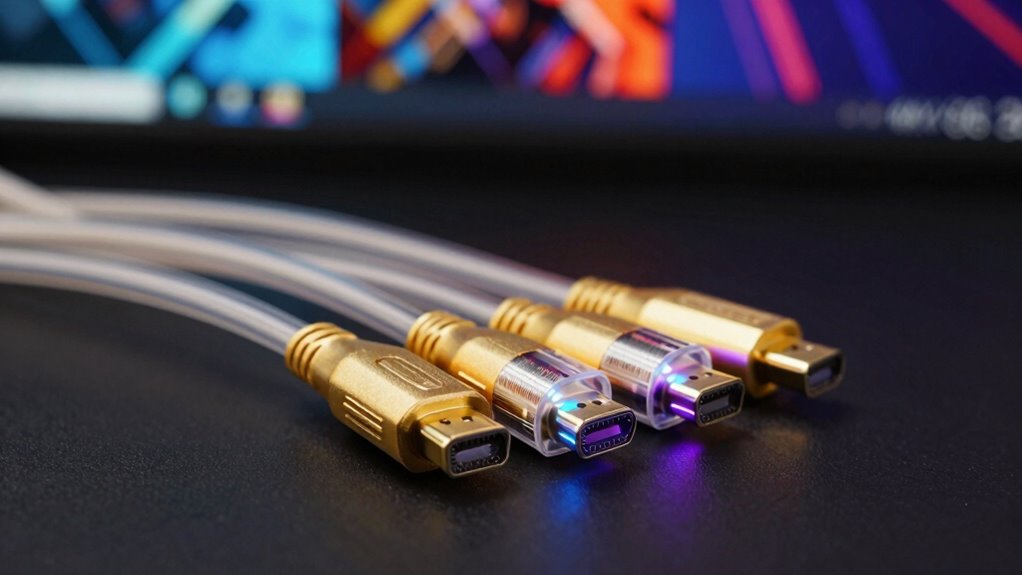
High bandwidth is essential for transmitting the large amounts of data required by 4K and 8K content without compression or loss of quality. Without sufficient bandwidth capacity, your signal can become compressed, leading to degraded image clarity and reduced signal fidelity. Existential themes can be reflected in the way we value the integrity of high-definition visuals, emphasizing the importance of quality in digital media. High bandwidth ensures that all the detailed visuals, vibrant colors, and smooth motion are preserved, providing a true viewing experience. As resolution increases, so does the demand for data transfer, making high-bandwidth cables necessary to handle this load. If your cable can’t support the required bandwidth, you risk lag, artifacts, or even signal dropouts. Fiber HDMI cables excel here because they offer the high bandwidth capacity needed to maintain pristine signal fidelity for ultra-high-definition content. Bandwidth capacity plays a critical role in ensuring seamless transmission of high-resolution digital media. Additionally, fiber optic technology enables these cables to transmit data over longer distances without degradation, which is vital for setups with extended runs.

ZXQDRE Measurement Microphone, Professional Calibrated Microphone with Individual Calibration File Compatible with MiniDSP, REW, Dirac Live, Plug and Play USB-C Mic for Speaker Design & Audio Tuning
Ultimate Accuracy: Each measurement microphone includes a unique calibration file tailored to its serial number. This ensures precise...
As an affiliate, we earn on qualifying purchases.
Which Professional Setups Benefit Most From Fiber HDMI?
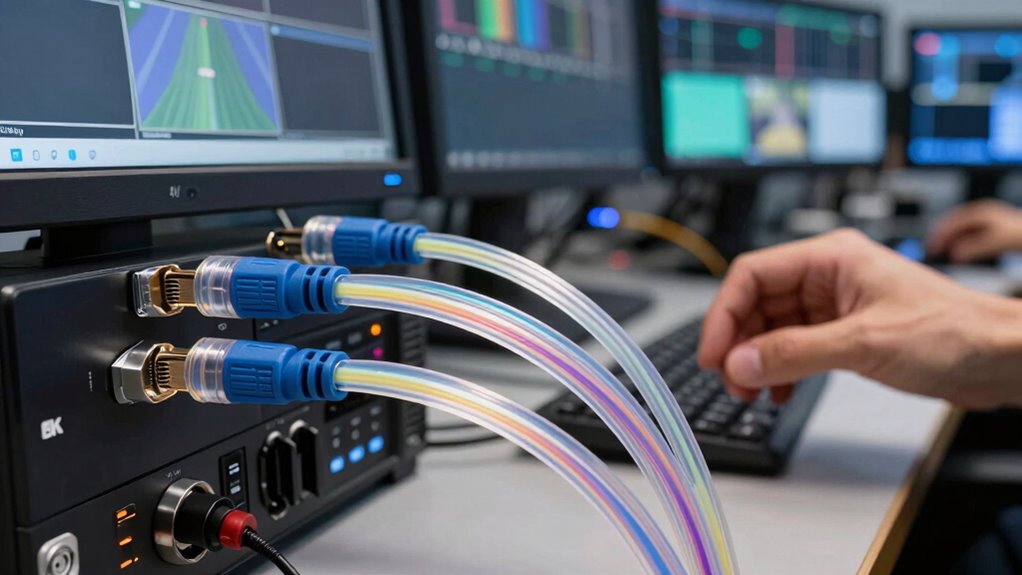
If you work in professional AV setups, fiber HDMI cables can considerably improve your performance. They provide enhanced signal integrity over long distances, reducing the risk of interference. This makes them ideal for environments where clear, reliable connections are critical. Additionally, they are especially beneficial when managing multi-unit setups, ensuring consistent quality across all devices. In such scenarios, signal quality can be maintained at high levels, which is essential for professional presentations and broadcasts. Moreover, utilizing vehicle protection accessories can further safeguard your equipment and ensure optimal operation during demanding setups. Proper ventilation is also important to prevent overheating and maintain equipment longevity. Incorporating innovative composting toilets into the environment can also promote sustainability and reduce maintenance needs, especially in remote or off-grid locations.
Enhanced Signal Integrity
While traditional HDMI cables can struggle with maintaining signal quality over long distances, fiber HDMI cables excel at preserving signal integrity in demanding setups. If you need consistent signal clarity for critical applications, fiber optics provide superior data robustness. They minimize interference from electromagnetic noise, ensuring your video and audio signals stay sharp and stable. This interference resistance is especially important in environments with numerous electronic devices. This makes them ideal for professional environments where even minor signal degradation can impact performance. Whether you’re running a high-end home theater, a broadcast studio, or a corporate presentation system, fiber HDMI cables deliver reliable, high-quality transmission. Their ability to maintain pristine signals over extended distances without loss makes them a smart choice when signal integrity is non-negotiable. Additionally, fiber optic technology significantly reduces latency, which is crucial for real-time applications. In these setups, fiber cables help you achieve crystal-clear visuals and dependable data transfer every time, especially when long-distance transmission is required for optimal performance.
Long-Distance Transmission
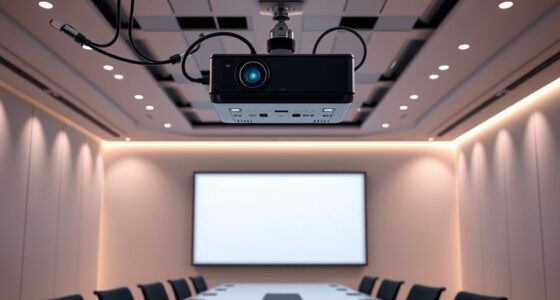
Professional setups that require long-distance transmission often face challenges with signal degradation and interference. Fiber HDMI cables excel in these scenarios, offering reliable performance over hundreds of feet without performance loss. Unlike wireless alternatives, which can suffer from interference or latency issues, fiber cables maintain a strong, stable signal. They also simplify cable management by reducing the need for multiple adapters or signal boosters. If you’re setting up a large conference room, a home theater spanning multiple rooms, or a professional broadcasting station, fiber HDMI ensures seamless, high-quality video transfer. This technology minimizes the clutter of cables and eliminates concerns about signal drop-offs, making it the ideal choice for any setup demanding long-distance, high-quality transmission.
How Do Environmental Factors Affect HDMI Cable Performance?
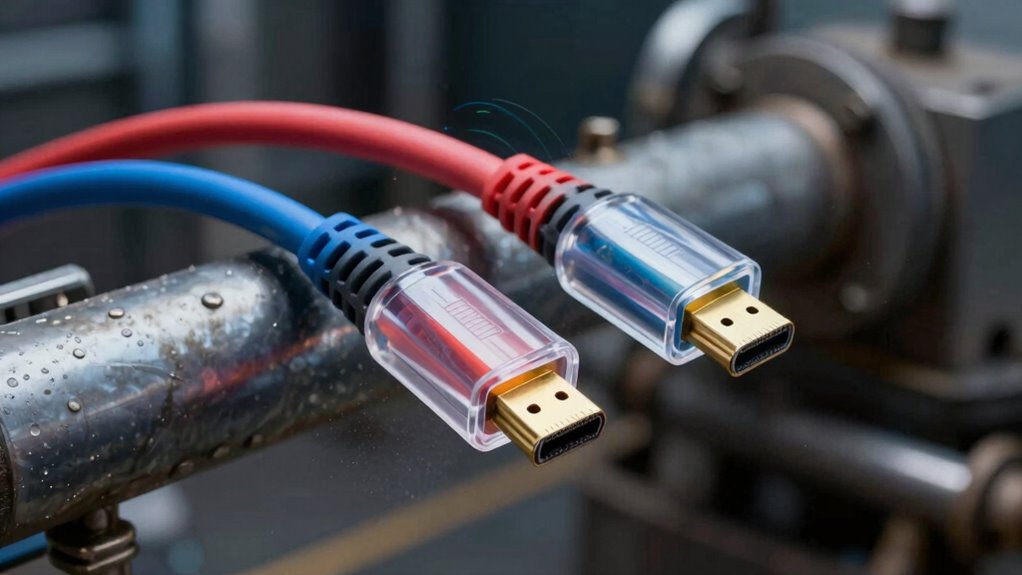
Environmental factors like temperature fluctuations can weaken signal quality and cause disruptions. Interference from nearby electronic devices adds noise, reducing picture clarity. Understanding these impacts helps you choose the right setup for reliable HDMI performance. Additionally, improper cable handling can lead to physical damage, further compromising signal integrity. Being aware of dust and debris buildup can also prevent signal degradation over time since contaminants can interfere with connections.
Temperature Impact on Signal
Temperature changes can drastically impact the performance of HDMI cables, especially in extreme conditions. When temperatures fluctuate beyond normal ranges, you may notice signal degradation, resulting in lower quality or interrupted audio and video. High heat can cause the internal components to expand or weaken, reducing cable durability over time. Conversely, cold environments can make the materials brittle, increasing the risk of cracks or breaks that compromise signal integrity. These environmental stresses can lead to inconsistent performance or complete failure, especially if the cable isn’t designed to withstand such conditions. To guarantee your HDMI connection remains reliable, choose cables rated for the temperature ranges of your environment. Proper insulation and quality construction help maintain signal strength and extend the lifespan of your cable.
Interference and Noise
Interference and noise from surrounding electronic devices can considerably disrupt the performance of HDMI cables. Electromagnetic interference (EMI) from nearby appliances, wireless devices, or power lines can introduce signal noise, degrading picture quality and audio clarity. Signal noise causes flickering, artifacts, or even temporary loss of connection. Shorter, well-shielded HDMI cables reduce susceptibility, but environmental factors still play a role. Fiber HDMI cables are less affected by electromagnetic interference, making them ideal in noisy settings. To guarantee maximum performance, keep HDMI cables away from sources of strong EMI, such as routers, transformers, or fluorescent lights. Proper shielding and strategic placement help minimize interference, maintaining a clean, stable signal for high-quality audio-visual experiences.
What Are the Costs and Limitations of Using Fiber HDMI Cables?
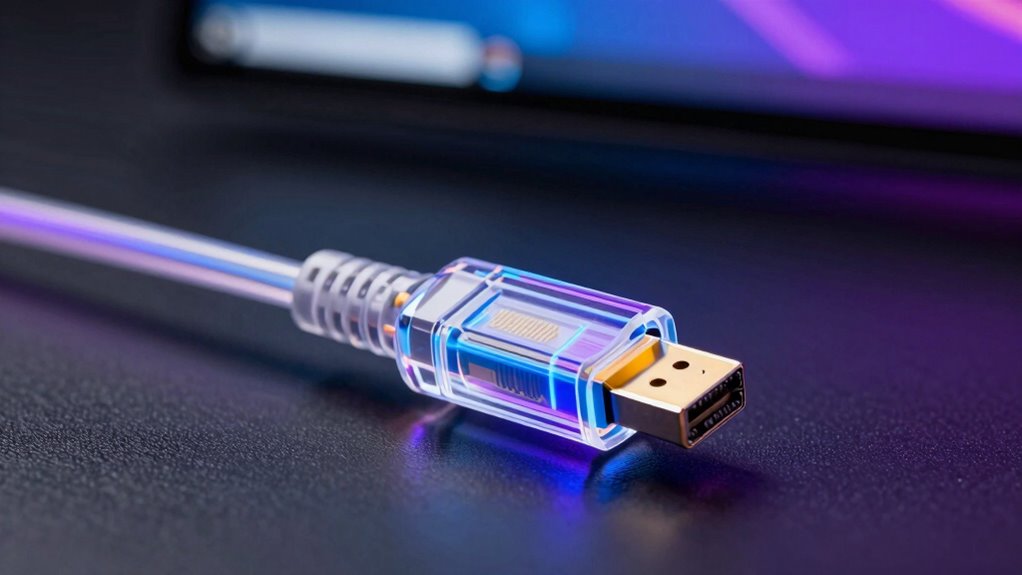
Are fiber HDMI cables worth the investment when considering their costs and limitations? The cost considerations can be significant, as fiber optic cables tend to be more expensive than traditional HDMI options. Additionally, installation challenges might arise since fiber cables require specialized connectors and careful handling to avoid damage. You may also need compatible equipment or adapters, adding to the overall expense. These cables are more fragile and less flexible, making setup in tight or complex spaces more difficult. While fiber HDMI provides excellent performance over long distances, the upfront costs and logistical hurdles can outweigh the benefits for casual or short-range use. Carefully evaluate whether your setup truly demands fiber optics before making the investment.
How Do You Decide If Your Setup Needs Fiber HDMI?
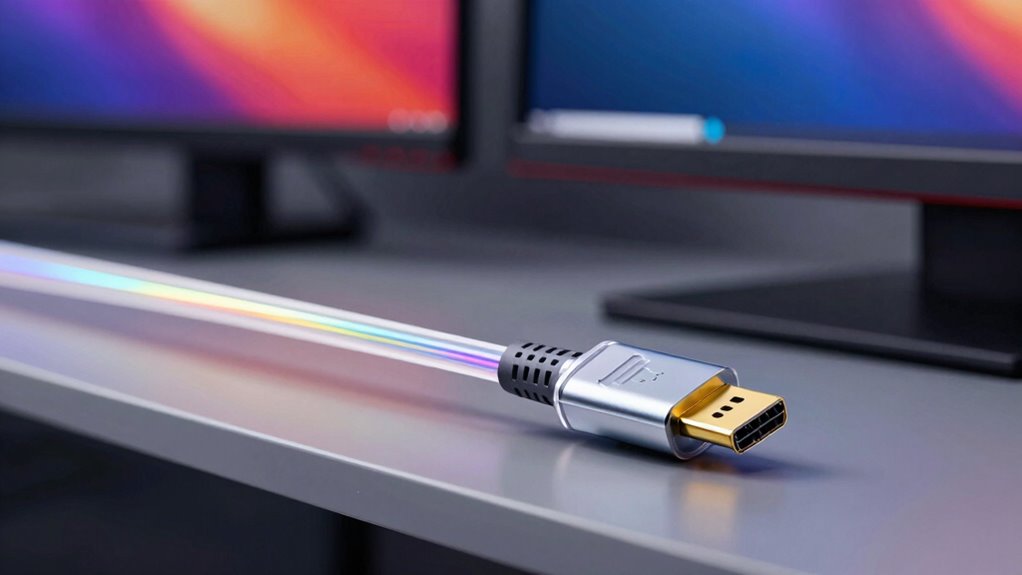
Deciding whether your setup needs fiber HDMI starts with evaluating your specific requirements for distance, signal quality, and future scalability. If you need to transmit signals over long distances—beyond 50 feet—fiber HDMI can prevent signal degradation that traditional cables might suffer. Consider whether your devices are compatible; fiber HDMI can sometimes pose compatibility issues with older equipment, so verify your hardware supports it. If you plan to upgrade or expand your setup later, fiber cables offer better scalability without sacrificing signal integrity. Assess whether maintaining pristine image and sound quality over extended runs is critical for you. If you’re facing issues like signal degradation with standard HDMI cables or foresee future needs, fiber HDMI could be the right choice to guarantee reliable, high-quality transmission.
Frequently Asked Questions
Can Fiber HDMI Cables Be Used for In-Wall Installations?
Yes, you can use fiber HDMI cables for in-wall installations, but make sure they’re rated for fire safety. Fiber cables are ideal because they’re resistant to electromagnetic interference and can handle long distances without signal loss. Always check the manufacturer’s specifications to confirm they’re suitable for in-wall use and meet fire safety standards, preventing potential hazards and ensuring a safe, reliable setup in your home or office.
Are Fiber HDMI Cables Compatible With All HDMI Devices?
Fiber HDMI cables are compatible with most HDMI devices, but you might face compatibility issues or signal limitations with some older equipment. Always check the specifications to confirm your devices support the cable’s features, like 4K or HDR. Keep in mind that fiber HDMI cables are designed for long-distance, high-quality transmission, so verify your device’s compatibility to avoid potential signal loss or performance issues.
How Do Fiber HDMI Cables Compare in Durability to Copper Ones?
Did you know fiber HDMI cables are up to 10 times more durable than copper ones? In durability comparison, fiber cables excel because of their material strength, making them resistant to electromagnetic interference, bending, and physical wear. Unlike copper, which can degrade over time, fiber’s sturdy construction guarantees longevity. So, if you’re looking for a cable that withstands daily use and harsh conditions, fiber HDMI cables are the tougher choice.
What Is the Typical Lifespan of a Fiber HDMI Cable?
You can expect a fiber HDMI cable to last around 10 to 15 years. Its lifespan is often longer than copper cables because it resists signal degradation over long distances. Plus, fiber cables offer better installation flexibility, allowing you to run them through tight spaces without loss of quality. Proper handling and avoiding physical damage help maximize their durability, ensuring you get the most out of your investment over time.
Are There Any Special Connectors Required for Fiber HDMI Cables?
Yes, fiber optic HDMI cables often require special connector types, typically SC or LC connectors, designed specifically for fiber optic technology. These connectors guarantee proper signal transmission and minimal loss. When choosing a fiber optic HDMI cable, make certain it matches the connector type compatible with your devices. This assures secure connections and peak performance, especially over long distances where traditional copper cables might struggle.
Conclusion
When choosing between copper and fiber HDMI cables, think of fiber as the highway for your high-definition dreams—fast, reliable, and built for the long haul. If your setup demands crystal-clear 4K or 8K content over great distances or in challenging environments, fiber cables are the game-changer you need. Don’t let limitations hold you back; with fiber, your home theater or professional setup can reach new heights, turning your space into a visual masterpiece.