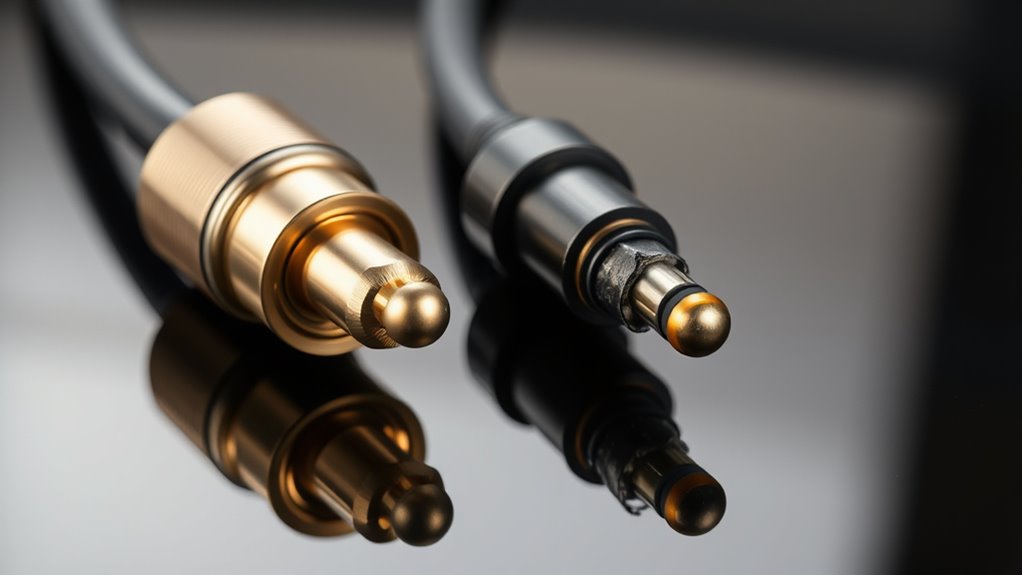

Balanced and unbalanced audio cables differ mainly in design and noise rejection. Balanced cables use three conductors and a differential signal, which cancels out external noise, making them ideal for long runs and noisy environments. Unbalanced cables have two conductors and rely on shielding for noise protection, perfect for short distances and casual setups. Understanding these differences helps you choose the best cable for your needs, and you’ll discover more about their applications as you explore further.

Get business pricing on your home office setup
- Business-only prices and quantity discounts
- Tax-exempt purchasing
- Multiple users, one account, clear invoices
Key Takeaways
- Balanced cables use three conductors for differential signal transmission, canceling out noise, ideal for long runs and noisy environments.
- Unbalanced cables have two conductors and rely on shielding, making them more susceptible to electromagnetic interference over longer distances.
- Balanced cables excel in high-interference settings, providing clearer audio, while unbalanced are suitable for short, casual connections.
- Shielding in unbalanced cables is crucial for noise reduction, but they generally offer less noise rejection than balanced cables.
- Application environment, cable length, and noise level determine whether a balanced or unbalanced cable is appropriate.
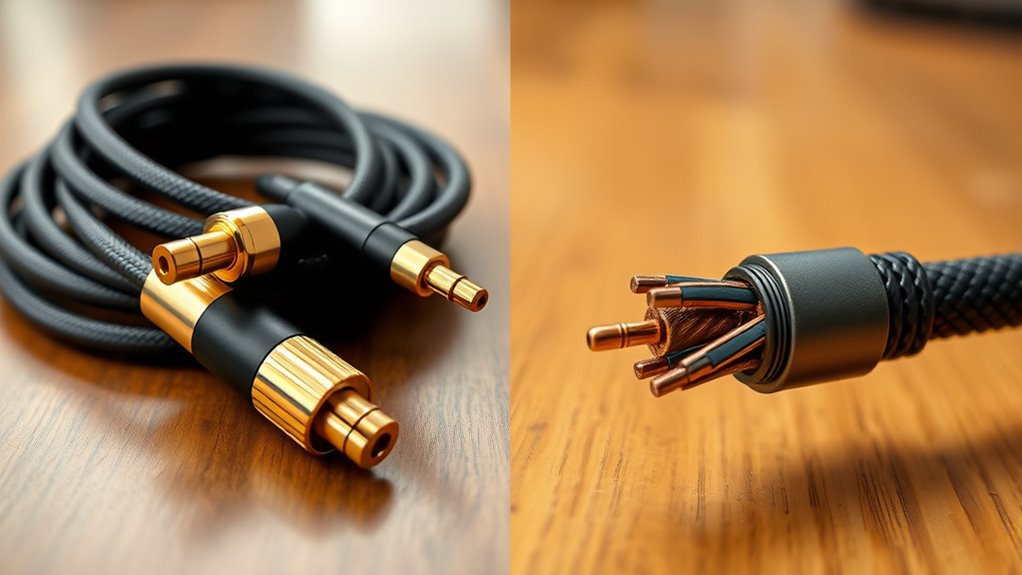
When choosing audio cables, understanding the difference between balanced and unbalanced types is essential because it directly impacts sound quality and noise interference. At the core of this distinction lies how each cable handles external noise and maintains signal integrity. Balanced cables typically have three conductors: two signal wires and a ground. This design allows them to cancel out noise that might be picked up along the cable’s length. The key to their effectiveness is cable shielding, which protects the signal from electromagnetic interference (EMI) and radio frequency interference (RFI). Because of this shielding and the balanced design, these cables excel in environments with lots of electronic devices, like recording studios or live sound setups. They can reject most external signal interference, ensuring your audio remains clean and accurate even over long runs.
In contrast, unbalanced cables usually have only two conductors: a signal wire and a ground. They rely heavily on cable shielding to protect against signal interference, but because they lack the differential design of balanced cables, they’re more vulnerable to noise. When you run unbalanced cables in noisy environments, you might notice hums, buzzes, or other unwanted sounds creeping into your audio. These cables are often used for shorter connections, such as connecting a guitar to an amplifier or linking consumer audio equipment. Their simplicity and lower cost make them a popular choice for casual or home use, but they don’t provide the same noise rejection capabilities as balanced cables. Additionally, the signal-to-noise ratio of balanced cables tends to be higher, resulting in clearer audio even in challenging conditions.
The effectiveness of cable shielding becomes particularly important when dealing with signal interference. Proper shielding can involve foil, braid, or a combination of both, and it acts as a barrier against electromagnetic and radio frequency interference. When you’re working with unbalanced cables, ensuring good shielding is crucial because it’s your primary defense against noise. However, even the best shielding won’t fully compensate for the lack of a differential signal, which is why balanced cables often outperform unbalanced ones in challenging environments. Ultimately, your choice depends on your setup and environment. If you’re dealing with long cable runs or high interference areas, balanced cables with robust cable shielding will give you a cleaner, more reliable sound.
Frequently Asked Questions
Can I Use Unbalanced Cables With Professional Audio Equipment?
Yes, you can use unbalanced cables with professional audio equipment, but keep in mind that they may be less durable and more prone to signal noise. Unbalanced cables are fine for short distances, but for longer runs, you might experience interference or reduced signal quality. If durability and minimizing noise are priorities, consider switching to balanced cables; otherwise, unbalanced ones will work in a pinch.
How Do I Identify if My Cable Is Balanced or Unbalanced?
Your cable is probably balanced if it has three connectors like XLR or TRS, and it uses cable shielding to minimize noise. Unbalanced cables usually have two connectors, such as RCA or TS, with less shielding. To be sure, check the cable’s connectors and look for a third wire or a metal shield. This quick glance reveals whether you’re dealing with a balanced or unbalanced setup.
Are Balanced Cables More Expensive Than Unbalanced Ones?
Yes, balanced cables are generally more expensive than unbalanced ones. The cost comparison reflects their enhanced durability factors and superior noise rejection capabilities. You might pay more upfront for balanced cables, but their increased durability and better performance in professional settings make them a worthwhile investment. If you need reliable, long-lasting audio connections, the higher cost of balanced cables can be justified by the improved quality and durability they offer.
Do Balanced Cables Reduce Electromagnetic Interference Effectively?
Think of balanced cables as a shielded fortress, fiercely defending your audio from electromagnetic interference. They effectively reduce noise caused by ground loops and external signals, thanks to their design that cancels out interference through differential signals. The shield’s effectiveness is key, preventing unwanted noise from sneaking in and ensuring your sound remains clear and pure. So, yes, balanced cables are excellent at fighting electromagnetic interference.
Can Unbalanced Cables Transmit Audio Over Long Distances Without Loss?
Unbalanced cables can transmit audio over long distances, but you might face issues like ground loop problems and signal loss. As the cable length increases, electromagnetic interference can sneak in, especially if the shielding isn’t effective. To minimize noise, use well-shielded cables and guarantee proper grounding. Shorter runs are generally better to maintain audio quality and avoid ground loop issues that can cause hum or buzz.
Conclusion
So, next time you’re choosing between balanced and unbalanced cables, remember that balanced ones can better handle longer runs and reduce noise, making your sound clearer. Some say balanced cables are always better, but if you’re just connecting your guitar to an amp nearby, unbalanced cables work just fine. Trust your needs and setup—sometimes, the simple option is all you need for great sound without the fuss.
Fall Picks
fall essentials
As an affiliate, we earn on qualifying purchases.