
While you don’t strictly need a dedicated room for your home theater, it greatly improves your viewing and listening experience. A separate space allows for better soundproofing, tailored layout, and fewer distractions, making movies more immersive. You’ll enjoy clearer audio, better visuals, and a more focused environment. If you’re curious about how to create the perfect setup and maximize your space, keep exploring the options that can turn any room into a cozy, soundproofed haven.
Key Takeaways
- A dedicated room enhances soundproofing, reducing outside noise and improving audio quality during viewing.
- It allows for optimal layout and seating arrangements, increasing comfort and viewing experience.
- A specific space minimizes distractions, creating an immersive environment for movie enjoyment.
- Designing a dedicated theater room simplifies the integration of soundproofing and acoustic treatments.
- While not mandatory, a dedicated room offers the best environment for high-quality home theater experiences.
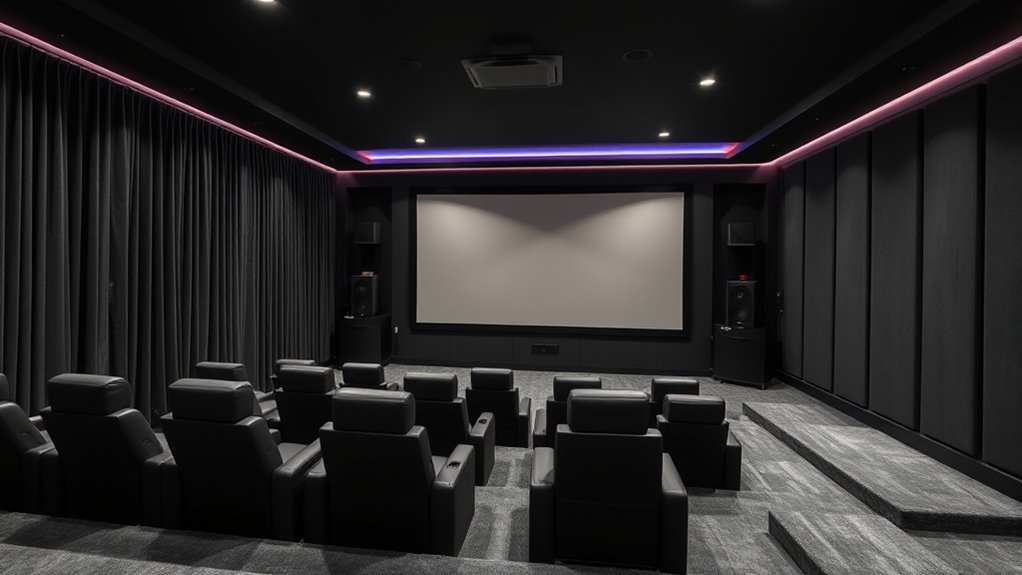
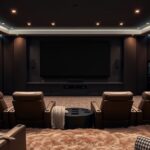
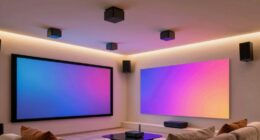
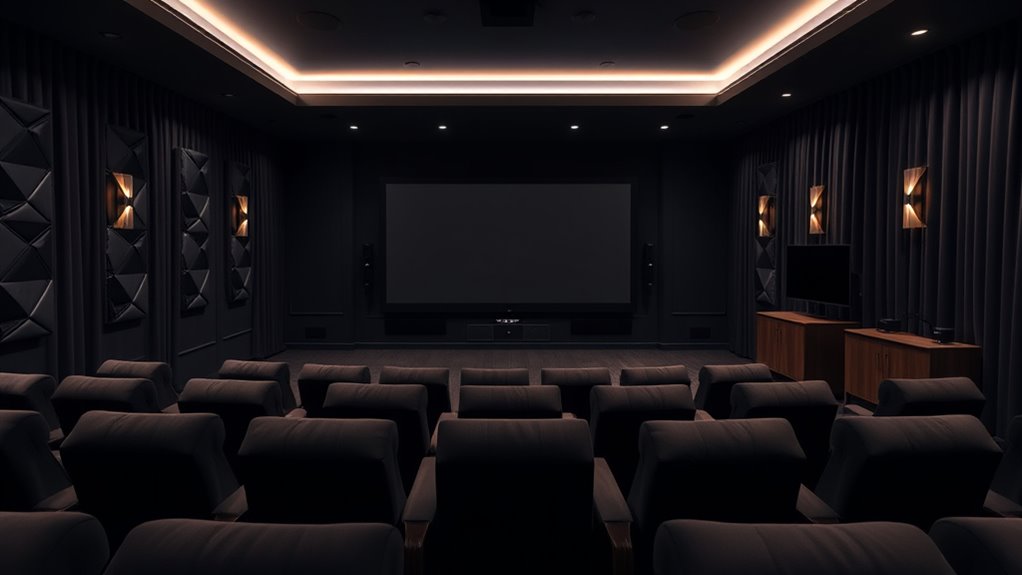
Ever thought about transforming a spare room into a dedicated home theater? If you’re passionate about movie nights and want an immersive experience, creating a space solely for that purpose makes a lot of sense. One of the first things you’ll need to contemplate is soundproofing techniques. Without proper soundproofing, your late-night screenings might disturb the rest of the household or be interrupted by outside noise. You can start by sealing gaps around doors and windows, adding acoustic panels to walls, and using heavy curtains or carpets to absorb sound. These steps help contain the audio within your theater, ensuring clear sound and a more authentic experience. Soundproofing isn’t just about blocking noise; it also improves audio quality by reducing echo and sound reflections, making every movie feel more lifelike. Additionally, choosing the right materials, like dense insulation, can further enhance soundproofing effectiveness. Once you’ve addressed soundproofing, you’ll want to focus on your seating arrangements. Comfort is key when it comes to enjoying a long movie session, so choose seats that suit your space and style. Recliners are a popular choice because of their comfort and adjustability, but plush sofas or even theater-style rows can work if you prefer a more traditional look. Think about the layout carefully—arranging seats in a slight curve facing the screen tends to provide the best viewing angles. Make sure each seat has an unobstructed view of the screen and enough space for movement. If your room allows, consider tiered seating to improve sightlines for everyone. Incorporate side tables or cup holders if you want to enhance convenience, and keep in mind that flexible arrangements give you the option to reconfigure based on your mood or the size of your group. Creating a dedicated room for your home theater isn’t just about installing a big screen and sound system; it’s about designing an environment that enhances your viewing pleasure. Soundproofing techniques and thoughtful seating arrangements are fundamental steps in that process. They help you enjoy movies without external disturbances and ensure everyone can experience the visuals and sound clearly. To optimize your setup, selecting high-quality soundproofing materials can make a significant difference. With a little planning, your spare room can transform into a cozy, soundproofed haven where movie nights become a weekly highlight. Whether you’re hosting friends or just relaxing with family, this dedicated space makes every viewing more immersive and enjoyable. The effort you put into soundproofing and seating pays off by providing a personalized cinema experience right in your home.

Valerion StreamMaster Plus 4K Laser Projector - 300" IMAX Enhanced Home Theater, 4ms |240Hz Response, Gaming Projector with 3D & Dolby Vision, HDR10, GTV, Smart Home & AI Assistant
Speed and Power Like Never Before - Experience unmatched speed with the AI-9618 chipset, 4GB RAM/ 128GB ROM—delivering...
As an affiliate, we earn on qualifying purchases.
Frequently Asked Questions
Can I Create a Home Theater in a Shared Living Space?
You can definitely create a home theater in a shared space by using multifunctional design. Opt for versatile furniture, like fold-away screens or modular seating, to maximize space. Use soundproofing or curtains to minimize noise, and incorporate blackout curtains for better viewing. With smart planning, you’ll enjoy a great home theater experience without sacrificing the shared environment’s functionality. It’s all about balancing comfort, practicality, and entertainment.
What Are the Cost Differences Between Dedicated and Multi-Purpose Rooms?
A dedicated home theater room usually costs more upfront due to specialized acoustics, lighting, and equipment. In contrast, multi-purpose spaces are more budget-friendly, as you can adapt existing rooms without extra renovations. Your budget considerations should include not only installation costs but also ongoing maintenance. If saving money is a priority, a multi-purpose room offers flexibility, while a dedicated space provides ideal sound and picture quality for serious viewing.
How Can I Soundproof a Room Without Construction?
You can soundproof a room without construction by using DIY soundproofing techniques. Start by sealing gaps and cracks with weatherstripping or acoustic sealant to block air gaps. Add heavy curtains or acoustic panels to absorb sound. Use rugs and furniture to reduce noise reflection. Applying mass-loaded vinyl or foam panels on walls also helps. These simple steps can markedly minimize sound transfer without requiring major construction.
Are There Portable Options for a Home Theater Setup?
A penny saved is a penny earned, so portable solutions make sense. Yes, you can opt for modular setups like portable projectors, wireless speakers, and foldable screens. These options let you create a home theater experience without permanent space. You can easily move and store them, making your setup flexible and budget-friendly. With portable options, you stay adaptable, enjoying quality entertainment wherever you go.
What Are the Best Sizes for a Home Theater Room?
The best sizes for a home theater room typically have room dimensions of at least 12 by 15 feet, providing enough space for comfortable seating arrangements and ideal sound. Ideally, you want a room that’s wide enough for a large screen and deep enough for proper viewing distance. Consider seating arrangements that maximize space, ensuring everyone has a clear view without feeling cramped. Larger rooms enhance immersion and audio quality.

Epson Home Cinema 980 3-Chip 3LCD 1080p Projector 4,000 Lumens Color and White Brightness, Streaming/Gaming/ Media Room, Built-In Speaker, Auto Picture Skew, 16000:1 Contrast, 2 HDMI Ports
Exceptional Picture Quality — Provides stunning, detailed 1080p images and fast data processing that’s optimized for fast-action sports,...
As an affiliate, we earn on qualifying purchases.
Conclusion
So, whether you have a massive basement or a cozy corner, creating a dedicated home theater transforms your space into a cinematic paradise. It’s like having your own personal movie palace right at home, where every detail immerses you in the story. Even a small dedicated room can make your movie nights feel like stepping into the action itself. Don’t settle for less—your ultimate viewing experience is just a room away!

Official Licensed Google TV Smart Projector, HAPPRUN 4K UHD Home Theater with Dolby Sound, Wi-Fi & Bluetooth, Built-in Streaming Apps, Compatible with Games Consoles & Smartphone, Indoor & Outdoor Use
[ Built-in Official Licensed Google TV ] - Without additional equipment, the smart projector can directly access Netflix,...
As an affiliate, we earn on qualifying purchases.

TOWOND Projector Screen and Stand, 150 inch Indoor Outdoor Projection Screen, Portable 16:9 4K HD Rear Front Movie Screen with Carry Bag Wrinkle-Free Design for Home Theater Backyard Cinema
Projector Screen with Stand. 150-inch diagonal, 160°wide viewing angle, aspect ratio 1:1 and 16:9 4k HD portable projector...
As an affiliate, we earn on qualifying purchases.