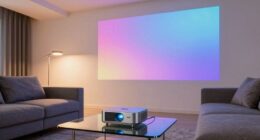
Aspect ratios are simply the proportions between the width and height of an image or screen, shaping how you see and experience visuals. They influence the mood, focus, and overall feel of photos, movies, or screens—for example, wide ratios like 2.35:1 create epic, cinematic scenes, while narrower ones like 4:3 feel cozy and intimate. Understanding these differences helps you appreciate how visuals are designed to tell stories and evoke emotions—if you explore further, you’ll discover even more about how aspect ratios shape your viewing experience.
Key Takeaways
- Aspect ratio is the proportional relationship between an image’s width and height.
- It influences how wide, tall, or balanced an image or screen appears.
- Different aspect ratios set mood, style, and storytelling tone in visuals.
- Common ratios include 4:3, 16:9, and 2.35:1, each creating distinct visual effects.
- Understanding aspect ratios helps appreciate and analyze the emotional impact of images and films.
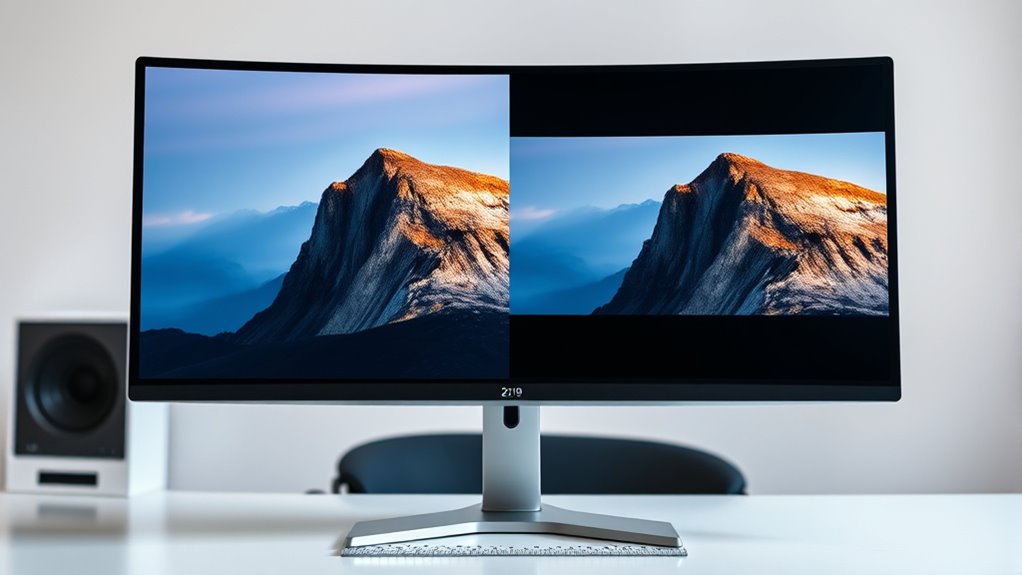
Have you ever wondered what makes a screen or image look right or feel balanced? The secret often lies in understanding aspect ratios, a fundamental aspect of film framing and image composition. Aspect ratio refers to the proportional relationship between the width and height of a picture or screen. It’s what determines whether an image feels wide, tall, or balanced. When you’re watching a movie or looking at a photograph, the aspect ratio influences how the scene is perceived and can evoke different emotions or styles.
Understanding aspect ratios helps create balanced, impactful images and films that evoke specific emotions and styles.
In film framing and image composition, choosing the right aspect ratio can make a scene feel more immersive, dramatic, or intimate. For example, wider ratios like 2.35:1 are often associated with epic landscapes or grand storytelling, giving viewers a sense of vastness. Conversely, more square-like ratios such as 1:1 or 4:3 tend to create a cozy, focused feel, putting emphasis on characters or details. The aspect ratio is a deliberate choice made by filmmakers or photographers to support storytelling and mood. It guides your eye across the frame and helps establish the visual language of the image.
Understanding aspect ratios also helps you appreciate how different formats have evolved. Classic movies often used the 4:3 ratio, which was standard for television before widescreen formats became popular. Today, many films use 16:9 for compatibility with modern screens, but filmmakers still choose ratios like 2.39:1 or 1.85:1 to craft specific visual effects. Knowing this, you can better analyze why a particular scene feels powerful or why a photo looks striking. It’s all about how the proportions influence your perception and emotional response.
When you think about image composition, aspect ratio plays a key role in framing your subject effectively. It affects how much space you give to different elements within the shot and how those elements relate to one another. For instance, a wider aspect ratio allows more of the environment to be included, giving context and setting the scene. A narrower ratio might focus your attention tightly on a subject, removing distractions. This control over framing helps you tell stories more clearly and artistically.
Recognizing reversible motors and other features in ceiling fans can help you select models that suit your needs for energy efficiency and year-round comfort. In essence, understanding aspect ratios enriches your appreciation of visual storytelling. It’s not just about the technical details but about how these proportions shape your experience. By paying attention to film framing and image composition in relation to aspect ratios, you gain insight into why certain images feel balanced and compelling. Ultimately, it’s a powerful tool that influences how you perceive and connect with visual media, making it essential to grasp for anyone interested in filmmaking, photography, or simply enjoying visual art more deeply.

Silver Ticket Products STR Series 6 Piece Home Theater Fixed Frame 4K / 8K Ultra HD, HDTV, HDR & Active 3D Movie Projection Screen, 16:9 Format, 135" Diagonal, Woven Acoustic Material STR-169135-WAB
Wall Mounted Fixed Frame Projection Screen (Overall Size 72.3" Tall x 123.8" Wide) (Viewing Area 135" Diagonal x...
As an affiliate, we earn on qualifying purchases.
Frequently Asked Questions
How Do Aspect Ratios Affect Video Editing?
Aspect ratios directly influence your video editing by shaping frame composition and maintaining visual balance. When you choose the right ratio, it guarantees your scenes look proportionate and visually appealing. It also helps you avoid cropping or distortions, making transitions smoother. By understanding aspect ratios, you can craft more professional videos that effectively guide viewers’ focus and enhance storytelling, giving your content a polished, cohesive appearance.
What Is the Best Aspect Ratio for Instagram?
Imagine you’re crafting a vintage film; for Instagram, the best aspect ratio is 4:5 for posts and 9:16 for stories. These aspect ratio standards optimize your video framing, making your content pop on mobile screens. Using these ratios guarantees your videos look professional and eye-catching, drawing viewers in effortlessly. So, whether you’re creating a quick story or a polished post, these ratios are your go-to for Instagram success.
Can Aspect Ratios Be Changed Without Cropping?
Yes, you can change aspect ratios without cropping by using resolution flexibility and aspect ratio conversion. Many editing tools allow you to adjust the aspect ratio while maintaining the full image, often by adding borders or padding around the content. This way, you preserve the entire image and adapt it to different screens or platforms without losing any detail, giving you more control over how your content appears.
How Do Aspect Ratios Impact Image Quality?
Aspect ratios affect image quality by influencing resolution considerations and display compatibility. When you change aspect ratios, you risk distortion, pixelation, or loss of clarity. A wider or taller ratio might not match your screen’s native display, causing quality dips. You should consider resolution and compatibility to maintain crisp, clear visuals. Always match aspect ratios to your device to guarantee ideal image quality and avoid unwelcome warping or stretching.
Are Aspect Ratios the Same for Screens and Projectors?
No, aspect ratios aren’t always the same for screens and projector formats. Screen dimensions vary depending on the device, often matching common aspect ratios like 16:9 or 4:3. Projectors, however, use specific formats suited for different content types, affecting how images are displayed. You should check both the screen’s aspect ratio and the projector’s format to verify your visuals look correct and avoid distortion or cropping.
Silver Ticket Products STR Series 6 Piece Home Theater Fixed Frame 4K / 8K Ultra HD, HDTV, HDR & Active 3D Movie Projection Screen, 16:9 Format, 120" Diagonal, Woven Acoustic Material STR-169120-WAB
Wall Mounted Fixed Frame Projection Screen (Overall Size 65.175" Tall x 110.8" Wide) (Viewing Area 120" Diagonal x...
As an affiliate, we earn on qualifying purchases.
Conclusion
Now that you understand aspect ratios, you can see how they shape the way images and screens look. Did you know that the standard aspect ratio for HDTVs is 16:9? This means the width is 1.78 times the height, giving you that wide, immersive viewing experience. Next time you watch a movie or look at your phone, you’ll appreciate how aspect ratios *guarantee* everything fits just right—making your visual world clearer and more enjoyable.

Elite Screens Lunette Series 110-Inch Curved Projector Screen 16:9, Acoustically Transparent Perforated Weave, Wall Mounted, Compatible with Standard, Short & UST Projectors, CURVE110H-A1080P3
【Dimension Size】: 110-inch diagonal fixed frame projector screen with a 16:9 aspect ratio. Viewing area measures 54.0" H...
As an affiliate, we earn on qualifying purchases.

Elite Screens Aeon AcousticPro UHD 165-INCH Diag. 16:9, 4K Home Theater Fixed Frame Edge Free Projection Sound Transparent Perforated Weave Projection Screen, AR165H2-AUHD
【Premium Projector Screen】165" Diag. 16:9 Aspect Ratio. View Size: 80.9" H x 143.8" W. Overall Size: 81.7"H x...
As an affiliate, we earn on qualifying purchases.