
To optimize your Dolby Atmos setup, position your front speakers at ear level and guarantee they face the seating area for balanced sound. Use upward-firing or ceiling-mounted speakers aligned with your front and surround channels to maximize immersion. Place surround speakers slightly behind and to the sides of your seating, at ear level. Proper placement, measurement, and experimentation are key to creating an immersive environment. Keep these tips in mind to elevate your sound experience, and you’ll discover even more effective strategies as you continue explore.
Key Takeaways
- Position front speakers at ear level facing the seating area for balanced sound.
- Use upward-firing or ceiling-mounted speakers aligned with front and surround speakers for ceiling reflection.
- Place surround speakers slightly behind and to the sides of seating at ear level for immersive effects.
- Choose between upward-firing or in-ceiling speakers based on room design and installation ease.
- Fine-tune speaker angles and distances, and test sound quality regularly for optimal Dolby Atmos experience.
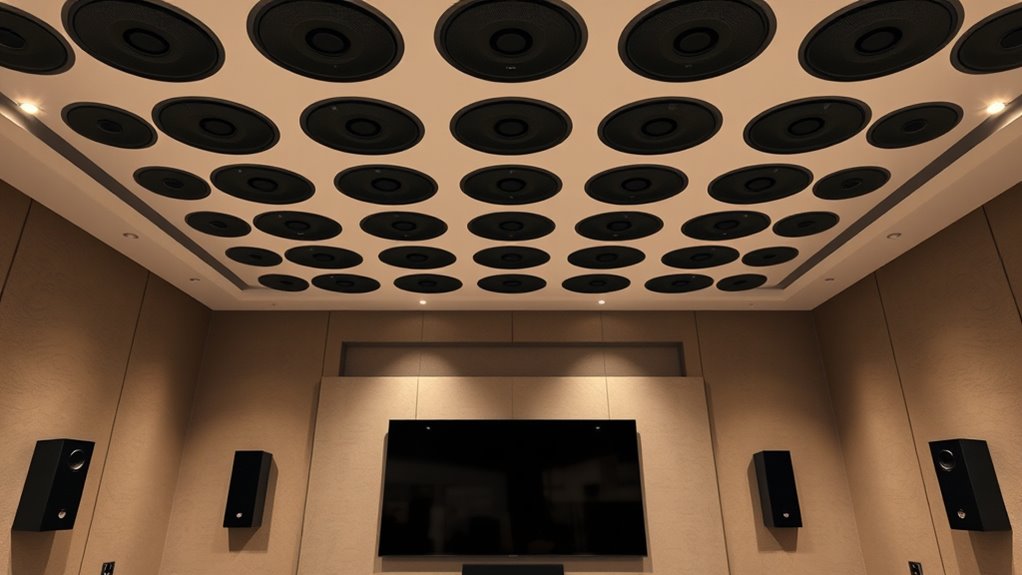
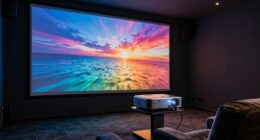
Setting up a Dolby Atmos system can dramatically enhance your home theater experience, but it requires careful speaker placement to achieve the immersive sound you want. The key to a stunning Atmos setup lies in how you position your speakers, especially when it comes to speaker placement and ceiling integration. You need to think strategically about where to place each speaker to create a seamless soundscape that surrounds you from all angles.
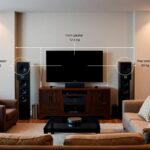
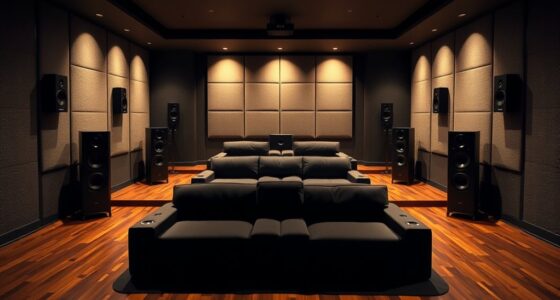
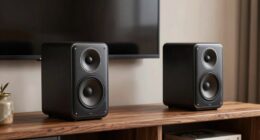
Start with your front speakers. They should be placed at ear level, directly facing your seating area. Position them equidistant from your TV or projector to ensure balanced sound. For Atmos, the key is adding height channels—either upward-firing speakers or ceiling-mounted speakers. These should be placed either directly above your listening position or integrated into the ceiling to maximize ceiling integration. When using upward-firing speakers, make sure they have a clear line of sight to the ceiling, so they can reflect sound accurately downward, mimicking ceiling-mounted speakers. If you’re installing speakers in the ceiling, ensure they’re aligned with your front and surround speakers for consistent sound.
Place front speakers at ear level, aligned with your seating area, for balanced sound and seamless ceiling integration.
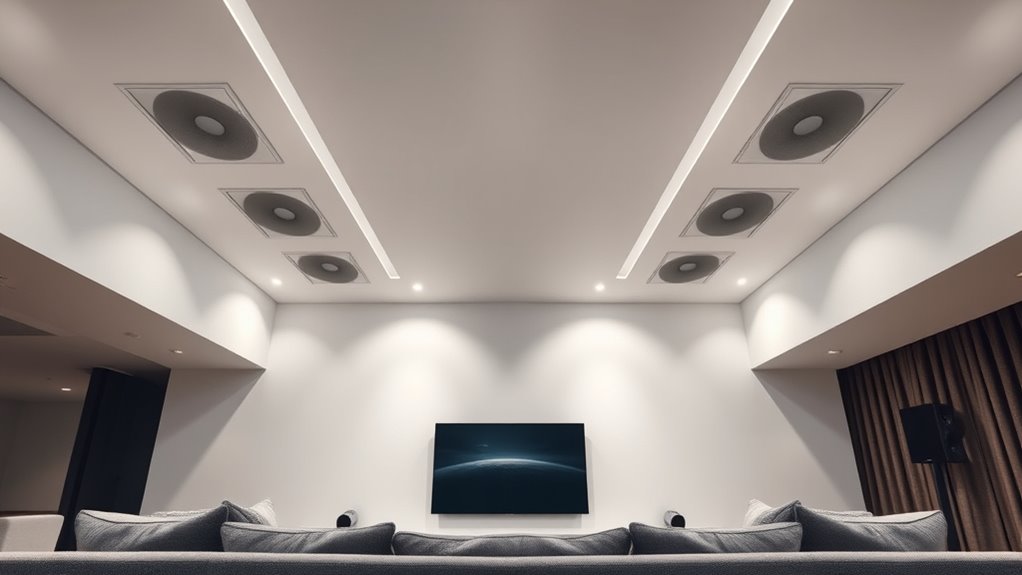
Surround speakers should be positioned slightly behind and to the sides of your seating area, at ear level when seated. This placement helps envelop you in sound, making effects like helicopters or rain feel more realistic. For ceiling integration, consider in-ceiling speakers placed directly above or slightly behind your listening position. Using in-ceiling speakers offers a clean look and seamless sound integration, but they require proper placement so sound reflections or direct sound reach your ears effectively. The goal is to create a balanced sound field where each speaker complements the others without overpowering or creating gaps.
When it comes to ceiling integration, you have two main options: upward-firing speakers or in-ceiling speakers. Upward-firing models are easier to install and can be added to existing setups, but they depend on proper placement and room characteristics to work well. In-ceiling speakers provide a more permanent solution, offering precise placement and consistent sound, especially if you’re building or remodeling. In either case, make sure your speakers are positioned to optimize sound reflection or direct delivery, ensuring the height channels truly elevate your audio experience.
Additionally, understanding speaker placement principles can help you fine-tune your setup for the best possible sound quality. Ultimately, the success of your Dolby Atmos setup hinges on thoughtful speaker placement and ceiling integration. Take your time to measure distances, experiment with angles, and test sound quality. Proper positioning transforms your home theater into a dynamic, immersive environment, where every sound comes alive from above and around you, delivering that breathtaking Dolby Atmos experience you’re aiming for.

Denon AVR-X1700H 7.2 Channel AV Receiver - 80W/Channel, Advanced 8K HDMI Video w/eARC, Dolby Atmos, DTS:X, Built-in HEOS, Amazon Alexa Voice Control
HIGH-PERFORMANCE 7-CHANNEL AMPLIFIER WITH NEXT-GEN MOVIE IMMERSION - Enjoy Denon sound in movies, games, and music with full...
As an affiliate, we earn on qualifying purchases.
Frequently Asked Questions
Can I Upgrade My Existing Speaker System to Dolby Atmos?
Yes, you can upgrade your existing speaker system to Dolby Atmos. Check speaker compatibility first; you’ll need upward-firing or ceiling speakers to create the immersive experience. Consider your budget, as Atmos setups can range from affordable to premium. You might only need to add height speakers or replace some components. Planning your upgrade carefully guarantees you get the best Atmos experience without overspending.
What Is the Ideal Room Size for Dolby Atmos Setup?
Is your room big enough to house a Dolby Atmos system? Ideally, your space should be at least 150 square feet, providing enough room for sound to breathe. You must consider soundproofing considerations to prevent sound leakage and optimize acoustics. Furniture placement also plays a crucial role; keep seating centered and avoid blocking speakers. With the right room size, setup, and thoughtful adjustments, you’ll immerse yourself in spectacular, multidimensional sound.
How Do I Calibrate Dolby Atmos Speakers for Optimal Sound?
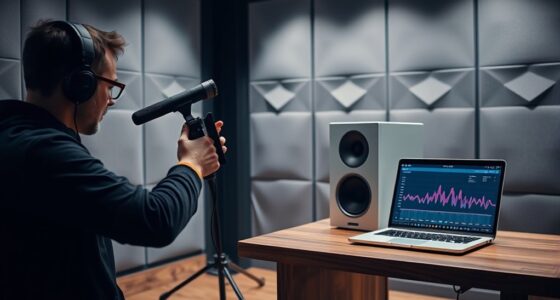
To calibrate your Dolby Atmos speakers for ideal sound, start with proper speaker placement, ensuring overhead and surround speakers are positioned correctly. Use calibration techniques like a sound level meter or AV receiver auto-calibration to balance speaker levels and distances. Adjust the speaker angles and heights to create an immersive experience. Regularly test with calibration discs or apps, and fine-tune settings until sound is clear, balanced, and enveloping.
Are Ceiling-Mounted Speakers Necessary for Dolby Atmos?
Sure, ceiling-mounted speakers aren’t strictly necessary for Dolby Atmos, but they sure do help. If you want immersive sound, you’ll want to think about speaker height and ceiling speakers that create a true overhead effect. Without them, you might miss out on those magical vertical sounds that make Atmos special. So, while optional, ceiling speakers greatly enhance your experience, making your setup feel like a real concert or theater.
What Are Common Mistakes to Avoid in Dolby Atmos Placement?
You should avoid poor speaker symmetry and improper height placement, which can harm your Dolby Atmos experience. Make sure speakers are symmetrically positioned around your seating area to create a balanced soundfield. Additionally, place speakers at the proper height—ideally just above ear level when seated—to guarantee sound moves seamlessly through the space. Overlooking these details can lead to uneven sound distribution and diminish the immersive effect Atmos offers.

Klipsch R-12SW Powerful Deep Bass Front Firing 12" Copper-Spun Driver 400W Digital Power Subwoofer 14" X 18.5" X 16"
Powerful 12" copper-spun front-firing woofer
As an affiliate, we earn on qualifying purchases.
Conclusion
By carefully placing your Dolby Atmos speakers, you’re crafting a sonic tapestry that surrounds and elevates you. Think of your setup as painting with sound—each speaker a brushstroke adding depth and dimension. When positioned thoughtfully, your space transforms into a live concert or a cinematic universe, pulling you into the heart of the action. With a little patience and precision, you’ll discover a world where every whisper and explosion feels vividly real, like stepping into another dimension.

Klipsch R-120SW Subwoofer, Black
12" high excursion spun-copper Imp woofer
As an affiliate, we earn on qualifying purchases.
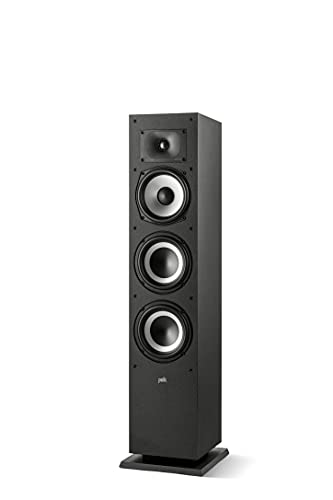
Polk Monitor XT60 Tower Speaker - Hi-Res Audio Certified, Dolby Atmos, DTS:X & Auro 3D Compatible, 1" Tweeter, 6.5" Dynamically Balanced Woofer, (2) 6.5" Passive Radiators (Single, Midnight Black)
HIGH-EFFICIENCY TOWER SPEAKER - The Polk Monitor XT60 features a 1" Tweeter, a 6.5" Dynamically Balanced Woofer and...
As an affiliate, we earn on qualifying purchases.