
Loudness Units (LUFS) measure perceived audio volume, helping you attain consistent sound levels across your projects. Unlike traditional meters, LUFS considers how humans hear sounds over time, making loudness more accurate and listener-friendly. Using LUFS guarantees your audio stays balanced, avoids sudden volume changes, and meets industry standards. If you want to master steady, professional sound, understanding LUFS and how to adjust for it is essential—there’s a lot more to explore.

Get business pricing on your home office setup
- Business-only prices and quantity discounts
- Tax-exempt purchasing
- Multiple users, one account, clear invoices
Key Takeaways
- LUFS measures perceived loudness over time, reflecting how humans experience sound rather than just technical peak levels.
- Psychoacoustic modeling in LUFS accounts for ear sensitivity to certain frequencies, ensuring more accurate loudness perception.
- Using LUFS helps maintain consistent volume levels across different content and platforms, preventing sudden loudness changes.
- Proper calibration and measurement with LUFS tools ensure audio levels meet industry standards for balanced sound.
- Unlike peak meters, LUFS focuses on overall loudness, promoting a more natural and comfortable listening experience.
What Are Loudness Units (LUFS)?

Have you ever wondered how audio levels are measured to guarantee consistent loudness? Loudness Units relative to Full Scale (LUFS) are designed to do just that. They quantify perceived loudness by analyzing audio signals through dynamic compression, which balances loud and soft sounds, making the overall volume feel steady. Psychoacoustic modeling plays a fundamental role, simulating how our ears perceive sound, ensuring LUFS measurements reflect what listeners actually hear. Unlike traditional peak meters, LUFS provides a more accurate picture of how loud content feels to your ears over time. This approach helps creators and broadcasters maintain consistent volume levels, preventing sudden dips or spikes that can disturb the listening experience. Ultimately, LUFS is an essential tool in delivering a balanced, enjoyable audio experience.
The Science Behind Perceived Loudness
Understanding perceived loudness requires recognizing that our ears process sound differently than electronic meters measure it. Perceived loudness is influenced by psychoacoustic factors, which affect how we interpret volume beyond raw sound levels. Our ears are more sensitive to certain frequencies, especially around 2-5 kHz, making sounds in this range seem louder even if they have the same intensity as others. Additionally, the duration and context of sound impact perception; a quick burst may seem softer than a sustained tone. These psychoacoustic factors cause our perception of loudness to differ from actual measured levels. As a result, understanding perceived loudness involves considering how our auditory system reacts to sound characteristics, not just the measured amplitude, ensuring audio remains consistent across various listening environments. Incorporating sound perception factors can improve how audio levels are managed for different listening scenarios. Recognizing how auditory sensitivity varies across frequencies can help in fine-tuning audio levels for a more consistent listening experience. Furthermore, awareness of listening environment effects can assist in adjusting audio for optimal clarity and comfort. For example, room acoustics can significantly influence perceived loudness, making it essential to adapt audio settings accordingly.
Differences Between LUFS and Traditional Volume Meters
You’ll notice that LUFS measurements focus on perceived loudness, unlike traditional volume meters that rely on peak levels. This difference affects how you match audio levels across various platforms and devices. Calibration and standards also play a key role in ensuring consistent loudness, making LUFS a more reliable tool for modern audio production. Additionally, understanding sound design principles can help optimize how audio is balanced to achieve the desired loudness perception. Proper mixing techniques are essential for maintaining consistent loudness levels across different content. Furthermore, employing loudness normalization processes ensures that audio complies with industry standards and provides a uniform listening experience. Recognizing the importance of loudness units can also aid audio engineers in fine-tuning their mixes for optimal listener experience. It is also crucial to monitor loudness during the production process to prevent unintended volume fluctuations.
Measurement Method Variations
Traditional volume meters measure sound levels based on peak or RMS values, which often don’t accurately reflect how loud a listener perceives audio to be. This creates measurement discrepancies because these methods focus on technical peaks rather than perceived loudness. As a result, audio can seem uneven across devices or platforms, leading to calibration challenges when trying to maintain consistent volume levels. LUFS measurement accounts for human hearing sensitivity, providing a more accurate reflection of perceived loudness. Unlike traditional meters, LUFS integrates loudness over time, reducing the impact of short-term peaks. This shift in measurement approach helps guarantee more uniform audio levels, but it also requires different calibration techniques and tools, making the process more precise but sometimes more complex. Additionally, vetted standards for loudness measurement ensure consistency across different audio productions and broadcasting platforms. Understanding loudness normalization is crucial for effective audio calibration and maintaining consistent listening experiences. An understanding of audio standards and their implementation can further improve the reliability of loudness measurements across diverse media.
Perceived Loudness Alignment
While traditional volume meters focus on peak or RMS levels, they often fall short in representing how loud audio truly sounds to listeners. This is because perceived loudness depends on psychoacoustic effects, which influence how our ears interpret sound. LUFS measurements account for these effects by capturing the dynamic range—the variation between the quietest and loudest parts—giving a more accurate picture of how loud content feels. Unlike simple meters, LUFS align with human perception, ensuring consistent loudness regardless of audio complexity. This perceived loudness alignment helps you avoid issues like unexpected volume jumps or overly compressed sound, making your audio more natural and listener-friendly. Additionally, understanding audio perception can help you optimize your content for better listener experience. Recognizing the importance of perceived loudness allows creators to deliver content that feels balanced and natural across different listening environments. Furthermore, loudness measurement standards have been developed to standardize how audio levels are assessed globally, which also promotes industry consistency in production practices. Ultimately, LUFS bridge the gap between technical measurement and how your audience actually experiences sound, especially when considering factors like listening environments and device variability.
Calibration and Standards
Calibration and standards differ markedly when comparing LUFS measurements to traditional volume meters. Unlike older meters, LUFS relies on specific calibration procedures to guarantee consistent loudness measurement across devices. This process involves setting equipment to a standardized reference to maintain accuracy. To achieve proper standard compliance, you should: 1. Follow manufacturer calibration procedures precisely to ensure measurements reflect true loudness levels. 2. Use reference signals that align with accepted loudness standards, such as EBU R128 or ATSC A/85. 3. Regularly verify calibration, especially when switching equipment or updating software, to maintain measurement consistency. Additionally, understanding the differences in calibration standards ensures accurate loudness measurement across various platforms and devices. Proper calibration techniques are essential to prevent discrepancies between devices and ensure reliable audio levels.
Why LUFS Matters in Modern Media Production

Using LUFS helps you keep audio levels consistent across different platforms and devices. It guarantees your content meets industry standards, preventing your audience from experiencing sudden volume changes. Additionally, understanding LUFS allows content creators to better manage audio normalization, ensuring a balanced sound that enhances viewer engagement. Being aware of loudness units can also improve the overall listener experience by reducing fatigue and ensuring clarity. Moreover, applying LUFS measurements allows content creators to better optimize sound quality for various distribution channels. Incorporating knowledge from ethical hacking, such as precise measurement techniques, can further refine your audio quality for diverse media environments.
Ensures Audio Uniformity
Maintaining consistent loudness levels across different media is crucial to deliver a seamless listening experience, and LUFS plays an indispensable role in achieving this. By standardizing loudness, you prevent jarring volume changes that disrupt the viewer’s focus. LUFS accounts for perceptual weighting, making loudness measurements more aligned with human hearing. This helps manage the dynamic range, ensuring neither quiet nor loud sections overwhelm the listener. To achieve audio uniformity, you should:
- Use LUFS meters regularly during mixing to monitor perceptual loudness.
- Adjust levels to maintain consistent LUFS readings across content.
- Consider the dynamic range to prevent overly compressed or overly dynamic audio.
These steps ensure a balanced, professional sound that feels natural and comfortable.
Meets Industry Standards
In today’s media landscape, meeting industry standards for loudness is essential to guarantee your content is compatible with broadcast and digital platforms. Using LUFS helps you maintain a consistent perceived volume, ensuring your audience isn’t surprised by sudden loudness changes. Industry standards specify target LUFS levels to balance dynamic range and prevent excessive audio compression, which can squash audio and reduce clarity. Adhering to these standards avoids issues like listener fatigue or content rejection due to non-compliance. Proper loudness management ensures your audio has enough dynamic range to sound natural while remaining within accepted loudness limits. Ultimately, aligning with industry standards helps your content sound professional, improves user experience, and guarantees it plays smoothly across all media channels.
How to Measure LUFS in Your Audio Projects
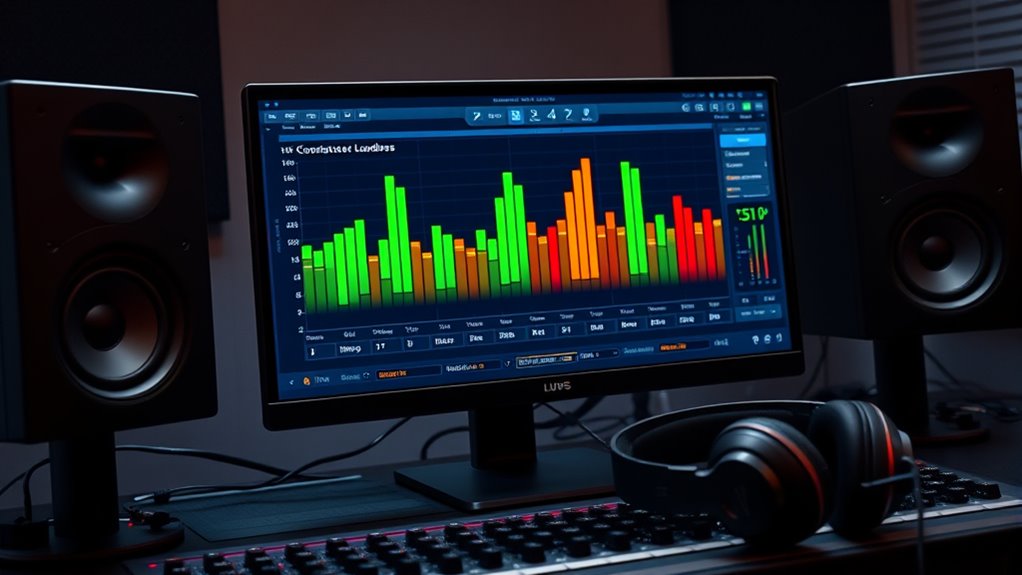
To accurately measure LUFS in your audio projects, you’ll need specialized tools known as loudness meters or analyzers. These tools help you assess loudness perception, ensuring your audio aligns with industry standards. Here’s how to do it:
- Choose a loudness meter compatible with your editing software to analyze your audio in real-time or after recording.
- Play your track through the meter, paying attention to integrated LUFS values, which reflect the overall loudness.
- Apply audio normalization techniques based on the LUFS readings to achieve consistent volume levels across your project.
Using these steps, you can precisely measure loudness, making sure your audio maintains the desired perceived volume and adheres to industry guidelines.
Setting Target LUFS Levels for Different Platforms
Different platforms have specific loudness standards you should follow to ensure your audio sounds consistent. Knowing the optimal LUFS targets helps you meet these standards and avoid playback issues. Adjusting your audio based on your audience ensures a better listening experience across all platforms.
Platform Standards Overview
Have you ever wondered why your audio sounds consistently loud or quiet across various platforms? It’s because each platform has specific loudness normalization standards that influence how your content is perceived. To align with these standards and maintain effective audio branding, you should consider the following:
- Streaming services like YouTube and Spotify typically target around -14 LUFS for a balanced listening experience.
- Broadcast TV often requires a louder level, around -23 LUFS, to compensate for commercial content.
- Social media platforms like Facebook prefer levels near -16 LUFS, ensuring your audio remains clear without overwhelming viewers.
Understanding these platform standards helps you set appropriate target LUFS levels, facilitating loudness normalization and consistent audio quality across all channels.
Optimal LUFS Targets
Setting appropriate LUFS targets is essential for ensuring your audio sounds consistent and professional across various platforms. Different platforms have preferred loudness levels based on their psychoacoustic models, which influence how viewers perceive volume and clarity. For example, streaming services like Spotify recommend around -14 LUFS, balancing dynamic range with clear sound. Broadcast standards often aim for -23 LUFS, maximizing loudness without sacrificing audio quality. Adjusting your target LUFS helps maintain an ideal dynamic range, preventing your audio from sounding too compressed or too soft. Understanding the psychoacoustic models behind each platform allows you to set precise loudness levels, ensuring your content remains engaging and clear, regardless of where it’s played. Tailoring your LUFS target improves overall listening experience and professionalism.
Adjusting for Audience
How do you choose the right LUFS level for your audience? To optimize audience engagement and match listener preferences, you need to adjust your audio levels based on the platform. Different platforms have standard LUFS targets:
- For streaming services like Spotify or Apple Music, aim for around -14 LUFS, as listeners prefer clear sound without excessive loudness.
- For broadcast TV and radio, target approximately -23 LUFS, ensuring your content aligns with industry standards and maintains consistency.
- For social media clips, consider slightly lower levels, around -16 LUFS, to prevent distortion on various devices.
Tools and Software for LUFS Measurement
To accurately measure LUFS levels, you need reliable tools and software designed for loudness analysis. Modern digital audio workstations often include built-in loudness meters that utilize advanced loudness algorithms to provide accurate readings. For more precise measurements, standalone software like iZotope RX, Nugen Audio VisLM, and Waves WLM Plus are popular choices. These tools analyze your audio in real-time or offline, ensuring consistency across different platforms. They typically support various standards, making it easier to meet industry guidelines. By choosing software with robust loudness algorithms, you can confidently monitor your audio’s loudness levels, ensuring your content remains balanced and compliant with broadcast or streaming requirements. Proper tools streamline the measurement process and improve overall audio quality.
Adjusting Your Audio to Achieve Consistent LUFS
Once you’ve chosen reliable tools to measure LUFS, the next step is to adjust your audio so it maintains a consistent loudness level throughout your project. To do this effectively:
- Use your measurement tool to identify sections with too high or low LUFS, focusing on the dynamic range and overall loudness.
- Apply audio normalization to bring these sections to your target LUFS, ensuring a balanced listening experience.
- Make subtle adjustments, such as compression or limiting, to control the dynamic range without sacrificing audio quality or clarity.
This process helps prevent sudden volume shifts and creates a smoother, more professional sound. Properly adjusting your audio ensures consistent loudness while preserving natural dynamics, making your project engaging and easy to listen to.
Common Mistakes When Using LUFS for Loudness Normalization
Many users make the mistake of relying solely on a single LUFS measurement without considering the context of their entire project, which can lead to uneven loudness levels. One common error is ignoring clipping issues, which can cause distorted audio and false LUFS readings. Clipping not only affects sound quality but also results in inaccurate readings, giving a misleading impression of loudness. Additionally, you might adjust levels based on a single measurement without checking for consistency across different sections or tracks. This approach can cause some parts to sound too loud or too quiet. Always monitor for clipping and verify measurements throughout your project. Relying solely on one LUFS value without considering these factors risks inconsistent loudness and compromised audio quality.
Best Practices for Maintaining Uniform Volume Across Content

Maintaining a consistent volume across your content requires more than just checking LUFS levels at a single point. To achieve uniformity, focus on controlling the dynamic range, so loud parts don’t overwhelm softer sections. Use psychoacoustic models to understand how your audience perceives loudness and adjust accordingly. Consider these best practices:
- Balance the dynamic range to prevent sudden volume jumps.
- Use compression thoughtfully to keep loud and soft sounds within a comfortable range.
- Regularly monitor loudness levels during editing, focusing on how psychoacoustic effects influence perceived volume.
Applying these strategies helps ensure your content sounds consistent, engaging, and professional, regardless of the source material.
Frequently Asked Questions
How Does LUFS Impact Listener Experience Across Different Devices?
LUFS impacts your listener experience by ensuring consistent perceived loudness across devices. When audio is properly normalized with LUFS, you won’t have to constantly adjust volume, reducing listener fatigue. It helps maintain a balanced sound, so you enjoy clear, comfortable audio whether on headphones, speakers, or mobile devices. This consistency keeps your focus on the content without distractions from sudden volume changes, enhancing overall satisfaction and engagement.
Can LUFS Normalization Improve Streaming Platform Discoverability?
Lufs normalization can definitely boost your streaming platform’s discoverability. By ensuring lufs consistency across tracks, you create a more balanced listening experience, encouraging listeners to explore more content without volume distractions. Using discoverability metrics, you can gauge how well your normalized tracks engage users. When your audio maintains consistent loudness levels, it’s more appealing, making it easier for new listeners to find and enjoy your content.
Are There Industry Standards for LUFS Levels Across Genres?
You wonder if industry standards set LUFS levels across genres. While guidelines exist, genre consistency, dynamic range, and listener expectations influence these standards. For example, pop often favors louder, compressed tracks, while classical maintains a broader dynamic range. These variations help guarantee each genre sounds appropriate, but no strict universal LUFS level applies. Instead, industry practices prioritize balancing loudness and dynamic range to suit each genre’s unique style.
How Often Should I Re-Measure LUFS During Editing?
You should measure LUFS regularly during editing to guarantee consistent volume levels. Typically, re-measure after significant edits, like adjusting loudness or adding new sections, to maintain editing consistency. For best results, check LUFS at least once every few passes and after major changes. This practice helps you catch discrepancies early, ensuring your audio stays balanced and professional throughout the editing process.
What Are the Limitations of LUFS in Complex Audio Environments?
In complex audio environments, LUFS has limitations because it can mask variations in dynamic range, making it harder to gauge true loudness. You might find measurement accuracy affected by overlapping sounds and sudden changes, leading to less reliable readings. This means you should use LUFS as a guide rather than a definitive measure, especially when dynamic range varies greatly. Always supplement LUFS with your ears and other tools for best results.
Conclusion
By mastering LUFS, you’re guiding your audio like a skilled conductor, ensuring each piece flows seamlessly and feels balanced. Think of your soundscape as a gentle wave—rising and falling smoothly without jarring leaps. With consistent loudness, your listeners enjoy a harmonious experience, no matter where they press play. Embrace LUFS as your compass, and watch your audio craft come alive with clarity, warmth, and a natural rhythm that keeps audiences engaged from start to finish.
Columbus Day / Indigenous Peoples' Day Picks
long weekend sales
As an affiliate, we earn on qualifying purchases.