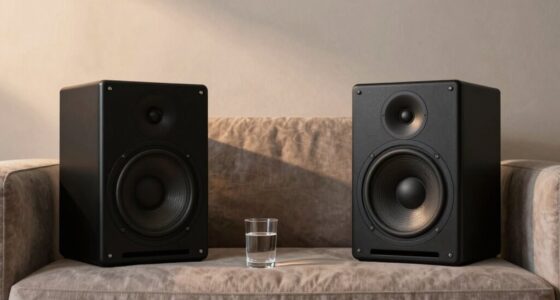
Your room’s acoustics, not your speakers, often cause issues like echoes, muddiness, and uneven sound. Reflective surfaces, room shape, furniture placement, and furnishings all influence sound quality by bouncing or absorbing sound waves. Simple adjustments like repositioning speakers, adding soft furnishings, or installing acoustic panels can vastly improve clarity. If you want to learn more about transforming your space into a better-sounding environment, explore effective strategies and cost-efficient solutions.

Get business pricing on your home office setup
- Business-only prices and quantity discounts
- Tax-exempt purchasing
- Multiple users, one account, clear invoices
Key Takeaways
- Poor room acoustics cause echoes and muddiness, making speakers sound worse regardless of quality.
- Room shape, size, and reflective surfaces significantly impact sound clarity and balance.
- Adding acoustic treatments like panels, diffusers, and soft furnishings improves sound absorption and reduces reflections.
- Proper speaker placement and decluttering the space enhance sound clarity more than upgrading equipment.
- Using calibration tools and strategic room adjustments can transform your space into an optimal listening environment.
How Room Acoustics Affect Your Sound Quality

Room acoustics play a crucial role in how your sound actually reaches your ears. Poor room acoustics can cause echoes, muddiness, and uneven sound distribution, making your listening experience frustrating. To improve this, consider soundproofing techniques that reduce unwanted noise and prevent sound from bouncing around the space. Proper acoustic panel placement is key; placing panels strategically on walls and ceilings helps absorb excess sound waves, minimizing reflections and echo. Additionally, understanding the importance of sound absorption can further enhance your acoustic treatment by reducing sound reflections from the start. Using acoustic materials effectively can significantly improve sound clarity and overall quality. Managing humidity levels in your room can also prevent issues like mold growth on acoustic treatments and maintain optimal material performance. Properly managing room dimensions can also influence how sound waves interact within the space, leading to better acoustics. By controlling how sound interacts with your room, you’ll notice clearer vocals, tighter bass, and a more balanced overall sound. Taking these steps ensures your space enhances your audio rather than distorts it, helping you get the most out of your speakers and enjoy a richer listening experience.
Common Room Issues That Distort Your Audio

Many common room issues can distort your audio, making it sound muddled or uneven. Poor soundproofing techniques allow sound to bounce unpredictably, creating echoes and reducing clarity. Improper acoustic panel placement can cause sound waves to reflect off walls and corners, leading to muddiness or unwanted reverberations. To improve, identify problem areas and strategically add soundproofing materials. Use the table below to understand key factors:
| Issue | Effect | Solution |
|---|---|---|
| Reflective surfaces | Echoes and sound bouncing | Acoustic panel placement |
| Large, bare walls | Excessive reverberation | Add rugs, curtains |
| Room shape | Unbalanced sound distribution | Soundproofing techniques |
| Furniture placement | Sound absorption inconsistencies | Rearrange or add absorbing elements |
Additionally, incorporating proper room setup techniques can significantly reduce sound distortions and improve overall audio quality. Implementing sound absorption strategies can further enhance clarity by minimizing unwanted reflections. For example, using diffusers to scatter sound waves can help create a more balanced acoustic environment. Paying attention to room dimensions can also help prevent problematic standing waves and resonance issues. Being aware of room shape and its influence on acoustics can guide more effective adjustments.
How Furniture and Decor Influence Sound Reflection and Absorption

Your furniture and decor directly impact how sound reflects and absorbs in your room. The materials you choose can either bounce sound around or soak it up, changing your listening experience. Moving things around also shifts sound dynamics, so placement matters just as much as the items themselves. Understanding sound reflection and absorption can help you create a more comfortable and acoustically balanced space. Additionally, being aware of material properties can guide you in selecting furnishings that enhance your room’s acoustics effectively. Considering room geometry can further optimize how sound waves interact within the space. Recognizing room size and shape is also crucial, as these factors influence how sound behaves in different environments. Being mindful of surface finishes can further influence the way sound interacts with your room.
Material Effects on Reflection
Furniture and decor play a crucial role in shaping how sound behaves in a space. The materials and reflection properties of your furnishings influence how sound waves bounce or absorb. Surface textures matter—smooth, hard surfaces reflect more sound, creating echo and glare. Conversely, softer materials and textured surfaces break up sound waves, reducing reflection. Hard surfaces like glass or tile increase reflections, adding brightness to your room. Soft textiles, such as rugs and curtains, absorb sound, minimizing echo. Upholstered furniture disperses sound waves, softening reflections. Rough textures disrupt sound paths, preventing harsh reflections. Reflective surfaces can cause unwanted echoes, while absorptive materials dampen them. Understanding how material choices affect reflection helps you design a room that sounds balanced, reducing harshness and improving clarity. Incorporating sound-absorbing materials like acoustic panels or plush padding can further enhance your room’s acoustics. Using the right material properties ensures a more controlled and comfortable sound environment. Additionally, choosing appropriate surface textures can significantly influence sound diffusion and absorption.
Placement Alters Absorption
Where furniture and decor are placed in a room can considerably influence how sound waves reflect and absorb. Strategic positioning impacts your acoustic environment, making it feel more natural and controlled. Using soundproofing techniques like placement of acoustic panels can substantially reduce unwanted reflections, creating a clearer soundstage. Proper acoustic panel placement is vital; placing them near reflective surfaces minimizes echo and glare. Additionally, incorporating sound vibrations can further enhance cellular regeneration and overall health in your space. Recognizing the importance of sound reflection and absorption can help optimize your room’s acoustics for a more comfortable environment. Understanding room acoustics can also help you make informed decisions about furniture arrangement and decor choices.
Decor Shapes Sound Dynamics
The shape and design of your decor elements substantially influence how sound waves reflect and absorb in a room. Furniture, wall materials, and window treatments all impact sound dynamics. For example, soft furnishings like plush sofas and curtains absorb sound, reducing echo. Conversely, hard surfaces like glass or bare walls reflect sound, creating reverberation. Window treatments, such as heavy drapes, help block or diffuse sound reflections. Wall materials also matter—porous wall coverings absorb more sound than smooth, reflective surfaces. The placement of decor influences sound flow, so strategically adding or removing items can fine-tune acoustics. Additionally, understanding sound reflection and absorption principles enables you to better design your space for optimal acoustics. By understanding how decor shapes sound, you can optimize your space for clearer audio and a more balanced listening environment. Incorporating room acoustics solutions like sound diffusers or bass traps can further enhance sound quality within your space.
How Can You Identify Room Problems Before Upgrading Speakers?

Before spending money on new speakers, it’s essential to identify whether your room itself is causing the sound issues. Start by examining your speaker placement; proper positioning away from walls and corners can reduce unwanted reflections and bass booms. Consider your room size—larger rooms often need different speaker arrangements than smaller ones to avoid sound dispersion problems. Pay attention to how sound interacts with the space: do you notice echo, dead spots, or uneven bass? Use a mirror to find reflective surfaces that might cause flutter echoes, or listen for areas where sound seems muffled or overly bright. These signs help you recognize if your room’s acoustics are limiting your system’s potential, so you can address room issues before investing in new speakers.
What Simple Adjustments Can Improve Your Room Sound?

Simple adjustments can make a noticeable difference in your room’s sound quality without the need for costly changes. By addressing room reflection and sound absorption, you can enhance clarity and reduce unwanted echo. Start by repositioning your speakers to minimize direct reflections from walls. Add soft furnishings, like rugs or curtains, to absorb sound and dampen reflections. Use bookshelves or wall hangings strategically to break up sound waves. Placing acoustic panels or foam in key reflection points can further improve sound absorption. Also, avoid placing furniture directly against walls, which can cause sound reflection issues. Understanding the importance of room acoustics helps you identify the best spots for treatment and adjustments. These simple tweaks help balance the room’s acoustics, creating a more natural listening environment without extensive renovations. Small changes lead to big audio improvements.
How Do Room Treatments Enhance Audio Clarity?
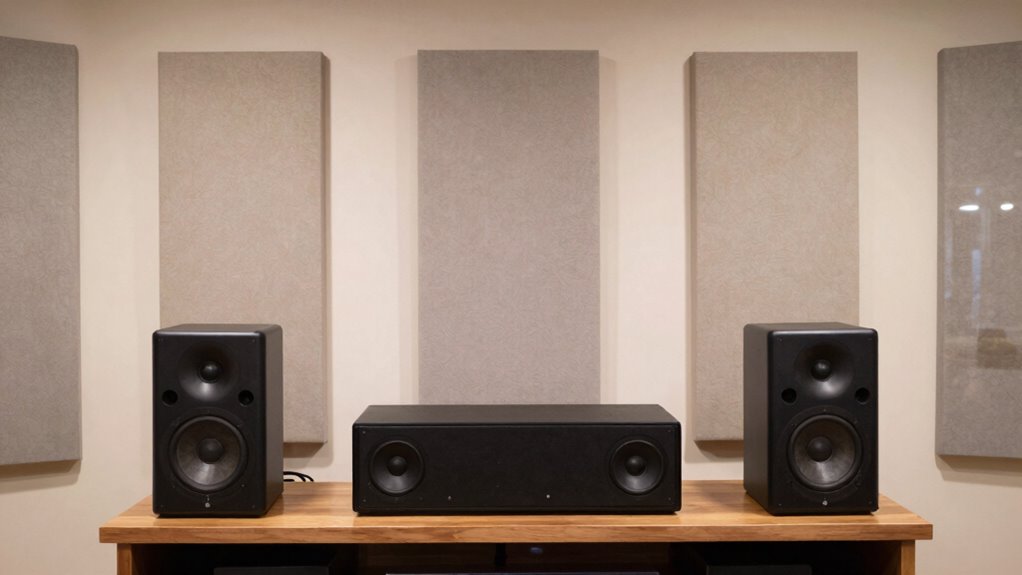
Room treatments directly improve audio clarity by controlling how sound waves interact within your space. By using soundproofing techniques, you reduce unwanted echoes and external noise, creating a cleaner listening environment. Acoustic panels absorb excess sound reflections, preventing them from bouncing around and muddying your audio. This control allows sound to stay focused and sharper, making details clearer. The acoustic panel benefits include better speech intelligibility and more accurate instrument reproduction. When you strategically place treatments, you minimize sound distortions caused by reflective surfaces or open spaces. As a result, your system’s performance improves, revealing nuances you might have missed before. Ultimately, room treatments transform your space into a true listening environment, where clarity and sound quality are markedly enhanced.
Where Should You Place Furniture for Better Sound?

Strategic furniture placement can considerably improve your listening experience by reducing sound reflections and deadening unwanted echoes. Proper furniture arrangement influences the decor impact and helps create a balanced sound environment. Position large pieces like sofas and bookshelves against walls to minimize sound bouncing around the room. Avoid placing furniture directly in front of speakers, which can block sound waves. Use soft furnishings such as rugs, curtains, and cushions to absorb reflections. Keep pathways clear to prevent sound distortion from obstructions. Experiment with angling furniture to break up sound waves and reduce flutter echoes. These small adjustments in furniture placement can make a noticeable difference in how your space sounds, enhancing clarity and immersion without costly equipment changes.
When and Why Should You Consider Professional Room Calibration?

Professional room calibration becomes essential when your listening environment still sounds uneven or muddy despite good equipment and furniture placement. If you notice inconsistent bass response or difficulty integrating your subwoofer seamlessly, calibration can help. It ensures your subwoofer blends smoothly with your main speakers, providing accurate bass and eliminating boomy or weak spots. You should consider professional calibration if you’ve tried DIY adjustments but still experience muddiness or uneven sound distribution. Calibration tools analyze your room’s acoustics, identifying issues like reflections, standing waves, or phase problems. By addressing these, a professional can optimize your system’s performance, delivering clearer, more balanced sound. Ultimately, calibration improves your listening experience, making your room’s acoustics work for you, not against you.
Budget-Friendly Tips to Improve Your Room’s Sound

Even with calibration tools, you don’t need to spend a fortune to make a noticeable difference in your sound quality. Small adjustments can have a big impact. Focus on subwoofer placement—try moving it closer to walls or corners for richer bass. Experiment with speaker orientation; angling your speakers slightly toward your listening position improves clarity. Rearranging furniture or adding rugs can reduce echo and sound reflections. Use bookshelves or soft materials to dampen sound waves. Keep speaker cables tidy to avoid unintended vibrations. These simple, budget-friendly tips can transform your listening experience without costly upgrades. By optimizing placement and orientation, you’ll notice clearer sound, better bass, and a more immersive environment—all without breaking the bank.
How Your Room Setup Can Save Money and Boost Listening Quality

By optimizing your room’s acoustics, you can improve sound quality without spending extra on new equipment. Properly positioning your speakers and avoiding clutter helps reduce echoes and unwanted noise. These simple adjustments can save you money and make your listening experience much better.
Optimize Room Acoustics
Have you ever considered how the shape and arrangement of your room impact sound quality? Optimizing your room’s acoustics can dramatically improve your listening experience and save money on high-end equipment. Start by addressing reflection issues with soundproofing techniques that reduce echo and unwanted noise. Use acoustic panel options strategically placed on walls to absorb sound and create a clearer audio environment. Consider the following:
- Positioning panels at reflection points
- Using rugs and heavy curtains to dampen surfaces
- Rearranging furniture to break up sound waves
- Installing bass traps in corners
- Choosing room shapes that minimize standing waves
These simple adjustments enhance sound clarity, reduce the need for costly upgrades, and make your space more enjoyable. Proper acoustics ensure you get the best sound without breaking the bank.
Position Speakers Properly
Properly positioning your speakers can make a significant difference in sound quality and save you money by reducing the need for expensive upgrades. Start by creating ideal sound staging; place your speakers equidistant from your listening position and form an equilateral triangle. This enhances clarity and imaging. To improve speaker isolation, avoid placing speakers directly against walls; instead, leave space to reduce vibrations and prevent muddy sounds.
| Speaker Placement Tips | Visualize the Setup |
|---|---|
| Equidistant from listener | Imagine a balanced triangle |
| Keep away from walls | Feel the space around speakers |
| Align at ear level | Picture speakers at your ear height |
| Maintain symmetry | See mirrored placement |
Minimize Echoes and Clutter
Unwanted echoes and clutter can seriously degrade your listening experience, but you can improve sound quality and save money by adjusting your room setup. Start with strategic wall placement to prevent sound reflections that cause echo. Use ceiling treatments like acoustic panels or diffusers to absorb excess sound waves. Declutter your space to reduce surfaces that bounce sound unpredictably. Incorporate rugs or curtains to dampen reflections and soften harsh echoes. Keep speakers away from corners and reflective walls to minimize sound distortion. Adding soft furnishings or wall hangings helps diffuse sound and reduce clutter. These simple adjustments make a noticeable difference, creating a clearer, more natural listening environment without expensive equipment upgrades.
Frequently Asked Questions
Can DIY Room Treatments Be as Effective as Professional Solutions?
DIY room treatments can be quite effective if you carefully research and craft solutions tailored to your space, but they may not match the precision of professional treatments. While DIY solutions are budget-friendly and customizable, professional treatments benefit from expert analysis and high-quality materials. If you’re willing to put in the effort and learn, DIY can improve your acoustic environment; otherwise, consulting a professional guarantees the best results.
How Does Room Size Impact Speaker Performance?
Imagine your room as a concert hall; larger spaces can dilute sound, making your speakers seem less powerful, while smaller rooms intensify sound but risk muddiness. Room size affects speaker performance because bigger rooms require careful speaker placement and potentially more treatment to prevent echoes and dead spots. Accurate room dimensions help you optimize placement, ensuring clear, balanced sound without unwanted reflections.
What Are Common Signs Indicating Poor Room Acoustics?
If you notice echoing, muffled sounds, or uneven bass, your room likely has poor acoustics. Signs include excessive sound reflection, which causes echo, and poor sound absorption, leading to muddiness. You might also struggle with speaker placement, as improper positioning worsens these issues. Improving sound absorption with rugs or panels and adjusting speaker placement can markedly enhance your listening experience, making your room’s acoustics much better.
Does Painting the Walls Affect Sound Quality?
Painting your walls is like adding a fresh coat of armor to a castle—it can influence sound quality, but not always for the better. Lighter wall colors and reflective decor tend to bounce sound waves, creating echoes, while darker shades absorb sound, reducing reverberation. So, your wall color and decor impact your room’s acoustics, shaping how clear or muddled your sound feels. Choose wisely to craft your ideal listening environment.
How Often Should I Reassess My Room’s Acoustics?
You should reassess your room’s acoustics every few months, especially if you notice changes in sound quality. Check your speaker placement and consider adding or adjusting acoustic treatments like panels or bass traps. Regularly testing your setup helps identify issues early, ensuring ideal sound. As your room evolves or equipment changes, reevaluating keeps your listening experience consistent and clear.
Conclusion
So, next time your speakers sound off, don’t blame the gear—blame your room. It’s the real villain hiding behind your sofa and under your curtains, sabotaging your sound waves. Before splurging on new gear, try a few simple tricks to tame the chaos. Remember, a little room tweak can turn your space from a sound disaster into a listening paradise—without draining your wallet or your patience. Who knew the room was the problem all along?
Halloween Picks
halloween
As an affiliate, we earn on qualifying purchases.