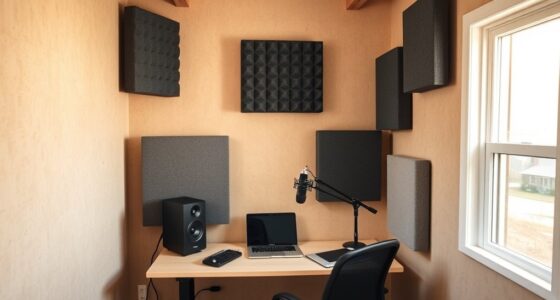

Your furniture placement greatly impacts your room’s acoustics by controlling sound reflection, absorption, and diffusion. Soft furnishings like rugs, curtains, and upholstered chairs absorb sound, reducing echoes and reverberations. Positioning furniture to break up large flat surfaces minimizes resonance and standing waves, creating clearer sound. Strategically placing items near reflective surfaces helps dissipate bouncing sound waves. If you keep exploring, you’ll discover how to optimize your space for better sound quality and comfort.

Get business pricing on your home office setup
- Business-only prices and quantity discounts
- Tax-exempt purchasing
- Multiple users, one account, clear invoices
Key Takeaways
- Soft furnishings absorb sound, reducing echo and reverberation for clearer acoustics.
- Uneven furniture placement breaks up flat surfaces, decreasing resonance issues.
- Large furniture near sound sources scatters sound waves, preventing uneven distribution.
- Positioning furniture away from reflective surfaces minimizes sound reflections and echo.
- Strategic layout controls sound interactions, creating a balanced and natural acoustic environment.

The way you arrange furniture can substantially influence the acoustics of a room, affecting sound quality and clarity. When you position pieces thoughtfully, you help control how sound waves travel and interact within the space. One key factor is sound absorption, which refers to how furniture can soak up sound energy, reducing echo and minimizing unwanted reverberations. Soft furnishings like upholstered chairs, rugs, and curtains are excellent for this purpose—they prevent sound from bouncing endlessly across hard surfaces. By incorporating these items strategically, you can create a more balanced acoustic environment where speech is clearer and music sounds more natural. Additionally, understanding cybersecurity principles can help safeguard your audio equipment from interference or unauthorized access, ensuring consistent sound quality.
Thoughtful furniture placement enhances room acoustics by boosting sound absorption and reducing echo.
Room resonance is another critical aspect impacted by your furniture placement. Resonance occurs when sound waves amplify due to reflections bouncing between parallel surfaces, often leading to a boomy or muddy sound. When you place furniture unevenly or break up large, flat surfaces with soft or irregularly shaped pieces, you diminish these problematic reflections. For example, placing bookshelves or couches at different angles can disrupt the formation of standing waves, reducing resonance and making the space feel more controlled. This not only improves sound clarity but also makes the room more comfortable for listening, watching movies, or hosting conversations.
Your layout choices can also influence how sound distributes throughout the space. When you position large furniture pieces near sound sources or along reflective walls, they act as diffusers, scattering sound waves in multiple directions. This prevents sound from becoming overly concentrated in certain areas, creating a more even acoustic experience. Conversely, cluttered or overly symmetrical arrangements might trap sound in specific zones, leading to uneven sound quality. By mixing different sizes and shapes of furniture, you promote a more diffuse sound field, which enhances overall clarity and reduces dead spots or excessive echo.
Additionally, the placement of furniture near walls or windows can significantly influence room resonance. Soft furniture placed close to reflective surfaces helps absorb sound that would otherwise bounce directly back into the room, lowering resonance issues. Avoid pushing all your furniture against the walls, as this can create parallel surfaces that intensify resonance and echo. Instead, leave some space to break up reflective paths, allowing sound waves to dissipate more naturally. This simple adjustment can make a noticeable difference in how crisp and natural your room sounds.
In essence, your furniture choices and their placement are powerful tools for shaping the acoustics of a space. By thoughtfully incorporating sound-absorbing items, breaking up reflective surfaces, and positioning furniture to diffuse sound, you can craft an environment with clearer, more balanced acoustics. This not only elevates your listening experience but also creates a more inviting and comfortable atmosphere for everyday living.
Frequently Asked Questions
How Does Furniture Shape Influence Sound Absorption?
Your furniture shape greatly influences sound absorption by creating varied surfaces that reflect or diffuse sound waves. Rounded or irregular shapes, like decorative accents, help break up sound, reducing echo. Incorporate furniture with different color schemes and textures to enhance this effect. When you strategically place these pieces, you improve acoustics, making your space more comfortable and visually appealing. So, your furniture choices directly shape how sound behaves in your environment.
Can Specific Furniture Materials Improve Room Acoustics?
Think of your room as a concert hall; the right decor materials can turn echo into harmony. Specific furniture materials like plush fabrics and soft woods absorb sound, reducing echo. Acoustic panels, made from materials like foam or fiberglass, are especially effective at dampening noise. Using these, you create a cozy, balanced space where conversations feel intimate and music sounds clear, much like a well-tuned instrument.
What Furniture Arrangements Reduce Echo in Large Rooms?
To reduce echo in large rooms, you should arrange furniture to break up sound waves. Place hanging curtains on windows and walls to absorb sound and prevent reflections. Installing acoustic panels strategically on walls or ceilings further dampens echo. Combine soft furniture like sofas and plush chairs with these acoustic treatments, and avoid placing large, hard surfaces directly opposite each other. This setup creates a balanced environment with minimal echo.
How Does Furniture Placement Affect Speech Clarity?
Think of your room as a concert hall—if furniture is arranged wisely, speech stays crisp and clear. You notice that low, plush sofas absorb background noise and reduce echo, making voices stand out. Proper furniture height prevents sound from bouncing unpredictably, ensuring clarity. When you position furniture thoughtfully, you create an environment where speech cuts through background noise effortlessly, making conversations more intimate and intelligible.
Are There Recommended Furniture Types for Optimal Sound Quality?
For ideal sound quality, you should choose furniture that absorbs sound, like plush sofas and upholstered chairs. Adding soundproof curtains helps block external noise, while acoustic wall panels improve internal acoustics by reducing echoes. Avoid hard, reflective surfaces like glass or metal. Combining soft furnishings with sound-absorbing accessories creates a balanced environment, ensuring clear speech and better overall sound. This setup makes your space more comfortable and acoustically enhanced.
Conclusion
As you walk into a room, imagine the way your furniture guides sound like gentle waves rolling over a calm lake. Proper placement absorbs echoes and softens sharp noises, creating a cozy sanctuary. When you position your sofas and shelves thoughtfully, you craft a space where sound flows smoothly, wrapping you in comfort. So, think of your furniture as the silent conductor, orchestrating perfect acoustics that make every moment feel warm and inviting.
Fall Picks
fall essentials
As an affiliate, we earn on qualifying purchases.