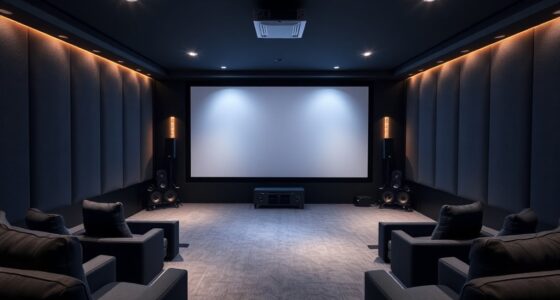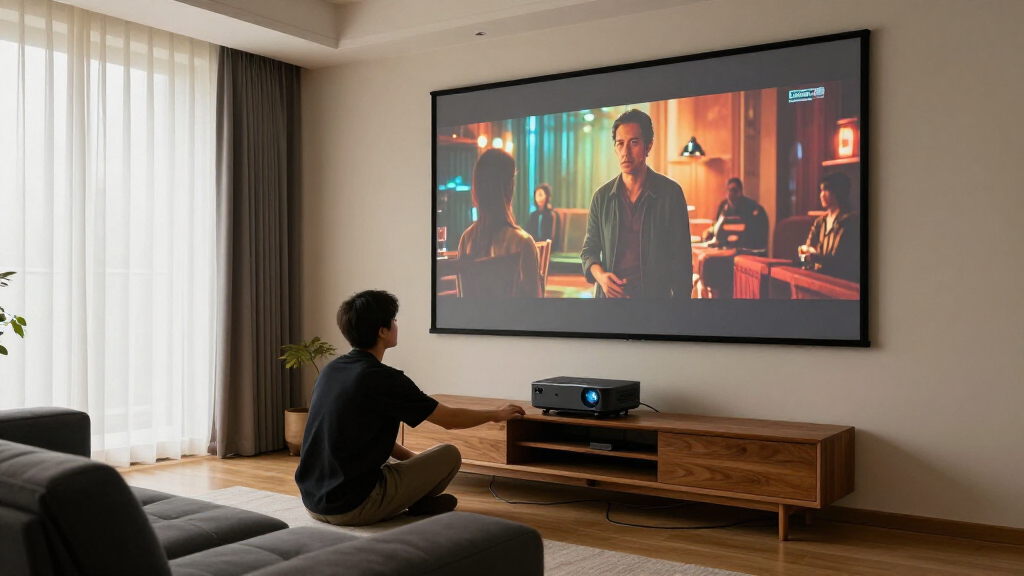

For most living rooms, I’d start with the Epson Home Cinema 3800: its 3LCD design and 4K PRO-UHD processing make it the most home-theater-focused pick in this group. The Epson Home Cinema 2350 adds smart streaming, while the Happrun 3000 ANSI Google TV Projector pairs a brighter stated output with autofocus and built-in Google TV. The key tradeoff is that “4K” can mean native 4K or support for decoding a 4K signal, and those are not the same thing. Room light, screen size, placement, and audio also matter as much as the headline resolution. Read on for the full comparison and help matching a projector to your setup.

Get business pricing on your home office setup
- Business-only prices and quantity discounts
- Tax-exempt purchasing
- Multiple users, one account, clear invoices
Complete the kit


Key Takeaways
- The Epson Home Cinema 3800 is the clearest dedicated home theater pick: its 3LCD system and 4K PRO-UHD positioning distinguish it from the many compact models that accept 4K video but use native 1080p imaging.
- 4K support does not always mean a native 4K image: the Wimius P62 Pro, XuanPad Mini, and VIDAA Smart Projector are explicitly listed as native 1080p with 4K support or decoding.
- Smart TV features vary as much as image specs: the Epson 2350 includes smart streaming, while several models advertise Google TV, Roku, or VIDAA; buyers should check which apps and services they actually need.
- High stated brightness is not a like-for-like comparison: the 4500 ANSI listing and Happrun 3000 ANSI model claim far more output than the 920 ANSI outdoor VIDAA model, but room light, screen size, and measurement methods affect real results.
- Setup convenience comes with tradeoffs: autofocus and rotating stands on several compact models suit flexible placement, while a fixed room setup may benefit more from prioritizing image performance, throw distance, and external audio.
| Epson Home Cinema 2350 4K PRO-UHD Smart Streaming Projector |  | Best for Bright-Room Gaming | Resolution technology: 4K PRO-UHD | HDR support: HDR10 and HLG | Brightness: 2,800 lumens (color and white) | VIEW LATEST PRICE | See Our Full Breakdown |
| 4500 ANSI Large Projector with WiFi and Bluetooth, 450″ Display Movie Projector with Hi-Fi Speaker, High Brightness 4K Projector for Home Theater & Business (Black) |  | Best for Large, Flexible Screens | Native resolution: 1080p with 4K decoding | Brightness: 4500 ANSI lumens | Contrast ratio: 20,000:1 | VIEW LATEST PRICE | See Our Full Breakdown |
| Epson Home Cinema 3800 4K PRO-UHD 3-Chip 3LCD Projector with HDR Technology |  | Best for Dedicated Home Theaters | Resolution: 4K PRO-UHD (pixel shifting) | Brightness: 3,000 lumens (color and white) | Contrast ratio: Up to 100,000:1 | VIEW LATEST PRICE | See Our Full Breakdown |
| 4K Smart Home Theater Projector, 2400 ANSI Lumens, HDR10+ and HDMI eARC |  | Best for Built-In Audio and Streaming | Resolution: 4K UHD decoding | Brightness: 2,400 ANSI lumens | HDR: HDR10+ | VIEW LATEST PRICE | See Our Full Breakdown |
| Happrun 2000 ANSI 4K Decoding Projector with WiFi, Bluetooth, Auto Focus |  | Best for Easy Portable Setup | Native resolution: 1920 × 1080 with 4K decoding | Brightness: 2,000 ANSI lumens | Contrast ratio: 20,000:1 | VIEW LATEST PRICE | See Our Full Breakdown |
| Wimius P62 Pro Smart Outdoor Projector, Native 1080p with 4K Support |  | Best for Flexible Streaming Setup | Native resolution: 1080p | 4K support: Yes; displayed at native 1080p | Brightness: 600 ANSI lumens | VIEW LATEST PRICE | See Our Full Breakdown |
| Aurzen Roku D1R Smart Projector |  | Best for Roku Households | Resolution: 1080p Full HD | Screen size: 60–150 inches | Streaming: Built-in Roku | VIEW LATEST PRICE | See Our Full Breakdown |
| Happrun 3000 ANSI Google TV Projector – 4K HDR, Auto Focus |  | Best for Brighter Rooms | Native resolution: 1920 × 1080 (Full HD) | Brightness: 3000 ANSI lumens | Display type: LCD | VIEW LATEST PRICE | See Our Full Breakdown |
| Outdoor 4K Projector with VIDAA Live TV, 40W Dolby Audio, 920 ANSI Brightness, WiFi6, Bluetooth 5.4, AI Auto Focus and HDR10 |  | Best for Built-In Live TV and Sound | Native resolution: 1080p with 4K decoding | Brightness: 920 ANSI lumens (ISO standard) | Operating system: VIDAA OS (2026 version) | VIEW LATEST PRICE | See Our Full Breakdown |
| XuanPad Smart Mini Projector with Native 1080p, 4K Support, Wi-Fi, Bluetooth, Autofocus, and 360° Stand |  | Best Compact Pick | Native resolution: 1080p | 4K support: Supported; displayed at native 1080p | Image size: 40–200 inches | VIEW LATEST PRICE | See Our Full Breakdown |
| VIDAA Smart Projector with Native 1080p, 4K Decoding, Wi-Fi 6 and Bluetooth |  | Best for Built-In Live TV | Native resolution: 1920 × 1080 | Maximum supported resolution: 3840 × 2160 | Brightness: 550 ANSI lumens | VIEW LATEST PRICE | See Our Full Breakdown |
| VOPLLS G7 4K Projector with Google TV, HDR10+ and High Brightness |  | Best for Short-Throw 4K Setup | Resolution: 4K | Operating system: Licensed Google TV | HDR: HDR10+ | VIEW LATEST PRICE | See Our Full Breakdown |
| Smart 4K-Supported Projector with Google TV, Wi-Fi 6, Bluetooth, Auto Focus, and Rotating Stand |  | Best for Brighter Flexible Placement | Native resolution: 1080p | 4K support: 4K decoding | Brightness: 3000 ANSI lumens | VIEW LATEST PRICE | See Our Full Breakdown |
| 4K home theater projector | Brightness | Native resolution |
|---|---|---|
| Epson Home Cinema 2350 4K PRO- | 2,800 lumens (color and white) | — |
| 4500 ANSI Large Projector with | 4500 ANSI lumens | 1080p with 4K decoding |
| Epson Home Cinema 3800 4K PRO- | 3,000 lumens (color and white) | — |
| 4K Smart Home Theater Projecto | 2,400 ANSI lumens | — |
| Happrun 2000 ANSI 4K Decoding | 2,000 ANSI lumens | 1920 × 1080 with 4K decoding |
| Wimius P62 Pro Smart Outdoor P | 600 ANSI lumens | 1080p |
| Aurzen Roku D1R Smart Projecto | — | — |
| Happrun 3000 ANSI Google TV Pr | 3000 ANSI lumens | 1920 × 1080 (Full HD) |
| Outdoor 4K Projector with VIDA | 920 ANSI lumens (ISO standard) | 1080p with 4K decoding |
| XuanPad Smart Mini Projector w | — | 1080p |
| VIDAA Smart Projector with Nat | 550 ANSI lumens | 1920 × 1080 |
| VOPLLS G7 4K Projector with Go | — | — |
| Smart 4K-Supported Projector w | 3000 ANSI lumens | 1080p |
More Details on Our Top Picks
Epson Home Cinema 2350 4K PRO-UHD Smart Streaming Projector
The Epson Home Cinema 2350 is a strong fit for viewers who split their projector time between movies and games. Its 2,800-lumen 3LCD image keeps color brightness in step with white brightness, while under-20 ms input lag favors responsive play. The 4K PRO-UHD image uses resolution enhancement, so buyers seeking native 4K should weigh that distinction. Compared with the Epson Home Cinema 3800, the 2350 adds Android TV for built-in streaming but gives up the 3800’s stated 3,000 lumens, high contrast figure, and lens shift. HDR10 and HLG support broaden its movie compatibility; however, streaming access depends on compatible apps, and the supplied details do not specify a contrast ratio or installation adjustments. I’d choose it for a bright, flexible gaming room where easy streaming matters more than lens placement options.
Pros:- 2,800-lumen output supports viewing in rooms with some ambient light
- 3LCD design displays full RGB color without relying on a color wheel
- Under-20 ms input lag suits responsive gaming
- Android TV and Google Assistant add convenient streaming and voice search
Cons:- 4K PRO-UHD uses resolution enhancement rather than native 4K
- Streaming availability depends on compatible apps
- No contrast ratio or lens-shift details are provided
Best for: Console gamers who want a bright, color-rich projector with built-in Android TV for casual streaming
Not ideal for: Buyers requiring native 4K resolution or lens shift to fit a fixed, awkwardly placed screen
- Resolution technology:4K PRO-UHD
- HDR support:HDR10 and HLG
- Brightness:2,800 lumens (color and white)
- Display technology:3-chip 3LCD
- Input lag:Under 20 ms
- Smart platform:Android TV
- Voice assistant:Google Assistant
Our verdict“Choose the Epson 2350 if bright 3LCD gaming and built-in streaming matter more than native 4K or installation flexibility.”
4500 ANSI Large Projector with WiFi and Bluetooth, 450″ Display Movie Projector with Hi-Fi Speaker, High Brightness 4K Projector for Home Theater & Business (Black)
This projector’s headline appeal is 4500 ANSI brightness and a stated image range up to 450 inches, which suits multipurpose rooms and occasional outdoor screenings. The catch for a 4K home theater shortlist is clear: it has native 1080p resolution with 4K decoding, so it accepts 4K sources without displaying native 4K detail. Compared with the Epson Home Cinema 3800, it offers a larger stated projection range and more listed ports, while the Epson specifies 4K PRO-UHD pixel shifting, lens shift, and full 10-bit HDR. Wi-Fi 6, Bluetooth 5.1, and dual 10W speakers reduce setup friction, but the product data does not list HDR support, and the large screen claim alone does not establish image quality at that size. I’d pick it for flexible use over strict 4K fidelity.
Pros:- Stated 4500 ANSI brightness suits rooms with more ambient light
- Wi-Fi 6 and Bluetooth 5.1 provide wireless source and audio options
- Dual 10W speakers offer built-in sound for casual viewing
- Broad port selection includes HDMI, USB, VGA, and AV
Cons:- Native resolution is 1080p, despite 4K decoding
- HDR10 or Dolby Vision support is not specified
- A 450-inch maximum image claim does not establish brightness or clarity at that size
Best for: Buyers who need a bright projector for mixed movie, presentation, and occasional outdoor use with flexible screen sizing
Not ideal for: Dedicated home theater viewers who prioritize 4K image detail or documented HDR performance
- Native resolution:1080p with 4K decoding
- Brightness:4500 ANSI lumens
- Contrast ratio:20,000:1
- Color gamut:98% NTSC
- Wireless:Wi-Fi 6 dual-band; Bluetooth 5.1
- Speakers:Dual 10W stereo
- Projection size:39–450 inches
- Ports:2 HDMI, 2 USB, VGA, AV
- LED lamp life:Up to 100,000 hours
Our verdict“Choose this model for brightness and flexible large-screen use, but skip it if native 4K detail is your priority.”
Epson Home Cinema 3800 4K PRO-UHD 3-Chip 3LCD Projector with HDR Technology
The Epson Home Cinema 3800 is the most theater-focused choice here for buyers who value picture controls and HDR handling. Its 4K PRO-UHD pixel shifting, three-chip 3LCD system, and full 10-bit HDR support make it a more clearly specified movie projector than the 4500 ANSI model, whose native resolution is 1080p and HDR support is unstated. At 3,000 lumens and a stated contrast ratio up to 100,000:1, it is also positioned for a brighter, punchier image than the Epson 2350’s 2,800-lumen output. Vertical and horizontal lens shift can ease placement when the projector cannot sit directly in front of the screen. The tradeoffs are that its resolution is still pixel-shifted, not native 4K, and the data gives no lamp-life figure. Its built-in speakers may also need replacing in a larger theater.
Pros:- 4K PRO-UHD pixel shifting and full 10-bit HDR support
- Three-chip 3LCD design avoids rainbow effect
- Vertical and horizontal lens shift simplify screen alignment
- 3,000 lumens and a stated contrast ratio up to 100,000:1
Cons:- Uses pixel shifting rather than native 4K resolution
- Dual 10W speakers may be insufficient for larger rooms
- Lamp lifespan is not specified in the supplied product data
Best for: Movie-focused buyers setting up a dedicated theater who need lens placement flexibility and documented HDR support
Not ideal for: Viewers who want native 4K projection, specified lamp longevity, or room-filling built-in audio
- Resolution:4K PRO-UHD (pixel shifting)
- Brightness:3,000 lumens (color and white)
- Contrast ratio:Up to 100,000:1
- HDR:Full 10-bit HDR
- HDMI:18 Gbps HDMI 2.0; 4K HDR at 60 Hz
- Lens shift:Vertical and horizontal
- Speakers:Dual 10W rear-firing stereo
- Bluetooth:Built-in wireless audio
- 3D support:Active 3D compatible
Our verdict“Choose the Home Cinema 3800 for a theater setup that benefits from HDR, contrast, and lens shift, while accepting pixel-shifted 4K.”
4K Smart Home Theater Projector, 2400 ANSI Lumens, HDR10+ and HDMI eARC
This smart projector is aimed at buyers who want a self-contained movie setup: it combines built-in streaming apps, HDR10+, and dual 38W speakers, with HDMI eARC for connecting a separate audio system. That integrated approach sets it apart from the Epson Home Cinema 3800, which lists dual 10W speakers and Bluetooth but does not list a smart platform. The claimed 2400 ANSI lumens and three brightness modes provide some room to tune the image, though the description says it is not recommended for outdoor daylight use. Its 4K UHD decoding wording does not confirm native 4K resolution, so I would not choose it for guaranteed 4K pixel detail. TOF autofocus and a retractable lens cover simplify routine setup, while Movin 2.0 OS and varied connections add convenience. Buyers should still check app availability for their services.
Pros:- HDR10+ support for compatible content
- Dual 38W Dolby Audio speakers provide substantial built-in sound
- Built-in streaming apps and Wi-Fi 6 reduce reliance on external devices
- TOF autofocus and a retractable lens cover make setup and storage easier
Cons:- Native 4K resolution is not specified; the description states 4K decoding
- Not recommended for outdoor daylight viewing
- App availability and long-term platform support are not detailed
Best for: Living-room viewers who want onboard streaming and powerful built-in speakers without assembling a separate system
Not ideal for: Dedicated 4K purists or anyone planning outdoor daytime screenings, since native 4K is unspecified and daylight use is discouraged
- Resolution:4K UHD decoding
- Brightness:2,400 ANSI lumens
- HDR:HDR10+
- Audio:Dolby Audio; dual 38W speakers
- Operating system:Movin 2.0 OS
- Wireless connectivity:Wi-Fi 6; two-way Bluetooth
- Focus:TOF autofocus
- HDMI:2 ports; HDMI 2 supports eARC and CEC
- Other ports:2 USB, AV, 3.5 mm audio out, Ethernet
Our verdict“Choose this projector for a convenient streaming and audio package, provided decoded 4K meets your needs.”
Happrun 2000 ANSI 4K Decoding Projector with WiFi, Bluetooth, Auto Focus
The Happrun suits buyers who move a projector between rooms or want automated setup to handle focus and alignment. Its autofocus, 6D keystone correction, obstacle avoidance, and screen alignment reduce manual adjustments, while Wi-Fi 6 and Bluetooth 5.2 offer flexible connections. For 4K home theater use, the key limit is that it has native 1080p resolution with 4K decoding; it accepts a 4K source but does not provide native 4K detail. Compared with the Epson Home Cinema 2350, it adds portability and more setup automation, while the Epson specifies higher brightness and under-20 ms input lag for gaming. Happrun’s 2,000 ANSI lumens can work in a dim room, but its own data says image quality still depends on darkness, and autofocus can falter beyond a 15-degree angle. The small 8W speaker is best for casual viewing.
Pros:- Autofocus, auto-keystone, obstacle avoidance, and screen alignment simplify setup
- Wi-Fi 6 and Bluetooth 5.2 support wireless connections
- Stated 100,000-hour light-source life
- Portable LCD form factor and multiple input options
Cons:- Native resolution is 1920 × 1080 despite 4K decoding
- Image quality is best in a dark viewing environment
- Autofocus may fail when the projector angle exceeds 15 degrees
Best for: Renters and occasional movie watchers who move the projector and want automated image setup
Not ideal for: Dedicated 4K theater buyers or viewers who cannot control room lighting and need dependable placement at steep angles
- Native resolution:1920 × 1080 with 4K decoding
- Brightness:2,000 ANSI lumens
- Contrast ratio:20,000:1
- Image size:50–300 inches
- Throw distance:4.72–28.4 ft
- Light-source life:Up to 100,000 hours
- Speaker:8W Hi-Fi
- Connectivity:2 HDMI, 2 USB, AV, 3.5 mm audio, Wi-Fi 6, Bluetooth 5.2
- Auto features:Autofocus, 6D auto-keystone, obstacle avoidance, screen alignment
Our verdict“Choose the Happrun for portable, automated setup in a dim room, but look elsewhere for native 4K detail.”
Wimius P62 Pro Smart Outdoor Projector, Native 1080p with 4K Support
The Wimius P62 Pro suits buyers who want a ready-to-stream projector for occasional movie nights indoors or outdoors. Its built-in apps and Wi-Fi 6 reduce setup steps, while autofocus, keystone correction, and screen alignment help when the projector moves between spaces. Compared with the XuanPad Smart Mini Projector, it offers a more substantial connection and sound setup, including two HDMI ports and dual 10W speakers, but it is less focused on lightweight portability. The 600 ANSI lumens rating points toward dim rooms and evening viewing rather than daylight use. Although it accepts 4K content, its native 1080p resolution means it cannot show the extra detail of a true 4K display. Buyers also need to supply their own carrying case.
Pros:- Built-in streaming apps and wireless screen mirroring simplify source access
- Autofocus, keystone correction, obstacle avoidance, and screen alignment ease setup
- Two HDMI ports and two USB ports support multiple connected devices
- Dual 10W Dolby speakers provide more built-in sound output than the Aurzen Roku D1R’s dual 5W speakers
Cons:- Native 1080p resolution limits the detail shown from 4K content
- 600 ANSI lumens is better suited to dark viewing than rooms with substantial ambient light
- A carrying case is not included
Best for: Movie watchers who want built-in streaming, flexible inputs, and a projector for dark-room or evening use
Not ideal for: Buyers seeking native 4K detail, daytime viewing brightness, or a compact travel kit with a case
- Native resolution:1080p
- 4K support:Yes; displayed at native 1080p
- Brightness:600 ANSI lumens
- HDR:HDR10
- Built-in apps:Prime Video, YouTube, and other apps
- Wireless:Wi-Fi 6; Bluetooth 5.2
- Speakers:Dual 10W with Dolby audio
- Ports:2 HDMI, 2 USB, 3.5 mm audio output
Our verdict“Choose the P62 Pro for flexible streaming and connections in a dim room, provided native 1080p meets your needs.”
Aurzen Roku D1R Smart Projector
The Aurzen Roku D1R makes sense for viewers who already use Roku and want familiar streaming built into a Full HD projector. Its 60–150-inch image range and automatic focus and keystone correction help keep setup straightforward, while Bluetooth lets you connect headphones or a separate speaker. Against the Wimius P62 Pro, the D1R gives up stronger built-in speaker output and extra HDMI and USB connections, but Roku integration is its clearest advantage for buyers who value a known streaming interface. Both models are native 1080p, so neither delivers true 4K image detail. The D1R also requires an account and internet connection to activate Roku, and its steady fan noise may be noticeable in quiet scenes.
Pros:- Built-in Roku provides direct access to popular streaming apps and free channels
- Autofocus and automatic keystone correction simplify placement
- Dual-band Wi-Fi and Bluetooth 5.2 support wireless streaming and audio connections
- Supports projected screen sizes from 60 to 150 inches
Cons:- Roku activation requires an account and internet connection
- Dual 5W speakers offer less output than the Wimius P62 Pro’s dual 10W speakers
- Cooling fan produces steady noise during use
Best for: Roku users who want a simple streaming projector for a bedroom, den, or occasional movie night
Not ideal for: Buyers who need native 4K resolution, strong built-in audio, or completely quiet operation
- Resolution:1080p Full HD
- Screen size:60–150 inches
- Streaming:Built-in Roku
- Speakers:Dual 5W
- Wireless:Dual-band Wi-Fi; Bluetooth 5.2
- Setup:Autofocus and auto keystone correction
- Noise level:Below 40 dB(A) at 1 meter; maximum 38.9 dB(A)
- Power supply:100–240V AC, 50/60Hz
Our verdict“Pick the D1R if Roku convenience matters more to you than higher speaker output or native 4K detail.”
Happrun 3000 ANSI Google TV Projector – 4K HDR, Auto Focus
Among these five picks, the Happrun 3000 ANSI stands out for its stated brightness: 3000 ANSI lumens gives buyers more flexibility in a moderately lit room than the Wimius P62 Pro’s 600 ANSI lumens. Google TV, voice control, and AI autofocus also make it a convenient fixed-room option, with mounting choices spanning tabletop, ceiling, wall, and tripod. The tradeoff is a mismatch for shoppers expecting a true 4K home theater image: its native resolution is 1920 × 1080, so 4K support does not add native pixel detail. The X9 Pro also decodes 4K at 1080p, but lists lower brightness and stronger built-in speakers. The Happrun’s LCD panel may also produce less convincing blacks in dark scenes.
Pros:- 3000 ANSI lumens provides more stated brightness than the Wimius P62 Pro
- Built-in Google TV gives direct access to streaming apps
- AI autofocus and screen alignment simplify setup
- Multiple mounting options support tabletop, ceiling, wall, floor, or tripod placement
Cons:- Native Full HD resolution does not show 4K content at 4K detail
- LCD panel may not deliver deep blacks in dark movie scenes
- Integrated speakers may not satisfy buyers seeking a more powerful theater sound system
Best for: Families who stream through Google TV and need a bright, flexible projector for a room with some ambient light
Not ideal for: Home theater buyers prioritizing native 4K resolution or deep blacks in a fully dark room
- Native resolution:1920 × 1080 (Full HD)
- Brightness:3000 ANSI lumens
- Display type:LCD
- Contrast ratio:20000:1
- Maximum image size:300 inches
- Throw distance:5.48–22 ft
- Wireless:Wi-Fi 6; Bluetooth 5.2
- Mounting:Ceiling, floor, tabletop, tripod, or wall
Our verdict“Choose this Happrun for a brighter, Google TV equipped Full HD image, but skip it if native 4K detail is your priority.”
Outdoor 4K Projector with VIDAA Live TV, 40W Dolby Audio, 920 ANSI Brightness, WiFi6, Bluetooth 5.4, AI Auto Focus and HDR10
The X9 Pro is the strongest fit here for buyers who want live channels and substantial built-in audio alongside streaming apps. Its VIDAA system lists more than 1,000 live channels, and the dual 20W Dolby speakers have far more stated output than the Wimius P62 Pro’s dual 10W set. At 920 ANSI lumens, it is also brighter on paper than the Wimius, though that still favors evening use over bright daylight. AI autofocus, 6-direction keystone correction, obstacle avoidance, and screen fit help with placement. Its central limitation is the same one found in the Happrun 3000 ANSI: native 1080p resolution. 4K decoding does not produce native 4K detail, so pixel-focused home theater buyers should look elsewhere.
Pros:- VIDAA OS includes streaming apps and more than 1,000 live TV channels
- Dual 20W Dolby speakers provide the highest stated speaker output in this group
- 920 ANSI lumens exceeds the Wimius P62 Pro’s stated 600 ANSI lumens
- Autofocus, 6D keystone correction, obstacle avoidance, and screen fit ease setup
Cons:- Native 1080p resolution means 4K content is decoded but not displayed at native 4K detail
- 920 ANSI lumens remains better suited to evening viewing than bright daytime rooms
Best for: Viewers who want integrated live TV, streaming apps, and higher-output speakers for evening movie watching
Not ideal for: Buyers who require native 4K detail or plan to watch in strong daylight
- Native resolution:1080p with 4K decoding
- Brightness:920 ANSI lumens (ISO standard)
- Operating system:VIDAA OS (2026 version)
- Live channels:1,000+ built-in
- Speakers:2 × 20W Dolby Audio
- HDR:HDR10
- Wireless:Wi-Fi 6; Bluetooth 5.4
- Connections:HDMI ARC/CEC, USB, 3.5 mm audio
Our verdict“Choose the X9 Pro if live channels and powerful built-in audio matter more than native 4K resolution.”
XuanPad Smart Mini Projector with Native 1080p, 4K Support, Wi-Fi, Bluetooth, Autofocus, and 360° Stand
At 1.89 pounds, the XuanPad is the portability specialist in this group, with a detachable 360° stand that makes it easier to aim at different walls or ceilings. Built-in apps, wireless mirroring, AI autofocus, and automatic keystone correction suit a user who wants quick informal viewing without building a fixed home theater setup. The Wimius P62 Pro is a better match for buyers who want specified brightness, more ports, and stronger built-in speakers; XuanPad’s listing gives no brightness measurement, making room suitability harder to judge. Like the Wimius, it supports 4K content but projects at native 1080p, so the label does not mean 4K image detail. Its 40–200-inch size range is broad, but the larger end depends heavily on viewing conditions.
Pros:- Lightweight 1.89-pound design is easier to move than the Wimius P62 Pro
- Detachable 360° stand offers flexible aiming
- AI autofocus and 6D automatic keystone correction simplify setup
- Built-in apps and wireless screen mirroring reduce reliance on separate streaming hardware
Cons:- Native 1080p resolution does not deliver native 4K detail
- No brightness measurement is provided, so performance in ambient light is difficult to assess
Best for: Travelers and renters who want a lightweight projector with an adjustable stand for occasional viewing
Not ideal for: Buyers setting up a dedicated 4K theater or needing a known brightness level for a lit room
- Native resolution:1080p
- 4K support:Supported; displayed at native 1080p
- Image size:40–200 inches
- Weight:1.89 lbs
- Focus:AI autofocus
- Keystone correction:6D automatic
- Stand:Detachable, 360° rotatable
- Wireless:Dual-band Wi-Fi; Bluetooth 5.2
Our verdict“Pick the XuanPad for lightweight, flexible placement, but choose another model if brightness or true 4K detail is a deciding factor.”
VIDAA Smart Projector with Native 1080p, 4K Decoding, Wi-Fi 6 and Bluetooth
For a home theater where streaming convenience matters more than native 4K detail, this VIDAA model stands out for its 1,200-plus apps and 1,000 live TV channels. AirPlay, voice control, and automatic focus and keystone correction also make it easier to move between a living room, ceiling mount, or outdoor setup. Its 1080p native resolution means 4K decoding accepts 4K sources but does not display them at native 4K; the 550 ANSI lumens also suit dim rooms better than brighter options such as the 3000 ANSI projector in this roundup. HDR10+ and MEMC add picture processing, but they cannot replace the detail or light output of a stronger dedicated theater model. I’d choose it for its built-in viewing options and flexible setup, while buyers prioritizing crisp 4K or brighter daytime viewing should look elsewhere.
Pros:- VIDAA includes access to more than 1,200 apps and 1,000 live TV channels
- Automatic focus, keystone correction, obstacle avoidance, and screen alignment simplify setup
- AirPlay, voice control, Wi-Fi 6, and Bluetooth 5.4 support flexible connections
- HDR10+, MEMC, and Dolby Audio add picture and sound processing
Cons:- Native 1080p resolution does not deliver native 4K image detail
- 550 ANSI lumens limit its suitability for rooms with substantial ambient light
- A 300-inch maximum image can be too ambitious for its listed brightness
Best for: Viewers who want live TV and streaming apps built in for a dim living room or occasional outdoor movie night
Not ideal for: Buyers seeking native 4K detail or a bright picture for daytime viewing, given its 1080p native resolution and 550 ANSI lumens
- Native resolution:1920 × 1080
- Maximum supported resolution:3840 × 2160
- Brightness:550 ANSI lumens
- Operating system:VIDAA
- Image size:Up to 300 inches
- Connectivity:Wi-Fi 6, Bluetooth 5.4, HDMI 2.1, 3.5 mm audio
- Audio:Dolby Audio
- Picture features:HDR10+, MEMC, autofocus, 6D keystone correction
Our verdict“Choose this VIDAA projector for its extensive built-in live TV and app selection in a dim space, but skip it if native 4K detail is your priority.”
VOPLLS G7 4K Projector with Google TV, HDR10+ and High Brightness
The VOPLLS G7 is the most theater-focused choice here for buyers who need to place a projector relatively close to the screen: its 1.24:1 throw ratio produces a 100-inch image from 9 feet. The listed 4K resolution, HDR10+, and licensed Google TV make it a more direct fit for a 4K home theater than the VIDAA model, which has native 1080p and 4K decoding. Google TV, Chromecast, AirPlay, and Miracast also reduce the need to add a separate streaming device. Autofocus, screen fit, and obstacle avoidance help with placement, while the sealed optical engine and three-year warranty are useful ownership details. The listing provides no brightness figure, so I can’t compare its light output with the 3000 ANSI model in this group; daylight performance remains unclear, and its short throw still requires space for the projector’s placement.
Pros:- Listed 4K resolution is a closer match for a 4K theater than 1080p models with 4K decoding
- 1.24:1 throw ratio supports a 100-inch image from 9 feet
- Licensed Google TV and Chromecast provide built-in streaming and casting
- Autofocus, 6D keystone correction, obstacle avoidance, and screen fit ease setup
Cons:- Brightness is not specified, making bright-room suitability difficult to judge
- A short-throw lens still requires careful placement and suitable screen distance
- Dolby Audio speakers may not replace a separate theater sound system
Best for: Movie watchers building a 4K setup in a room where the projector must sit about 9 feet from a 100-inch screen
Not ideal for: Buyers who need verified brightness for daytime or bright-room viewing, since no brightness figure is provided
- Resolution:4K
- Operating system:Licensed Google TV
- HDR:HDR10+
- Throw ratio:1.24:1
- Image size and distance:100 inches at 9 feet
- Setup features:Autofocus, 6D keystone correction, obstacle avoidance, screen fit
- Audio:Dolby Audio, dual speakers, DSP chip
- Warranty:3 years
Our verdict“Pick the G7 if its short throw and listed 4K resolution fit your room, but seek a projector with a stated brightness rating for a bright viewing space.”
Smart 4K-Supported Projector with Google TV, Wi-Fi 6, Bluetooth, Auto Focus, and Rotating Stand
This projector’s standout claim is 3000 ANSI lumens, paired with Google TV and a rotating stand. That light output gives it a stronger stated case for rooms with some ambient light than the 550 ANSI VIDAA model, while the 360° stand and automatic lens cover suit buyers who move the projector between rooms or store it between sessions. There is a significant resolution tradeoff: it is natively 1080p and only decodes 4K, so the VOPLLS G7 is the more appropriate pick for buyers focused on listed 4K resolution. Google TV, Wi-Fi 6, Bluetooth 5.2, and a voice remote keep streaming straightforward; autofocus and screen alignment reduce manual setup. Digital zoom only scales the picture from 50% to 100%, and the stated brightness does not change its native resolution.
Pros:- Listed 3000 ANSI lumens offer more stated light output than the 550 ANSI VIDAA model
- Built-in Google TV apps and voice remote simplify streaming
- 360° rotating stand supports flexible placement and projection direction
- Automatic focus, keystone correction, and screen alignment reduce setup work
Cons:- Native resolution is 1080p; 4K sources are decoded rather than displayed at native 4K
- Digital zoom adjusts image size from 50% to 100% rather than providing optical zoom
- High brightness does not compensate for the lower native resolution in a detail-focused theater
Best for: Households that want a bright, movable projector with built-in Google TV for flexible living-room or occasional outdoor use
Not ideal for: Home theater buyers who want native 4K image detail or rely on optical zoom for flexible screen sizing
- Native resolution:1080p
- 4K support:4K decoding
- Brightness:3000 ANSI lumens
- Connectivity:Wi-Fi 6, Bluetooth 5.2
- Focus and correction:AI autofocus, auto keystone correction, smart screen alignment
- Digital zoom:50%–100%
- Stand:360° rotating
- Warranty:2 years
Our verdict“Choose this model for its stated brightness and rotating stand if flexible placement matters more than native 4K detail.”
How We Picked
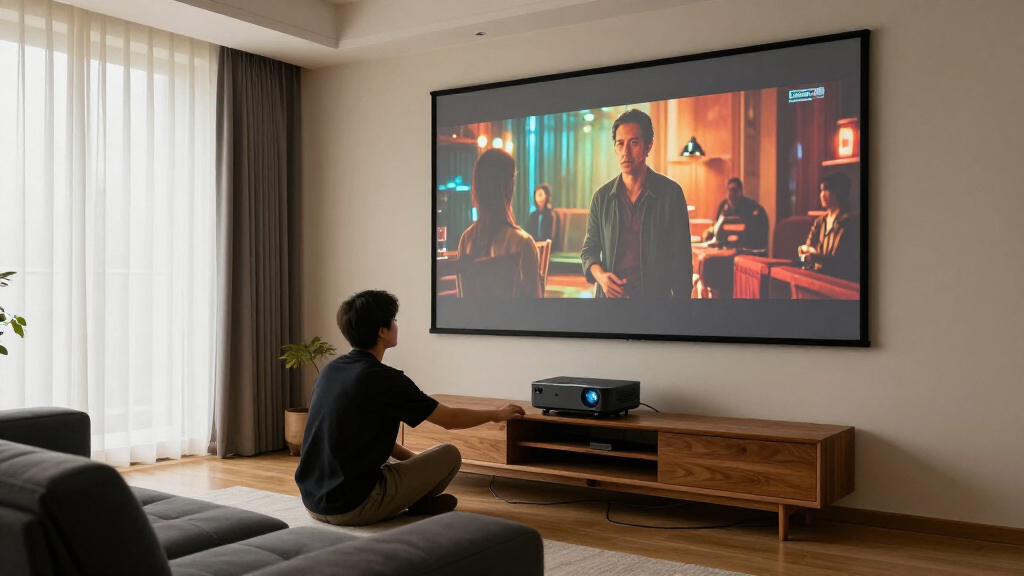
I compared these projectors by how well their stated features serve a home theater setup: image technology and resolution claims, brightness information, HDR support, streaming options, audio connections, and placement aids. I gave more weight to a clearly described imaging system and home-use features than to broad claims such as “4K projector” when the listing specifies native 1080p with 4K decoding. I also considered whether a projector appears suited to a dark dedicated room, a brighter multipurpose space, outdoor viewing, or portable use.
The order reflects those differences. The Epson Home Cinema 3800 leads for its 3LCD and 4K PRO-UHD home theater focus; the Epson 2350 follows as a more streaming-oriented alternative, and the remaining picks earn their places through distinct strengths such as stated brightness, smart TV platforms, audio, or flexible setup. Several listings provide limited detail about native resolution, optics, or brightness measurement, so I treat those claims cautiously and avoid presenting unlike specifications as direct performance equivalents.
Factors to Consider When Choosing 4K Home Theater Projectors
I’d choose a projector by working backward from the room and viewing habits, then checking whether the model’s 4K label, brightness claims, and setup features match those needs.
Check Whether 4K Is Native or Decoded
Product names often use “4K” for very different capabilities. A native 4K projector places 4K pixels on screen, while a 1080p model with 4K decoding can accept a 4K source and display it at lower native resolution. That distinction matters most on a large screen or when you sit close enough to see fine detail. Look for an explicit native resolution in the specifications rather than relying on a title or a “4K supported” badge. Also check whether the projector supports the HDR formats and inputs your sources use. If the listing leaves native resolution unclear, treat that as missing information rather than assuming the higher figure.
Match Brightness to the Room and Screen
A projector that looks strong in a dark room can seem washed out with daylight or lamps on. Screen size changes the equation too: spreading the same light over a larger image reduces the perceived brightness. ANSI lumen claims can help compare models when they are measured consistently, but figures across listings may use different methods. For a dedicated dark room, contrast and black levels may matter more than chasing a high brightness number. For a multipurpose room or outdoor use, ambient light and practical viewing times should guide the decision. A proper screen and the ability to control light can improve the result more than a small difference in a headline spec.
Measure Throw Distance Before You Buy
Throw distance determines how large an image a projector can create from a given spot, so measure from the intended shelf or mount to the screen before choosing. Check the projector’s throw ratio and zoom range, then compare them with your room dimensions and desired image size. Keystone correction can square an image when placement is imperfect, but heavy correction may reduce usable image area or detail. Autofocus saves setup time, particularly if you move a projector between rooms, yet it cannot compensate for a placement that falls outside the lens range. Ceiling mounts, vents, cables, and people walking through the beam can also affect where the unit can go. Planning placement first avoids buying a capable projector that cannot create the image you want.
Decide How Much Streaming and Sound You Need Built In
Built-in Google TV, Roku, or another smart platform can simplify casual viewing by reducing the need for a separate streaming device. App availability, software support, and access to the services you use matter more than the platform name alone. Projector speakers may be convenient for setup, but they generally cannot reproduce the scale or separation of a dedicated sound system. Check for audio outputs or HDMI eARC if you plan to connect a soundbar or receiver. A projector with modest built-in audio can still suit a theater room if its connections fit your equipment. For outdoor viewing, consider how you will power and position both the projector and speakers.
Spend on the Weakest Part of Your Setup
Paying more makes sense when the extra capability solves a real limitation, such as a brighter image for a room you cannot darken or more detail for a large screen. It makes less sense to pay for smart features you will replace with a streaming box or for portability when the projector will stay mounted. A screen, light control, and sound system can matter as much as the projector itself, so reserve room in the setup plan for those pieces. Check warranty terms, filter or lamp maintenance, and replacement part availability before deciding which model represents better long-term value. Buyers who watch mostly in a dark room may prefer image performance over convenience features. Those who move the projector often may value autofocus and a rotating stand more than a fixed installation’s extra image controls.
Frequently Asked Questions
Does a projector that supports 4K show a native 4K image?
No. “4K support” or “4K decoding” can mean the projector accepts a 4K input and converts it for a lower native-resolution display. Several models in this roundup are described as native 1080p with 4K support, including the Wimius P62 Pro and XuanPad Mini. Check the native resolution specification if image detail is a priority. If a listing does not state it clearly, seek clarification before treating the projector as native 4K.
Can I use a 4K home theater projector in a room with daylight?
It can work, but daylight reduces contrast and makes a projected image look less vivid. The 4500 ANSI listing and Happrun 3000 ANSI model advertise higher brightness figures than the outdoor VIDAA projector’s 920 ANSI claim, but those numbers alone do not predict performance in your room. A smaller image, darker curtains, or a screen suited to ambient light can help. For movie watching with lights on, weigh room control and screen choice alongside the projector’s brightness claim.
Should I choose a smart projector or connect a streaming device?
A smart projector is convenient if its platform includes the apps you watch and you want fewer devices and cables. Models in this roundup list Google TV, Roku, VIDAA, or smart streaming features, but platform names do not guarantee identical app support or update policies. A separate streaming device is easy to replace and may offer a familiar interface, though it adds a connection and another component to manage. Check both app availability and audio routing before deciding. If your projector will be part of a receiver-based setup, HDMI and eARC compatibility may matter more than built-in apps.
Is a projector’s built-in speaker enough for movie nights?
Built-in speakers can handle casual viewing and simplify a portable setup, but they may lack the bass and room-filling sound that make a theater feel immersive. This group includes models advertising a Hi-Fi speaker, 40W Dolby Audio, or HDMI eARC, but wattage and format labels do not tell the whole story about sound quality. For regular film viewing, check whether the projector can connect to your soundbar or receiver. HDMI eARC can carry audio to compatible equipment, while other audio outputs may fit simpler systems. If you plan to watch outdoors, choose a speaker arrangement that can be positioned near the audience.
What should I measure before choosing a projector for a small room?
Measure the distance available from the lens position to the screen and decide the image size you can accommodate. Then check the projector’s throw ratio and zoom range to see whether it can make that image from your available distance. Also account for the projector’s depth, ventilation clearance, power cable, and any mount or shelf. Autofocus and keystone correction can ease setup, but they do not extend the lens’s physical range. If the listing lacks throw details, find the manufacturer’s specifications before choosing a model for a tight room.
Conclusion
For a traditional dark-room setup, I’d choose the Epson Home Cinema 3800 as the best overall because it is the most clearly positioned around home theater imaging, with a 3LCD system and 4K PRO-UHD. The Epson Home Cinema 2350 is a strong alternative for buyers who want smart streaming alongside 4K PRO-UHD features, while the Happrun 3000 ANSI Google TV Projector is the value-minded pick for shoppers drawn to its stated brightness and built-in Google TV, subject to confirming its native resolution and room fit. Beginners who want simpler setup can look at autofocus models such as the Happrun 3000 ANSI or XuanPad Mini, while recognizing the XuanPad is listed as native 1080p with 4K support. For outdoor or flexible placement, compare the VIDAA, Wimius, and rotating-stand options by their stated brightness, native resolution, audio, and connectivity. Pick the one whose imaging claims, placement range, and sound connections suit your room—not the one with the biggest “4K” label.
Fall Picks
fall essentials
As an affiliate, we earn on qualifying purchases.