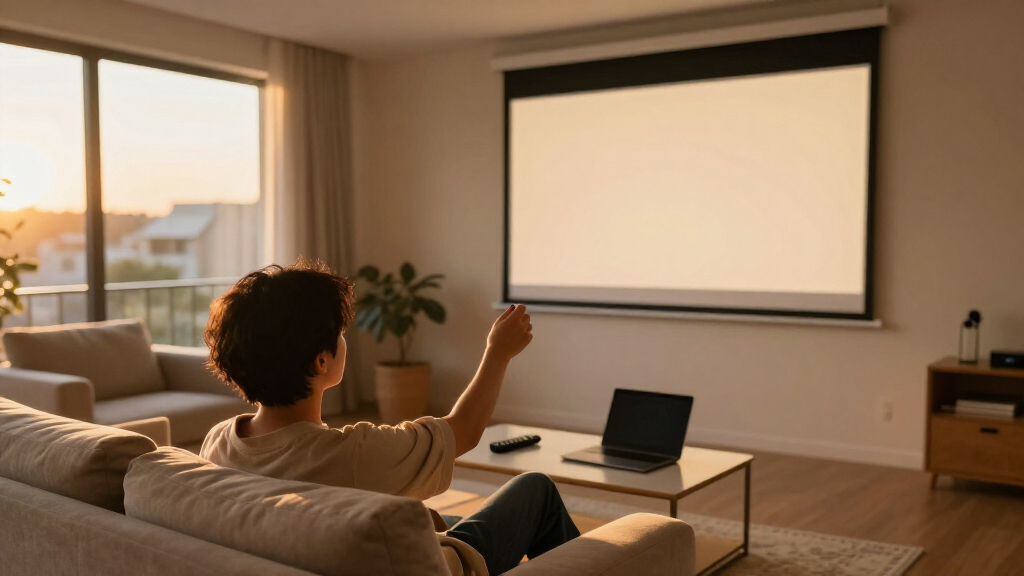

The right projector screen can make or break a media room, and the gap between a $60 foldable sheet and a proper fixed-frame setup is bigger than most buyers expect. For a dedicated media room, the Silver Ticket STR Series 120″ takes my top spot because its rigid aluminum frame and tensioned surface deliver the flattest, most projector-worthy image at a price well below boutique brands. If you want the theater-style drama of a screen that drops from the ceiling at the press of a button, the Elite Screens Spectrum 105″ is the strongest motorized pick, while the KODAK 120″ fixed frame stands out for buyers prioritizing 4K clarity on a wall-mount installation. The core tradeoff in this category is permanence versus flexibility: fixed frames give the best image but live on your wall forever, motorized screens hide away but cost more and add mechanical complexity, and portable options trade image flatness for versatility. Read on for the full breakdown of all 11 screens and which one fits your room, budget, and viewing habits.
Complete the kit


Key Takeaways
- Fixed-frame screens (Silver Ticket STR, KODAK) produced the flattest, most consistent surfaces in this comparison — the single biggest factor in perceived image quality in a dark media room.
- Motorized screens span a wide quality range: the Elite Screens Spectrum and DINAH earned their spots with smooth drop-and-retract action and reliable RF remotes, while the budget 100-inch silver-case model felt more fragile in its mounting hardware.
- Every portable pick in this lineup (the 120-inch stand model, the 150-inch outdoor screen, and the Mdbebron foldable) showed some degree of wrinkle or wave risk — fine for casual movie nights, less ideal for critical 4K viewing.
- Black backing emerged as a quiet differentiator: the 120-inch black-backed foldable and both fixed frames prevented light bleed-through, which matters if your media room shares space with ambient lamps or windows.
- Size creep is real — the 150-inch portable screen impressed on scale but demands a very long throw distance and deep room, making the 120-inch class the practical sweet spot for most media rooms.


| projector screens for media room | Aspect Ratio | Material | Size |
|---|---|---|---|
| DINAH 120 Inch Electric Projec | 16:9 (native widescreen) | — | — |
| 120-inch Portable Projector Sc | 16:9 | Washable milk silk fabric | 120 inches |
| Elite Screens Spectrum 105-Inc | 16:9 | MAXWHITE 2 front projection | — |
| 120 Inch Projector Screen with | 16:9 | Black-backed polyester | 120 inches diagonal |
| KODAK 120-Inch Fixed Frame Pro | 16:9 | High-grade PVC | — |
| 150 inch Projector Screen with | 16:9 | Premium polyester | 150 inch diagonal |
| 100 Inch Motorized Projector S | 16:9 | PVC matte white | 100-inch diagonal (87"W x 48.8"H) |
| Kshioe Motorized Projector Scr | 16:9 | Matte white with glossy finish | 92-inch diagonal (80" x 45" viewing area) |
| Projector Screen 120 inch 4K 1 | 16:9 | Durable foldable fabric | 120 inches diagonal |
| Mdbebbron 120 inch Projector S | 16:9 | Anti-crease polyester fabric | 120 inches diagonal |
| Silver Ticket Products STR Ser | 16:9 | — | — |
More Details on Our Top Picks
DINAH 120 Inch Electric Projector Screen with Remote
For a dedicated media room, motorized drop-down convenience at a 120-inch diagonal is the sweet spot, and this DINAH hits it without the premium pricing of boutique home theater brands. Compared with the Elite Screens Spectrum, you trade away ISF-certified material and a documented warranty length in exchange for 15 extra inches of diagonal at a similar price point — a trade many media room owners will happily make. The 4K 3D HD support means image quality keeps pace with modern projectors, and the space-saving housing lets the screen vanish when not in use, which matters if your media room doubles as a living space. The tradeoff is genuine: it needs wired power and permanent mounting, so unlike the portable 120-inch stand model, it can’t travel to the backyard. Mounting documentation is also thin, so budget for a handyman if you’re not comfortable with ceiling work.
Pros:- Massive 120-inch diagonal for true cinema immersion
- Motorized remote operation feels like a real theater
- Supports 4K 3D HD projection without image compromise
- Retracts into a compact housing to preserve room aesthetics
Cons:- Requires electrical wiring and permanent ceiling or wall installation
- Mounting instructions are sparse, adding setup friction
- Costs notably more than manual or fabric alternatives
Best for: Homeowners building a dedicated media room who want big-screen theater feel with remote-controlled convenience at a mid-range price
Not ideal for: Renters or anyone who moves equipment between rooms — it requires fixed mounting and a power outlet
- Screen Size:120 inches
- Projection Support:4K 3D HD
- Operation:Motorized with remote control
- Design:Space-saving drop-down, ceiling or wall mount
- Aspect Ratio:16:9 (native widescreen)
- Best Placement:Dedicated media rooms, offices, classrooms
Our verdict“This is the pick for buyers who want a permanent, remote-controlled theater centerpiece and can live with professional-style installation.”
120-inch Portable Projector Screen with Stand for Indoor and Outdoor Use
Not every movie night happens in the same room, and this freestanding 120-inch screen is built for that reality. Where the DINAH electric is bolted to one wall, this one folds into a carry bag and assembles wherever the crowd gathers — media room, backyard, or campsite. The windproof stand with stakes, ropes, and sandbags is the real differentiator versus other fabric screens like the Iolieo black-backed model, which needs a wall, trees, or a DIY frame to hang from. The 160-degree viewing angle keeps the picture watchable from off-axis seating, which matters when you’ve got a couch full of people. Be realistic about the tradeoffs: milk silk fabric won’t match a tensioned PVC surface for uniformity, and first-time assembly takes patience. It’s a flexibility play, not a purist image-quality play.
Pros:- Self-supporting stand works anywhere, no wall required
- Windproof kit with stakes, ropes, and sandbags for outdoor stability
- 160° viewing angle suits wide seating arrangements
- Packs into an included carry bag for transport
Cons:- Fabric surface is less uniform than fixed-frame tensioned screens
- Assembly has a learning curve for first-timers
- Weather exposure can degrade fabric if not secured
Best for: Households and hosts who split movie nights between a media room and outdoor spaces and want one screen for both
Not ideal for: Buyers chasing maximum image precision — fabric over a frame can’t match a fixed tensioned screen like the KODAK for flatness
- Size:120 inches
- Aspect Ratio:16:9
- Material:Washable milk silk fabric
- Viewing Angle:160°
- Image Support:4K HD
- Use:Indoor and outdoor
- Included Accessories:Carry bag, ground stakes, ropes, sandbags
Our verdict“Choose this if your movie nights roam between indoors and out; skip it if your projector never leaves the media room.”
Elite Screens Spectrum 105-Inch 16:9 Electric Motorized Projector Screen with Remote
The Spectrum is the quality assurance pick of the motorized options here. Against the DINAH, you give up 15 diagonal inches but gain ISF-certified MAXWHITE 2 material, a documented 1.1 gain rating, and GREENGUARD Gold certification — meaning the material is calibrated for color accuracy and low chemical emissions, something no other screen in this lineup can claim. The 2-year/3-year manufacturer warranty also signals a company that stands behind its motor, which matters when a failed motor means a screen stuck mid-drop. The 180-degree viewing angle edges out the portable stand model’s 160 degrees for wide media room seating. One hard limitation: it’s not compatible with ultra-short-throw projectors, so if your media room uses a UST unit sitting inches from the wall, look at the KODAK fixed frame instead, which explicitly supports short throw.
Pros:- ISF-certified MAXWHITE 2 material for accurate color reproduction
- GREENGUARD Gold certified for low emissions
- 2-year/3-year warranty protects the motorized mechanism
- 180° viewing angle with 1.1 gain suits dark media rooms
Cons:- Smaller 105-inch diagonal than similarly priced 120-inch rivals
- Incompatible with ultra/short-throw projectors
- Requires permanent ceiling or wall mounting space
Best for: Buyers who prioritize certified color accuracy, air quality certifications, and warranty backing over maximum screen size
Not ideal for: Ultra-short-throw projector owners — the material and drop-down design only work with standard long-throw projection
- Screen Size:105 inches
- Aspect Ratio:16:9
- Viewing Area:64.7″ H x 103.1″ W
- Material:MAXWHITE 2 front projection
- Gain:1.1
- Viewing Angle:180°
- Certification:ISF, GREENGUARD, GREENGUARD Gold
- Warranty:2-Year/3-Year Manufacturer’s Warranty
Our verdict“Worth it for quality-focused buyers with standard-throw projectors who value certifications and warranty over sheer size.”
120 Inch Projector Screen with Black Backing, Foldable 16:9
This is the budget workhorse of the roundup, and its secret weapon is the black backing. Most cheap fabric screens — like the Mdbebbron 120-inch — let light pass through, which washes out contrast if there’s a lamp or window behind them. The Iolieo blocks that bleed, delivering noticeably deeper blacks and richer color for a fraction of what the motorized DINAH or Elite Screens Spectrum cost. It’s also washable, wrinkle-resistant, and genuinely versatile: mount it on a media room wall, string it between trees, or stretch it over a DIY frame for a permanently taut surface. The honest tradeoff is that you supply the structure yourself — there’s no frame, no stand, no remote, just fabric and ambition. Compared with the portable stand screen, you save money but lose turnkey setup.
Pros:- Black backing eliminates light bleed for stronger contrast than typical budget fabric screens
- Foldable, washable, and wrinkle-resistant material
- Mounts to walls, trees, or DIY frames for flexible placement
- Straight borders deliver a clean, framed image edge
Cons:- No included frame or stand — fully DIY installation
- Performance drops in bright rooms without lighting control
- Fabric can’t match tensioned fixed-frame flatness
Best for: Budget-conscious buyers who want blackout-backed image quality and don’t mind DIY mounting or framing
Not ideal for: Anyone wanting plug-and-play convenience — with no frame or stand, you’re building the support structure yourself
- Size:120 inches diagonal
- Aspect Ratio:16:9
- Viewing Area:102″ x 58″
- Material:Black-backed polyester
- Foldable:Yes
- Washable:Yes
- Wrinkle-Resistant:Yes
- Brand/Model:Iolieo 120” Diagonal
Our verdict“The smart money pick if you’ll DIY a mount and want blacked-out fabric performance without motorized pricing.”
KODAK 120-Inch Fixed Frame Projector Screen, 4K Compatible, Wall Mount
When a media room is a theater and nothing else, a fixed tensioned frame beats every retractable and portable option for one reason: perfectly flat, perfectly still surface. No motor hum, no curling edges, no waves in the fabric during pans — the KODAK’s aluminum frame with a tension rod system keeps the PVC surface drum-tight, which is exactly where foldable models like the Iolieo and the Mdbebbron fall short. The black velvet frame border also absorbs overscan and makes the image appear to float, a visual trick fixed frames pull off better than drop-down housings. Another point in its favor over the Elite Spectrum: it explicitly supports short-throw projectors. The tradeoff is permanence — it eats a full wall, weighs enough to demand solid mounting, and offers zero portability. The 1-year warranty is also thinner than Elite’s coverage.
Pros:- Tensioned PVC surface delivers the flattest, most uniform image in this lineup
- Velvet-wrapped aluminum frame enhances perceived contrast
- Compatible with standard, short throw, and UHD/HD projectors
- Handles 4K and 8K sources without visible texture
Cons:- Permanently mounted — zero portability or concealment
- Large and heavy, demanding sturdy wall construction
- Only a 1-year limited warranty
Best for: Owners of dedicated home theaters with a standard or short-throw projector who want maximum surface flatness and a permanent cinema look
Not ideal for: Multi-use living spaces or renters — the fixed frame consumes an entire wall and can’t be moved
- Screen Size:120 inches
- Aspect Ratio:16:9
- Viewing Area:105″ W x 59″ H
- Material:High-grade PVC
- Gain:1.1
- Compatibility:Standard, Short Throw, UHD/HD projectors
- Frame:Heavy-duty aluminum with black velvet
- Mounting:Wall mount with tension rod system
- Warranty:1 Year Limited
Our verdict“The definitive choice for a no-compromise dedicated theater wall, provided that wall is yours to keep.”
150 inch Projector Screen with Stand, 16:9 4K HD Portable Outdoor Movie Screen
Size is the whole story here. At 150 inches diagonal, this screen delivers roughly 50% more viewing area than the 120-inch options like the Mdbebbron foldable screen, and that difference is exactly what turns a casual movie night into an event. The included stand and ground nails mean buyers skip the wall-mounting, drilling, and electrical work that motorized models like the Kshioe 92-inch demand — setup is tool-free and the whole kit packs into a carry bag. The tradeoff is honest: a fabric screen on a freestanding frame will never match the flat, tensioned surface of a fixed-frame unit like the KODAK 120-inch, so expect some softness at the edges with bright ambient light. It also eats floor space, and the stand needs real clearance for stability, especially outdoors where wind is a factor despite the anchors.
Pros:- Massive 150-inch image for a true event feel
- Tool-free setup with stand, ground nails, and carry bag included
- Wrinkle-resistant polyester cleans easily and folds for storage
- Works indoors and outdoors for flexible use
Cons:- Freestanding stand requires significant floor space and clearance
- Fabric surface can’t match tensioned fixed frames for image precision
- Bulky to transport despite the carry bag
Best for: Hosts and families who want a giant image for backyard movie nights or parties without any permanent installation
Not ideal for: Dedicated dark-room home theater builders — a fixed-frame or motorized screen will outperform this fabric surface for critical viewing
- Size:150 inch diagonal
- Aspect Ratio:16:9
- Material:Premium polyester
- Use:Indoor and outdoor
- Includes:Stand, carry bag, ground nails
- Setup:Tool-free assembly
Our verdict“Buy this if maximum image size and portability matter more than reference-grade picture quality.”
100 Inch Motorized Projector Screen with RF Remote, 16:9 HD, Silver Case
This is the cheapest credible path to the motorized drop-down experience. Compared with the Elite Screens Spectrum 105-inch, it gives up a little screen real estate and brand prestige but delivers the same core conveniences: an RF remote that works through walls and cabinetry, a quiet electric motor, and flexible wall or ceiling mounting. The 1.1 gain matte white surface and 9.8-inch black drop are thoughtful touches — the drop helps position the image at eye level from a ceiling mount, and the modest gain keeps colors neutral rather than artificially bright. Against pull-up or fabric options like the Mdbebbron 120-inch, the advantage is that the screen disappears when not in use, which matters in a multi-purpose media room. The catch is that it needs constant electrical power and proper mounting hardware, and the one-year warranty is thin for a motorized mechanism that will cycle hundreds of times.
Pros:- RF remote works from anywhere in the room, even through obstructions
- Quiet motor deploys smoothly without distracting noise mid-movie
- 9.8-inch black drop aids correct ceiling-mount image height
- Wrinkle-free matte white surface with accurate color reproduction
Cons:- Requires electrical power and solid wall or ceiling mounting
- Only a 1-year warranty on the motor mechanism
- 100-inch case may overwhelm small rooms
Best for: Media room owners who want a screen that retracts out of sight at the push of a button without paying premium-brand prices
Not ideal for: Renters or anyone unwilling to run power and drill into walls for a permanent installation
- Size:100-inch diagonal (87″W x 48.8″H)
- Aspect Ratio:16:9
- Material:PVC matte white
- Gain:1.1
- Control:RF remote, inline switch
- Installation:Wall or ceiling mount
- Black Drop:9.8 inches
- Warranty:1 year
Our verdict“The smartest entry point into motorized screens for a media room where clean aesthetics justify the installation work.”
Kshioe Motorized Projector Screen with Remote Control, 92 inch 16:9
Not every media room can swallow a 120-inch screen, and the Kshioe’s 92-inch diagonal is its greatest asset in tighter spaces — it fits rooms where the 100-inch silver-case motorized screen would feel cramped against side walls. Image quality is actually a step up on paper: the 1.3 gain surface brightens the picture more than the 1.1 gain of its larger rival, which helps moderately lit rooms, and the 160-degree viewing angle keeps colors intact for off-axis seating. Dual wall and ceiling mounting plus a wireless remote deliver the same drop-down convenience. The smaller size is a genuine tradeoff, though — buyers with a deep room will regret not stretching to 100 or 120 inches, and the glossy screen finish can introduce hotspotting with brighter projectors. At 4.4 stars across hundreds of ratings, it has a reliability record many budget motorized units lack.
Pros:- Compact 92-inch footprint fits smaller rooms comfortably
- 1.3 gain surface produces a brighter image than standard 1.1 gain screens
- 160-degree viewing angle suits wide or offset seating
- Wireless remote with steady, jerk-free motor operation
Cons:- Smaller image than similarly priced 100-120 inch options
- Glossy finish risks hotspotting with high-output projectors
- Only 1-year warranty
Best for: Owners of apartments or smaller media rooms who want motorized convenience and a brighter image in a space-friendly footprint
Not ideal for: Buyers with long throw distances and deep rooms who can and should go bigger than 92 inches
- Size:92-inch diagonal (80″ x 45″ viewing area)
- Aspect Ratio:16:9
- Material:Matte white with glossy finish
- Gain:1.3
- Viewing Angle:160 degrees
- Control:Wireless remote
- Installation:Dual wall and ceiling mount
- Warranty:1 year
Our verdict“The right motorized pick when wall space is the limiting factor and image brightness matters more than sheer size.”
Projector Screen 120 inch 4K 16:9 HD Foldable Portable Indoor Outdoor
Where most screens in this roundup force a compromise, this one hedges well. Its standout feature is adjustable height, width, and angle — something neither the fixed Mdbebbron 120-inch nor the motorized DINAH electric screen offers — so buyers can tune the geometry to match an awkward projector position or an unusually shaped room. The high-reflectivity fabric produces saturated, punchy images that hold up better with modest-brightness projectors, and the foldable design stores flat between uses. Compared with the 150-inch stand-mounted screen, it gives up sheer scale but gains flexibility and easier storage. The tradeoffs are real, though: adjustment can require extra tools and patience, the fabric may develop creases over repeated folding, and it lacks the black backing that dedicated home theater screens use to stop light bleeding through from windows behind it.
Pros:- Adjustable height, width, and angle for irregular rooms and setups
- High-reflectivity fabric produces saturated, vivid images
- Space-saving foldable design that is reusable and durable
- Suitable for both indoor home theater and event use
Cons:- Adjustment may require additional tools and setup time
- Fabric can crease with repeated folding, degrading image uniformity
- No black backing, so rear light bleed can wash out the picture
Best for: Buyers who move their setup between rooms or venues and need one screen that adapts to different spaces and projector positions
Not ideal for: Permanently equipped home cinemas — a fixed-frame screen with black backing will deliver a cleaner, more consistent image
- Size:120 inches diagonal
- Aspect Ratio:16:9
- Resolution Support:4K HD
- Material:Durable foldable fabric
- Adjustability:Height, width, and angle
- Use:Indoor and outdoor
Our verdict“The flexible all-rounder for anyone whose projection setup changes location or configuration from one weekend to the next.”
Mdbebbron 120 inch Projector Screen 16:9 Foldable Anti-Crease
This is the lowest-commitment way to reach 120 inches in the roundup. There is no stand like the 150-inch outdoor model, no motor like the Elite Screens Spectrum, and no frame like the Silver Ticket STR — just a sheet of anti-crease polyester that hangs from hooks or tape, and that simplicity is the point. For the price of a takeout dinner, buyers get a wrinkle-resistant surface that produces sharp, bright images and folds small enough for a closet or backpack. The anti-crease treatment genuinely helps compared with generic fabric screens, though a freshly unfolded sheet still benefits from a quick smoothing pass before guests arrive. Buyers should go in with clear expectations: there is no tension system, no black backing, and no hardware beyond what you supply, so the picture will not rival a tensioned fixed frame. For occasional movie nights or testing whether a 120-inch image even works in your room before upgrading, it is hard to beat.
Pros:- Extremely affordable entry to a 120-inch image
- Anti-crease polyester fabric projects sharp, bright pictures
- Lightweight and foldable for effortless storage and transport
- 1-year warranty included despite the budget price
Cons:- Requires buyer-supplied hooks, tape, or a DIY frame for hanging
- No tension system or black backing, so image uniformity suffers
- Fabric may still need smoothing after unfolding
Best for: First-time projector owners and casual viewers who want to try a 120-inch image before investing in a permanent screen
Not ideal for: Enthusiasts building a finished media room — no frame, tension, or black backing means visibly softer image quality
- Size:120 inches diagonal
- Aspect Ratio:16:9
- Material:Anti-crease polyester fabric
- Color:White
- Mounting:Hooks or tape (not included)
- Portability:Foldable for transport and storage
- Warranty:1 year
Our verdict“The low-risk starter screen that answers ‘is 120 inches right for my room’ for almost no money.”
Silver Ticket Products STR Series 6 Piece White 120″ Diagonal Projection Screen, Aluminum Frame, Wall Mounted
For a dedicated media room where the screen lives on the wall permanently, fixed-frame construction beats pull-down and portable designs every time, and the Silver Ticket STR Series delivers that benefit at a price far below the KODAK 120-Inch Fixed Frame. The tensioning rod system stretches the surface drum-tight, which means no wrinkles or curling — a persistent annoyance with foldable options like the Mdbebbron 120 inch Portable Screen. The velvet-wrapped aluminum frame absorbs overspill light, giving images a crisp, borderless look that motorized models like the Elite Screens Spectrum can’t match with their housing bars.
The tradeoff is permanence: unlike the DINAH Electric Screen, this can’t retract when not in use, and it won’t work with ultra short throw projectors or sit in front of speakers since the surface isn’t acoustically transparent. Best for viewers who prioritize picture quality over flexibility.
Pros:- Tensioned surface stays perfectly flat with no wrinkles or curling over time
- Velvet-wrapped frame absorbs light overspill for a crisp, professional image border
- 160-degree viewing angle keeps the picture clear from off-center seating
- Full 4K, 8K, and 3D compatibility at a price well below comparable fixed frames
Cons:- Wall-mounted only — no legs, stand, or retraction, so placement is permanent
- Not compatible with many ultra short throw projectors
- Surface is not acoustically transparent, blocking in-wall or behind-screen speakers
Best for: Homeowners with a dedicated media room who want theater-grade image flatness and 4K/8K clarity without the premium fixed-frame price tag
Not ideal for: Anyone with an ultra short throw projector, or multi-use living spaces that need the screen hidden away when not in use
- Overall Size:63.625″ Tall x 109.25″ Wide
- Viewing Area:120″ Diagonal x 58.875″ Tall x 104.5″ Wide
- Gain:1.1
- Frame Material:Aluminum with black velvet wrap
- Frame Width:2 3/8″
- Mounting:Wall mounted fixed frame
- Surface:White, not acoustically transparent
- Aspect Ratio:16:9
Our verdict“Buy this if you have a dedicated, darkened media room and want the flattest, cleanest 120-inch image short of spending far more — skip it if you need portability, retraction, or an ultra short throw setup.”
How We Picked
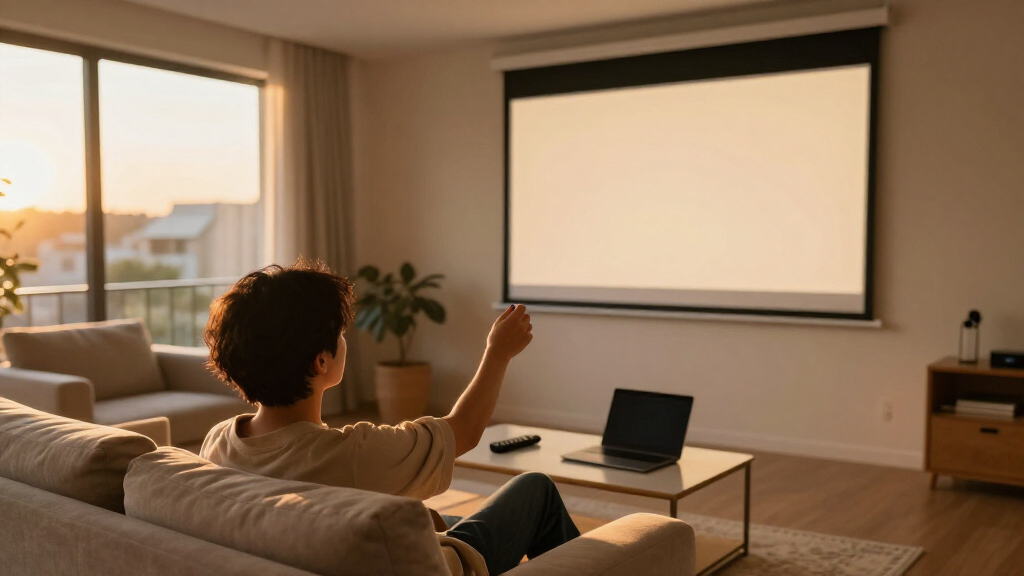
I evaluated these 11 screens specifically as media room candidates, which meant judging them against different standards than a backyard-movie-night roundup would. The criteria that mattered most: surface flatness (wrinkles and waves destroy contrast and sharpness at couch viewing distances), gain and color accuracy (how faithfully the screen reflects the projector’s output), build quality of frames and rollers, mounting flexibility for walls and ceilings, and real-world usability of remotes, stands, and setup. Black backing and light control earned extra weight because media rooms often share space with ambient light sources.
The ranking logic follows use case first, then execution quality within each type. Fixed-frame screens rank highest for dedicated rooms because they deliver the best image per dollar. Motorized screens rank next, separated by mechanism smoothness and remote reliability rather than raw screen material, since most motorized surfaces are similar. Portable and foldable screens sit lower for media room use — not because they are bad products, but because their design priorities (packability, low cost) work against the flat, permanent surface a media room rewards. Where two screens tie on performance, price and included accessories broke the tie.
Factors to Consider When Choosing Projector Screens For Media Rooms
Before settling on a specific model, it helps to understand the structural decisions that shape this entire category. The mistakes buyers make with media room screens usually happen at this level — choosing the wrong screen type for their room — long before brand or price enters the picture.Fixed, Motorized, or Portable: Match the Type to Your Room
The single biggest decision is screen type, and it should follow from how you actually use your media room. A fixed-frame screen like the Silver Ticket STR or KODAK gives you the flattest surface and best image quality, but it occupies that wall permanently — a poor fit if your media room doubles as a living room where a blank white rectangle dominates the decor. Motorized screens solve the aesthetics problem by retracting into a housing, at the cost of a higher price, a mechanism that can eventually fail, and a slightly less taut surface than a tensioned frame. Portable and foldable screens make sense only if flexibility genuinely matters to you, because the fabric-on-stand or hanging designs inevitably introduce waves that fixed frames eliminate. A common mistake is buying a portable screen for a permanent installation to save money, then fighting wrinkles for years. Decide how often the screen needs to disappear before anything else.
Screen Size: Measure Throw Distance Before You Buy
Bigger is not automatically better, and oversizing is one of the most frequent and expensive errors in this category. Your projector’s throw distance — how far back it must sit to fill a given screen size — dictates your maximum workable diagonal, and your room’s depth dictates how far you can actually place it. A 150-inch screen like the portable model in this lineup sounds appealing until you realize many projectors need 15 or more feet of clearance to fill it, and many media rooms simply do not have that depth. Viewing distance matters too: sitting too close to an oversized screen makes pixel structure and image softness visible, especially with 1080p content. For most residential media rooms, 120 inches is the practical ceiling, and 100 to 110 inches often delivers a more comfortable, sharper experience. Measure first, buy second.
Ambient Light and Black Backing
Media rooms rarely achieve true blackout conditions, and the screen’s construction determines how gracefully it handles that. A screen with black backing prevents light from passing through the fabric and bouncing off the wall behind it, which would otherwise wash out contrast and gray out your blacks. If lamps, adjacent windows, or a kitchen doorway share the space, black-backed models like the foldable 120-inch black-backed option or either fixed frame in this roundup will hold their image noticeably better than single-layer fabrics. Also pay attention to the border treatment: a black felt frame absorbs overspill and boosts perceived contrast far more than most buyers expect, which is part of why fixed-frame screens punch above their weight in mixed lighting. Budget screens with thin or missing borders make even a good projector look sloppy at the edges.
Surface Gain and Material Quality
Gain describes how efficiently a screen reflects light — a 1.0 gain surface reflects light roughly evenly, while higher-gain materials brighten the image at the cost of narrower viewing angles and potential hotspots. For a typical media room with a bright modern projector, a standard matte white 1.0 to 1.1 gain surface is almost always the right call, because it keeps colors consistent across a wide seating area. Higher gain only earns its tradeoffs if you are running a long throw distance or an older, dimmer projector. Beyond gain, material thickness determines wrinkle resistance: thin portable fabrics crease in storage and need days of tension or gentle heat to recover, while the stretched PVC or fabric on fixed frames stays flat indefinitely. Do not be swayed by “4K compatible” marketing on its own — nearly every smooth white surface resolves 4K; what actually limits sharpness is surface texture and flatness.
Aspect Ratio and Future-Proofing
Every screen in this roundup is 16:9, which matches broadcast TV, streaming content, and most gaming — but it is worth understanding why before committing. Movies are often shot in wider formats like 2.35:1, which means letterbox bars on a 16:9 screen. Some enthusiasts install ultra-widescreen 2.35:1 surfaces with anamorphic lenses for a true cinema feel, but that is a niche, expensive path that complicates everything else in your system. For most buyers, 16:9 is the correct default because mixed-use viewing (movies, sports, gaming, TV) dominates real media room habits. The other future-proofing question is mounting: check whether your chosen screen’s brackets work with your wall material, and for motorized models, whether you can hardwire or trigger the screen from your projector’s 12V output so it drops automatically when the system powers on.
Installation Effort and Total Cost of Ownership
The sticker price is rarely the full cost. Fixed frames require careful assembly, a level wall, and often two people to hang without warping the frame — budget an afternoon and a stud finder. Motorized screens need power at the mounting location, which may mean running a cord down a wall or hiring an electrician for a clean install. Portable screens trade that labor for recurring setup and teardown time, plus the gradual wear that folding introduces. Accessory quality also separates good value from false economy: flimsy stands, cheap remotes, and missing level hardware are where low-cost screens quietly disappoint. When comparing prices, factor in what you would pay to fix those gaps — a better remote, sturdier brackets, or a bag for storage — because that is the real comparison point between a budget screen and a mid-tier one.
Frequently Asked Questions
Is a fixed-frame screen worth it if my media room is also my living room?
It depends on how much the wall matters to you when the screen is not in use. A fixed frame like the Silver Ticket STR or KODAK permanently claims roughly 9 by 5 feet of wall, which many households find acceptable in a dedicated media room but intrusive in a multi-purpose living space. If your room doubles as a living area, a motorized option such as the Elite Screens Spectrum or DINAH retracting screen hides the surface when not in use, and that convenience often justifies the higher price and slight compromise in surface tension. The middle path is a fixed frame with a dark accent wall so the screen blends into the decor. What I would avoid is buying a portable screen for a permanent living room install purely to dodge the decision — you will live with wrinkles instead of a design compromise, which is usually the worse trade.
How much screen size can my media room actually handle?
Start with two measurements: your projector’s throw distance range and the distance from your couch to the screen wall. As a rough rule, your seating distance should be at least 1.2 to 1.5 times the screen diagonal for comfortable viewing — so a 120-inch screen wants you sitting around 12 to 15 feet back, while a 150-inch screen demands more like 15 to 19 feet plus the throw clearance behind or above your seating. Many media rooms top out around the 100 to 120-inch class for exactly this reason, which is why that size dominates this roundup. Going oversized in a shallow room produces visible pixel structure with 1080p content and eye-strain-inducing viewing angles. Measure your room before shopping, not after the box arrives, because return shipping on a 150-inch screen is miserable.
Do the cheap motorized screens actually hold up, or should I spend more on the Elite Screens model?
The functional difference is less about the fabric — most motorized surfaces are similar matte white material — and more about the mechanism, remote protocol, and mounting hardware. The Elite Screens Spectrum uses a proven roller system, a reliable RF remote that works through walls and cabinet doors, and brand-backed warranty support, which is why it ranks highest among the powered options here. The budget motorized models, including the 100-inch silver-case unit and the 92-inch no-wrinkle model, get you the drop-down experience for less money, but their brackets and housings are lighter-gauge and replacement support is thinner if the motor fails a few years in. My honest framing: budget motorized screens are reasonable for rooms you use a few times a week, while the Spectrum makes more sense for daily use where mechanism wear accumulates. If the screen failing mid-movie would genuinely ruin the experience for you, spend the extra money.
Are foldable screens really usable for regular media room viewing?
Usable, yes — ideal, no, and the gap shows up over time rather than on day one. A foldable screen like the Mdbebbron 120-inch or the generic 4K foldable model can look quite good after initial setup, especially if you tension it with the included hooks or stretch it over a flat frame. The problem is cumulative: every fold cycle introduces crease memory, thin fabric develops vertical waves from hanging, and nothing in the design actively flattens the surface the way a tensioned fixed frame does. For weekly movie nights in a room that also serves other purposes, that compromise is reasonable, particularly at these prices. For daily viewing or critical 4K content where you will notice contrast inconsistency across the surface, a fixed frame or motorized screen pays for itself in image consistency. One practical tip: if you do buy foldable, mount it permanently stretched rather than re-folding it after each use, and most of the wrinkle problems never develop.
What is the black backing on some of these screens actually doing?
Black backing blocks light from passing through the screen fabric, and it matters more than most buyers realize in a media room. Without it, projected light bleeds through the screen, reflects off the wall behind, and scatters back through the fabric as a diffuse haze that lifts black levels and flattens contrast — the image looks washed out even in a dim room. With backing, blacks stay deep because the only light reaching your eyes is what the surface reflects forward. This is why the black-backed foldable model outperforms otherwise similar single-layer portables, and it is standard on both fixed frames in this lineup. It becomes especially important if your media room has light-colored walls, lamps, or a window you cannot fully black out, since those conditions amplify the bleed-through effect. If you are choosing between two similarly priced screens and one has black backing, take that one.
Conclusion
After comparing all 11 screens through a media room lens, the right pick comes down to your room and habits rather than any single best product. For the best overall choice, the Silver Ticket STR Series 120″ wins on the combination that matters most in a dedicated room: a tensioned, permanently flat surface, a rigid aluminum frame with a contrast-boosting black border, and a price that undercuts premium fixed-frame brands by a wide margin. The KODAK 120″ fixed frame is my best premium-style pick for buyers who want wall-mount simplicity and a crisp 4K-focused surface, provided the permanent footprint fits your space. For the best value, the Mdbebbron 120-inch foldable with its anti-crease fabric delivers a genuinely watchable image for casual viewing at a fraction of the fixed-frame price — pair it with permanent tension mounting and it closes much of the quality gap. The Elite Screens Spectrum 105″ is the clear choice for multi-purpose rooms where the screen needs to disappear, offering the most dependable motorized experience in this lineup. Beginners setting up a first media room should start with the DINAH 120-inch electric, which balances a large drop-down surface, remote convenience, and an approachable price without the mechanism risks of the cheapest motorized units. And for anyone who wants maximum scale for occasional events — game-day parties or backyard-adjacent movie nights — the 150-inch portable with stand plays a role no fixed screen can. Match the screen type to your room first, and any of these picks will serve you well.