Streaming Vs Physical Media: Quality Differences Explained
For those debating between streaming and physical media, uncover how quality differences may influence your listening experience and which option truly delivers the best sound.
When comparing streaming to physical media, you’ll find that streaming often involves compression, which reduces audio fidelity for quicker delivery, while physical formats like CDs or vinyl provide uncompressed or less compressed sound for richer quality. Your device quality and internet speed also impact streaming, sometimes causing buffering or lower clarity. Physical media offers consistent, high-quality sound unaffected by connection issues. To discover how these differences truly stack up and which might suit your needs better, keep exploring the details.
Physical media often offers higher audio fidelity due to less compression compared to streaming formats.
Streaming quality varies with internet speed and bandwidth, potentially causing fluctuations in audio clarity.
Uncompressed or minimally compressed formats in physical media provide more consistent and richer sound experiences.
Hardware limitations and device quality impact streaming audio fidelity more than with dedicated physical media players.
Physical formats deliver stable, high-quality audio regardless of external internet or network conditions.
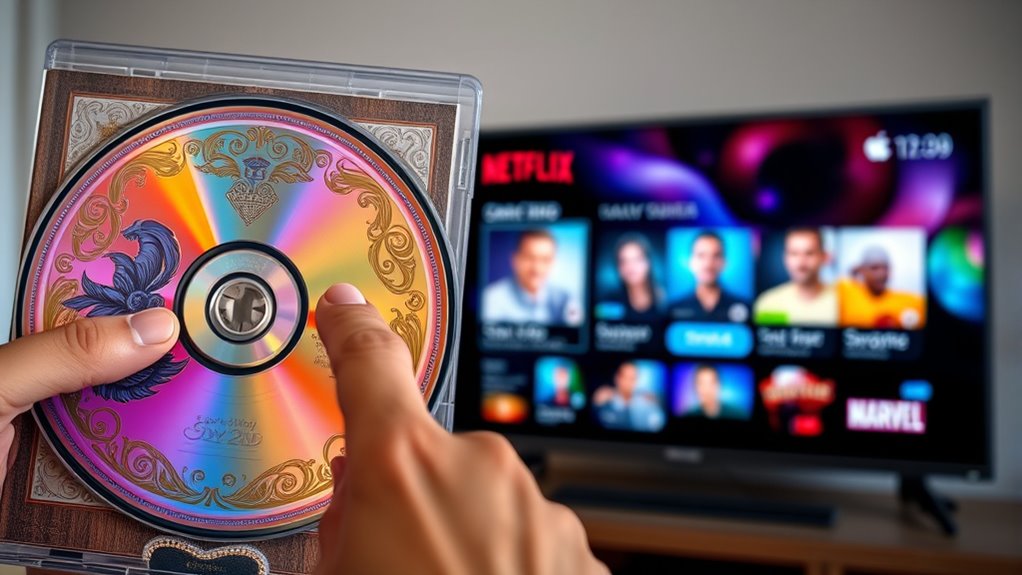
Have you ever wondered whether streaming or physical media is the better way to enjoy your favorite movies and music? When it comes to quality, understanding the differences can make a big impact on your viewing or listening experience. Streaming services rely heavily on audio compression to deliver content efficiently over the internet. This compression reduces file sizes by removing some audio data, which can sometimes lead to a loss in audio fidelity. While modern codecs like AAC and Dolby Digital aim to preserve sound quality, you might notice slight differences compared to high-quality physical formats. Physical media, such as Blu-ray discs or vinyl records, typically offer uncompressed or less compressed audio, providing richer, more detailed sound. If you’re an audiophile or simply crave the best possible audio experience, physical media often holds the advantage in this area.
Another critical factor in quality differences is hardware compatibility. When streaming, your device’s hardware, including your internet connection, plays a crucial role. If your hardware isn’t optimized for high-bitrate streams, you might encounter buffering, lag, or lower audio and video quality. Some older devices or cheaper streaming setups may struggle to decode high-quality streams, which could mean settling for lower resolutions or compressed audio. Conversely, physical media relies on your hardware’s capabilities—your Blu-ray player, stereo system, or turntable determine how well you experience the content. High-end hardware can access superior audio quality for physical formats, especially if you use dedicated audio equipment with high-fidelity speakers or amplifiers. This hardware compatibility guarantees you’re getting the full potential of the format’s sound quality without compromise.
Furthermore, physical media often offers more consistent quality because it isn’t dependent on internet speed or server bandwidth. With physical formats, once you own the media, your experience remains stable, regardless of external factors. Streaming quality, however, can fluctuate based on your internet connection, affecting both video resolution and audio clarity. If you have a fast, stable connection, streaming can deliver impressive quality, but it still might never match the uncompressed richness of physical media. On the other hand, streaming offers convenience and instant access, which can sometimes outweigh the incremental quality benefits of physical formats.
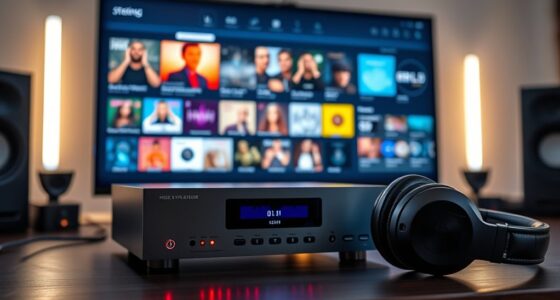
Denon AVR-X1700H 7.2 Channel AV Receiver - 80W/Channel, Advanced 8K HDMI Video w/eARC, Dolby Atmos, DTS:X, Built-in HEOS, Amazon Alexa Voice Control
HIGH-PERFORMANCE 7-CHANNEL AMPLIFIER WITH NEXT-GEN MOVIE IMMERSION - Enjoy Denon sound in movies, games, and music with full...
As an affiliate, we earn on qualifying purchases.
Frequently Asked Questions
Can I Notice Quality Differences on Standard Headphones?
You might notice quality differences on standard headphones, especially if they have high sensitivity and good audio fidelity. While they may not reveal every detail of high-quality streams or physical media, better headphones can enhance clarity, bass, and overall sound richness. If your headphones have lower sensitivity or audio fidelity, the differences become less noticeable. Upgrading your headphones can make streaming or physical media sound markedly better.
Do Different Streaming Services Have Varying Quality Standards?
Yes, different streaming services have varying quality standards. You’ll notice these differences through bitrate consistency, which affects how smoothly your music plays, and content licensing, which determines the available audio quality. Some services prioritize higher bitrates for better sound, while others may compress files more to save data. So, your listening experience depends on the platform’s commitment to quality, making it worth choosing a service that aligns with your audio preferences.
How Does Compression Affect Audio and Video Quality?
Compression impacts your audio and video quality through lossy compression, which reduces file size by discarding some data, often affecting clarity and detail. Higher bitrate optimization preserves more quality by allocating more data per second, resulting in better sound and visuals. When streaming, lower bitrates can cause pixelation or audio artifacts, but skilled bitrate management guarantees a good balance between quality and data use, keeping your viewing smooth and crisp.
Are Physical Media More Future-Proof Than Streaming?
Yes, physical media tends to be more future-proof because it offers better digital preservation and media longevity. When you store your data on discs or tapes, you control the medium and can update or migrate it over time. Streaming relies on digital platforms that may change or become obsolete, risking data loss. So, if you want long-term access, physical media generally provides more stability and durability.
Does Internet Speed Impact Streaming Quality Significantly?
If your internet speed drops, you’ll notice buffering issues that can ruin your viewing experience. Faster internet speeds generally mean smoother streaming, with less lag and higher quality. But if your connection is slow or unstable, you might face constant buffering or reduced quality, making it frustrating to watch. So, yes, internet speed impacts streaming quality markedly, and a reliable connection is essential for seamless viewing.
ViewSonic LS740W 5500 Lumens WXGA Laser Projector with 1.3X Optical Zoom, H/V Keystrone, 360 Degrees Projection for Auditorium, Conference Room, and Education
High Brightness Laser Projector: WXGA (1280x800p) resolution with a 1.2-1.5 throw ratio and 5,500 ANSI lumens for clear,...
As an affiliate, we earn on qualifying purchases.
Conclusion
Think of streaming and physical media like two roads leading to the same destination. Streaming offers convenience and quick access, while physical media provides a tangible quality you can hold onto. Your choice depends on what matters most—ease or quality. Just remember, whether you cruise down the digital highway or take the scenic route through your collection, both paths can deliver a great experience. Ultimately, it’s about finding the route that feels right for you.
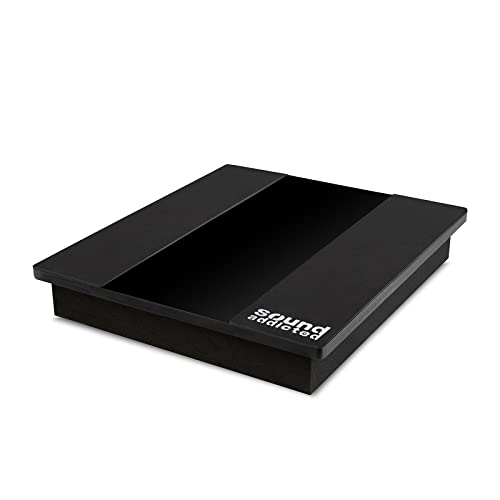
Sound Addicted VibeBoss P10 - Acoustic Isolation Platform Suitable for 8-10 inches Subwoofers (13.7'' x 15.7'' x 2.5'')
Studio Grade Audio Performance Anywhere: a must-have subwoofer isolation riser for any home studio. High-performance acoustic isolation pad...
As an affiliate, we earn on qualifying purchases.
SVS SoundPath Subwoofer Isolation System, 4-Pack
Affordable and discreet alternative to platforms and risers.
Streaming Audio Formats: Lossless Streaming Services and Codecs
With widespread support for lossless codecs like FLAC and ALAC, understanding streaming formats is essential to unlocking your optimal listening experience.