
Planning wiring routes before construction helps you guarantee safety, efficiency, and an organized electrical system. By evaluating the building layout early, you can identify ideal paths for cables, outlets, and switches. Proper cable management and conduit design prevent damage and future problems. Checking compliance with safety standards avoids costly rework. Taking the time to design and plan routes now means smoother installation and easier maintenance later. Continue exploring to learn how to create effective wiring plans from start to finish.
Open a free Amazon Business account
Business pricing, bulk buying and tax-exempt orders.
As an affiliate, we earn on qualifying purchases.
Key Takeaways
- Evaluate the building layout to determine optimal paths for wiring, minimizing length and avoiding obstacles.
- Develop a detailed conduit layout with logical, straight routes that ensure accessibility and future expansion.
- Identify the locations for outlets, switches, and fixtures to plan direct wiring routes and reduce clutter.
- Incorporate electrical codes and safety standards into route design to prevent violations and rework.
- Use cable management strategies like conduit planning and secure fastening to organize wiring and facilitate maintenance.
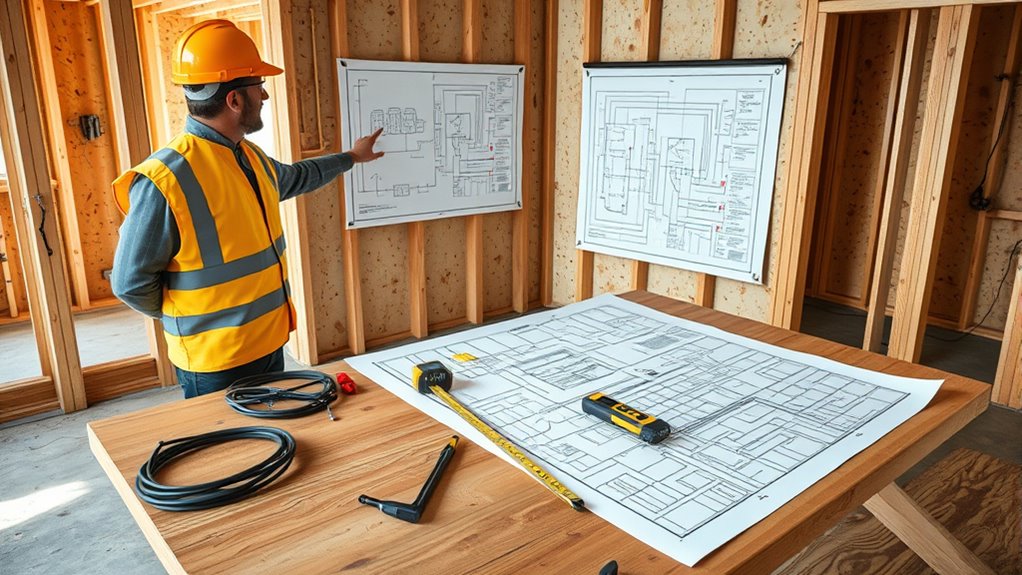
Planning wiring routes is a critical step to guarantee a safe, efficient, and organized electrical system. When you map out your wiring, you’re setting the foundation for easy maintenance, future upgrades, and overall safety. A well-thought-out plan minimizes the risk of electrical hazards and keeps your project running smoothly. Start by evaluating the layout of the building, considering where outlets, switches, appliances, and fixtures will go. This helps you identify the most direct, logical paths for your wiring, reducing unnecessary cable lengths and potential clutter.
Mapping out wiring routes ensures safety, efficiency, and easy maintenance for your electrical system.
Cable management is essential in this stage. You want to guarantee cables are organized and secured properly to prevent damage, interference, or accidental disconnections. Effective cable management involves choosing appropriate routing paths that avoid high-traffic areas or places prone to moisture and heat. Keep cables away from sources of electrical noise and interference, especially if you’re running data or communication lines alongside power cables. Use cable ties, clips, or conduits to keep wires tidy and prevent them from sagging or tangling. This not only makes installation easier but also simplifies troubleshooting later on.
Speaking of conduits, the conduit layout is a key element of your wiring plan. Conduits serve as protective channels that house and shield your cables from physical damage and environmental hazards. When planning your conduit layout, consider the most efficient paths to minimize bends and turns, which can complicate installation and increase costs. Think about accessibility for future inspections or repairs—placing conduits where they’re easy to reach makes maintenance less invasive. Also, plan for expansion; leave space or conduits for additional wiring if needed down the line. Your conduit routing should follow logical, straight lines whenever possible, and avoid sharp angles that could damage cables or hinder pulling wires through. Additionally, incorporating proper conduit sizing ensures your cables have enough space for safe operation and easy installation.
Before actual installation begins, double-check your layout for compliance with electrical codes and safety standards. Verify that conduit sizes are appropriate for the cable types and quantities you plan to use. Proper planning helps you avoid costly rework or code violations later. Incorporate considerations for grounding and load distribution early in the process. When you have a detailed route plan, you reduce surprises during construction, saving time and money.
Frequently Asked Questions
How Do I Determine the Optimal Wiring Path in Complex Structures?
To determine the most suitable wiring path in complex structures, you should evaluate cable management and conduit routing options. Start by mapping out the building’s layout, identifying key access points, and avoiding obstacles. Consider future expansion and maintenance needs. Use cable trays or conduits that follow logical routes, minimizing bends and length. Prioritize safety and code compliance, ensuring the wiring path is efficient, accessible, and organized for long-term reliability.
What Safety Codes Must Be Considered During Wiring Route Planning?
Think of safety codes as the guardian angels watching over your wiring plans. You must prioritize electrical safety by following local and national electrical codes, such as the NEC or IEC standards. Guarantee your route avoids hazards like water, heat, or sharp edges, and uses proper insulation and grounding. Code compliance isn’t optional; it’s your shield against accidents, legal issues, and future repairs, keeping everyone safe and your project solid.
How Can I Minimize Wiring Costs Without Compromising Quality?
To minimize wiring costs without sacrificing quality, focus on effective cable management and smart conduit selection. Opt for cost-efficient conduits that suit your environment, reducing material expenses, while ensuring they meet safety standards. Use organized cable management techniques to streamline installation, prevent damage, and reduce labor time. By balancing conduit choice and cable organization, you can cut costs while maintaining reliable, high-quality wiring systems.
What Tools Are Best for Mapping Wiring Routes Accurately?
You should use circuit tracing tools like toner probes and cable locators to map wiring routes accurately. These tools help identify existing cables and prevent damage during installation. Additionally, employing cable management systems such as cable trays and conduits guarantees organized routing. Combining circuit tracing with effective cable management makes your wiring routes precise, minimizes errors, and ultimately reduces costs while maintaining quality.
How Do I Coordinate Wiring Plans With Other Construction Phases?
Think of coordinating wiring plans like conducting an orchestra—you need perfect timing. You should communicate early with project managers to align electrical load requirements and conduit sizing across phases. Regular coordination meetings ensure wiring routes fit seamlessly into the construction schedule, preventing delays or rework. Share updated plans using digital tools so everyone stays in sync, and modify wiring routes as needed to match progress and evolving construction needs.
Conclusion
Now that you’ve mapped out your wiring routes, remember—one overlooked detail could lead to unexpected delays or costly rewiring later. Stay vigilant, double-check every plan, and consider potential obstacles before you start. The success of your project hinges on these initial choices. Are you prepared to face what lies beneath the surface? Your careful planning now could be the difference between smooth installation and unforeseen surprises. The next step could change everything—are you ready?
Evergreen bestsellers Picks
bestsellers
As an affiliate, we earn on qualifying purchases.