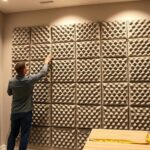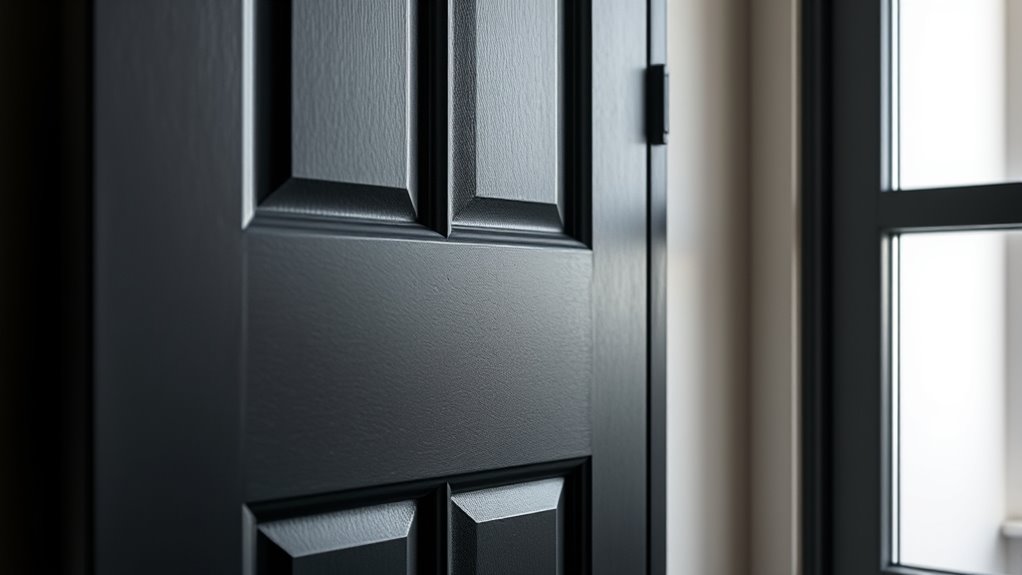

To soundproof your doors and windows, start by sealing all gaps with weatherstripping or acoustic sealants to stop noise leaks. Add window inserts or thick curtains to absorb sound, and install door sweeps at the bottom of doors for extra insulation. Regularly check and maintain these features for best results. Combining these methods can markedly reduce noise. Keep exploring different techniques to create a quieter, more peaceful space.
Key Takeaways
- Seal gaps around doors and windows with weatherstripping, door sweeps, and acoustic sealants to prevent sound leaks.
- Add window inserts or secondary panes to absorb and block outdoor noise effectively.
- Use heavy curtains or acoustic drapes to enhance sound absorption around windows.
- Regularly inspect and maintain seals and weatherstripping for optimal soundproofing performance.
- Combine multiple methods, such as sealing, inserts, and sound-absorbing fabrics, for comprehensive noise reduction.

If noise from outside is disrupting your peace, there are simple yet effective ways to soundproof your doors and windows. The first step involves sealing gaps and cracks that let sound seep through. Door sealants are an excellent solution because they fill small crevices around the door frame, creating a tight barrier that minimizes sound transfer. You can easily apply weatherstripping or door sweeps to the bottom and sides of your doors, ensuring there’s no room for sound to escape or enter. These sealants are affordable and straightforward to install, making them a popular choice for quick soundproofing improvements. For windows, adding window inserts is another impactful method. These inserts are secondary panes of glass or acrylic that fit snugly into your existing window frame. They act as a buffer, absorbing and blocking noise before it reaches your ears. Installing window inserts is less invasive than replacing entire windows and can markedly reduce outdoor sounds, especially if your current windows are thin or single-pane.
Next, consider enhancing your existing window setup by using thick curtains or drapes. Heavy fabrics absorb sound waves, preventing them from bouncing around your room. Pairing these with window inserts amplifies the effect, creating a more soundproof environment. When selecting door sealants, look for options that are durable and designed specifically for acoustic insulation. Some sealants also have insulating properties, which can help regulate temperature while reducing noise. Applying these sealants is a matter of cleaning the surface, applying the material along the edges of your door or window frame, and then pressing firmly to ensure a good seal. For added effectiveness, you might also consider using acoustic caulk, which remains flexible and maintains a tight seal over time. Regularly inspecting and maintaining your soundproofing materials ensures their continued effectiveness and maximizes your efforts.
In addition to sealants and inserts, it’s important to check for any gaps or leaks around your windows and doors regularly. Even small cracks can undermine your soundproofing efforts. If you notice any, seal them promptly with appropriate materials. Installing door sweeps at the bottom of your doors can prevent sound from leaking underneath, and sealing around the window frame with weatherstripping or foam tape further enhances your sound barrier. These upgrades, while simple, can make a notable difference in creating a quieter, more peaceful space. Remember, combining multiple methods—like door sealants, window inserts, and acoustic treatments—will give you the best results. Consistency and attention to detail are key to achieving a quiet, serene environment inside your home.
Top picks for "soundproof door window"
Open Amazon search results for this keyword.
As an affiliate, we earn on qualifying purchases.
Frequently Asked Questions
How Much Does Installing Soundproof Doors and Windows Typically Cost?
Installing soundproof doors and windows usually costs between $1,000 and $4,000 per unit, depending on size, material, and installation complexity. Your cost estimate will vary based on these factors and whether you choose custom or standard options. Expect to pay a higher price range for premium materials and professional installation. To get an accurate price, it’s best to request quotes from local installers and compare their offers.
Can Existing Doors and Windows Be Easily Upgraded for Better Soundproofing?
Yes, you can upgrade existing doors and windows for better soundproofing easily. You should add door sealants around the edges to block gaps and improve insulation. For windows, consider installing window inserts that fit snugly inside the frame to reduce noise transmission. These simple upgrades are cost-effective and can markedly enhance soundproofing without needing complete replacements, making your space quieter and more comfortable.
What Are the Most Common Mistakes When Soundproofing Doors and Windows?
Think of soundproofing as building a fortress—you need strong walls, not gaps. Your biggest mistake is often installation errors, like leaving gaps or uneven seals that let noise sneak through. Material mismatches, such as using thin weatherstripping with heavy acoustic panels, also weaken the barrier. To avoid these, double-check your installation and choose compatible, high-quality materials to create a solid, noise-blocking shield around your doors and windows.
How Long Does the Installation Process Usually Take?
The installation process typically takes between a few hours to a full day, depending on the project’s complexity. You can expect the installation timeline to be shorter for simple upgrades and longer if you’re adding multiple soundproof layers or custom fittings. Keep in mind that the overall project duration may extend if scheduling delays or additional preparations are needed, but most standard soundproofing installations are completed within a day.
Are There Eco-Friendly Options for Soundproof Doors and Windows?
Imagine doors and windows that protect your home and the planet—yes, eco-friendly options exist. You can choose soundproof doors and windows made with eco-friendly materials and sustainable options, reducing environmental impact while keeping noise out. These alternatives often include recycled wood, natural insulation, and low-VOC finishes. By selecting these, you’re making a conscious choice that benefits both your living space and the environment.
Conclusion
By following these soundproof door and window tips, you’re taking control of your space and creating a peaceful retreat. Remember, small changes can make a big difference—don’t let noise get the best of you. With patience and effort, you’ll turn your home into a quiet sanctuary. Keep at it, because when it comes to silence, every little step counts. Soon enough, you’ll enjoy the calm you’ve been craving, proving that persistence pays off in the long run.