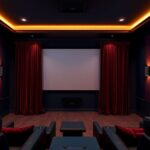
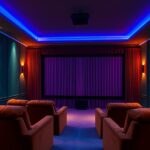
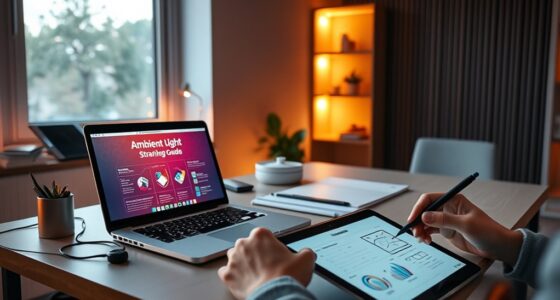
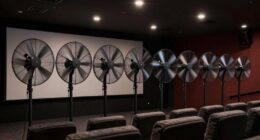
To achieve a cinematic feel, start with warm or cool lighting to set the mood and guide viewers’ focus. Use softboxes or diffusers to create soft, natural light, while adding flags or grids to control spill and shape the shadows. Position your key light thoughtfully, often slightly above and to the side, and layer additional lights for depth. Mastering these techniques can dramatically elevate your visuals, and exploring further will reveal even more ways to craft cinematic scenes.
Use a key light positioned slightly above and to the side of the subject for natural depth.
Incorporate color temperature adjustments (warm or cool) to set the scene’s emotional tone.
Utilize soft modifiers like softboxes for gentle, flattering light; add flags or grids for precise control.
Add background and hair lights to create separation and layered depth within the scene.
Balance all lighting elements to achieve a cohesive, cinematic look that guides viewer focus and mood.
Achieving a cinematic look starts with mastering your lighting setup, as it sets the mood, guides the viewer’s focus, and enhances storytelling. One of the most vital aspects is understanding how to manipulate color temperature and use light modifiers effectively. Color temperature shapes the emotional tone of your scene; warm tones evoke intimacy, comfort, and nostalgia, while cooler tones suggest detachment, tension, or modernity. You should adjust your lights accordingly to match the intended mood, whether by choosing bulbs with specific Kelvin ratings or using gels to shift hues. Balancing these temperatures ensures your scene feels cohesive and supports the narrative, making it more immersive for viewers.
Light modifiers are your tools for shaping and controlling light’s behavior. They include softboxes, umbrellas, barn doors, flags, and diffusion materials that allow you to refine the quality and direction of your lighting. For a cinematic feel, soft light is often preferred because it reduces harsh shadows and creates a more natural, flattering appearance. Using a softbox or diffusion material, you can spread light evenly across your subject, avoiding stark contrasts that feel flat or amateurish. Conversely, for dramatic shots, you might use barn doors or flags to block or shape light precisely, creating stark shadows or highlighting specific features. Proper use of light modifiers also helps control spill, ensuring that your lighting focuses on your subject and doesn’t distract or wash out the background.
Furthermore, the placement and manipulation of your lights with these modifiers influence depth and dimension. You might position a key light with a softbox slightly above and to the side of your subject to create gentle shadows that add depth. Adding a hair light or background light with a grid or snoot directs focus and separates your subject from the background. The combination of color temperature choices and light modifiers allows you to craft a layered, visually compelling scene. Remember, lighting isn’t just about illumination—it’s about guiding the viewer’s eye, establishing atmosphere, and reinforcing the story. By mastering these tools, you can elevate your scenes from basic to cinematic, ensuring each shot communicates the intended emotion and style with precision.
Official Licensed Google TV Smart Projector, HAPPRUN 4K UHD Home Theater with Dolby Sound, Wi-Fi & Bluetooth, Built-in Streaming Apps, Compatible with Games Consoles & Smartphone, Indoor & Outdoor Use
[ Built-in Official Licensed Google TV ] - Without additional equipment, the smart projector can directly access Netflix,...
As an affiliate, we earn on qualifying purchases.
Frequently Asked Questions
How Do I Achieve Natural-Looking Cinematic Lighting?
To achieve natural-looking cinematic lighting, you should prioritize natural light by shooting during golden hour or near windows. Incorporate practical lighting sources like lamps or practical fixtures to add realism. Use diffusers or reflectors to soften shadows and balance light. Keep your lighting subtle and avoid overly harsh or artificial looks. This approach helps create a genuine, cinematic feel that immerses viewers in your scene.
What Are the Best Color Temperatures for Film Lighting?
The best color temperatures for film lightingrange from 3200K to 5600K, depending on the mood you want to create. Cooler temperatures (around 5600K) lend a daylight, crisp feel, while warmer tones (around 3200K) evoke intimacy and warmth. But beware—your choice of color temperature influences light quality, subtly shaping the scene’s atmosphere. Selecting the right balance keeps your visuals compelling and authentic, drawing viewers into your story.
How Can I Control Shadows for Dramatic Effect?
You can control shadows for dramatic effect by adjusting shadow contrast and using light diffusion techniques. Increase shadow contrast with hard light sources to create sharp, intense shadows, or soften them with diffusers for a more subtle, moody look. Using flags or barn doors also helps block unwanted light, shaping shadows precisely. Experiment with these tools to craft the desired atmosphere, emphasizing depth and emotion in your scene.
What Equipment Is Essential for Cinematic Lighting on a Budget?
Imagine crafting cinema magic with just a few tools. You’ll need essential equipment like affordable light modifiers—such as softboxes or reflectors—to shape your light beautifully. Power sources like portable batteries keep your setup flexible. This combo lets you achieve cinematic lighting without breaking the bank, giving your scenes depth and mood. With these essentials, you control the light, creating dramatic effects that elevate your storytelling effortlessly.
How Do I Balance Multiple Light Sources Effectively?
To balance multiple light sources, start by carefully adjusting light placement to create a natural look and prevent harsh shadows. Use light modifiers like diffusers and reflectors to soften and control each light’s effect. Turn down or dim some lights if they overpower others, and consider the color temperature to guarantee consistency. Continuously observe the scene, making small tweaks until the lighting feels balanced and enhances the cinematic atmosphere.
Epson Home Cinema 980 3-Chip 3LCD 1080p Projector 4,000 Lumens Color and White Brightness, Streaming/Gaming/ Media Room, Built-In Speaker, Auto Picture Skew, 16000:1 Contrast, 2 HDMI Ports
Exceptional Picture Quality — Provides stunning, detailed 1080p images and fast data processing that’s optimized for fast-action sports,...
As an affiliate, we earn on qualifying purchases.
Conclusion
By mastering your lighting setup, you can instantly elevate your cinematic scenes and evoke the desired mood. Remember, studies show that viewers are 60% more likely to feel emotionally connected to a scene with professional lighting. So, experiment with key, fill, and backlights to create depth and drama. With a little practice, you’ll transform simple shots into mesmerizing visuals that truly tell your story. Keep refining your lighting skills, and your films will stand out even more.
Projector with 5G WiFi and Bluetooth, Native 1080P Projector[Projector Screen Included], Full HD 18000LM Movie Projector, 100" Display Home Theater, Compatible with Phone/Laptop/TV Stick
【2.4G/5G Dual-Band Wifi & Bluetooth Connection】 Roconia projector supports screen mirroring on iOS, Android and Windows devices without...
As an affiliate, we earn on qualifying purchases.
2000 ANSI 4K Decoding Projector with WiFi and Bluetooth, HAPPRUN Movie Home Theater with Auto Focus, 300'' Display for Indoor/Outdoor, Smart Proyector Compatible with Phone/TV Stick/PC/PS5
[EASIER OPERATION: AI Smart Screen Adjustment] HAPPRUN projector comes with auto focus and 6D auto-keystone technology, enjoy a...
Getting your wiring routes planned early ensures safety and efficiency—discover the essential steps to create effective wiring plans from start to finish.
Keep your space brilliantly lit by mastering these three overlooked steps to brightening a room—discover the secrets that can transform your space today.



![Projector with 5G WiFi and Bluetooth, Native 1080P Projector[Projector Screen Included], Full HD 18000LM Movie Projector, 100" Display Home Theater, Compatible with Phone/Laptop/TV Stick](https://m.media-amazon.com/images/I/51tJ+dTl5qL._SL500_.jpg)