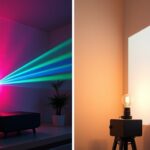
If you’re choosing between lamp-based and laser projectors, consider their lifespan, maintenance needs, and upfront costs. Lamp-based models are cheaper initially but require frequent bulb replacements and maintenance, which can add up over time. Laser projectors cost more upfront but last longer, need less upkeep, and are more reliable, reducing downtime. To determine which suits your needs best, explore the detailed differences and benefits further.
Laser projectors have significantly longer light source lifespans (20,000-30,000 hours) compared to lamp-based models (2,000-4,000 hours).
Lamp-based projectors require regular bulb replacements and more maintenance, increasing long-term costs.
Laser projectors generally have higher upfront costs but lower ongoing maintenance expenses.
Laser models offer greater reliability and less downtime due to fewer replaceable components.
Choice depends on budget, usage frequency, and preference for lower initial costs versus long-term savings.
When choosing a projector, understanding the differences between lamp-based and laser models is vital, as each offers distinct advantages and drawbacks. One of the key factors to ponder is projector lifespan. Lamp-based projectors typically have a limited lifespan for their bulbs, usually around 2,000 to 4,000 hours, after which you’ll need to replace the lamp to maintain ideal image quality. This replacement can be costly and inconvenient, especially if you use the projector frequently. In contrast, laser projectors tend to have much longer lifespans, often ranging from 20,000 to 30,000 hours, because their light source doesn’t rely on traditional bulbs that burn out over time. This extended lifespan means less frequent replacements and lower ongoing maintenance costs, making laser models more suitable for long-term, high-usage environments.
Laser projectors offer longer lifespans and lower maintenance compared to lamp-based models.
However, when you’re weighing these options, it’s also important to consider the maintenance challenges associated with each type. Lamp-based projectors require regular maintenance to ensure the lamp functions properly. This includes not only replacing the bulb when it dims or burns out but also cleaning filters and internal components to prevent overheating and dust buildup. These tasks can be time-consuming and may require technical expertise, especially if you want to avoid damaging delicate parts. Additionally, the cost of replacement lamps can add up over time, making these projectors more expensive to operate in the long run.
Laser projectors, on the other hand, generally demand less maintenance. Because they don’t have bulbs that burn out or filters that need frequent cleaning, they tend to be more reliable and easier to care for. That said, the initial investment for laser models is usually higher, and repair costs can be substantial if something does go wrong. Still, the reduced maintenance challenges make laser projectors more appealing for settings where minimal downtime is vital, such as business presentations or large conference rooms.
Ultimately, your choice depends on your usage pattern and budget. If you prioritize lower upfront costs and don’t mind regular maintenance and bulb replacements, a lamp-based projector might suit you. But if you want a projector with a longer lifespan, fewer maintenance challenges, and lower operational costs over time, investing in a laser model could prove more cost-effective and convenient in the long run. Additionally, the availability of support hours for technical assistance can vary depending on the manufacturer and region, which is worth considering for troubleshooting and maintenance needs.
Frequently Asked Questions
How Do Maintenance Costs Compare Between Lamp and Laser Projectors?
You’ll find that laser projectors generally have lower maintenance costs compared to lamp-based ones. Replacement costs for laser light sources are higher upfront but last much longer, reducing downtime impact and frequency of replacements. Lamp projectors, on the other hand, require more frequent lamp replacements, which can increase overall maintenance expenses and cause more downtime. So, laser projectors save you money and hassle over time, especially with regular use.
Which Projector Type Offers Better Color Accuracy?
You’ll find laser projectors generally offer better color accuracy thanks to their wider color gamut and consistent light output. They benefit from advanced calibration techniques that help maintain vibrant, true-to-life colors over time. Lamp projectors may experience color shifts as lamps age, requiring more frequent calibration. Overall, if color precision is your priority, a laser projector is the better choice, providing more accurate and stable visuals.
Are Laser Projectors More Energy-Efficient Than Lamp Projectors?
Ever wondered if laser projectors are more energy-efficient? They generally consume less energy than lamp-based models, thanks to their longer-lasting light sources and more efficient technology. This means lower energy consumption and a reduced environmental impact over time. By choosing a laser projector, you not only get better performance but also contribute to sustainability efforts. Isn’t it smart to pick a device that saves energy and benefits the environment?
How Do Lifespan and Durability Differ Between the Two Types?
Laser projectors generally last longer and are more durable than lamp-based ones. You won’t need frequent bulb replacements, which saves you money and hassle. They also handle heat better, reducing overheating issues that can damage components. This means laser projectors tend to have a longer lifespan overall. With proper heat management, they maintain brightness and performance longer, making them a reliable choice for long-term use.
Can Laser Projectors Be Used Outdoors Effectively?
Yes, laser projectors can be used outdoors effectively. They offer higher outdoor brightness, ensuring clear images even in ambient light. Look for models with weather resistance features, such as sealed enclosures and robust casing, to withstand elements like rain and dust. Proper installation and protection help maintain performance and longevity, making laser projectors a reliable choice for outdoor events, signage, or entertainment.
Conclusion
Ultimately, choosing between lamp-based and laser projectors depends on your needs. If you want a budget-friendly option that’s easy to replace, lamps are your go-to. But if you’re after long-lasting, vibrant images, lasers might be worth the investment. Think of it like weighing the pros and cons—sometimes you have to bite the bullet and go all in. Whatever you choose, make sure it’s the right fit, so you don’t miss the boat.