Curved screens can greatly enhance your home cinema experience, creating a more immersive atmosphere for films and gaming. They reduce glare and guarantee better color consistency, making every seat in the room more enjoyable. However, these screens have limitations; the best viewing angle is only from the front, and installation can be tricky and costly. Plus, compatibility with standard projectors might pose challenges. Overall, while the benefits of a curved screen can elevate your viewing experience, it is crucial to weigh these against the cons and installation considerations to make the best choice for your space.

Get business pricing on your home office setup
- Business-only prices and quantity discounts
- Tax-exempt purchasing
- Multiple users, one account, clear invoices
Key Takeaways
- Curved screens offer an immersive viewing experience, enhancing depth perception and engaging peripheral vision during movies and gaming.
- They reduce glare and reflections, ensuring better color consistency and brightness, improving image quality by up to 30%.
- Limited ideal viewing angles mean optimal viewing is restricted to the front, making side seating less effective.
- Installation can be challenging, requiring specialized mounts and precise alignment to avoid image distortion.
Overview of Curved Screens
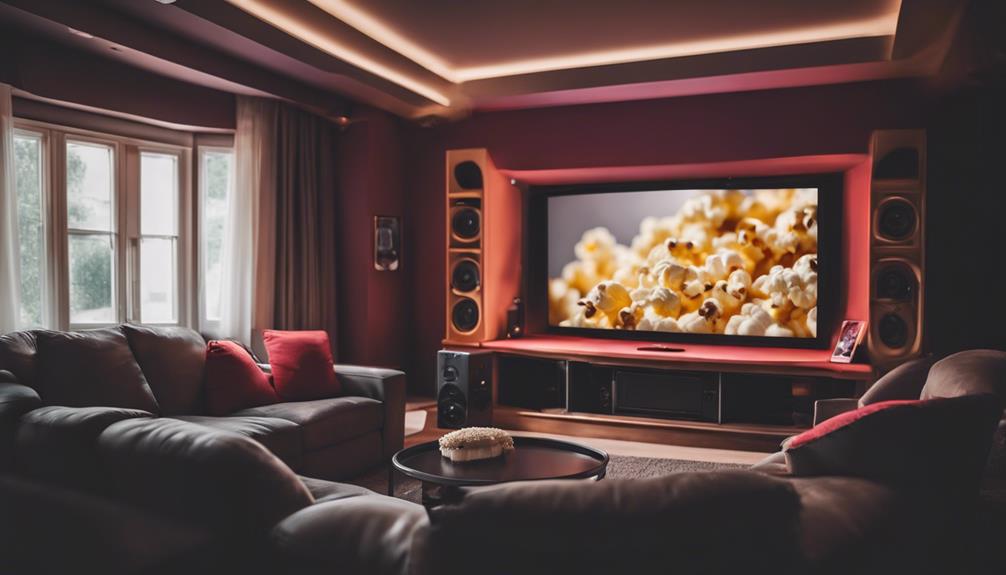
Curved screens transform your home cinema experience by wrapping around your field of vision, creating an immersive environment that draws you into the action.
These screens are designed to enhance depth perception and engage your peripheral vision, making them ideal for movie watching and gaming. Originating from IMAX theaters, they provide a wider field of view, which contributes to a truly immersive viewing experience.
One of the main advantages of curved screens is their ability to minimize glare and reflections, helping maintain color consistency, even in brightly-lit environments. This feature can greatly enhance your enjoyment of films and games. Additionally, their durable construction, often from materials like aluminum or carbon fiber, makes them suitable for 3D content.
However, curved screens come with some disadvantages. Their unique shape can complicate installation, requiring specific mounting techniques that may not suit every home theater setup.
You might find that these screens demand more planning and effort during installation compared to traditional flat screens. Overall, understanding these advantages and disadvantages can help you decide if a curved screen is the right fit for your cinematic needs.
Benefits of Curved Screens
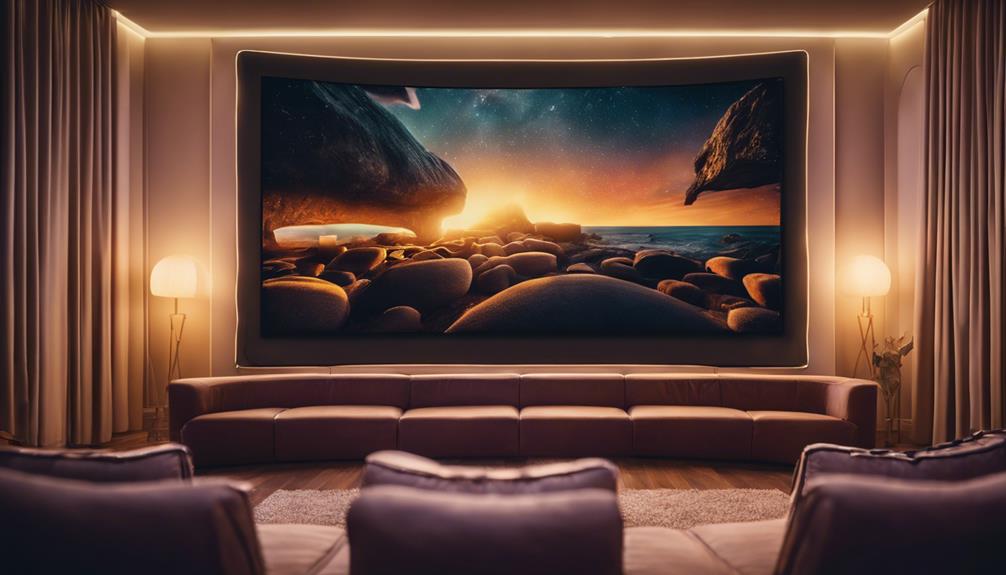
When considering the immersive qualities of curved screens, you'll discover numerous benefits that elevate your home cinema experience. These screens wrap images around your peripheral vision, simulating a 3D experience that enhances action scenes and panoramic landscapes.
Here are some key advantages:
- Reduced Glare: Curved screens minimize reflections from light sources, ensuring better color consistency even in bright environments.
- Wider Ideal Viewing Angles: With a curved screen, everyone in the room can enjoy the same vibrant colors and contrast, making group viewings much more enjoyable.
Additionally, the curvature helps mitigate pincushion distortion, providing uniform light distribution across the screen. This means you can experience sharp, clear visuals from various angles, making every movie night feel like a trip to the theater.
The combination of these features creates an immersive experience that truly transforms your home cinema setup, allowing you to plunge into your favorite films like never before.
Drawbacks of Curved Screens
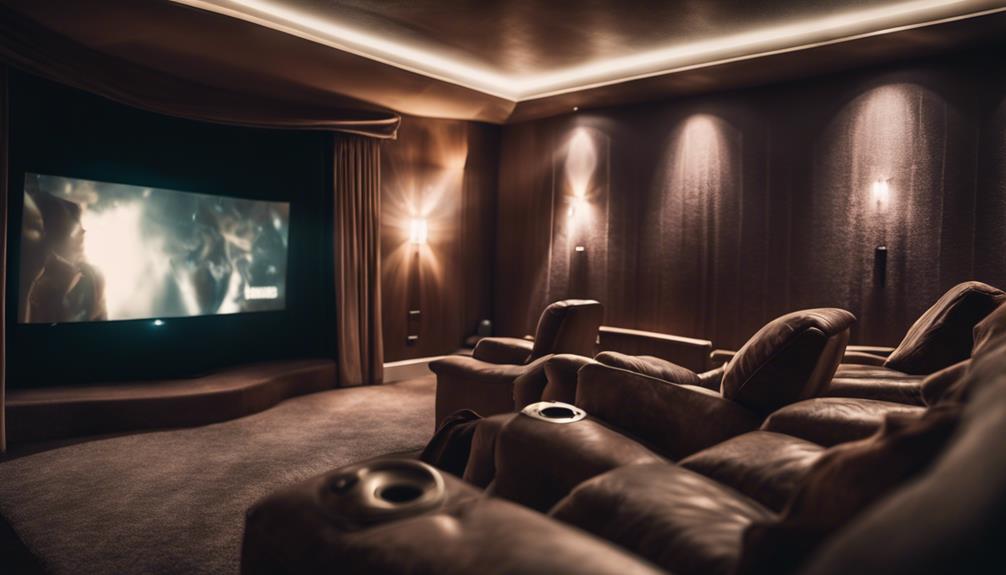
While curved screens offer a unique viewing experience, they also come with several drawbacks that can impact your home cinema setup. One major concern is the limited ideal viewing experience; these screens are best viewed directly from the front, which can lead to suboptimal perspectives for viewers seated at the sides.
Additionally, installation challenges arise due to their design, often requiring specialized mounts that complicate flush wall mounting. This can make setting up your screen more of a hassle than you might expect.
Moreover, compatibility issues can surface with standard projectors. Some projectors may struggle to deliver ideal performance on curved surfaces, leading to potential image distortion and focus challenges.
Here's a quick overview of the drawbacks:
| Drawback | Description |
|---|---|
| Limited Viewing Angle | Best viewed from the front only |
| Installation Challenges | Requires specialized mounts |
| Compatibility Issues | May not work well with all projectors |
| Higher Cost | Generally more expensive than flats |
Considering these factors, you might want to weigh whether a curved screen is the right choice for your home cinema.
Installation Considerations
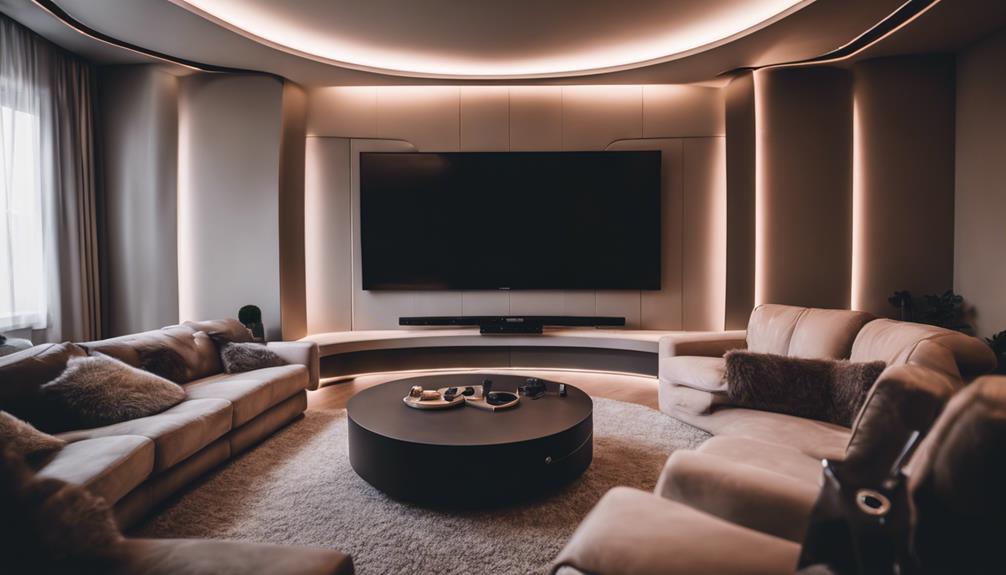
Installing a curved screen can present unique challenges that require careful planning and precise execution. Unlike flat screens, the installation of curved screens often involves specialized mounting techniques to guarantee proper alignment and support.
Here are a few considerations you should keep in mind:
- Space Requirements: Curved screens may need more mounting space, limiting placement options in smaller rooms.
- Custom Mounts: Some models may require custom mounts or adjustments to standard brackets, increasing complexity and costs.
Additionally, the unique curvature of these screens necessitates thoughtful consideration of ambient lighting and room layout.
You'll want to maximize the benefits of the curved design while minimizing glare and reflections. This means taking the time to assess your space and possibly adjusting your projector setup for peak viewing.
In short, a successful installation hinges on understanding the specific requirements that come with the curvature, guaranteeing that every detail is attended to for the best cinematic experience.
Final Thoughts on Curved Screens

Curved screens can transform your home cinema experience, offering an immersive feel that flat screens often struggle to match. The curvature helps wrap the image around your field of vision, greatly enhancing the immersion factor. This design can create a more engaging atmosphere, especially in environments where glare and reflections might be an issue.
However, it's crucial to weigh the pros and cons. While the wider ideal viewing angle is a definite advantage, you might find yourself limited in viewing positions, necessitating careful room layout considerations. Additionally, curved screens often come with a premium price tag compared to their flat counterparts, so you'll need to evaluate your budget and space dimensions thoroughly.
Custom installation can also add complexity to the setup process, as you'll need to verify compatibility with your existing home theater equipment.
Ultimately, curved screens can elevate your viewing experience, but they require careful thought regarding placement, cost, and installation. If you're ready to invest in this technology, you could find that the enhanced experience is well worth it, but be mindful of the challenges that might arise.
Frequently Asked Questions
Are Curved Screens Better for Movies?
Curved screens can enhance your movie experience by providing a wider field of view and reducing glare. However, you'll need to sit directly in front for ideal enjoyment, which might limit your seating options.
What Are the Pros and Cons of Curved Projector Screens?
Imagine a window to another world; curved projector screens can enhance immersion and color consistency. However, they're pricier, tricky to install, and best viewed directly in front, limiting flexibility during gatherings. Choose wisely!
What Are the Disadvantages of Curved Display?
Curved displays can limit your viewing angles, making it tough to enjoy with a group. Installation might be tricky due to their shape, plus they often cost more and require specific mounts for setup.
What Are the Pros and Cons of a Curved Monitor?
Curved monitors offer immersive experiences and reduced glare, enhancing your gaming and multimedia enjoyment. However, they can be pricier, require more space, and may have limited viewing angles that affect shared experiences.
Conclusion
In the grand tapestry of home cinema, curved screens can be both the shimmering star and the shadowy companion.
They envelop you in a cinematic embrace, enhancing immersion with their panoramic allure.
Yet, the drawbacks might leave you feeling a tad disoriented if you're not positioned just right.
Ultimately, whether you choose to bask in their glow or stick to the familiar flatness, trust your instincts to create the perfect viewing experience tailored for your space.
Halloween Picks
halloween
As an affiliate, we earn on qualifying purchases.