
TL;DR

Get business pricing on your home office setup
- Business-only prices and quantity discounts
- Tax-exempt purchasing
- Multiple users, one account, clear invoices
Havenly says orders for purple and plum furniture rose 34% on a relative basis from Q3 2025 through Q3 2026, while its designers sourced 53% more plum and jewel-toned decor year over year. Designers interviewed by House Beautiful recommend choosing complex, muted plums and balancing them with other colors and materials; the figures come from Havenly and do not establish a wider industry trend.
Havenly reports growing demand for plum and purple furnishings, with orders for purple and plum furniture rising 34% on a relative basis from Q3 2025 through Q3 2026. In a House Beautiful report, the company’s chief commercial officer also said its designers sourced 53% more plum and jewel-toned decor year over year, pointing to a shift among Havenly customers toward richer colors in home interiors.
Lee Anne Blake, Havenly’s chief commercial officer, said the furniture-order increase was recorded at Interior Define, a Havenly brand, over consecutive quarters from Q3 2025 through Q3 2026. The figure is a 34% relative increase; the report does not provide order counts or a broader furniture-market comparison. Blake separately said Havenly designers sourced 53% more plum and jewel-toned decor year over year.
Blake said customers shopping across Havenly’s brands were requesting white, cream and beige pieces less often. She connected the interest in plum and jewel tones with demand for colorful, moody interiors and the current interest in Art Deco. These are company observations and commentary, not independently measured figures for the entire home-design sector.
Designers quoted by House Beautiful advise choosing a plum with brown, red or gray undertones rather than a bright, blue-based purple. They suggest testing the shade with flowers, a rug, artwork, pillows or an accent chair before committing to paint or large upholstery. For a more immersive approach, they point to smaller rooms such as powder rooms, libraries and bathrooms.
Why Plum Is Reaching More Homes
The figures offer a concrete indication that some shoppers are moving beyond the pale neutrals that have often dominated home furnishings. If the trend continues among Havenly customers, plum could influence choices in upholstery, accessories and paint, not just seasonal styling. However, the source describes activity at a company and its brands; it does not establish that plum is leading the wider market or quantify how many households are making the change.
For readers considering a home update, the design advice frames plum as a shade that can be tested at different levels of commitment. A small accessory lets homeowners see how the color works with their room’s lighting, existing palette and materials. Paint or a large upholstered piece makes a stronger statement and may require more planning to coordinate with the rest of the space.
How Designers Recommend Using Plum
Blake described plum as having warm brown and red undertones that can make it feel more grounded than a brighter purple. She compared its versatility with navy and forest green, while saying it can add a fresh, layered quality to a room. That is her design assessment, rather than a measured claim about how the color performs in every interior.
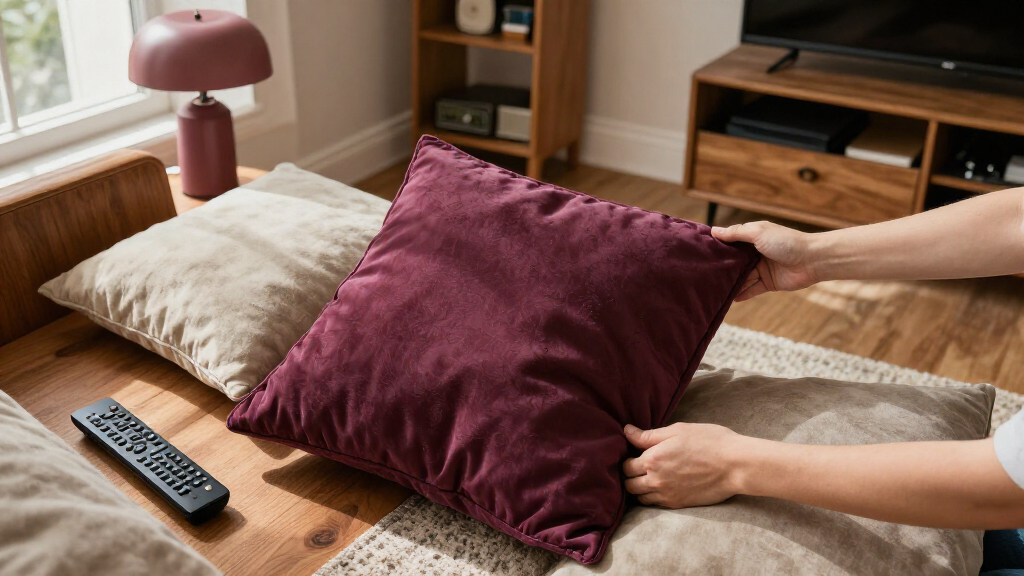
The designers interviewed by House Beautiful offer a graduated approach. Taniya Nayak, a home expert for Marshalls and T.J. Maxx, suggested trying plum or berry-colored dahlias in a vase to see how the color looks in a specific room before making a permanent change. Other low-commitment options include a pillow, artwork, rug or accent chair.
For more committed use, designers recommend giving plum a clear role rather than leaving one isolated item to compete with an otherwise unrelated palette. Lindsay Angyus of KSA Design Group suggested pairing rich colors with tones such as muddy olive, tobacco brown or dusty pink. Kamber Mason cautioned against grape-like purples, while Isabel Clune favored plums with brown, red or gray undertones and materials such as aged brass, stone and rich wood.
“At Interior Define, orders for purple and plum furniture grew consecutively every quarter from Q3 2025 through Q3 2026, representing a 34 percent relative increase.”
— Lee Anne Blake, Havenly chief commercial officer
How Broad Is the Plum Trend?
The source material reports Havenly’s business data and designers’ observations, but does not give raw order totals, the exact year-over-year comparison dates for decor sourcing, or results from other retailers. It is therefore unclear how representative the figures are of the overall home-furnishings market or whether demand will remain elevated beyond the reported period.
House Beautiful’s report says designers expect purple to remain influential into 2027, but that is a forecast, not a confirmed outcome. The material also does not provide the full set of color pairings attributed to designer Cindy McKay, so no additional recommendations from her are included here.
What Shoppers Can Watch
The next useful indicator will be whether Havenly’s reported interest continues in subsequent quarters and whether other retailers or design firms report similar demand. The report supplies no further sales forecast or scheduled industry data release, so the future direction of the trend remains open.
For homeowners, designers’ suggestions point to a practical next step: test plum in a removable or temporary form, then assess it in the room’s actual light alongside existing finishes. Anyone considering a larger change can compare undertones and materials first, since a deep plum can look different beside wood, stone, metal and patterned textiles than it does on a paint sample or screen.
Key Questions
What evidence suggests plum is gaining popularity?
Havenly’s Lee Anne Blake said purple and plum furniture orders at Interior Define rose 34% on a relative basis from Q3 2025 through Q3 2026. She also reported that Havenly designers sourced 53% more plum and jewel-toned decor year over year.
Does the data show that plum is the leading color across the home-design industry?
No. The figures cited are Havenly-specific. The report does not provide data from the full market or other retailers, so it cannot establish that plum is the leading shade industry-wide.
How can someone try plum without repainting a room?
Designers suggest starting with flowers, a pillow, a rug, artwork or an accent chair. Those choices let someone see how the color interacts with existing decor and lighting before making a more permanent change.
Which kind of plum do the designers recommend?
Several designers favor a deep, complex plum with brown, red or gray undertones, rather than a bright or strongly blue-purple shade. They also recommend connecting it to other colors and materials in the room.
Source: rss
Fall Picks
fall essentials
As an affiliate, we earn on qualifying purchases.