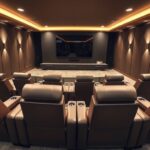
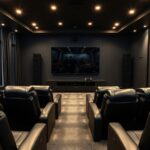
To create a perfect multi-row seating design for your family theater, focus on maximizing space without sacrificing comfort. Arrange seats in multiple rows with gradual elevation to guarantee clear sightlines for everyone and optimize sound distribution for immersive audio. Prioritize ergonomic chairs with good lumbar support and adjustable features for extended comfort. Thoughtful layout and automation can enhance sound, lighting, and accessibility, making your theater more enjoyable. Keep exploring to discover detailed tips for your ideal home theater setup.
Key Takeaways
- Maximize room capacity and comfort with multi-row seating that prevents clutter and optimizes space organization.
- Design seat placement to enhance sound distribution, ensuring clear audio for all viewers.
- Incorporate automation for seamless control of lighting and sound systems, enhancing the viewing experience.
- Prioritize ergonomic seats with lumbar support and adjustable features for extended comfort.
- Use gradual elevation of seats to improve sightlines and ensure unobstructed views for everyone.

Multi-row seating design transforms the way we organize spaces by maximizing capacity while maintaining comfort. When creating a family theater, this approach allows you to accommodate more viewers without sacrificing the quality of their experience. One of the key aspects to contemplate is theater acoustics. Properly designed seating arrangements help direct sound efficiently throughout the room, ensuring everyone can hear clearly without echoes or dead spots. When seats are thoughtfully positioned, sound waves travel smoothly, creating an immersive experience that keeps every family member engaged, regardless of where they sit. You want to avoid cluttered, haphazard layouts that hamper sound quality; instead, focus on a design that enhances both sound distribution and overall audio clarity. Incorporating automation technologies can further optimize sound systems and lighting for a seamless viewing experience.
Seating ergonomics also play a vital role in multi-row designs. Comfortable seats aren’t just a luxury—they’re essential for long movie nights and family gatherings. When selecting your seating, prioritize models that offer good lumbar support, adjustable features, and appropriate padding. This ensures that viewers can enjoy extended periods without discomfort. Proper ergonomic design also considers sightlines, so each person has a clear view of the screen, regardless of their position in the row. By elevating seats gradually from front to back, you prevent obstruction and provide an unobstructed view for everyone, fostering a more inclusive and enjoyable environment. When seats are well-designed, they promote better posture and reduce fatigue, so your family can relax and focus on the movie, not on adjusting their position constantly.

Klipsch R-12SW Powerful Deep Bass Front Firing 12" Copper-Spun Driver 400W Digital Power Subwoofer 14" X 18.5" X 16"
Powerful 12" copper-spun front-firing woofer
As an affiliate, we earn on qualifying purchases.
Frequently Asked Questions
How Do Multi-Row Seats Affect Sightlines and Viewing Angles?
Multi-row seats improve sightline optimization by guaranteeing each row’s elevation and angle allows unobstructed views for everyone. You can adjust viewing angles by staggering the seats and raising the back rows, which prevents heads from blocking the view. This setup enhances viewing angles, making it easier for all family members to see the screen clearly. Proper design ensures a comfortable experience, maximizing sightlines and minimizing obstructions throughout the theater.
What Are the Best Materials for Family-Friendly Theater Seating?
Think of your theater seats as the sturdy oak trees of a forest—strong and reliable. For family-friendly seating, choose durable materials like high-quality vinyl, stain-resistant fabrics, or molded plastic, which stand up to wear and tear. These options also offer diverse aesthetic choices, from vibrant colors to sleek finishes, ensuring safety and style. Prioritize durability considerations to keep your theater inviting and functional for years to come.
How Do I Ensure Accessibility for All Family Members?
You guarantee accessibility by incorporating wheelchair accessibility into your family seating arrangements, making sure pathways are wide and unobstructed. Arrange seats to include designated spaces for wheelchairs near family-friendly features, so everyone feels included. Use removable or adjustable seats to accommodate different needs. Communicate clearly about accessible options, and train staff to assist families with diverse requirements, creating an inclusive environment where all family members can enjoy the theater comfortably.
What Maintenance Is Required for Multi-Row Theater Seating?
You’ll want to keep your seats in tip-top shape, so establish regular cleaning routines that banish crumbs and spills. Upholstery care is key—vacuum often and spot clean stains to prevent wear and tear. Don’t forget to check for loose bolts or squeaky hinges, or your seats might start to resemble a haunted house rather than cozy family spots. Stay proactive, and your theater will remain inviting for generations to come.
How Can I Optimize Space When Designing Multi-Row Seating Layouts?
To optimize space, you should focus on compact arrangements and modular configurations that maximize seating capacity without sacrificing comfort. Use tiered or staggered layouts to improve sightlines and reduce wasted space. Incorporate flexible, moveable seats to adjust for different event needs. By designing with these strategies, you’ll create an efficient, comfortable environment that fits more seats in a smaller footprint, enhancing overall audience experience.

Klipsch R-120SW Subwoofer, Black
12" high excursion spun-copper Imp woofer
As an affiliate, we earn on qualifying purchases.
Conclusion
With a well-planned multi-row seating design, you can maximize comfort and visibility for every family member. Did you know that theaters with optimized seating see a 30% increase in audience satisfaction? By thoughtfully arranging rows and ensuring clear sightlines, you create a welcoming space where everyone feels included. So, when designing your family theater, remember that smart seating choices turn ordinary spaces into memorable experiences, making every visit enjoyable and family-friendly.

Epson Home Cinema 980 3-Chip 3LCD 1080p Projector 4,000 Lumens Color and White Brightness, Streaming/Gaming/ Media Room, Built-In Speaker, Auto Picture Skew, 16000:1 Contrast, 2 HDMI Ports
Exceptional Picture Quality — Provides stunning, detailed 1080p images and fast data processing that’s optimized for fast-action sports,...
As an affiliate, we earn on qualifying purchases.

2000 ANSI 4K Decoding Projector with WiFi and Bluetooth, HAPPRUN Movie Home Theater with Auto Focus, 300'' Display for Indoor/Outdoor, Smart Proyector Compatible with Phone/TV Stick/PC/PS5
[EASIER OPERATION: AI Smart Screen Adjustment] HAPPRUN projector comes with auto focus and 6D auto-keystone technology, enjoy a...
As an affiliate, we earn on qualifying purchases.