
Incorporating curtains and drapes can effectively improve your room’s acoustics by absorbing sound and reducing echoes. Choose heavy, tightly woven fabrics like velvet or thick wool, and guarantee they’re hung high and wide to block sound leakage. Layering curtains or adding linings enhances their noise-dampening ability. Proper installation makes a big difference, turning your curtains into soundproofing tools. Keep exploring to discover tips for optimizing your acoustic setup even further.
Key Takeaways
- Choose heavy, dense fabrics like velvet or thick wool to maximize sound absorption.
- Mount curtains high above windows and extend beyond the frame to minimize sound leaks.
- Use double-layered curtains or add lining for enhanced acoustical performance.
- Ensure curtains reach the floor and cover the entire window area for a tight sound barrier.
- Layer different fabrics and textures to improve overall room acoustics and dampen noise effectively.

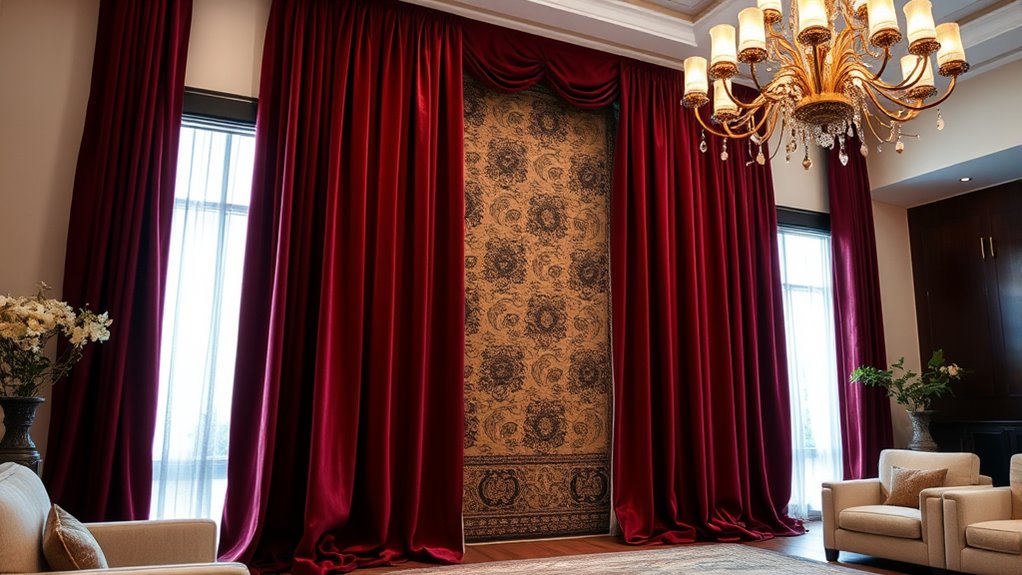
Adding curtains and drapes to your space is one of the simplest ways to improve acoustics. They can considerably reduce echo, dampen noise, and create a more comfortable listening environment. To get the best results, focus on fabric selection and installation techniques. The right fabric can make a big difference in how well your curtains absorb sound. Heavy, dense materials like velvet, thick wool, or specialized acoustic fabrics are ideal because they contain more fibers that trap sound waves. Lighter fabrics such as linen or sheer materials won’t provide as much sound absorption, so if your goal is to dampen noise effectively, opt for thicker options. You might even consider layering different fabrics, combining a dense curtain with a lighter sheer behind it, to maximize both aesthetics and acoustical performance.
Heavy, dense fabrics like velvet and thick wool enhance sound absorption and reduce echo effectively.
When selecting fabric, also think about the texture and weight. Smooth, tightly woven fabrics tend to block sound better than loosely woven ones. If you’re looking to optimize acoustics, avoid thin, flimsy materials that flutter in drafts and fail to absorb sound effectively. The color and pattern are more about style, but choosing darker, matte finishes can help minimize reflective surfaces that bounce sound around the room. Remember, the goal is to create a barrier that absorbs and diffuses sound waves, so choose fabrics that are thick and textured.
Installation techniques are just as essential as fabric choice. Properly hanging your curtains ensures they perform well acoustically. Use sturdy curtain rods that can support the weight of heavy fabrics without sagging. Install the rods high above the window frame and extend them wider than the window itself—this allows the curtains to drape fully and cover more area, preventing sound from leaking around the edges. Make sure the curtains reach all the way to the floor and, if possible, extend beyond the window frame to create a tight seal against sound escape. Using rings or hooks that allow the fabric to hang smoothly helps avoid gaps that could let sound pass through.
Additionally, consider the curtain’s depth when closed. The more fabric you have, the better the sound absorption. If you’re dealing with larger spaces or high ceilings, double-layered curtains or adding a lining can enhance acoustical performance further. Proper installation, combined with thoughtful fabric selection, transforms your curtains from simple window dressings into effective soundproofing tools. With the right approach, you’ll notice a substantial improvement in your room’s acoustics, making your space more comfortable and inviting.
A soundproofing barrier in your curtains can significantly enhance their acoustic performance, especially in challenging spaces.
Top picks for "incorporat curtain drap"
Open Amazon search results for this keyword.
As an affiliate, we earn on qualifying purchases.
Frequently Asked Questions
How Do Curtains Compare to Acoustic Panels in Soundproofing?
Curtains provide decent sound absorption and noise reduction, especially if they’re thick or layered, but they generally can’t match acoustic panels. Acoustic panels are designed specifically for soundproofing, offering superior noise reduction by absorbing more sound waves. You’ll notice a bigger difference with panels in reducing echo and controlling noise. However, curtains are a good, cost-effective option for softer sound absorption and can complement other soundproofing methods.
What Materials Are Best for Acoustic Curtains?
Think of your curtains as a fortress against noise; the best materials are thick, heavy fabrics like velvet, suede, or dense polyester blends. These act like sound barriers, absorbing echoes. When choosing fabric options, look for those with dense weaves and multiple layers. Proper installation techniques, like mounting close to the ceiling and using sturdy rods, enhance their acoustic performance, turning your space into a quiet sanctuary.
Can Curtains Improve Sound Quality in Small Rooms?
Yes, curtains can improve sound quality in small rooms. You should opt for decorative fabrics and window treatments with thick, dense materials like velvet or heavy drapes, which absorb sound waves effectively. These curtains reduce echo and noise, making your space more comfortable. By choosing the right window treatments, you enhance acoustics without sacrificing style, creating a cozy, inviting environment perfect for relaxing or working.
How Do Curtain Thickness and Length Affect Acoustics?
Think of curtain thickness and length as the walls of an acoustic fortress. Thicker fabrics absorb more sound, muffling echoes like a cozy cave, while longer curtains reach the floor, blocking sound waves from escaping or entering. Your fabric choice and installation techniques, like proper mounting and layering, can turn your space into a sound sanctuary. Adjust these elements to craft a room that hums with perfect acoustic harmony.
Are There Maintenance Tips for Preserving Acoustic Curtain Effectiveness?
To preserve your acoustic curtains’ effectiveness, follow regular cleaning routines like gentle vacuuming or spot cleaning to prevent dust buildup. Avoid harsh chemicals that could damage the material, and make sure they’re properly hung to maintain their shape. Proper maintenance extends material longevity, keeping your curtains performing well over time. Additionally, periodically inspect for wear or tears, and address any issues promptly to ensure peak sound absorption and durability.
Conclusion
By embracing curtains and drapes, you’re opening a gateway to better acoustics—like a curtain lifting to reveal a clear, peaceful space. They symbolize your commitment to harmony and comfort within your home or office. Just as a well-draped window transforms a room’s look, your choice in fabrics shapes the soundscape, creating a sanctuary where noise fades and serenity shines through. Let your curtains be the silent guardians of your peaceful haven.