
Wireless audio transmitters let you stream sound wirelessly from one device to multiple speakers or headphones, eliminating tangled cables and clutter. They work by using specific radio frequency ranges, like 2.4 GHz or 5 GHz, to send signals smoothly. Advanced compression algorithms guarantee your audio remains clear and high quality while reducing lag and interference. Understanding these basics helps you choose the right system, and exploring further reveals even more about how these devices optimize your listening experience.
Key Takeaways
- Wireless audio transmitters enable cable-free streaming of sound from a source to multiple speakers or headphones.
- They use specific frequency bands like 2.4 GHz and 5 GHz, affecting range, interference, and sound quality.
- Audio compression techniques reduce data size for efficient, high-quality wireless transmission without noticeable delay.
- Proper frequency selection minimizes interference from Wi-Fi and Bluetooth devices, ensuring reliable performance.
- Advances in wireless tech and security improve audio clarity, stability, and user experience in both personal and professional settings.
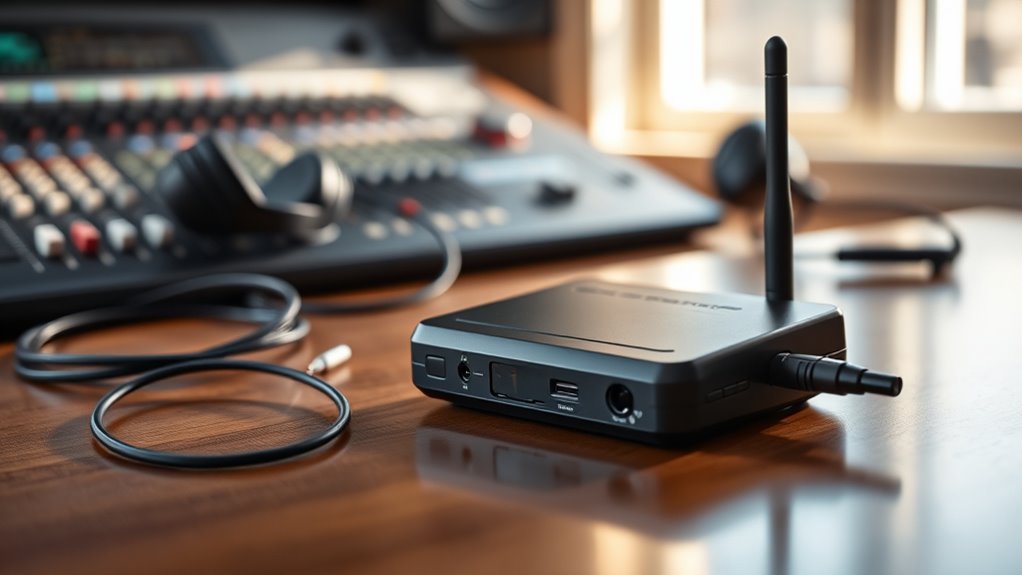
Wireless audio transmitters have revolutionized how you enjoy sound by eliminating the need for tangled cables and restrictive wires. With these devices, you can stream music, podcasts, or audio from one source to multiple speakers or headphones without the clutter of cords. But to truly understand how they work and why they’re so effective, it helps to grasp some fundamental concepts like audio compression and frequency ranges.
Audio compression plays a vital role in wireless transmission. When you send audio signals wirelessly, the data needs to be efficiently compressed so it can travel smoothly through the air. Without compression, high-fidelity audio would require a massive amount of bandwidth, making it difficult to transmit reliably and quickly. Modern wireless transmitters use advanced compression algorithms to reduce the data size without sacrificing sound quality. This ensures that your audio remains clear and detailed, even over longer distances or in environments with potential interference. The right balance of compression allows for minimal lag and maintains sound integrity, giving you a seamless listening experience.
Effective audio compression ensures clear, detailed sound over wireless connections with minimal lag and interference.
Frequency ranges are another key aspect of wireless audio transmission. Every wireless device operates within specific parts of the radio frequency spectrum, which determines how far and how well the signal travels. Common frequency ranges used by wireless transmitters include 2.4 GHz and 5 GHz bands. The 2.4 GHz range is popular because it offers a good balance between range and compatibility, but it can be crowded with Wi-Fi and Bluetooth devices, which might cause interference. On the other hand, the 5 GHz band provides higher bandwidth and less congestion, resulting in better sound quality and fewer dropouts, though it may have a shorter effective range. When choosing a wireless transmitter, understanding these frequency ranges helps you select a device that best fits your environment and needs, ensuring reliable performance and high-quality sound.
Understanding AI vulnerabilities in wireless communication can help in designing more secure transmission methods, especially as wireless technology continues to advance. In essence, the technology behind wireless audio transmitters relies heavily on effective audio compression and the strategic use of frequency ranges. These elements work together to deliver crisp, clear sound wirelessly, whether you’re streaming music at home or managing audio in a professional setting. By understanding how they operate, you can make smarter choices about the equipment you use, optimizing your listening experience and avoiding common issues like lag, interference, or dropped signals. As wireless technology continues to evolve, so does the quality and reliability of the audio transmission, making it easier than ever to enjoy your favorite sounds freely and without hassle.

Douk Audio BS-1 Bass Shaker: 50W High Power Tactile Transducer - Subwoofer Lows for Home Theater, Car Audio & Gaming Chair Vibration Immersion (1 PC)
The fully upgraded version of Douk Audio BS-1 bass shaker, released in May 2025, the performance is greatly...
As an affiliate, we earn on qualifying purchases.
Frequently Asked Questions
Can Wireless Audio Transmitters Connect Multiple Devices Simultaneously?
Yes, wireless audio transmitters can connect multiple devices simultaneously through multi device pairing. This feature allows you to stream audio to several receivers at once, making it ideal for sharing music or presentations. Keep in mind, not all transmitters support simultaneous streaming, so check the specifications. When it works, you get seamless multi device pairing, ensuring everyone hears the same audio without needing multiple transmitters or complicated setups.
What Is the Typical Battery Life of Wireless Audio Transmitters?
Like a marathon runner, your wireless audio transmitter’s battery longevity varies, typically lasting between 4 to 12 hours. You can extend this lifespan through smart power management, such as turning off when not in use or lowering transmission power. Keep in mind, factors like device quality, usage, and settings influence how long your transmitter stays powered, so regular charging guarantees consistent, uninterrupted sound—keeping your audio experience smooth and reliable.
Are Wireless Audio Transmitters Compatible With All Audio Equipment?
Wireless audio transmitters aren’t compatible with all audio equipment, so you might face compatibility issues. Before purchasing, check the device interoperability and confirm the transmitter supports your gear’s connectors and protocols. Some transmitters work seamlessly with certain brands or models, but others may require adapters or specific settings. Always verify compatibility details to avoid frustration and ensure your wireless setup functions smoothly with your existing audio equipment.
How Secure Are Wireless Audio Transmissions From Eavesdropping?
Did you know that 60% of wireless devices have vulnerabilities due to outdated encryption standards? Wireless audio transmissions can be quite secure if you use strong encryption, but they remain vulnerable to hacking if protections are weak. To protect your audio, make sure your transmitter employs current encryption standards, and regularly update firmware. This reduces hacking vulnerabilities and keeps your conversations private from eavesdroppers.
What Should I Do if I Experience Interference With My Wireless Transmitter?
If you experience interference with your wireless transmitter, start by troubleshooting the interference source, such as other electronic devices or Wi-Fi networks. Move your transmitter and receiver closer together to improve signal strength. You should also optimize your signal by changing channels or frequencies, if possible. Additionally, verify that your transmitter is placed away from metal objects and other sources of signal disruption to maintain a clear, stable connection.

Dayton Audio BST-2 Tactile Bass Shaker 35 Watt
Increase the realism of home theater and gaming systems for a more immersive experience
As an affiliate, we earn on qualifying purchases.
Conclusion
Now that you understand wireless audio transmitters, it’s clear they’re like the bridge connecting your devices to crisp, clear sound without messy cords. They make your listening experience seamless, whether you’re at home or on the go. By choosing the right transmitter, you guarantee your audio flows smoothly, just like a gentle river. So, embrace this technology and enjoy the freedom of wireless sound—it’s a simple upgrade that makes a big difference.
Douk Audio BS-1 Bass Shaker: 50W High Power Tactile Transducer - Subwoofer Lows for Home Theater, Car Audio & Gaming Chair Vibration Immersion (1 Pair)
The fully upgraded version of Douk Audio BS-1 bass shaker, released in May 2025, the performance is greatly...
As an affiliate, we earn on qualifying purchases.

Dayton Audio BST-300EX, 300 Watts RMS,Tactile Bass Shaker, 4 Ohms Impedance - Turn Any Surface into a Speaker System - Generates Subwoofer Lows
Max watts & impedance: With 300 watts of power at 4 ohms, the Dayton Audio BST-300EX Bass Shaker...
As an affiliate, we earn on qualifying purchases.