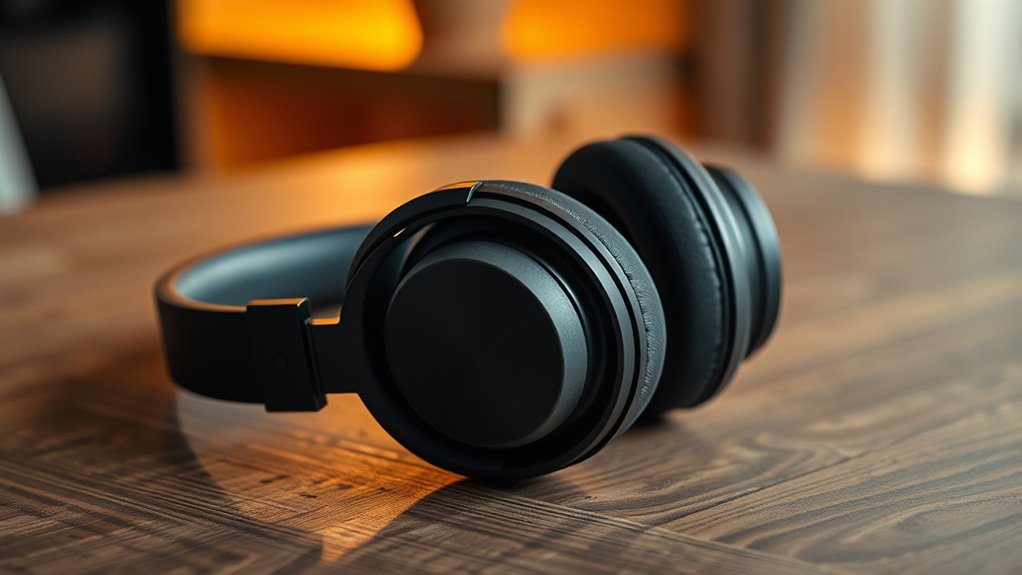

Spatial audio with head-tracking makes your headphone experience more immersive by dynamically adjusting sound based on your movements. As you turn or move your head, sensors detect these motions and software instantly updates the audio, creating a realistic sense of space and direction. This makes virtual environments feel genuine and engaging. If you want to discover how this technology transforms sound experiences and the hardware involved, keep exploring further.

Get business pricing on your home office setup
- Business-only prices and quantity discounts
- Tax-exempt purchasing
- Multiple users, one account, clear invoices
Key Takeaways
- Head-tracking adjusts spatial audio in real-time to match head movements, creating a more immersive listening experience.
- Sensors like accelerometers and gyroscopes detect head orientation, enabling precise sound source positioning.
- Personalization tailors audio based on individual ear shape, head size, and hearing preferences for enhanced comfort.
- Seamless integration of hardware and software ensures low latency and high fidelity in dynamic sound environments.
- Spatial audio with head-tracking enriches gaming, movies, and music by making sounds feel naturally anchored in 3D space.

Spatial audio technology, combined with head-tracking, creates a more immersive listening experience by accurately simulating how sounds originate and move around you in three-dimensional environment. This breakthrough isn’t just about better sound quality; it’s about transforming how you perceive audio, making it feel as if you’re right there in the scene. When you wear headphones equipped with spatial audio, head-tracking technology detects your head movements and adjusts the audio signals in real-time. As you turn your head, the sounds seem to shift naturally, maintaining their position in the virtual setting. This effect heightens realism and makes virtual environments feel more authentic.
Spatial audio with head-tracking makes virtual sounds shift naturally as you move, creating a truly immersive experience.
To achieve this, developers integrate advanced personalization features into their spatial audio systems. These features tailor the experience to your unique hearing profile, adjusting for variables like head size, ear shape, and even hearing preferences. By capturing detailed data about your ears and head, the system can optimize how sounds are rendered, ensuring a more precise and personalized experience. For example, if you tend to favor certain sound frequencies or have hearing impairments, the system can adapt accordingly. Personalization ensures that the immersive effect isn’t just generic but finely tuned to your auditory perception, enhancing comfort and accuracy during extended listening sessions.
The technical implementation of head-tracking in spatial audio involves sophisticated algorithms and sensors embedded in headphones or connected devices. Accelerometers, gyroscopes, and sometimes magnetometers track your head’s orientation and movement with remarkable precision. This data is then processed by software that dynamically adjusts the audio signals in real time. The result is an experience where sounds stay anchored to their sources, no matter how you move your head. This seamless integration requires a robust combination of hardware and software working in harmony, often involving complex digital signal processing techniques to ensure low latency and high fidelity.
In essence, the success of spatial audio with head-tracking hinges on meticulous technical implementation and smart personalization features. These elements work together to create a truly immersive environment, where sounds are not just heard but felt as if they’re part of your physical world. Whether you’re gaming, watching movies, or listening to music, this technology invites you to step into a new realm of sound—one that responds intuitively to your movements and preferences, enriching your auditory experience in ways traditional headphones simply can’t match.
Frequently Asked Questions
How Does Head-Tracking Improve Spatial Audio Accuracy?
Head-tracking improves spatial audio accuracy by adjusting the sound based on your head movement, ensuring the audio stays fixed relative to your environment. When you turn your head, the system updates the audio positioning in real-time, maintaining audio precision. This creates a more natural and immersive experience, as sounds appear to come from consistent directions, no matter how you move your head.
What Devices Support Spatial Audio With Head-Tracking?
Imagine stepping into a world where sound surrounds you perfectly—many devices now support spatial audio with head-tracking. You’ll find compatible devices like Apple AirPods Pro and Max, Sony WH-1000XM4, and some gaming headsets. These require specific software, like iOS or Android updates, to activate full functionality. Always check device compatibility and software requirements to guarantee you experience immersive, precise spatial audio with head-tracking.
Can Spatial Audio With Head-Tracking Reduce Motion Sickness?
Spatial audio with head-tracking can reduce motion sickness by minimizing sensory conflict between what you see and what you hear. When audio adjusts accurately with your head movements, it creates a more natural experience, helping your brain reconcile visual discomfort and auditory cues. This synchronization can lessen discomfort and nausea, making virtual environments feel more real and comfortable. So, yes, it can substantially improve your overall immersive experience.
How Does Head-Tracking Affect Battery Life of Headphones?
Head-tracking increases power consumption, which can drain your headphone’s battery faster. However, manufacturers implement battery optimization techniques to minimize this impact. While you’ll notice some battery use during active head-tracking, smart power management helps extend playtime. So, even with added features, your headphones balance immersive audio with reasonable battery life, ensuring you enjoy enhanced sound without constant charging.
Are There Any Compatibility Issues With Existing Audio Content?
You might encounter compatibility issues with existing audio content due to formatting issues or licensing restrictions. Not all audio files are optimized for spatial audio or head-tracking features, which can cause playback problems. Additionally, some content may be protected by licensing restrictions that prevent it from supporting these advanced features. To enjoy seamless immersion, check if your content supports spatial audio formats and verify your headphones are compatible.
Conclusion
By embracing spatial audio and head-tracking, you don’t just hear sound—you step into a universe where every whisper, footstep, and echo surrounds you completely. It’s like having a superpower, transforming your headphones into portals to another dimension. With these technologies, immersion isn’t just enhanced; it becomes an unstoppable force that pulls you right into the heart of the experience. Prepare to lose yourself entirely—because once you’ve tried it, nothing else will ever sound the same again.
Fall Picks
fall essentials
As an affiliate, we earn on qualifying purchases.