
To stay comfortable during long gaming sessions, choose a chair with proper support, especially adjustable lumbar and firm padding that contours to your body. Make certain your monitor is at eye level, your wrists stay neutral, and your feet rest flat. Take regular breaks, stretch, and move around to prevent stiffness and strain. Setting up your workspace ergonomically helps maintain good posture and reduces fatigue, so keep exploring for more tips to optimize your gaming comfort.
Key Takeaways
- Choose an adjustable ergonomic chair with proper lumbar support and firm padding for optimal comfort during long gaming sessions.
- Position your monitor at eye level and keep your wrists neutral to prevent strain and promote good posture.
- Maintain feet flat on the ground with knees at a 90-degree angle, and adjust chair height for elbow support at 90 degrees.
- Incorporate regular movement, stretching, or short breaks every 30-60 minutes to reduce muscle tension and improve circulation.
- Arrange your workspace to encourage natural sitting positions, minimizing tension and ensuring equipment placement supports ergonomic alignment.
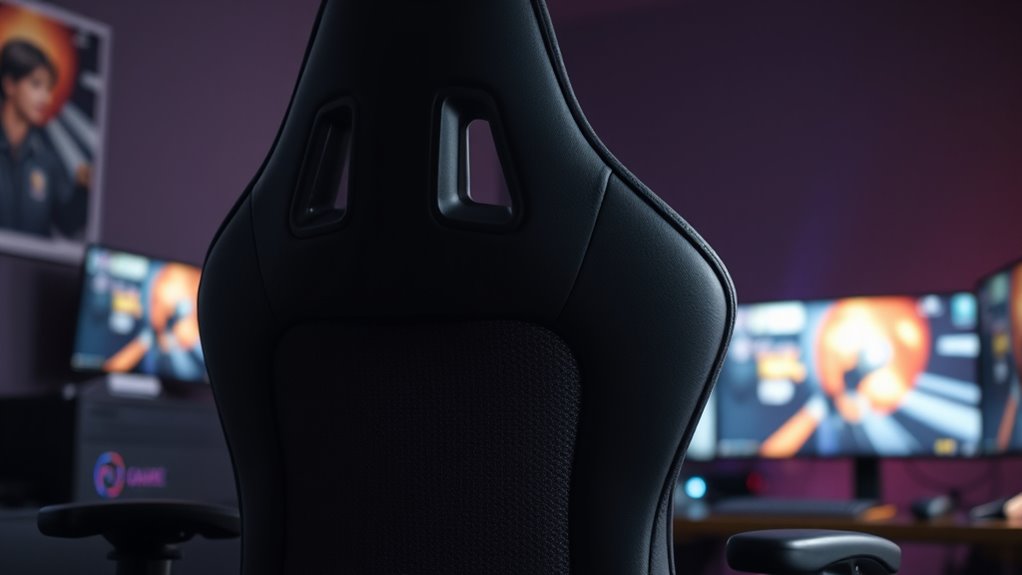
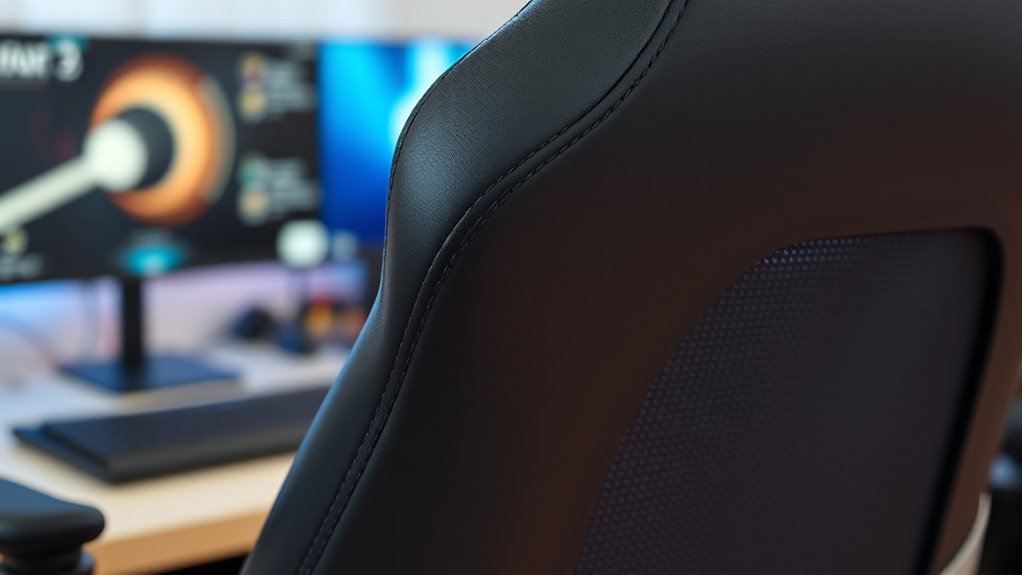
Long gaming sessions can be incredibly immersive and enjoyable, but without proper seating and ergonomics, they can also lead to discomfort and long-term health issues. One of the most important factors in maintaining comfort and health is ensuring your chair provides adequate support. Good chair support helps keep your spine aligned and your muscles relaxed, reducing strain on your neck, shoulders, and lower back. When choosing a gaming chair, look for options that offer adjustable lumbar support and firm padding that contours to your body. This way, you can customize your seating position to fit your unique shape, preventing slouching and encouraging proper posture throughout extended gaming periods.
Proper gaming chair support and ergonomic features enhance comfort and prevent long-term health issues.
Posture correction plays a essential role in avoiding chronic pain and fatigue. Sitting with poor posture—like slouching forward or leaning excessively to one side—can cause muscle tension and joint strain over time. To promote proper posture, make sure your chair encourages an upright sitting position with your feet flat on the ground and knees at a 90-degree angle. Your hips should sit comfortably in the seat, with your lower back supported by lumbar support. Adjust your chair’s height so your elbows rest at a 90-degree angle when holding your controller or keyboard, avoiding awkward reaching or hunching. Regularly check your posture during gaming sessions, and take short breaks to stretch and realign your spine. Additionally, selecting a chair with ergonomic features can further enhance comfort and support during long gaming marathons.
In addition to chair support and posture correction, paying attention to your overall setup can make a big difference. Position your monitor at eye level to prevent neck strain, and keep your wrists in a neutral position to avoid repetitive strain injuries. Using an ergonomic keyboard and mouse can also help maintain proper hand and arm alignment. Remember, the goal is to create a workspace that encourages you to sit comfortably and naturally, minimizing tension and fatigue.
Finally, don’t overlook the importance of movement. No matter how well your chair supports your body, staying in the same position for hours isn’t healthy. Make a habit of standing up, stretching, or walking around every 30 to 60 minutes. These small breaks boost circulation, relieve muscle tension, and help you maintain good posture over long gaming sessions. By prioritizing chair support and posture correction, you can enjoy your gaming without sacrificing your health, ensuring long-term comfort and well-being.
Frequently Asked Questions
How Often Should I Take Breaks During Long Gaming Sessions?
You should take a break every hour during long gaming sessions. Use this time to stretch, hydrate, and practice mental health strategies like deep breathing or quick mindfulness exercises. Staying hydrated with water or electrolyte drinks helps maintain focus, while regular breaks prevent fatigue and discomfort. Remember, short breaks boost your overall performance and well-being, so don’t skip them—your body and mind will thank you for it.
What Are the Best Types of Cushions for Gaming Chairs?
You’re sitting pretty with memory foam cushions or gel-infused pads that mold to your body, providing ideal comfort. These cushion materials work hand-in-hand with an ergonomic seat design to support your lower back and reduce fatigue. For the best gaming experience, choose cushions with breathable covers and firm support. Remember, a well-chosen cushion can turn your gaming chair into a throne, making long sessions more enjoyable and less taxing.
Can Standing Desks Improve Gaming Ergonomics?
Yes, a standing desk can improve your gaming ergonomics by promoting movement and reducing strain. The standing desk benefits include better posture, increased circulation, and less fatigue during long sessions. An ergonomic desk setup with adjustable height allows you to switch between sitting and standing, keeping your muscles engaged and preventing discomfort. Incorporating a standing desk encourages healthier habits, making your gaming experience more comfortable and sustainable over time.
How Do I Prevent Wrist Strain While Gaming?
To prevent wrist strain while gaming, use wrist supports to keep your wrists in a neutral position and reduce pressure. Consider wearing gaming gloves that provide extra cushioning and support during long sessions. Take regular breaks to stretch your hands and wrists, and make certain your mouse and keyboard are at comfortable heights. These steps help avoid strain and keep your gaming sessions comfortable and safe.
Are There Specific Ergonomic Accessories Recommended for Gamers?
You should look for ergonomic accessories like adjustable gaming chairs that allow you to customize seat height, tilt, and lumbar support. Proper monitor positioning is essential; keep your monitor at eye level and about an arm’s length away to reduce strain. These adjustments promote comfort and help prevent long-term injuries. Using a wrist rest and an ergonomic mouse can further improve your setup, making long gaming sessions healthier and more enjoyable.
Conclusion
Investing in the right seating and ergonomics can dramatically improve your gaming experience and health. Did you know that gamers who prioritize ergonomic setups report 30% fewer aches and pains? By choosing an adjustable chair, maintaining proper posture, and taking regular breaks, you’ll stay comfortable and focused during marathon sessions. Remember, good ergonomics isn’t just about comfort—it’s about protecting your body for years of gaming enjoyment. Make these changes, and you’ll game smarter and healthier.